


Oyster Farmers Ready to Harvest, But Have No Place to Sell
On Katama Bay, oyster farmers are still working, tending their mesh cages. But due to dramatically depressed demand, most oysters maturing this spring will not be harvested.</p>
On Katama Bay, oyster farmers are still working, tending their mesh cages. But due to dramatically depressed demand, most oysters maturing this spring will not be harvested.

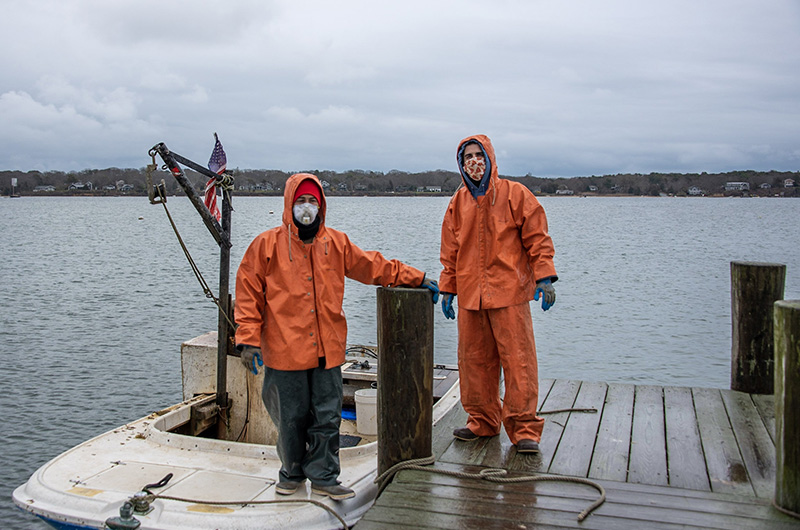
Martino brothers grow their oysters off Eastville in Oak Bluffs.
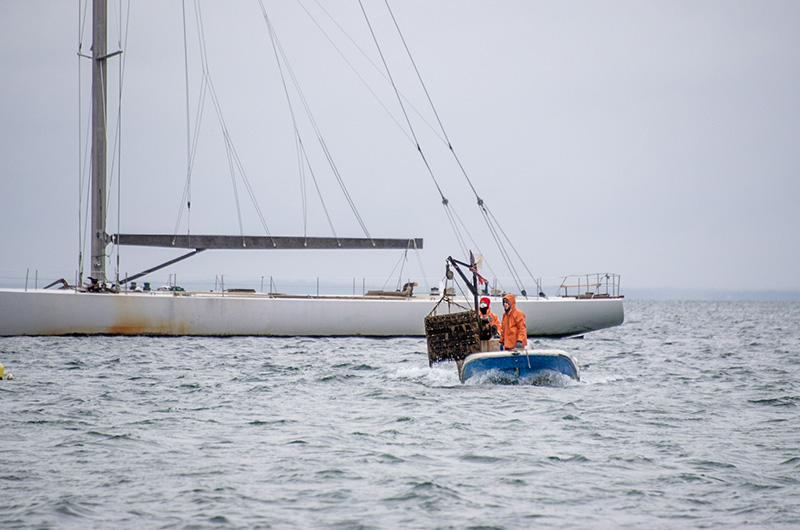
Martino brothers grow their oysters off Eastville in Oak Bluffs.
The coronavirus pandemic has disrupted every corner of the agricultural and seafood industries. But the oyster farm industry occupies its own unique corner in the emergency. Without a viable market, oysters that were seeded last year and just now reaching maturity will soon grow past their prime size for retail sale. With restaurants closed, weddings canceled and summer gatherings on hold, the oysters will have to be sold to a cannery for a fraction of the price — or discarded back into the sea.
Further complicating the process, mature oysters need to be sold to clear space for fresh seed, which can take up to 18 months to reach maturity. Without a crop in progress, losses this season could stretch out even longer.
Scott Castro runs the Blue Moon Oyster farm in Katama bay. He said sales usually ramp up around this time of the year. But he has not sold a single oyster since March 10.
“Everything just came to a screeching halt pretty much overnight,” he said. “It is a complete stoppage of the whole chain, top to bottom. It’s a chain reaction. Normally I would be selling a large load once a week to a wholesaler. That’s not happening. So I don’t have the empty cages to plant the small ones.”
Dan Martino, who co-owns Cottage City Oysters in Oak Bluffs, had similar remarks.
“What hasn’t changed is the fact that we still have millions of baby oysters coming in for the year. We still ordered seed and it’s still coming,” he said. “What has changed is that demand has dropped to zero. The longer we sit on them, the bigger they are going to get, and the less valuable they will become.”

Ryan Smith heads out to tend his crop in Katama Bay.
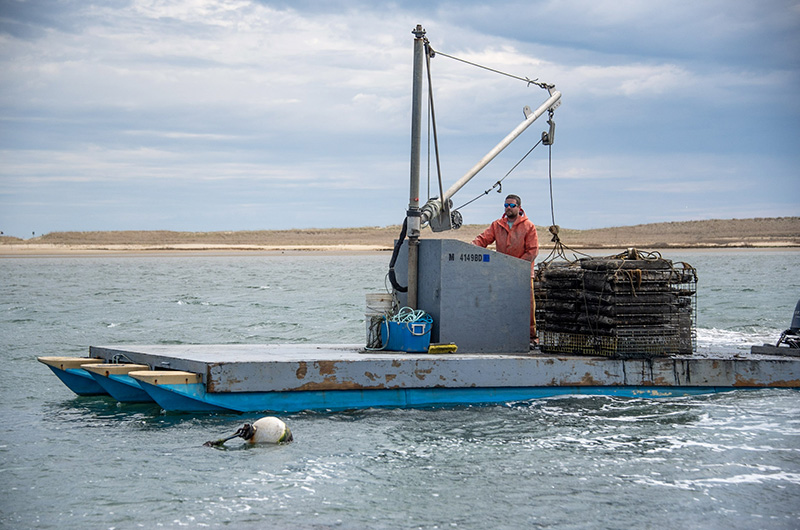
Ryan Smith heads out to tend his crop in Katama Bay.
The disruption comes just as the relatively young oyster farm fishery had begun to take off. In the past decade the industry has grown from $5 million to $28 million, making it the third most profitable fishery in the state, according to the state Division of Marine Fisheries.
On Martha’s Vineyard, the growth of the industry is evidenced by the oyster rafts that dot the tidal saltwater bays and ponds from Katama to Menemsha. Farmed oysters have become a staple in the local seafood market, with festivals and other celebrations held in spring and fall. Once a quaint vocation for a handful of Island fishermen, farmed oysters are now a multi-million dollar industry that provides a solid living for dozens of families.
The market has grown in tandem with increasing demand from restaurants, banquets and weddings. Oyster farmers said as much as 95 per cent of their business is dependent on these local markets — all of which have dried up since the state of emergency was declared.
Ryan Smith of Signature Oysters is a grower in Katama. Two days before restaurants were ordered to close, he had delivered 6,000 oysters to a wholesale distributor in Boston. On March 16, the wholesaler called to say the oysters would not sell. That night he drove back to Boston, returning to the Island with 4,000 oysters. The rest that had been shipped to restaurants were dumped, he said. Under contract with his distributor, he swallowed the loss.
Now Mr. Smith, like many other oyster farmers, is unsure what the future will bring. He said he is sitting on 800,000 oysters that are ready for market, growing larger and less valuable by the day.
“Unfortunately, I’ll probably have to throw them out or just give them away,” he said.

Mr. Smith, like many other oyster farmers, is unsure what the future will bring.
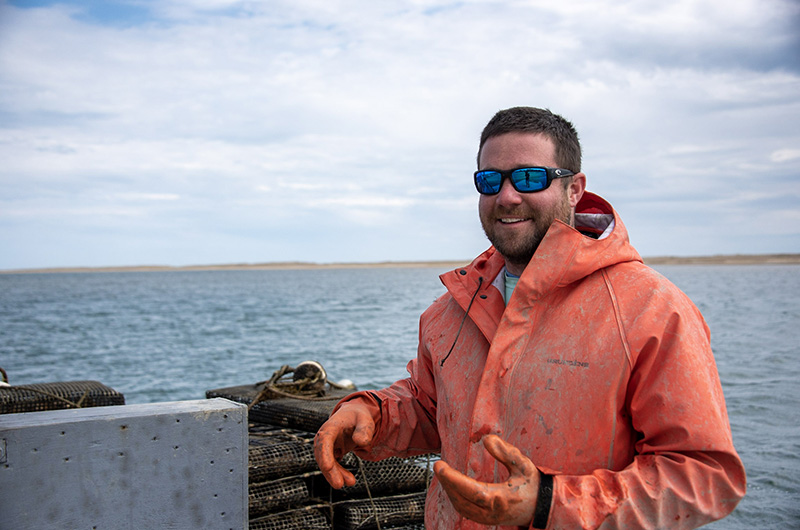
Mr. Smith, like many other oyster farmers, is unsure what the future will bring.
A few Island growers are adapting. Mr. Martino has been harvesting and delivering directly to customers, under a special license he holds as a home sale dealer. He also is trying to secure a permit that will allow him to sell oysters at open air markets. He said the process is unfamiliar, as he usually relies on bulk sales.
“Necessity breeds creativity,” Mr. Martino said. “We are still moving product, just not at the rate of restaurants . . . It’s not ideal, but we need to start building up different markets.”
Many farmers also said they are cautiously counting on the $2 trillion federal stimulus package which set aside $300 million in aid to the fishing industry, including oyster farmers.
Others said they have been unable to secure retail licenses, which require hours of training and pricey fees to meet federal safety standards.
Jeremy Scheffer, who owns Spear Point Oysters in Menemsha, has both a wholesale and a retail permit, and is working on a plan to retool his operation too. Speaking to the Gazette by phone with the sound of seagulls and the tinkering of oyster cages in the background, he said he was still on the water, preparing his gear amid all the uncertainty.
“I’m just trying to stay busy,” Mr. Scheffer said. “I don’t know what to expect, or what to be ready for.”
Comments
Please try to sell these
Kerri Allen New Jersey/ Martha’s VineyardPlease try to sell these online. And seek assistance via social media and TV media. GMA and the today show are helping businesses around the country stay in business by offering the products on television. Yesterday they helped a restaurant in Boston still a years worth of product in one day!
People will absolutely buy these online if you can ship them!
What you’ve missed is that
Salt EgartownWhat you’ve missed is that they can’t sell their own oysters without a retail permit. They have to sell to a market, wholesaler or restaurant.
Give them away, into your
John Feld Newport, Rhode IslandGive them away, into your community. Put your name on everything. Consider it the purest form or advertising. Don’t harvest more in a week then your community can absorb. At the end you will of created your own loyal shellfish farm stand community. You now will have a Farm story to tell and many people to share it for generations.
We’ve been buying ICOs and
Margaret FloridaWe’ve been buying ICOs and trying new oysters from Maine, Plymouth bay and the Cape via Island Creek Oysters. We can’t be the only ones buying oysters every week. I imagine they could help you too.
This is another sad story the
Tom Engley West TisburyThis is another sad story the regulations do not allow them to even give them away let alone sell out of their truck or boat. They would have to have a dealer certificate with all the permits sell them to themselves and then sell them to u. It’s stupid but that’s the deal. Sad
Food pantries around the
A.R. South shore MaFood pantries around the state would be a solid donation, or the island school lunch programs.
Add new comment