

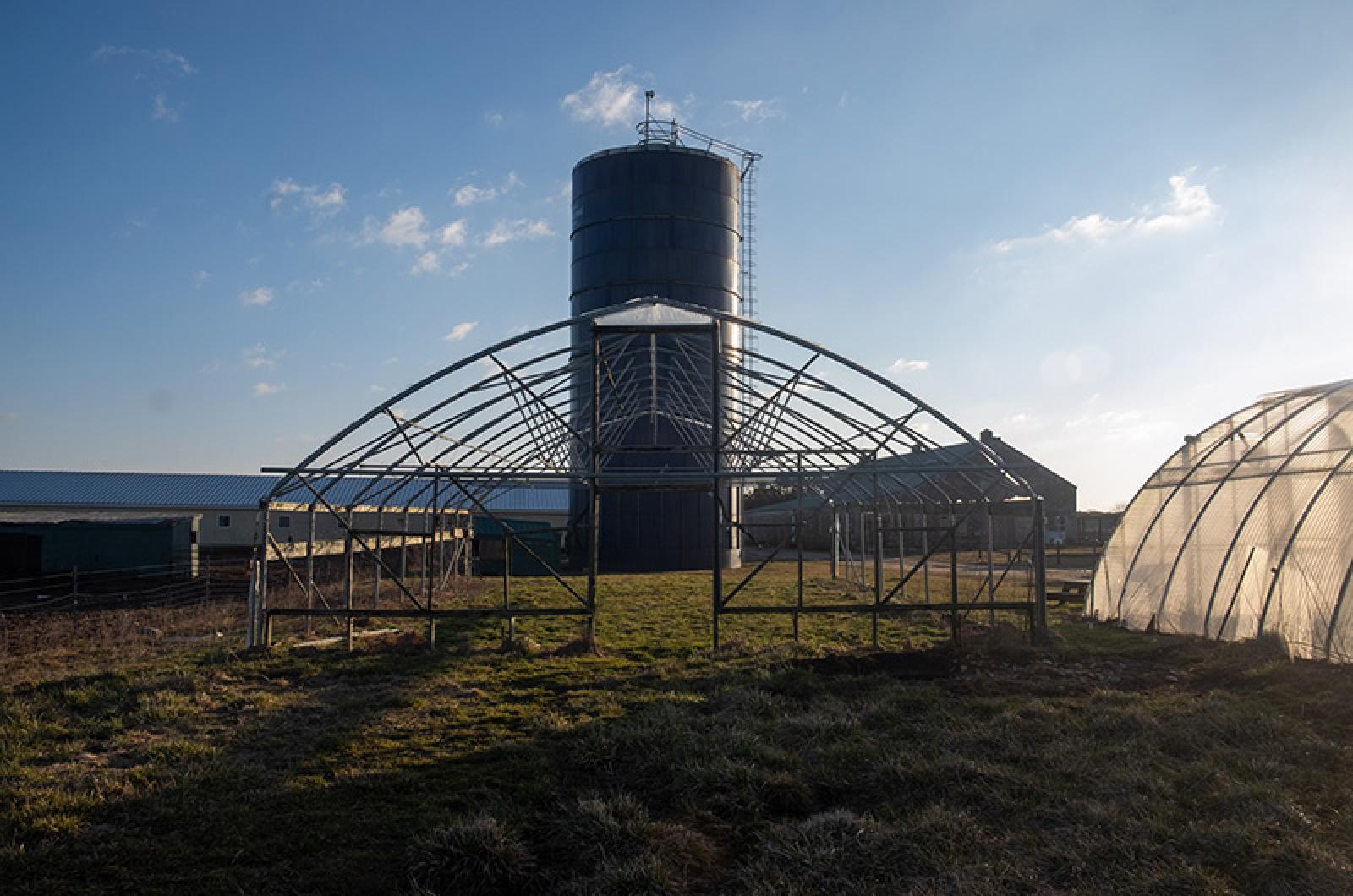
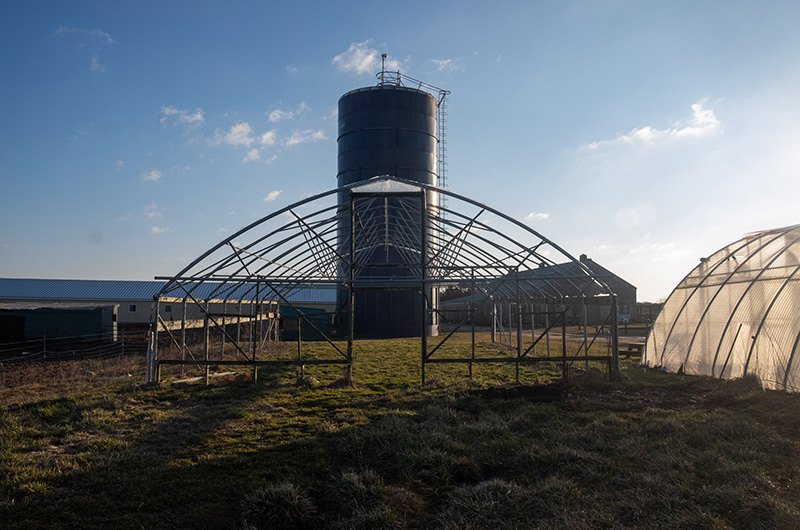
<p>Tensions over the use of Katama Farm by the Trustees of Reservations came to a head before the Edgartown conservation commission this week.</p>
Tensions over the use of prime town-owned Katama farmland by the Trustees of Reservations came to a head before the Edgartown conservation commission this week, with the commission threatening to sever its lease with the Farm Institute if it does not quickly come into compliance.
Trustees have reduced the number of livestock at the farm this year, raising concerns about whether they plan to continue active agriculture.
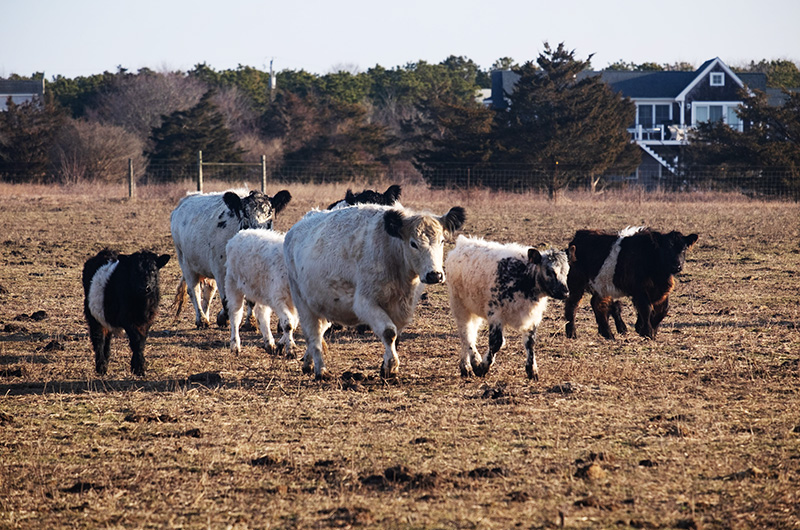
Trustees have reduced the number of livestock at the farm this year, raising concerns about whether they plan to continue active agriculture.
The Trustees, a Massachusetts land conservancy with seven properties on Martha’s Vineyard from Menemsha to Cape Pogue, took over the nonprofit Farm Institute and lease for the 182-acre farm in 2016. The lease runs for 30 years at a rate of $12,500 per year. The conservation commission is the landlord for the property, whose history as a working farm dates to a previous century.
In recent months, according to the conservation commission, the Trustees has winnowed the livestock population, removing approximately 20 breeding cows from the farm, let go of a full-time farmer and proposed a change of use for the property that would take about 60 acres of grazing land out of agricultural use in order to protect a rare grasshopper sparrow population.
The Trustees have attempted to frame the issue as a balancing act between conservation and agriculture. But the conservation commission has pushed back vigorously against the suggestion, noting that the town manages other rare conservation lands at Katama, and that Katama Farm was in fact set aside nearly 50 years ago for use as a working farm. That purpose is spelled out in the lease with the Trustees.
Minutes from conservation commission meetings early this year reflect the tension.
“The commission leased the land to the Trustees in order to have a vibrant, working farm with a consistent — not a token — livestock presence,” minutes from a Jan. 24 meeting state. “ . . . if the Trustees’ are finding the operation [not] economically viable, they should consider terminating the lease.”
At a conservation commission meeting Wednesday, Kevin Channell, director of agricultural operations for the Trustees, sought to cool the heat. He said removal of the cattle is only for this year and that the farm would take steps to adapt its use agreement to fit with the shared goals of the Trustees and the town. He promised to have a new draft agreement available by next week.
“[Farming] is our full intention,” Mr. Channell said. “As far as the current use plan, we would like to make some minor adaptations to it. But it will be in keeping with the spirit and intent of the original use plan.”
He promised that the Trustees would staff the farm in the interim, and said they plan to look for a new farmer.
In a subsequent phone conversation, Edgartown conservation agent Jane Varkonda said the change of use occurred without the commission’s knowledge and violated the spirit, if not the letter, of the lease. She said issues with the Trustees management of the farm go back for some time, with the recent changes sparking fresh pique among commissioners.
“They did not talk to us before implementing a major change at the farm,” Ms. Varkonda said. “They sent off animals without telling us, and did not get prior approval from their landlord . . . We’ve had issues with them for the past two summers.”
The 2016 agreement between the town and the Trustees/Farm Institute spells out the expected use of the land.

Town took ownership of historic farm in the late 1970s.
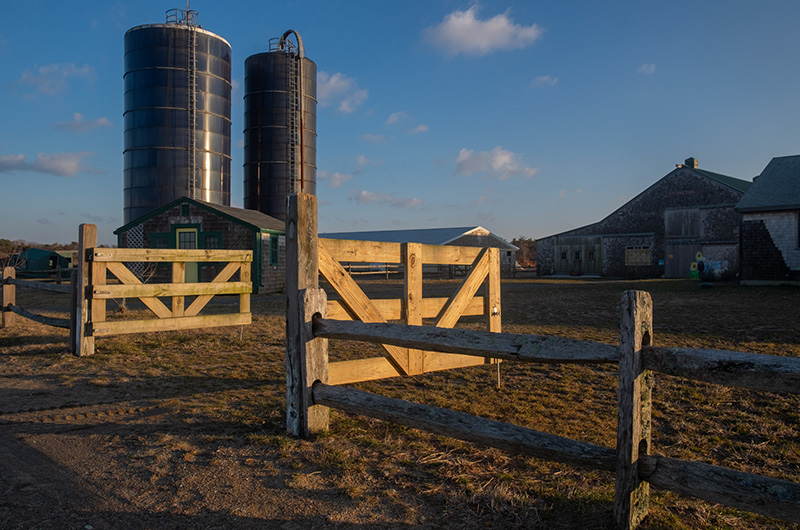
Town took ownership of historic farm in the late 1970s.
“The long use of the Katama plains for agriculture has been well-documented,” it says in part. “TFI and the Trustees’ honor this legacy by continuing to farm the land, primarily as a livestock operation, while maintaining trails, signage and encouraging conservation practices.”
When the agreement was signed, the Trustees had 65 head of cattle, including 22 breeding cows, over 100 sheep (45 ewes), 300 laying hens, a pair of breeding pigs and 70 turkeys for Thanksgiving, as well as assorted rabbits and a special duck. The agreement states that the total animals put them at about 80 per cent of their livestock capacity.
Ms. Varkonda said she toured the farm on Monday, and found approximately 26 cows, 26 chickens, six sheep, five goats, five ducks and two rabbits. She said the farm has cut back on its poultry business and did not harvest turkeys for Thanksgiving this year.
Ms. Varkonda said town counsel has been notified of the situation.
She also said the Trustees have been using the farm’s barn as a storage space for beach vehicles used at Norton Point for the past two years, despite repeated requests from the town to remove the vehicles.
Sam Hart, the Islands’ director for the Trustees who attended the meeting Wednesday, said the vehicles have been removed. He and Mr. Channell both said the removal of the animals would be temporary and seasonal.
The town bought Katama Farm in the late 1970s when developers were threatening to turn the globally-rare remnant of the Great Plains with its rich loamy topsoil into a 700-lot subdivision. Over the years, the farm has had an eclectic assortment of tenants, including dairy and beef operations.
Originally established as an educational nonprofit dedicated to livestock farming and teaching, the Farm Institute began leasing Katama Farm from the town in 2003. In 2016 the institute, which was struggling financially, merged with the Trustees, which subsequently took over the lease with the town. Recently the Trustees installed a kitchen addition. The property is used for summer fundraising events as well as farming activities.
The most recent dispute between the Trustees and town began in September, when the Trustees contacted the state Division of Fisheries and Wildlife to notify them of the presence of rare grasshopper sparrows on the property. Although agricultural land is exempt from state endangered species rules, state ecologist Julie Richburg wrote that care should be nonetheless be taken to avoid harm to the tiny sparrows.
In a Jan. 17 letter to the town, Mr. Channell outlined “production scale changes” on the farm due to concerns about grazing ruminants on the sparrow habitat, and the resulting expense of importing high-quality hay for farm animals. The letter described plans to cut back on livestock production and let a large area lie fallow.

Trustees took over the Farm Institute in 2016.
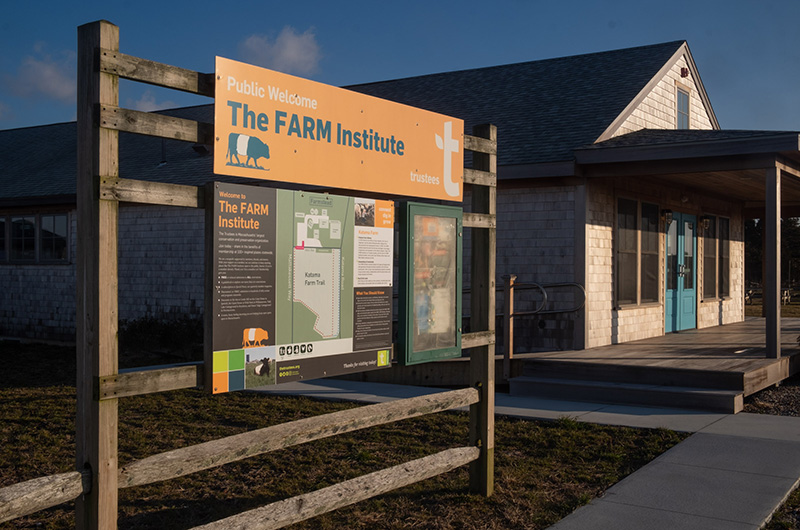
Trustees took over the Farm Institute in 2016.
“The change in production scale year-round activity is one that is difficult to accept for all of us, but also one that is necessary for the ecological and economic realities we are facing,” the letter concluded.
The letter prompted a stern reply from Ms. Varkonda and the commission, who chastised the Trustees for reaching out to state environmental officials without their knowledge, expressly noting that the land was exempt from any endangered species act concerns. Ms. Varkonda also said the claims about economic viability were misguided.
“It’s land under agriculture, it’s exempt from MESA regulations,” Ms. Varkonda told the Gazette Thursday. “We manage Katama airfield and many other properties for habitat. And Katama Farm was bought for agricultural purposes.”
In addition to Katama, the Trustees own 2,000 acres of farmland across the state, including three farms: Powisset Farm in Dover, Appleton Farm in Hamilton and Ipswich, and Weir River Farm in Hingham.
At the time of its merger with the Farm Institute, executive director Barbara Erickson said the Island farm would fit snugly among those other properties.
“Our organization is heavily invested in food systems, and not only bringing local food to people but supporting sustainable farms in our state,” she said. “We were really heartened and inspired by the programming at the farm.”
On Wednesday, Mr. Channell walked back many of the previous plans, and said he had received a subsequent letter from the state that would free the Trustees from many of the concerns surrounding the sparrows, therefore allowing them to farm.
But the trust between the conservation organization and their landlord clearly had been shaken.
“It feels like you were trying to manipulate a bunch of land into another land use other than that which had already been established,” commissioner Jeff Carlson said. “You have to understand that makes us a little skeptical, and there’s a trust factor that we’re not really sure about in regards to this.”
Comments
Jane is doing a great job for
Bob EdgartownJane is doing a great job for Edgartown and we are lucky to have her. I am thankful she is keeping a close eye on the Trustees as they can be deceitful and double speak often. I go by the farm all the time and have noticed myself the lack of animals and wondered what was going on. It use to be a great place to walk the dirt roads and see the action. Was the original Farm Institute started by wealthy summer people? Did they walk away from it completely?
No, the original farm was a
Jess EdgartownNo, the original farm was a real farm run by an island farmer. After the town bought the property the had several tenants who didn’t work out. One a dairy operation and on a beef operation. The Farm Institute got the lease after that bringing in the Belted Galloway cattle that are on their logo.
Funny. The trustees are
East of east EdgartownFunny. The trustees are concerned about a sparrow in a field but not about the soon to be endangered American eel found in mytoi which is being dredged? Funny. Oh. I get it. Mytoi makes $$
MyToi needs to be dredged
MyToi Volunteer ChappyMyToi needs to be dredged because the whole pond is filled with silt and plants and if left alone there would only be a muddy marsh. And there may be a small fee for non-members, but caring for that Japanese garden takes a lot of effort, with specialized knowledge. MyToi doesn’t contribute revenue in any significant amount and the dredging is a very big expense. Members of the Chappy Community have wanted the pond dredged for years.
Per their lease or how Mytoi
AnonymousPer their lease or how Mytoi was gifted to the Trustees from its' previous owners who left it in their will, they can't really charge for anything. Mytoi doesn't make any money. This is the first year they started charging a fee, and it was only $5 for some events.
If there was an eel in the
Mytoi volunteer ChappyIf there was an eel in the Mytoi pond it must have been very lonely! In over 40 years of working in the garden I have never seen a single one. The dredging of the pond’s muck has been a long time coming and is a very expensive proposition. Mytoi has never been a money maker but, rather, is a benefit for Chappaquiddick. And, for those concerned about the eel population perhaps all the eels sold by the tackle shops should be bought up and released?
Farming this property need
Prudy Burt West TisburyFarming this property need not preclude also protecting some habitat for nesting grasshopper sparrows, a threatened species in Massachusetts. Certainly it is within the wheelhouse of both The Trustees and the town's conservation commission to understand that it is excellent news that these birds are present at Katama Farm, and to do all they can to balance one land use with the need to protect this threatened species- the two need not be mutually exclusive. I believe it has been some years since grasshopper sparrows nested regularly at the town owned Katama Airpark where I monitored this species for The Nature Conservancy in the early 1990s. I trust that these two dedicated groups will work out their differences to the benefit of their shared goals and obligations, including as stated above in the 2016 agreement, 'encouraging conservation practices'.
Thanks very much for that
Joanne ChilmarkThanks very much for that perspective. It fills out gaps in the article.
Well said Prudy, I fully
Rebecca Sanders West TisburyWell said Prudy, I fully agree. After spending the last 8 years working outdoors on this property, i am convinced that trees are the answer. Trees have the power to bridge the gap between these two seemingly conflicting agendas: one being production agriculture and the other environmental conservation. While working on the farm I saw firsthand the challenges of raising plants and animals in what was sometimes a harsh environment. Balance these challenges with the task of keeping the farm both educational, and financially sustainable, and you can better understand the reality of this situation. I believe the adoption of a silvopasture system across the farm could change things for the better. In his book Restoration Agriculture, Mark Shepard writes about thriving silvopasture systems where trees, forages, multiple species of livestock, and yes, even rare grassland sparrows, live in harmony with each other. The book is based on the concept that, in his words, "ecological restoration can occur simultaneously with agriculture, not separate from it". Indeed, these biologically diverse ecosystems can support thriving populations of both farm animals and native flora and fauna as well. The Trustees, in their management of both farms and conservation lands, have the unique ability to become leaders in the field of regenerative agriculture. With good decision making, they could start right here on the island, at Katama Farm.
This species of sparrow does
Liz TisburyThis species of sparrow does not use habitat with trees or tall shrubs. It requires a long line of sight. That is why it is in decline and hasn't been breeding on mv for many years. Fewer wide open spaces, lots of outdoor cats stalking through Katama, skunks, etc. Other sparrows, such as savannah sparrows, are willing to nest with trees closer to them so they are not a MESA listed species.
The most intelligent,
Adrienne off islandThe most intelligent, measured and sane perspective.
Ah, the good old days when
James Kozak Vineyard HavenAh, the good old days when you could buy quarts of Seaside Dairy milk at The Edgartown Market, from Elmer, at a time when there was actually enough smell from the cows to generate complaints out of the surrounding neighbors. Now, not a peep, thanks to diminished numbers.
Typical Martha’s Vineyard ...
Brian Vineyard HavenTypical Martha’s Vineyard .....administrators who cannot get out of their own way.....the first article in the Gazette speaks of Hunger and now we have a working farm reduced to a non working farm....run properly it could feed those who need food....perhaps the AG society could jump in to help....what a sad state of affairs ...we have assets but they are administered by groups who cannot get out of their own way.....
Regardless of the specifics
Trustees Volunteer EdgartownRegardless of the specifics of this moment, or possible errors in communication, I think it’s important to remember that The Trustees are a non-profit with a stellar reputation for over 125 years stewarding land for public use and enjoyment. The organization is not an evil corporation with sinister plots! There are always diverse and competing tensions, adhering to historical norms and adapting to changing circumstances. The people behind the organization are warm, good natured people who each individually strive to make our community and environment better.
Since the Trustees took over
Katama Resident EdgartownSince the Trustees took over the property has been further and further removed from local decision making. Decisions for the Farm Institute are made in Boston. Edgartown has lost local control. What could - and should - be the community center for Katama, is so far removed from the people who live here. Particularly year round residents.
Not too long ago they had a lot of turn over in management positions at The Farm Institute. Now the farmer is gone (to be rehired? Does the previous farmer have recall rights?) Is anyone looking at turnover rates and its causes? What is really going on?
Kudos to the Conservation Commission for their oversight. The Town of Edgartown needs local control of this gem of a place. Decisions made locally include the element of accountability. Return this beautiful property to the people of Edgartown!
The Trustees seem to have a
AnniePThe Trustees seem to have a priority on maintaining their properties for the benefit of anything but the humans who own and use them. It has seemed to me - as a visitor to many of their open save and more wild spaces - to have become increasingly more radical in that regard in the last 7-10 years. I think the lack of communication is indicative of following its own mission without regard to lease (and legal) obligations. It certainly knew that the Farm is not subject to the environmental restrictions it sought to impose. Perhaps each of the farmers who came after the original one should have paid more attention to why he got out of the farming business: he couldn’t any longer make a living at it. None of these non-profits seem to have u see stood how to support themselves in a seasonal environment. Even tho farming is inherently seasonal...... if not family owned and run it’s really difficult to break even.
I have no problem sending a
Susan of OB West Hartford CTI have no problem sending a letter to the Trustees and terminating my membership. I'm with Brian, and his letter -- make it a fully working farm, restore the livestock! A source of food product to address the food disparity on MV -- what a thought!
The spirit of The Farm
Elizabeth EdgartownThe spirit of The Farm Institute was to be a teaching farm. My son spent many summers there and learned a number of valuable skills from caring for animals, understanding the way a farm makes money and sustainable living. Perhaps the Trustees need to communicate with other farmers on island that seem to be able to run a profitable operation, while preserving land for something other than McMansions. Storing vehicles in the barn rather than using it to house animals is indicative of how the Trustees are using the farm.
I join Susan in my
Tara OB, Wellesley, MAI join Susan in my willingness to send a letter to the Trustees and terminate my membership. Brian's comments are worthy and justified. The actions of the Trustees in this scenario is shameful. Elizabeth is spot on, the spirit of the The Farm Institute was that it would be a working, educational farm. As such, it was a gem, supported by wonderful, devoted people and touching the lives of many. We are all smart enough to figure out a way to help it flourish. If the Trustees aren't up to the task, we can find those who are.
The Farm Institute, under
Confused EdgartownThe Farm Institute, under Trustees management, is a teaching farm. That is the fundamental nature of the operation, why they have very popular summer farm camps and bring local students on site, etc. Some people commenting appear to be upset that the property is not operating as a commercial farm whose primary purpose is to raise and sell meat or other agricultural products. Perhaps the only way to keep TFI as a teaching farm is to scale back some of the herds? If we have a choice between a “teaching farm” and leasing land for a commercially viable, private enterprise what would the town choose? I think it should remain a teaching farm, which is the goal of The Trustees.
Meat processing is not
Nancy EdgartownMeat processing is not economically viable for The Farm without building and operating a meat processing facility - a slaughter house - on Island. This would change Katama. Focus on vegetables, dairy, eggs, flowers and teaching. Food and fiber can be produced without mass killing of mammals.
And shipping cows off Island for slaughter - and back as meat to be sold - creates a carbon footprint that does not really fit with the sustainable angle.
Pity. I remember decades ago
Lorraine EdgartownPity. I remember decades ago riding my bike out to South Beach when it was a working farm. Pity.
Trustee Volunteer - One can
ECS Ft Lauderdale / EdgartownTrustee Volunteer - One can work for the Trustees, but I would not expect them to have an unbiased opinion of the organization. They clearly have issues. Prima-facia example look at South Beach, i'm sorry look at the south beach parking lot. While every organization needs funding non-profits like every other person/organization can loose proper perspective and in my opinion they clearly have. The trustees are hugely interested in growth; the bigger they are the more the top administrators can get paid.
Elizabeth, ideally the island farmers need to be involved but I am afraid the local farmers see the Farm Institute potentially, certainly not in its current state, as competition for them though frankly if they thought it through the Farm Institute will never threaten any of them.
The Trustees suffer from the
Jonathan West Tisbury / Vero BeachThe Trustees suffer from the "just because we can, we should" syndrome. More empire building, more control, more donors, more pay for top administrators. Many non-profits over reach, build out too far and can not sustain their efforts. This is what is happening. They lack the soul of a farmer.
The cows have been there for
Erik H WTThe cows have been there for many decades.
And over those many decades, a sparrow population has either flourished or, at least, co-existed.
Why the sudden need for change?
The most pointed question
Islander Too TisburyThe most pointed question here.
What has changed?
I think it is the Trustees which has changed, not the sparrow.
I have heard other negatives about the Trustees' high-handed behavior.
I declined to renew my membership years ago.
This species of sparrow hasn
Liz West TisburyThis species of sparrow hasn't been there for well over a decade.
Leasing a working farm that
Local MVYLeasing a working farm that has an education component to an organization that has a mandate for conservation was asking for trouble to begin with. Conservation is not necessarily stewardship. The farm is mandated to be a working farm based in the terms of the lease and by direction of it’s owners (town) just as any property is. This isn’t a debate about what it should or shouldnt be. It was determined decades ago what it is to be. If Trustees can’t abide by their lease they should be removed as any tenant would be. There are enough farmers on island and vibrant agg society that should be brought in for help with a longer term solution.
The Trustees is a fine
martha edgartownThe Trustees is a fine organization and stewards the properties with sensitivity to the true purpose of conservation. I'd rather see less institutional operations and more wildlife at the farm and its surrounding Great Plains. Thank you Trustees for always maintaining the beauty of our Island. Edgartown is fortunate to have them caring for that amazing property with such true sensitivity. Thank you. Edgartown taxpayer.
There is a very good model of
Mar Harrison Ripton, Vt.There is a very good model of a farm that is used for educational purposes, internships, producing farm products and keeping development at bay,
and that is a farm in the center of Carlisle, Ma. - Clark Farm. It could be a wonderful model for the Trustees right now.
As some have noted above,
Jason Juno Beach, FloridaAs some have noted above, there is a huge difference between operating a teaching farm vs. a working farm. A real working farm would bring in much more truck traffic to Edgartown in the peak of tourist season. Do we really want this? Working farms also can bring new forms of pollution in the form of animal waste and fertilizers, even if they are supposedly "organic" in nature. Finally, where will we get the seasonal workers to farm the land and where exactly will they live? Will we need migrant labor? Let's be careful for what we wish for.
We are neighbors of Katama
Katama Farm Neighbor KatamaWe are neighbors of Katama Farm and have been for nearly 30 years. Once the Trustees took over management of the Farm we, as well as many other neighbors, became quite concerned as it appeared that the most important decisions regarding the farm were going to be made in Boston by administrators who possibly had limited knowledge of the history nor expertise in managing a property unique to our island.
A farm is supposed to have animals and crops and activity, not only for education, but also for providing food, especially for those who might be struggling to feed their families.
It would also seem that the concept of removing so many animals to protect the sparrows is a flawed concept. We visit the farm regularly and it appears that the sparrows find a multitude of food sources as a result of the animals fertilization process. It is sad to drive by the farm and rarely see any of the beautiful animals which also used to be featured in the Farm's Logo. We encourage the the Conservation Commission to seriously consider having Katama Farm under its local management and to return the farm to its original intent of being a working and educational farm complete with animals, crops and sparrows living in harmony.
Either this is a farm as the
Carol EdgartownEither this is a farm as the documents mandate, or the documents get changed to allow other use. To return this land to its original state of grassy, coastal plains exclusively would be noble, but that is not farm land. And the Katama Farm is a farm.
As Prudy suggests, and as
David Foster Petersham and WTAs Prudy suggests, and as conservationists worldwide have recognized, it is possible to advance the goals of agriculture and habitat management simultaneously on a property. The vast majority of open upland habitat on Martha's Vineyard and across New England developed with deforestation and farming since the 1600s. Grasshopper sparrows and the other birds that thrive in these habitats have been declining throughout the twentieth century as agriculture declined and forests have grown back. The Trustees, where I was a board member, has a unique appreciation for both natural and cultural landscapes and has been a leader in trying to use grazing and other agricultural practices to address conservation objectives, including supporting rare and uncommon plants and wildlife. With its new Island and farm management group I expect that the Trustees will strive to make The Farm Institute a showcase and educational center for this approach, which should be advanced broadly across the Island and region.
I wholeheartedly agree. If
Michael Whittemore West TisburyI wholeheartedly agree. If farming can be done sustainably while improving conservation, then why not? Research has been done on this especially in the Midwest, including work I helped with in native parties of North Dakota. Although agriculture fields provide openland structure, they are often dominated by nonnative cool season grasses and lack native warm season grasses and wildflowers that a harbor a whole host of species (including rare). Conservation is a spectrum. In this case, the extremes are to achieve pristine sandplain grasslands (a globally threatened ecosystem with a large proportion here on island), or farmland dominated by nonnative fodder. If we can find a happy medium, then why not? It seems like the responsible thing to do.
Edgartown residents let’s
Diane EdgartownEdgartown residents let’s take back our farm and beach and let our wonderful new manager handle both. I would rather see our town employees get paid the money as they truly have a vested interest. The trustees selling weekly beach stickers is a disaster.
Have they tried making it a
MarieHave they tried making it a co-op? Works in other towns.
Community Garden
The idea of farming for the Food Bank is a good one.
I’d like to thank Prudy Burt
DownislanderI’d like to thank Prudy Burt and Rebecca Sanders for thoughtful, considerate comments. Unlike the rest of the panic-stricken, wring your hands and cancel your Trustees membership solutions.
I don’t think any of the
Diane EdgartownI don’t think any of the Edgartown comments are said in panic. I believe that we have watched and witnessed the areas that have been taken card of by the Trustees and are disappointed. Time for a change. Yes, there are many productive ways to farm and can be achieved by the right people . I love the idea of gardening for island use. What could be better than selling the products from the farm, similar to the up island farms. I believe there are very responsible island people who could do a great job managing the properties including the beach.
Add new comment