

State Biologists Investigate Spate of Young Deer Suffering From Paralysis
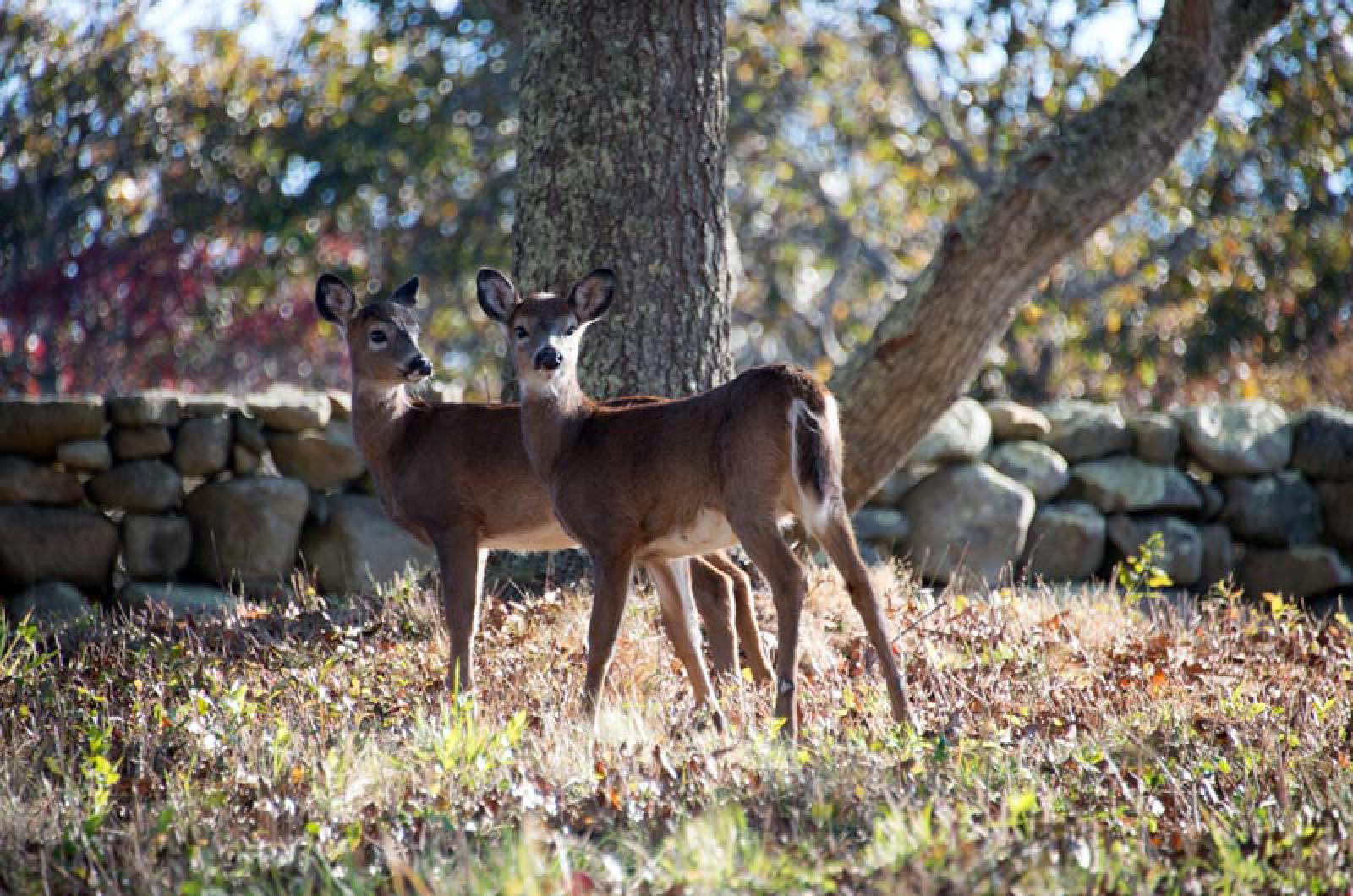
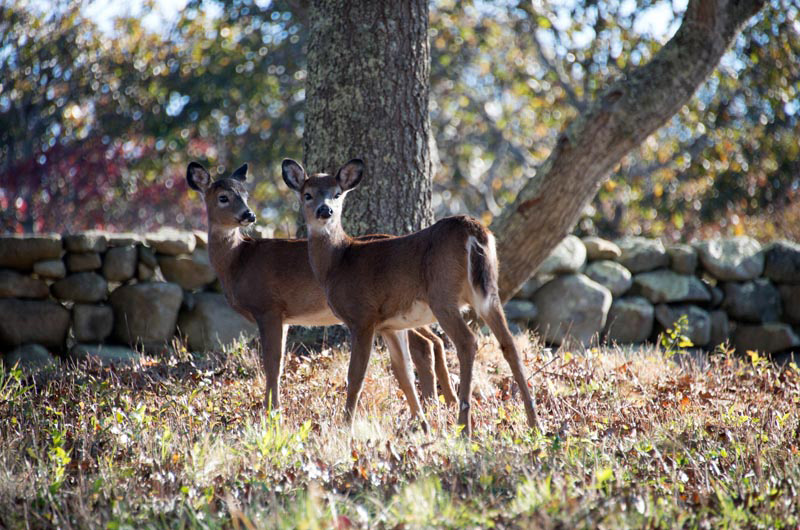
Six fawns have been found on Martha’s Vineyard suffering from a mysterious paralysis, the state Department of Fish and Wildlife confirmed.
Six fawns have been found on Martha’s Vineyard suffering from a mysterious paralysis, the state Department of Fish and Wildlife confirmed Tuesday.
“We have never documented anything like this. . . on the Vineyard or in the state.” said David Stainbrook, a state fish and wildlife deer biologist who is responsible for assessing the local and statewide health of the deer herd.
Mr. Stainbrook said the six fawns — all button bucks (young male deer born in the spring) — were found in West Tisbury and Chilmark between Nov. 6 and Dec. 5.
He said the condition was the same for each animal.
“In every situation they are unable to use their front and back legs, unable to move or get up. . . Their belly is on the ground — but they are able to keep their head up,” Mr. Stainbrook said. “It seems like a type of paralysis.”
He also said it was curious the young deer were lying in the prone position.
“If they had suddenly lost all control, they would have been on their side,” the biologist said.
The paralyzed fawns were either dead on arrival or euthanized to relieve them of suffering, Mr. Stainbrook said. He said the animals were sent to a veterinary diagnostic laboratory in New Hampshire.
He said preliminary tests so far have ruled out chronic wasting disease, a contagious neurological disease that has been found in deer in other states. There has never been a confirmed case of the disease in Massachusetts. Final lab results are still incomplete. Testing is also under way for viral and bacterial causes, including tick-borne disease.
Diagnostic testing and examination is being conducted with the assistance of the Northeast Wildlife Disease Cooperative, Massachusetts Department of Public Health, New Hampshire Veterinary Diagnostic Laboratory, and researchers from Cummings School of Veterinary Medicine at Tufts University and the University of Massachusetts, a fish and wildlife press release said.
The fawns all tested negative for any chemicals that could have leached into the landscape, exposing the deer to neurodegenerative toxins, Mr. Stainbrook said.
He also said there were no signs of spinal trauma that could have been caused by a car or jumping over a fence.
“We are still in the process of trying to figure out what is going on, but all the main problems have been weeded out,” Mr. Stainbrook said. “We are trying to see if there is anything else out there that we don’t yet know about.”
He said it was concerning that the reports were centralized in the towns of West Tisbury and Chilmark and that the paralysis is only being reported in fawns.
He said there was one report from a hunter of a doe suffering from paralysis, but DFW biologists were unable to locate the deer to confirm the report.
Mr. Stainbrook urged any residents who come across a fawn in distress to contact either the environmental police or the DFW. People should not approach the deer, but should remain on site to help direct officials, he said.
To contact the state environmental police, call 1-800-632-8075. To contact the Department of Fish and Wildlife call 1-508-389-6300, or the southeast district office at 508-759-3406.
Shotgun season for deer hunting is in its second week. Bow season has been under way since October.
Comments
Could they have been poisoned
Laurie West TisburyCould they have been poisoned?
It seems they were tested for
Syl AquIt seems they were tested for toxins...May be a vector bourne issue-but I hope not!
Sounds like this new disease
Carol formerly ChilmarkSounds like this new disease afflicting Florida panthers?
https://www.google.com/amp/s/www.nytimes.com/2019/08/20/science/florida…
They should test for
Tucker EdgartownThey should test for amatoxins from Amanita muscaria. Young deer can be very experimental in their foraging, and a couple bad mushrooms could easily be the culprits for these symptoms.
Wouldn't be surprised if this
Steve FalmouthWouldn't be surprised if this was some sort of infectious disease exacerbated by overpopulation
What about prymetherin?
Gabrielle West TisburyWhat about prymetherin?
If there is that much in the
Steve falmouthIf there is that much in the environment that is scary..,
Permethrin is a quite
John Patrick West TisburyPermethrin is a quite unlikely etiology, since the deer would have to have ingested a relatively massive dose. West nile may be a consideration as it has definitely been identified in deer elsewhere, could cause these symptoms, and we know it's present on the island (when did a hard frost kill off the mosquito population this year?). The results of further testing will hopefully turn up a cause.
Add new comment