

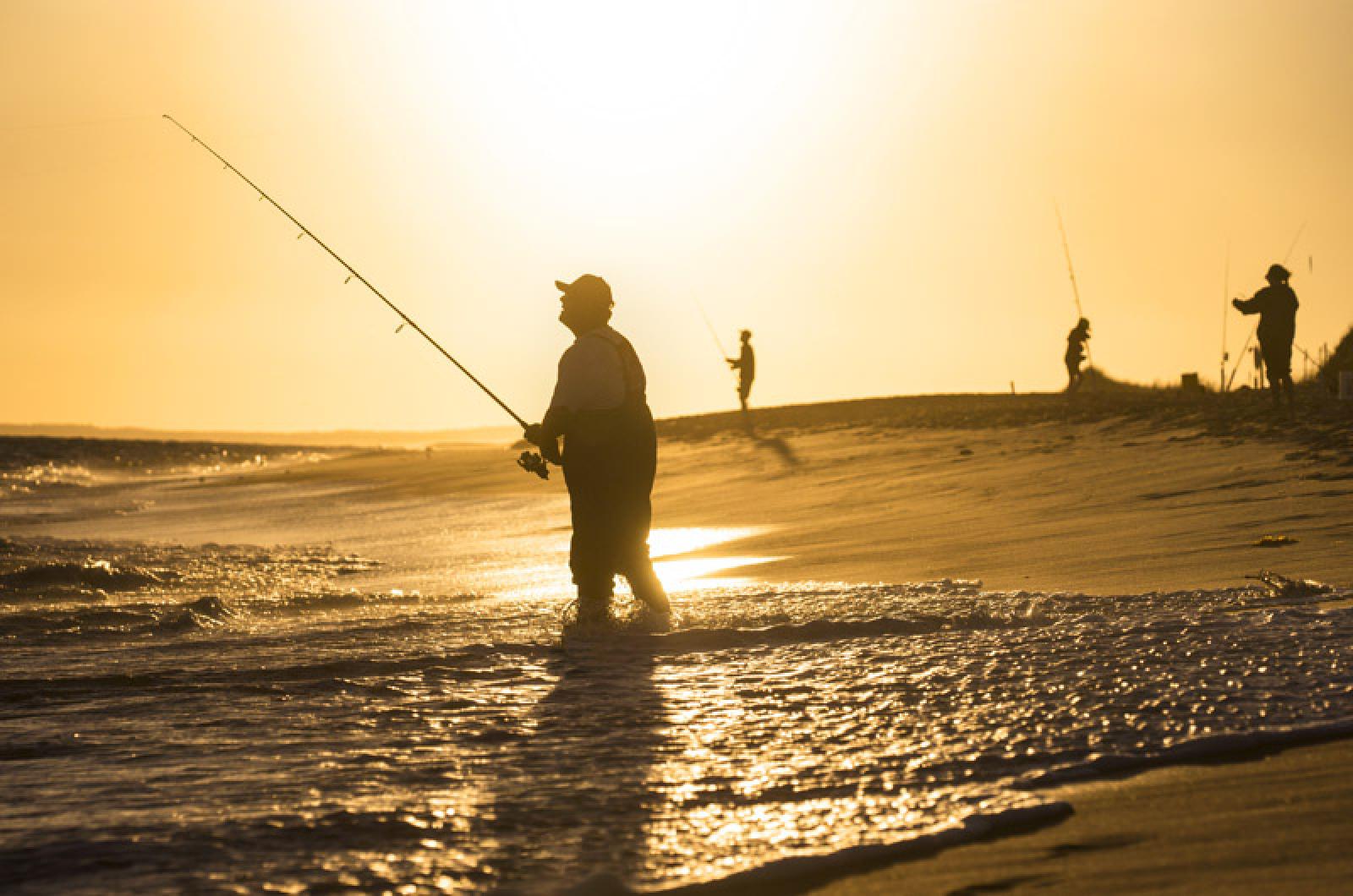
As striped bass stocks have declined, the debate over how to best manage this prized fish has become more heated.
Regulations for Atlantic striped bass were first imposed in Massachusetts in 1649, when the use of bass for fertilizer was banned by the General Court of the Massachusetts Bay Colony.
In the 370 years since, the balance between commerce and conservation for striped bass has grown increasingly complex. Federal agencies and commissions from 11 different states and the District of Columbia are now involved in the stewardship of the Atlantic striper. And as stocks have declined, the debate over how to best manage this prized fish has become more heated.

Developing stewardship for striped bass is literally a moving target, passing through coastal waters of 11 states.

Developing stewardship for striped bass is literally a moving target, passing through coastal waters of 11 states.
While opinions vary over best practices, stakeholders across the board agree that the striped bass population is in rapid decline, and that immediate action is needed.
Last month the Atlantic States Marine Fishery Commission (ASMFC) striped bass management board — which covers coastal waters from North Carolina to Maine — voted to require an 18 per cent harvest reduction for 2020. The decision was informed by a 2018 benchmark study that estimated the 2017 population of females age four years and older was well below the desired threshold.
The new rules limit recreational fishermen to one striped bass per day, with a slot limit that requires any fish measuring less than 28 inches and more than 35 inches to be released. Saturday is the deadline for states to submit alternate proposals.
Division of Marine Fisheries (DMF) deputy director Dan McKiernan said this week that Massachusetts will go with the proposed recreational slot limits in 2020.
How the Massachusetts commercial fishery will reach the 18 per cent reduction is yet to be determined.
On Martha’s Vineyard there is a groundswell of support for a moratorium on taking stripers, like there was in the 1980s, until the fish rebounds like it did in the 1990s.
There’s also talk of removing stripers from the Martha’s Vineyard Striped Bass and Bluefish Derby.
“We talked about it for hours and hours this year,” longtime derby committee member Cooper Gilkes said. “We went up to 34 inches [as a minimum catch size] this year and that was a big change. I’m sure we’re going to look at it closely again next year.”
Max Appelman, fishery management plan coordinator for the ASMFC, said an interstate moratorium wasn’t considered. “There’s a general feeling around the management board that the stock isn’t near the level of the 1980s,” he said. “They recognized a reduction in take had to happen. The primary focus of this addendum was to reduce fishing mortality. There will be another addendum discussed in the spring to rebuild the stock.”
He also said game fish designation for striped bass — which would eliminate commercial fishing — would be up to individual states, not the ASMFC.
Part of the difficulty in developing stewardship for the striped bass is that it’s literally a moving target, passing through coastal waters of 11 states, often with differing regulations. Four of those states — New Jersey, Connecticut, New Hampshire, and Maine — have banned commercial fishing and consider striped bass a game fish.
In Massachusetts, commercial fishermen are currently limited to 15 fish per day, a 34-inch minimum and two fishing days a week.
Meanwhile, the call for a commercial fishing ban in the commonwealth has gotten louder. Dean Clark, Massachusetts co-chairman of Stripers Forever, a nonprofit that seeks game fish status for striped bass on the Atlantic Coast from Maine to North Carolina, has long been a proponent of a ban.
“One of my personal concerns is that the emotions involved in recreational and commercial fisheries have obfuscated the real issue: looking at how this fishery is valued,” Mr. Clark said. “The emotions [commercial fishermen] bring to the table are very real. My heart goes out to these guys. But we have to look at what we want this fishery to do for the citizens of Massachusetts. A number of states think stripers are too valuable to sell in the marketplace and have made the striped bass a game species. Massachusetts archaically holds onto value being what it gets at market, and turns a blind eye to value of fishery if recreationally managed. The more fish, the more fishermen show up, and the fishery becomes more valuable.”
He cited the freshwater trout, once fished commercially almost to extinction, as an example of a fishery that is much more valuable as a game fish.

Many say in the end it will up to individual fishermen to make a difference.
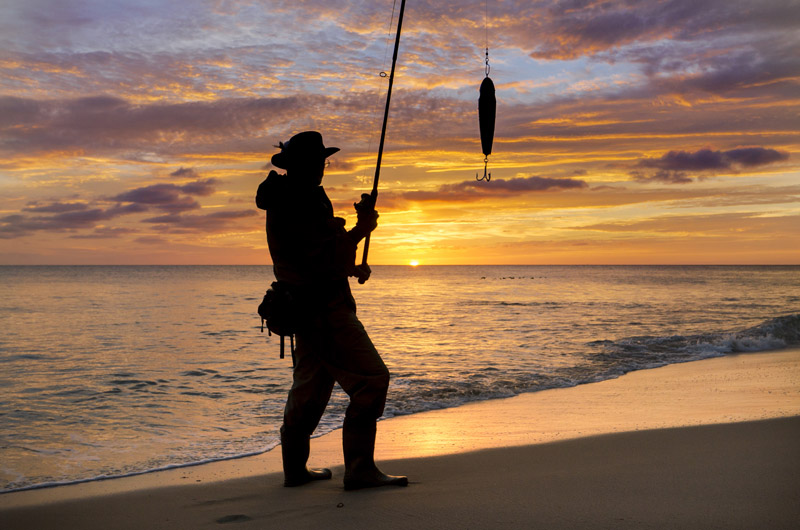
Many say in the end it will up to individual fishermen to make a difference.
“When you manage a resource for maximum extraction you are taking as many as you can. When you manage it for recreational use, you create the most robust fishery you can. They’re polar opposite management goals,” he said.
Not surprisingly, commercial fishermen have a different take on the issue.
This year, commercial fishermen only caught 67 per cent of the state quota.
“This is a catch and release state. Mortality is the big problem,” said Raymond Kane, the governor’s appointed commissioner to the marine fisheries advisory commission and outreach coordinator for the Cape Cod Commercial Fishermen’s Alliance.
He pointed to the DMF estimate that nine per cent of striped bass that are released don’t survive. Using this metric, in 2017, over one million of the 13 million striped bass released by Massachusetts recreational anglers died. Commercial anglers in the same year landed 593,670 striped bass; all were presumably were sold and consumed.
Mr. Kane said he thinks the release mortality rate is higher than nine per cent. “They may see a fish swim away and think it’s fine but it a day or two it might be dead,” he said.
Dr. Andy J. Danylchuk, a professor of fish conservation at the University of Massachusetts, said in an email that more research is needed on the issue of post-release mortality for striped bass.
Mr. Kane said new commercial regulations will be decided after a series of industry meetings which begin next week.
“Everything is in flux right now. Are we going to go with a slot limit? I don’t know,” he said. He continued:
“I hate like hell to make the striper a game fish. Visitors would rather eat locally caught bass than something shipped from Maryland. Fishermen already have a tough go of it. They can’t make a living off just stripers but it makes a big difference in their bottom line.”
Mr. McKiernan concurred. “We’re a seafood state,” he said. “We’re in favor of commercial fishing as long as it’s properly managed. The price this year was the strongest it’s ever been. We also have to consider the non-fishing public that wants locally sourced food.”
Whatever the outcome, many stakeholders believe that the survival and ultimate comeback of the striper will be up to individual fishermen. Veteran Island angler David Nash recommends replacing treble hooks with single hooks, in addition to using circle hooks for bait. “I also crimp the barbs on hooks,” Mr. Nash said. “I don’t think it increases losing fish and there’s less strain on the hook when you remove it from the fish or from your finger.”
Mr. Gilkes concurred. “The less you handle them the better,” he said. “Release them gently, head first, into the wave.”
Fishermen can also help the striper by keeping an eye out for rule-breakers, who apparently are on the rise. “We have seen a steady increase in poaching on the commercial and recreational sides,” said Maj. Patrick Moran of the state environmental police, in an email.
“No doubt people are taking shorts off the beach,” Mr. Nash said. “Most of the shady stuff goes on at night.”
There are other questions. How much does bycatch from trawlers fishing for squid and menhaden play a role? Are the menhaden trawlers damaging a critical food source? Do warming waters push the menhaden farther north, which was apparently the case this year. Do regulations in Maryland that allow for smaller minimum sizes and gill netting put northern states at a disadvantage, given 70 to 90 per cent of Atlantic striped bass come from the Chesapeake? How accurate are the ASMFC biomass assessments? How much does water pollution and runoff damage the stock?
Whether the vaunted fish will make a comeback, or even survive, is far from certain. What is certain is that stakeholders won’t have another 370 years to figure it out.
Comments
If Ma sticks with the slot
R Scott Patterson EdgartownIf Ma sticks with the slot limit as stated in the article I don't see how the Derby keeps the Striper in the prize structure. What are they gonna do have people bringing in 34.5" fish trying to break 15lbs? They should have been removed 2 years ago, I'm glad the state is gonna force them to take action.
Just make the derby catch and
Steve FalmouthJust make the derby catch and release...
The Derby eliminated striped
Kib Bramhall West TisburyThe Derby eliminated striped bass from the prize structure from 1985 until the species was officially declared restored in 1994. Without stripers the contest lost some of its glamour but none of its popularity: numbers of entrants continued to grow during the nine years that bass were absent.
If all these people are into
Jennifer S TisburyIf all these people are into local seafood then why don’t we all eat more conch or see more conch on local restaurant menus?
There is a really simple fix
Bunda BaltimoreThere is a really simple fix for this..the Feds need to declare these fish game fish and make commercial harvest illegal everywhere.
Never ate much striped bass;
Mr. B. ChilmarkNever ate much striped bass; won't eat any, anymore. Next stop? Encourage fish markets to stop selling it. If one does, then that's where I'm going.
Moratorium! Worked before.
Jim B VirginiaMoratorium! Worked before.
The fishery is in dire
Jen A. BourneThe fishery is in dire straits. Striped bass need to be designated as a game fish for starters. A slot limit will do little to help restore the population. We need a better solution.
1) enact striped bass game
Jim D Conway, MA1) enact striped bass game fish status
2) restore Atlantic menhaden populations
completely agree!
bridget aquinnahcompletely agree!
Seals are better at catching
Al, X Fisherman Plymouth and OBSeals are better at catching fish than fishermen. As the number of seals increase the less fish will survive, all while your waiting for the stock rebuild the seals will be working the other way. Fish are on their menu, all kinds.
I don’t get it. There is a
Steve FalmouthI don’t get it. There is a groundswell of support for a Striper moratorium on the vineyard, but you can’t find a way to make derby catch and release? You guys crack me up
I've fished stripers and
James Hubert NY and AquinnahI've fished stripers and everything else for more than 50 years as a recreational angler. I am friends with a number of commercial bass fishermen on the Island. The reality for both recreational and commercial fishermen is this. Chumming and chunking, yo yo ing has to stop. The fish are mostly gut hooked. Survival after release s nil. Single hooks on lures and anything else mean lip & jaw hooking and release mortality stops being a problem. How does one make a living without chunking, etc? I don't know. But how does one make a living when the fish are all gone?
If we keep 28-35” fish, we’re
George Baldwin CTIf we keep 28-35” fish, we’re eliminating them from the stocks during their early breeding years. The older, larger bass that we’ll protect will get older and die out, while we harvest the more easily caught new breeders to lower numbers. I don’t have much faith in the recent decision. I feel that the 35” minimum overwhelmingly supported by fishermen was the best way to go. I sincerely hope I’m wrong.
It Should be a gamefish!
John L NY and MAIt Should be a gamefish!
People will eat other species if they have that need for fresh fish!
Circle hooks only for bait! Single hooks only on plugs and lures! It needs to be enforced with stiff penalties. Heavy fines, loss of tackle , jail time for repeat offenders!
When stripers were dropped
Kib Bramhall Weat TisburyWhen stripers were dropped from the Derby from 1985 until 1994 when the species was officially declared restored, the contest lost some its glamour but none of its popularity. Numbers of entrants continued to grow during the nine years that bass were absent from the prize structure.
36"..... It worked before and
Richard Hertz LifeLong36"..... It worked before and it will work again.....But why would you listen to the guys who actually catch the fish......
Add new comment