

I knew I was in trouble the moment he walked through the door.
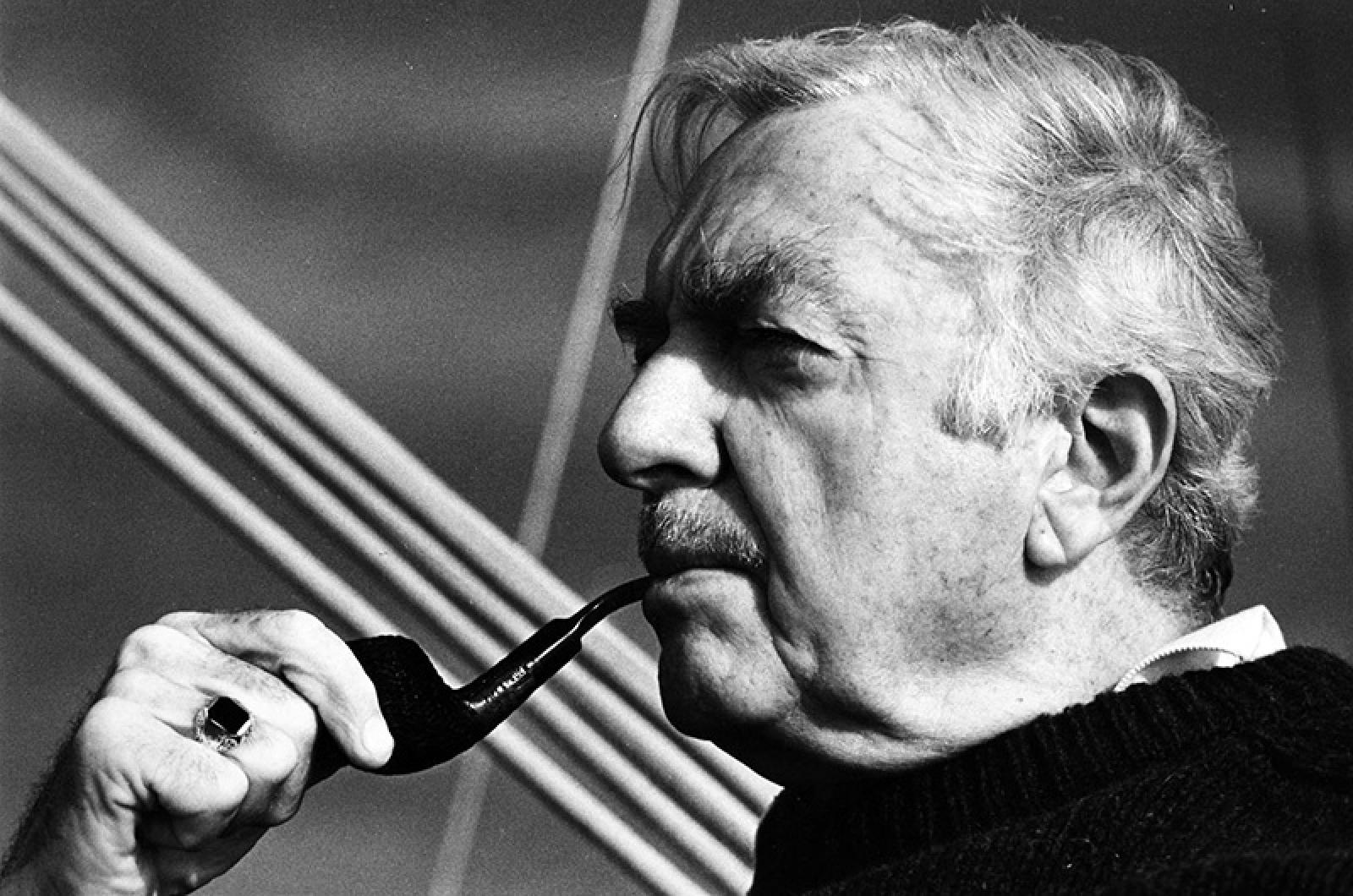
I knew I was in trouble the moment he walked through the door. I was a wet-behind-the-ears newswriter, a fairly recent graduate of the Missouri School of Journalism who lucked into a writing job at CBS News during the New York newspaper strike of 1961. He was Walter Cronkite, whose newspaper byline was familiar to Americans from his coverage of the war in Europe. He was a rising star at the network, going through an adjustment period with this new, more complicated medium of television.
Cronkite’s regular writer was taking a leave of absence and Walter was none too happy about it. When the newspaper strike ended, the boss of the writers pointed his finger at me, the most junior of the writers, as the illogical replacement. The other writers had declined the assignment. Cronkite was doing the little-watched, five-minute afternoon newscast at the time, and word was getting around that he was being groomed as the replacement for Douglas Edwards on the evening news.
Our newsroom was in the office building on the north side of Grand Central Station in mid-Manhattan. Charles Kuralt was an assignment editor and so was Harry Reasoner. It was Kuralt who had helped get me the writing job when I assisted him in covering an overnight plane crash in the East River that took many lives. Kuralt’s coverage started him up the network ladder and led me to a 40-year career at CBS News.
As Cronkite’s writer, I was jammed into a windowless back office right outside the wire machines. Walter had an office behind me with a window that overlooked an elevator shaft, not exactly commodious surroundings for an anchorman. When he walked in that first day, he sort of grumbled his name and walked to the back. I sort of grunted my name back and kept busy at the typewriter. There wasn’t much in the way of video or graphics in those days, so the copy was everything. Walter made a few scribbled changes to that first script, but otherwise it sailed through. I gulped.
Because I grew up on radio I had a fairly good sense of story. But those first few days with Cronkite were pure agony. It wasn’t that he criticized my copy, he just didn’t say anything. My stomach was a wreck.
I scanned every tidbit on the wire machines for anything that would make a Cronkite story. I knew he had been an ace World War II reporter for the United Press and had a sophisticated view of the world. And then it hit me. A Reuters staffer had been reporting most every morning from Laos about the escalating fire fights between the Mountagnard tribesmen and the Communist Viet Cong. It was the first rumblings that would later become the war in Viet Nam, a war that Cronkite helped end a dozen years later by declaring on-air that it was time to end the conflict, which prompted President Lyndon Johnson to not seek another term in the White House. LBJ confessed that if he lost Cronkite, he had probably lost the nation.
A decade later when I became the producer of the weekend news broadcasts with Dan Rather, a jovial Cronkite threw a party for us at his New York East Side townhouse. He was in fine fettle, toasting his former writer and Rather, his White House correspondent. Watergate was just beginning to fester and Cronkite’s reporting would have a major impact on the resignation of President Richard Nixon.
Fast forward to Cronkite’s retirement as anchor in 1981. He had become leery of Rather’s sometimes “shoot from the hip” style of reporting, and did not go to bat for Rather as his successor. When the ratings began to slip, Rather cast the blame on the long shadow of “America’s anchorman,” who was still active on the network doing documentaries and special programs. A rift developed, mainly of Rather’s doing. On a few occasions, Walter would find himself in a breaking news location and offer his insight to the evening news producers. Each time he was rebuffed by Rather. Walter took it personally. The rift widened.
In 1986, we bought a house on the Vineyard about a mile west as the crow flies from the Cronkite home on the harbor. It was a tumultuous time at CBS. Founder Bill Paley, Walter’s longtime advocate, had lost control of the network and the ground was shaking at the Broadcast Center on West 57th street. Cronkite’s trusted producer was terminated, hundreds of longtime employees were fired and I found myself in limbo producing the occasional documentary.
Walter invited me to lunch. He said he was not quite ready to retire and would I be willing to join him for his last hurrah, an occasional hour omnibus program called Walter Cronkite at Large? I leaped at the chance, even though I knew the CBS News hierarchy would try to bury the shows in late time slots because of Rather’s paranoia.
For the next couple of years we had a practically unlimited budget to go anywhere in the world we wanted. The CBS bosses still had a certain fear of the Cronkite legend. So off we went to the Greek ruins where Melina Mercouri, the actress and cultural minister, showed us how environmental pollution was threatening her country’s history; to Macao for a dark piece about a rebel priest and the Chinese mafia lord of what was to become the new gambling capital of Asia; to Princeton for a chat with George Kennan, the Russian scholar who predicted that North Korea, not the USSR, posed the biggest future threat to the United States. Everybody still wanted to talk to Uncle Walter.
As expected, the bosses buried the shows late on weekend nights, giving the press department little time to promote them. The ratings weren’t great, but one of them, Children of Apartheid, the story of the unusual friendship between Nelson Mandela’s daughter and the daughter of South Africa’s apartheid President, P.W. Botha, won an Emmy. It was ground-breaking stuff in those days and it was Walter’s last CBS hour.
At his memorial service, an old newspaper pal described their final dinner together. Walter was ailing and had to be guided to the table at the back of Patsy’s, a legendary Italian restaurant in midtown. They swapped war stories for a glorious two hours. No one seemingly noticed. Then Walter got up to leave and as he slowly made his way toward the front door, the patrons began to rise. Soon the whole restaurant was on its feet and Walter Cronkite walked out to thunderous applause.
Bud Lamoreaux was a longtime executive producer of Sunday Morning with Charles Kuralt. He lives in Edgartown and Vero Beach, Fla. July 17 marks the 10th anniversary of the death Walter Cronkite.
Comments
What a beautifully written
Jennifer Johnson Indianapolis IndianaWhat a beautifully written snap shot of those years!
Thank you for sharing these amazing stories from your personal vantage.
As always Bud . . . Spot on.
Gil Williams Oak Bluffs Martha's ViuneyardAs always Bud . . . Spot on. Wonderful red.
Good read about important
Todd JohnsonGood read about important memories. Thanks Bud.
“And that’s the way it is”
Rich McMenamin Philadelphia“And that’s the way it is”
Well done. Thanks Bud
Wonderful memory of a very
Bill Woolverton BostonWonderful memory of a very great journalist. Mr. Cronkite used to stop in at the Gazette office when I worked there as a reporter during the summer of 1974.
Beautifully written... Very
Audrey Loggia Los Angeles ( formerly Edgartown)Beautifully written... Very interesting...
Thank you!!
I forgot to mention in my
Audrey Loggia Los Angeles ( formerly Edgartown)I forgot to mention in my previous comment, that my husband, Robert, would have loved this piece! He became an actor, but was also a graduate of J school at Mizzou. He was successful as an actor, but always wondered about not having followed his first love of Journalism.
Thank you for sharing your
Debbie Phillips West TisburyThank you for sharing your unique insight, Bud Lamoreaux. What a delightful piece to come upon especially after this week's remembrances of the moon landing.
You've still got the gift of
Bruce Stone EdgartownYou've still got the gift of a journalist, Bud. Thanks for sharing.
Great article, Bud! Thank
Judy Swan Southern CaliforniaGreat article, Bud! Thank you.
There was and is no better
Ginny Bradley Durham, NCThere was and is no better news anchor. Walter Cronkite was a man who could be trusted for reporting the news accurately and fairly. Thank you for sharing your story... it’s a great reminder of “the way it was.”
Terrific story Bud, and how
Jack Fleishman Brookline, MATerrific story Bud, and how we all yearn for the likes of Walter Cronkite to bring some sanity to the chaos and divisive times we now have to endure!
Enjoyed your story about
Daniel Klee Rochester NYEnjoyed your story about Walter Cronkite.. He was always a favorite of ours. Remembering the Rehoboth days fondly.
Dan
What a wonderful article, Bud
Carol Martin EdgartownWhat a wonderful article, Bud!
So beautifully written -- and
Susan of OB Oak BluffsSo beautifully written -- and what a lesson in perseverance....Uncle Walter indeed. How lucky you were to work with him. How lucky are those of us who listened to him and learned from him on the Nightly News/other moments.
I was a colleague of Bud's in
Jonathan Coleman New York CityI was a colleague of Bud's in the early 1980s and would like to be in touch with him. Here is my email address: [email protected]. If you could send me his, or send him this message, I would be deeply appreciative.
Thank you
Bud was humorous and direct.
Glenda Taylor Melbourne FloridaBud was humorous and direct. He was out of his career when I met him and his lovely wife in Vero Beach Florida. I grew up listening to Walter Cronkite. I loved being around Bud full of vigor and bright stories to share. He will be missed and always remembered.
Glenda
Add new comment