

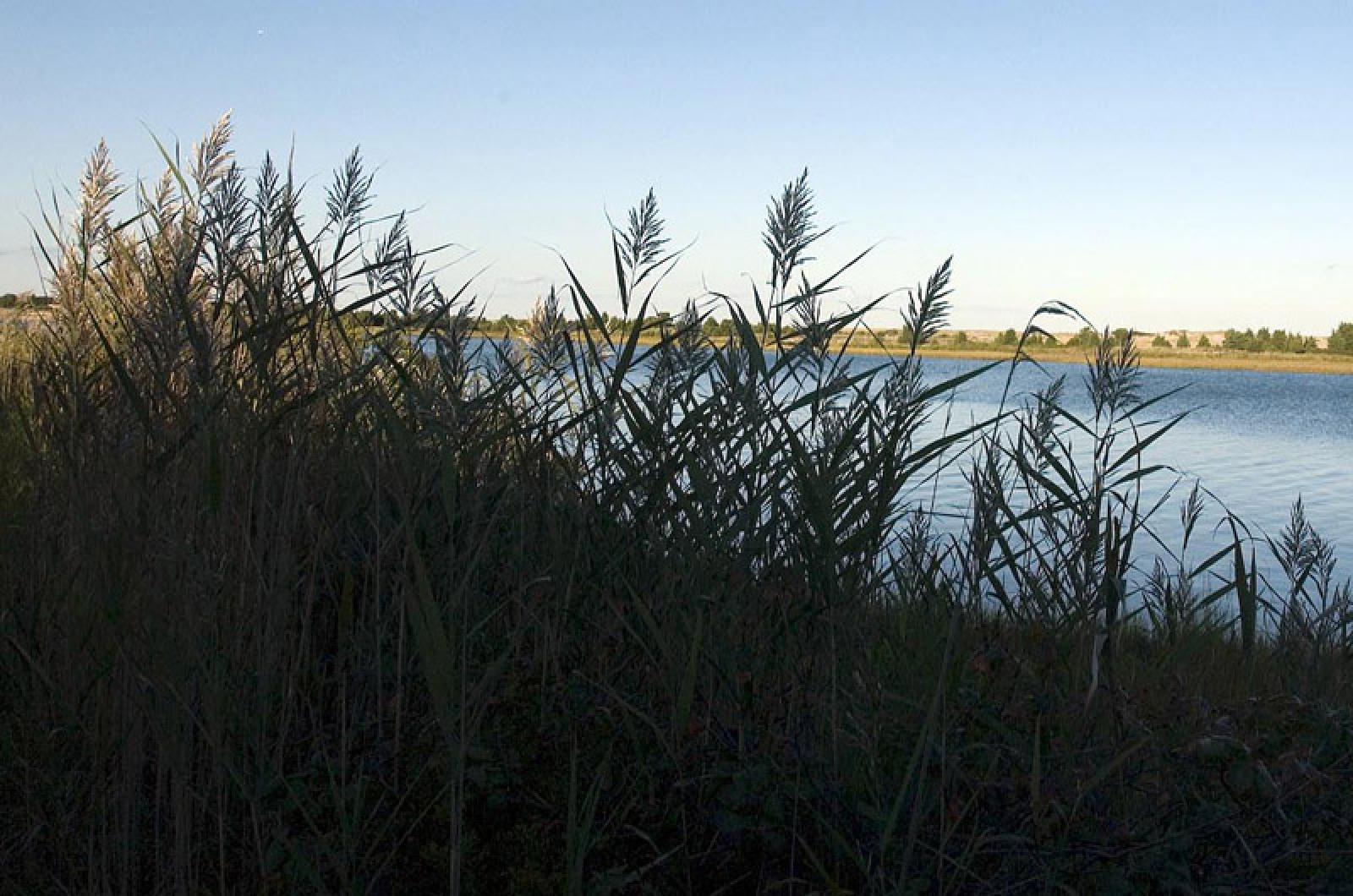
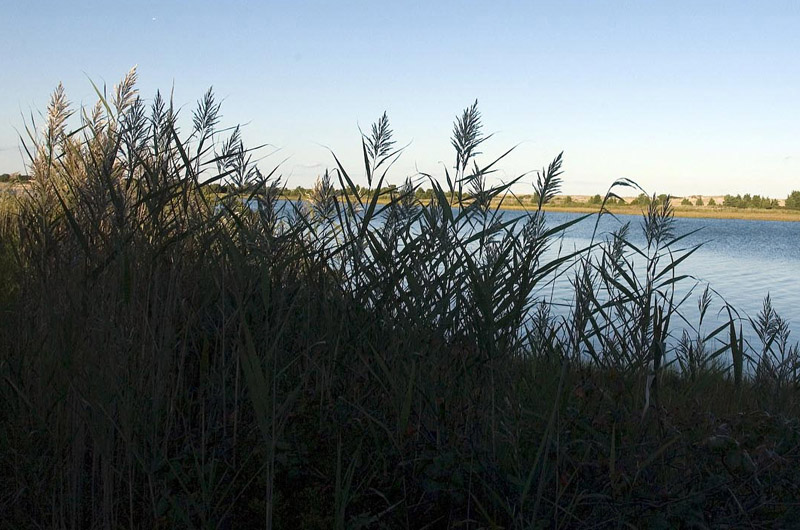
<p>Regular removal of phragmites is an effective and efficient way to improve the health of coastal ponds, a study has found.</p>
Regular removal of phragmites is an effective and efficient way to improve the health of coastal ponds, a study recently completed by the Martha’s Vineyard Shellfish Group has found.
The study concludes that harvesting phragmites — an invasive wetland grass — reduces nitrogen levels, leading to a more sustainable ecosystem.
The shellfish group will present the study results at a forum on March 12 at the West Tisbury Library. The forum begins at 1 p.m.

Invasive phragmites take up nitrogen, a potential benefit to coastal ponds if managed through harvesting the reeds, a new study concludes.
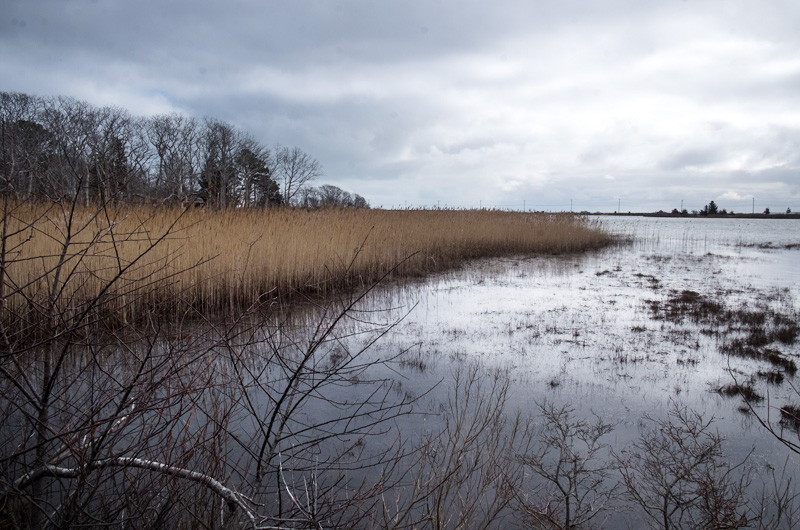
Invasive phragmites take up nitrogen, a potential benefit to coastal ponds if managed through harvesting the reeds, a new study concludes.
The shellfish group has been studying phragmites for the past five years, beginning with a pilot project funded by the Edey Foundation in 2014. Preliminary results from that study led to a $135,000 federal grant from the Environmental Protection Agency in 2015 to continue the work.
Emma Green-Beach, co-director of the shellfish group, said this week that the research was conducted over two summer seasons of field sampling at Lagoon Pond, Farm Pond and Chilmark Pond. Nearly 2,000 samples of plant tissue were tested.
Project partners included Dr. Jamie Vaudrey of the University of Connecticut, the Martha’s Vineyard Commission, Sheriff’s Meadow Foundation, Oak Bluffs conservation commission, WorldStove and Mermaid Farm.
Phragmites are native to the Island, but an invasive version was brought over by Europeans in the 17th century to use as roof thatching. Now there is no shortage of the tall grass in and around Island estuaries. The reeds are especially thick around Chilmark Pond, where the water quality has been compromised by high nitrogen and bacteria levels.
Nitrogen is a growing problem in Island saltwater ponds, mostly due to the effects of development and residential septic systems.
Work is under way to monitor the problem and develop solutions, including through dredging, regular breaching to the sea in the south-facing Great Ponds and seeding oysters to filter pond water.
Rick Karney, director emeritus at the shellfish group, said oysters are a good way to reduce nitrogen levels, but require time to be effective. The filtering process typically takes about three years and permits are required to seed the ponds. Removing phragmites takes as long as mowing your lawn or trimming the hedges.
“Phragmites is a low-hanging fruit,” Mr. Karney said. “They are just sitting there waiting to be collected.”
On a visit this week to Farm Pond in Oak Bluffs, amber stalks of phragmites coated the banks of the pond and hindered views of the water with heights upwards of 10 feet. Ms. Green-Beach said the phragmites there are actually on the small side and that the reed can grow as high as 15 feet.
The plants are clonal, meaning that they are genetically identical and grow in contiguous strands, stopping at the same point as if they share an invisible ceiling. Ms. Green-Beach called them “monsters,” but argued that the value of the grass is found in what they hold inside.
“Phragmites is just bad in almost every way except for taking out nitrogen,” she said. “Phragmites loves nitrogen.”
A single acre holds an average of 34 kilograms of nitrogen. Cutting the phragmites reduces the amount of both the reed and the nitrogen it contains in the environment. Once the phragmites grow back, the process can be repeated.
The benefits don’t end at extraction. The reeds can be crushed into pellets for combustible heating, according to Nathaniel Mulcahey, founder of Worldstove. Worldstove produces stoves that convert waste biomass, such as phragmites pellets, into a clean burning gas that can be used for cooking and heating. The shellfish group partnered with Mr. Mulcahey to look into pellet use on the Island during the study.
Phragmites removal addresses concerns of both Island landowners and conservationists. Many Island landowners have called for phragmites removal because it takes over their lawns and blocks views. Conservationists don’t like how it squeezes out native species.
The responsibility for protecting saltwater estuaries falls on municipalities, Ms. Green-Beach said, expressing hope that the study could lead to a town-sponsored a phragmites removal program.
“If we do nothing to protect our ponds, then our towns will suffer,” she said. “It’s in everyone’s best interest to keep our ponds as healthy as possible.”
She concluded:
“Some ponds are so rich with nitrogen, and we’re coming to the tipping point. It urgently needs to be addressed on town agendas. It’s hard for people to grasp how serious it is.”
Comments
Chilmark Pond was so clean in
Carol formerly ChilmarkChilmark Pond was so clean in the 1960s when my sisters and I would swim and play in it. There are many more houses around the pond now, though. What is needed, obviously, is a SEWER SYSTEM.
There's always money for
Jim Brownlow Tisbury and North Haven, CTThere's always money for another study. There is never money for remedies.
VERY well said
Michael OBVERY well said
Ones on our property are
Mr B ChilmarkOnes on our property are coming down this June. Need a new roof for the Tiki Hut!
The findings of the shellfish
Peter Koesler 20 CALVES PASTURE LANE, OAK BluffsThe findings of the shellfish group are welcome information for those of us who over years made every effort to contain phragmites growth in Hidden Cove and Majors Cove
"“Phragmites is just bad in
Katherine Scott Tisbury"“Phragmites is just bad in almost every way except for taking out nitrogen,” she said. “Phragmites loves nitrogen.”
A single acre holds about 200 kilograms of nitrogen. Cutting the phragmites reduces the amount of both the reed and the nitrogen it contains in the environment. Once the phragmites grow back, the process can be repeated."
These statements appear to be contradictory, implying that phragmites is good because it takes nitrogen out of the water, and bad because it puts it back into the water . . . What is the point of the project? To remove the phrag or to harvest it and let it continue to clean the water? Or to harvest it so that it does not continue to put nitrogen into the water?
Hi Ms. Scott
Emma Green-Beach Oak BluffsHi Ms. Scott
It does sound a little confusing. The reeds have deep roots that suck up a lot of nitrogen which the plants hold it in their green leaves during the summer. They hold more nitrogen than native plants because they grow so big and tall. When the reeds die back in the winter and the leaves fall to the ground, the nitrogen goes back into the soil as the leaves break down, and the plant transferes some to the roots to use as fuel for the next growing season. If the reeds are cut and removed from the pond area, they will grow back, which requires them to suck up more nitrogen from the ground water or from the pond in order to grow big, tall and green. Either way, nitrogen is removed from the system. There are other factors involved, of course, because nature is more complex than even the best planned research project. I hope this helps. Best, Emma
Katherine, I am confused too!
Gee Gee Barden Porter Ranch, CAKatherine, I am confused too!
Cutting down the reeds while
DanWCutting down the reeds while leaving the root system is what’s being described. As the reeds grow, nitrogen is sequestered insidenthe reed itself.
Trimming the reed height and carting off the trimmings removes the sequestered nitrogen from the area. The reeds will grow back by keeping the roots intact.
Similar to the oysters, the
Dave OBSimilar to the oysters, the phrags grow, absorb Nitrogen from the pond, get harvested - removed from the pond, along with their absorbed nitrogen, and a new crop of phrag grows to repeat the process. The harvest gets used as fuel pellets.
To my knowledge, no one has
BIODIVERSITYWORKS Vineyard HavenTo my knowledge, no one has ever documented the native Phragmites species on Martha's Vineyard.
I am a little confused by the
JPW vineyard havenI am a little confused by the article too. Are we supposed to regularly "harvest" phragmites and thereby continually remove nitrogen but maintain its presence despite its other bad attributes?
Add new comment