

I hope some day we will look back at 2017 and say that it was the year the Vineyard community started to really do something about the problem of ticks and tick-borne illnesses.
I hope some day we will look back at 2017 and say that it was the year the Vineyard community started to really do something about the problem of ticks and tick-borne illnesses. Certainly there are promising signs that we are starting to deal with the overabundance of deer on the Island. The boards of selectmen of all six Island towns have asked the Massachusetts Fisheries and Wildlife Board to hold a public meeting on the Vineyard to consider changes to the hunting regulations that will allow hunters to harvest more deer. As detailed in last Friday’s Gazette, the Island Grown Initiative will be accepting and processing donated deer and distributing the venison through the Food Pantry.
The tick program sponsored by the boards of health of the six Island towns will be providing subsidies to make it less expensive for hunters to have their deer processed. The tick program is also working with Vineyard property owners to encourage them to allow hunting on their private property. While these are all important steps toward reducing the number of deer and deer ticks on the Island, I believe the most important will be how much land is opened to hunting.
One reason I say this is that during hunting season deer naturally gravitate toward areas with no hunters. Aerial photos taken after the end of hunting season show dense clusters of deer in areas where there is no hunting. The Vineyard already has plenty of swamps, briar patches and scrub oak bottoms where deer can hide. Properties where hunting is not allowed provide additional refuges for deer, making an already difficult task even harder.
A second reason is that much of the land where hunting is prohibited is in residential neighborhoods. Our yards already provide abundant food for deer in the form of gardens, shrubbery and yard edges. Add in safety from hunters and our yards and surrounding woodlands make pretty good deer habitat. Hunting season coincides with the time when female deer ticks are feeding on deer to get the blood meal they need to produce eggs. After they feed and mate with the males that are also on the deer, females drop off and lay their eggs.
Thus in return for your kindness providing food and shelter, the deer leave behind female ticks, each capable of laying thousands of eggs in your yard. Since many of us spend considerable time in our yards, it should be no surprise to find that that is where we get most of the ticks that cause tick-borne illnesses.
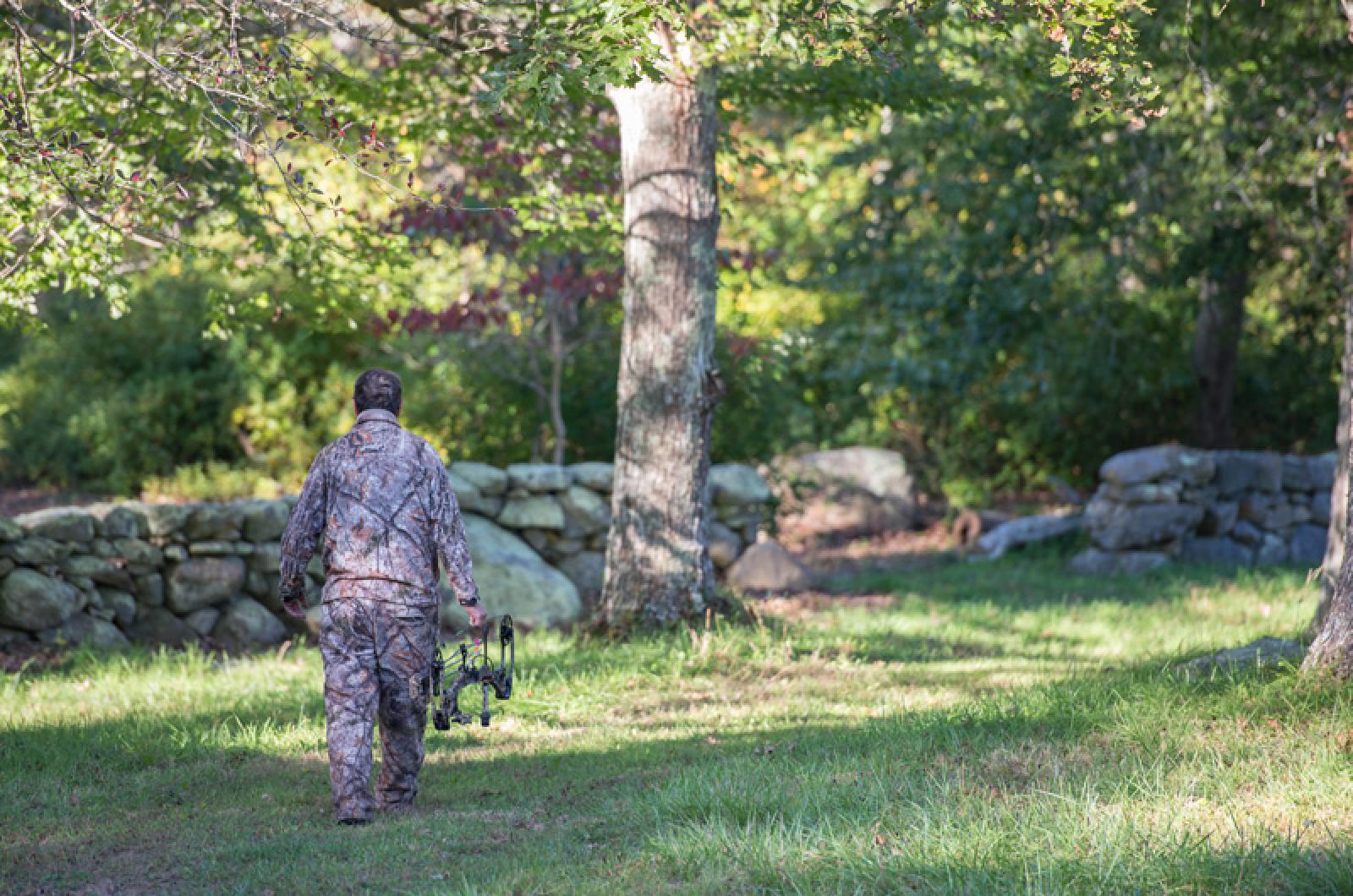
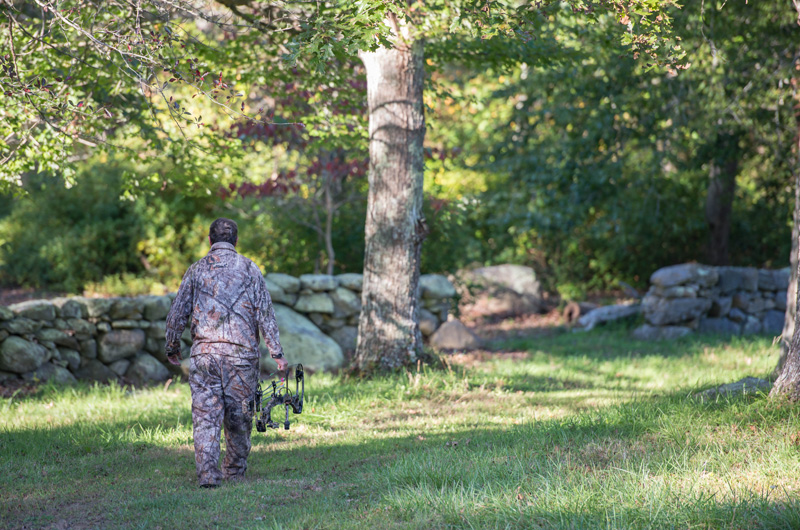
When you allow hunting on your property you not only help reduce the overall number of deer on the Island but also help make your yard safer. I urge homeowners, homeowner associations, and neighborhood groups to think long and hard about their hunting policies and the consequences, perhaps unintended, of those policies.
Over the past two years the tick program has worked with several homeowners associations and numerous individual homeowners to match them with a responsible hunter and devise a plan to allow safe hunting on their land. However, with roughly 60 per cent of the Island privately owned, we have just begun to scratch the surface. We will need the cooperation of many more Vineyard landowners if we are to significantly reduce the deer herd, the number of ticks and the incidence of tick-borne illnesses.
If you are willing to consider allowing hunting on your property, please call 508 693-1893 or email [email protected], Dick Johnson for more information. I thank you in advance for doing your part to end the terrible scourge of tick-borne illnesses on Martha’s Vineyard.
Richard Johnson is an Island biologist and occasional contributor to the Gazette. For more information about the tick-borne illness prevention program, go to mvboh.org or email questions to [email protected].
Comments
Deer are a problem, but not
RL EdgartownDeer are a problem, but not the problem. Mice and their nests are the place where ticks are born. Then they are carried to your yard and to deer for further travels. The saving grace this year has been a significant increase in hawks of all types. They are working the mouse population down. As a home owner you can help by mowing all of the scrub brush on your property each fall and eliminate mice by trap or poison from your property.
The last thing I want is
Kathryn MuirThe last thing I want is someone shooting a gun or arrow in my yard. What kind of test do you give a hunter to determine if they are "responsible"? Besides, if you kill off all the deer, what are many people going to eat and what kind of imbalance of nature do you create that makes another problem?
Its the white footed mice that are the problem. It would be wiser to deal with the source of the problem, not the symptom.
Do I know the complete answer to the tick issue? No, but I do know allowing people to hunt in residential neighborhoods is a recipe for disaster.
Wait, doesn't poisoning mice
Lois Purvis Santa fe NMWait, doesn't poisoning mice lead to poisoning their predators? (I.e. hawks)
10/31/17
Gerald W Schuler New Milford, CT 0677610/31/17
Considering that for this year I have trapped 313 voles and mice, I question what percent of tick blame is shared between rodents and deer. Remedial measures should be conducted proportionally.
Beyond the significant
Tim Boland West TisburyBeyond the significant contribution Deer have to the high incidence of ticks, they are also out of balance with the ecology of the island, and devastating to natural plant populations. In botanical surveys over the last 12 years, more and more native plant species are disappearing or in steep decline. Who cares about plants some might say? Well, when plants are lost, so are the pollinators that depend on them for their food and life cycle support. The overall effect is called a trophic cascade, when one species decline causes another, overall biodiversity declines. Reducing the herd to 10-15 per square mile allows for both the deer and plants to flourish. Successful deer reduction programs throughout the Northeast using skilled and well-trained hunters have helped reduce lyme disease in other parts of the country and brought back declining plant populations. The one aspect of this not to forget, is that this is a measurable study, that is, after deer are reduced to a sustainable size, lyme disease should correspondingly be reduced. I had the lone star tick this past year and was lucky enough to find them and remove them early. With a changing and warming climate, we can expect lyme disease to increase not decrease. The movement toward deer reduction has started and is a positive move that can be both a health benefit to people and to biodiversity.
All excellent points, Tim.
Dick AquinahAll excellent points, Tim. But if deer have reached or nearly reached range capacity, it is likely their numbers will quickly regain their highest levels, even after a reduction via hunting. Does that have just one or just the occasional twin fawns will, within a year, all have twins and sometimes three young each spring. With the newly available browse or range capacity, more fawns born in June will enter a first estrous just six months later. My point is this: numbers reduction via hunting can reduce both ticks numbers and instances of Lyme, but that effort will need to be continued, even re-doubled, over time if a serious attack on the problem is warrented.
Excellent point Dick, it
Tim Boland West TisburyExcellent point Dick, it would need to be sustained for populations to remain in check. That will take a considerable and coordinated effort.
Add new comment