

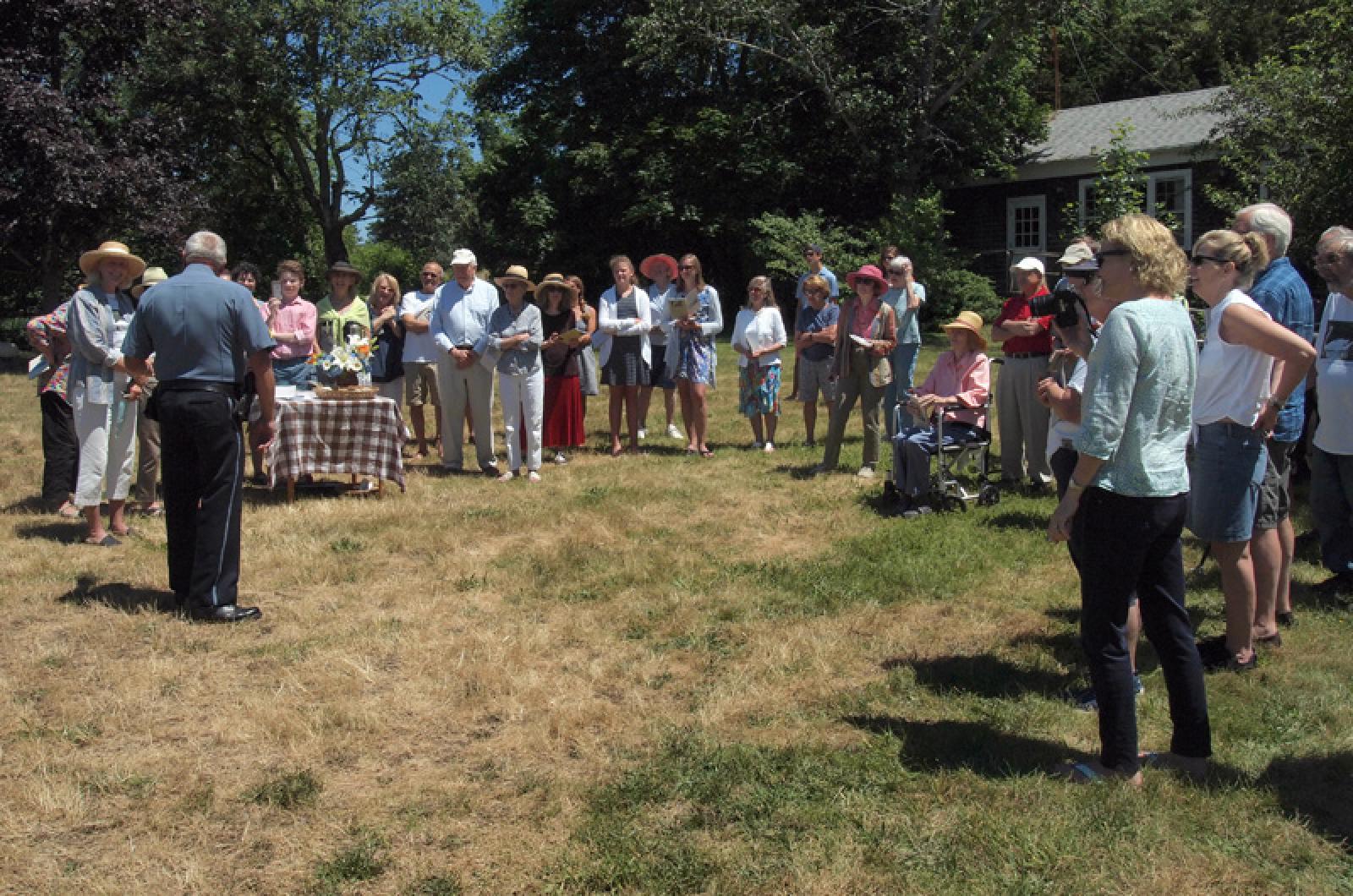
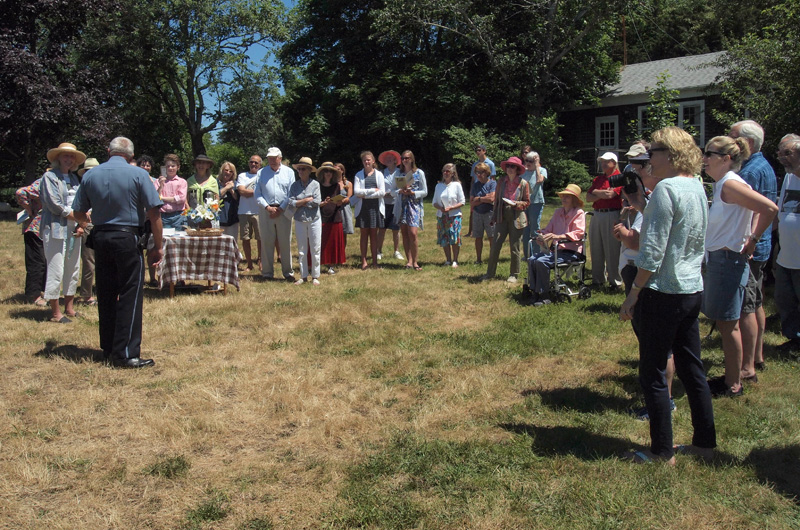
<p>About 50 people gathered Sunday to commemorate the Mill Pond, a symbol of West Tisbury and a reminder of the town’s origins.</p>
About 50 people gathered Sunday to commemorate the Mill Pond, a symbol of West Tisbury and a reminder of the town’s origins as place for grinding grain and producing fabric.
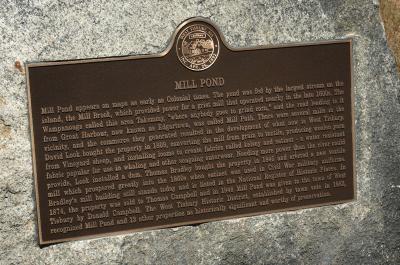
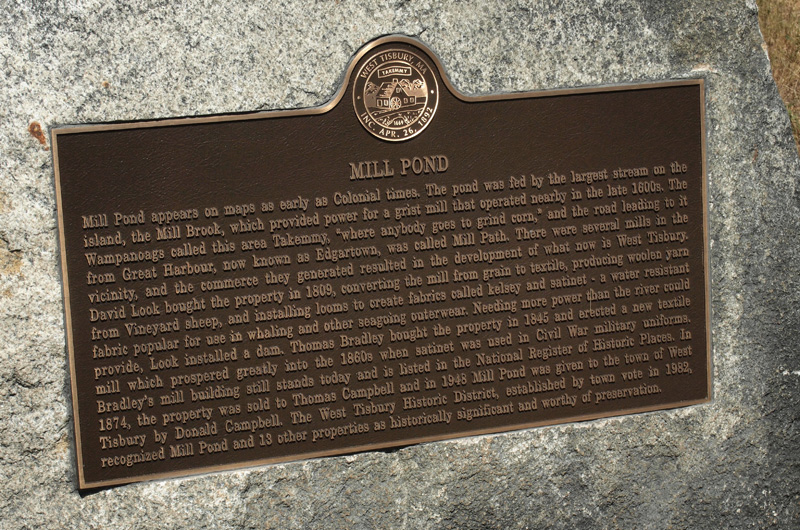
The ceremony marked the installation of a plaque near the Mill Pond dam that recounts the pond’s history and its importance to the community.
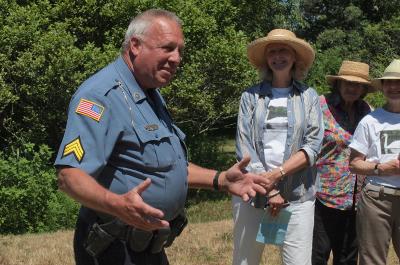
Sgt. Jeffrey (Skipper) Manter celebrated Mill Pond plaque and also his 60th birthday Sunday.
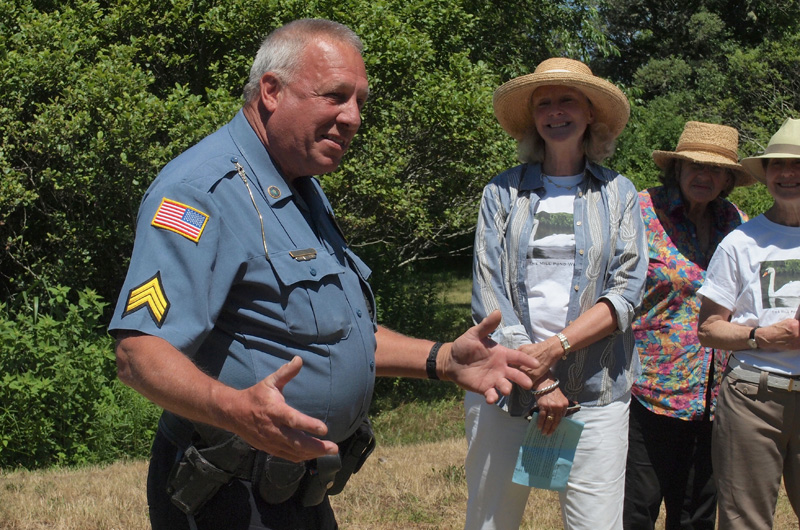
Sgt. Jeffrey (Skipper) Manter celebrated Mill Pond plaque and also his 60th birthday Sunday.
Community members read aloud poems by Dan Waters, the town’s first poet laureate, and by the late Dionis Coffin Riggs, who served on the town’s conservation commission and was instrumental in obtaining the pond for the town in the 1940s.
Stoneworker Alan Gowell of Edgartown created and installed the plaque, which is mounted on a 3,000-pound granite boulder from Plymouth that extends about four feet underground. About 40 people contributed through an online fundraising campaign organized by the Friends of Mill Pond.
During the event, cars and trucks sped over the dam and past the historic mill building from the 1840s, the second to stand at the site, while the Hog Stompers bluegrass band kept things flowing with their music.
On either side of the dam were hand-painted signs warning motorists of turtles crossing the road.
Barbara (Suki) de Braganca of the Friends of Mill Pond welcomed visitors and spoke fondly of the 2.5-acre pond at the center of town.
“This beautiful body of water and the brook that feeds into it constitute, along with the old mill, an historic asset whose key role in the settlement of West Tisbury will be acknowledged going forward on this plaque for all who pass by to admire,” she said. She highlighted the mill’s role in producing satinet, a water-resistant material that whalers and mariners wore on their journeys.
The new plaque caps nearly two years of work by the town historic commission, selectmen and others, amid some controversy along the way. Some environmental advocates have proposed removing the dam to allow the pond to return to a more natural, marshy state as part of the Mill Brook river system. The idea has stirred widespread debate.
Place of history in heart of West Tisbury.
Place of history in heart of West Tisbury.
But the mood on Sunday was upbeat.
“It’s a happy moment,” said Sean Conley, a member of the town historic commission, which drafted the wording of the plaque. “I hope that this will teach people more about the importance of the Mill Pond so that it will be here,” he added. “And if for some reason it’s not here, it’s even more important that we have a [plaque].”
Selectman and police Sgt. Jeffrey (Skipper) Manter, who attended the event in uniform, recalled the dredging of Mill Pond in the 1950s, which provided the material for the small park where the ceremony took place, just next to the former police station.
“It was an interesting and long project,” Mr. Manter said of the plaque. “But very community spirited. A lot of people worked on it. You could imagine how long it took just to agree on the wording . . . It means a lot to me because I’ve been here so long.”
Noted historian and West Tisbury resident David McCullough drew laughter when he recalled an October day many years ago when a group of well-dressed women were studying mute swans from the shore and Mr. Manter emerged from the police station. “They said, ‘Young man, young man. What do you call these birds?’” Mr. McCullough said “He said, ‘I call them delicious!’”
Later, Mr. McCullough reflected on Mill Pond’s importance to the town.
“I think anywhere water is gathered naturally in a community adds something to the spirit of the community, in a way that nothing else does,” he said. He also noted the importance of mills in creating towns like West Tisbury in the first place.
“The mill is the beginning of a community.” he said. “It really is. And it’s a mark of: we’re here to stay. And here we are 300 years later and we’re still here.”
Volunteers read Mr. Waters’s poem Mill Pond, a whimsical ode, and two poems by Mrs. Riggs — Duck Crossing and Mill Pond Diary. Seventh grader Sebastian Alexander read Duck Crossing:
No one drives fast
On the road beside the Mill Pond
They would miss the changing view
Of wind on water, the quiet
Of a misty morning
They would miss the geese and ducks
That come each spring and fall
The swans that meet in the upper reaches
Even the fancy ducks from Maley’s
Seem to prefer the Mill Pond.
They cross the road slowly.
Sunday also happened to be Mr. Manter’s 60th birthday. After the poetry readings, the crowd sang Happy Birthday with impromptu backing by the Hog Stompers, who kept the music going into the early afternoon.
Comments
That poem says it all for me!
Maureen Fischer West TisburyThat poem says it all for me! The thought of losing this beloved place is heartbreaking. How many hundred years have to pass before the towns signature is accepted by all? Yes, temperatures are warming, azaleas and other species are now blooming in my yard where none could bloom before, last years vinca vine lasted the winter on my deck. We are adapting and maintaining. Let's dredge the Pond, and be the good caregivers that we promised to be. And one more thing.... What will happen when the pond becomes a marsh? The mosquitoes will be thrilled.
Honoring and commemorating
Nelson Sigelman Vineyard HavenHonoring and commemorating the mill for its role in the commercial and social history of West Tisbury does not preclude honoring the natural history of the brook that fed the mill’s associated impoundment. The notion that removing the dam would result in a mosquito breeding swamp runs counter to the experience of other communities that have successfully removed obsolete obstructions along waterways and welcomed the return of herring and other species. A free flowing natural brook populated by native fish and waterfowl and bordered by grassy banks is not a bad replacement for a scenic, man-made mud puddle.
Add new comment