

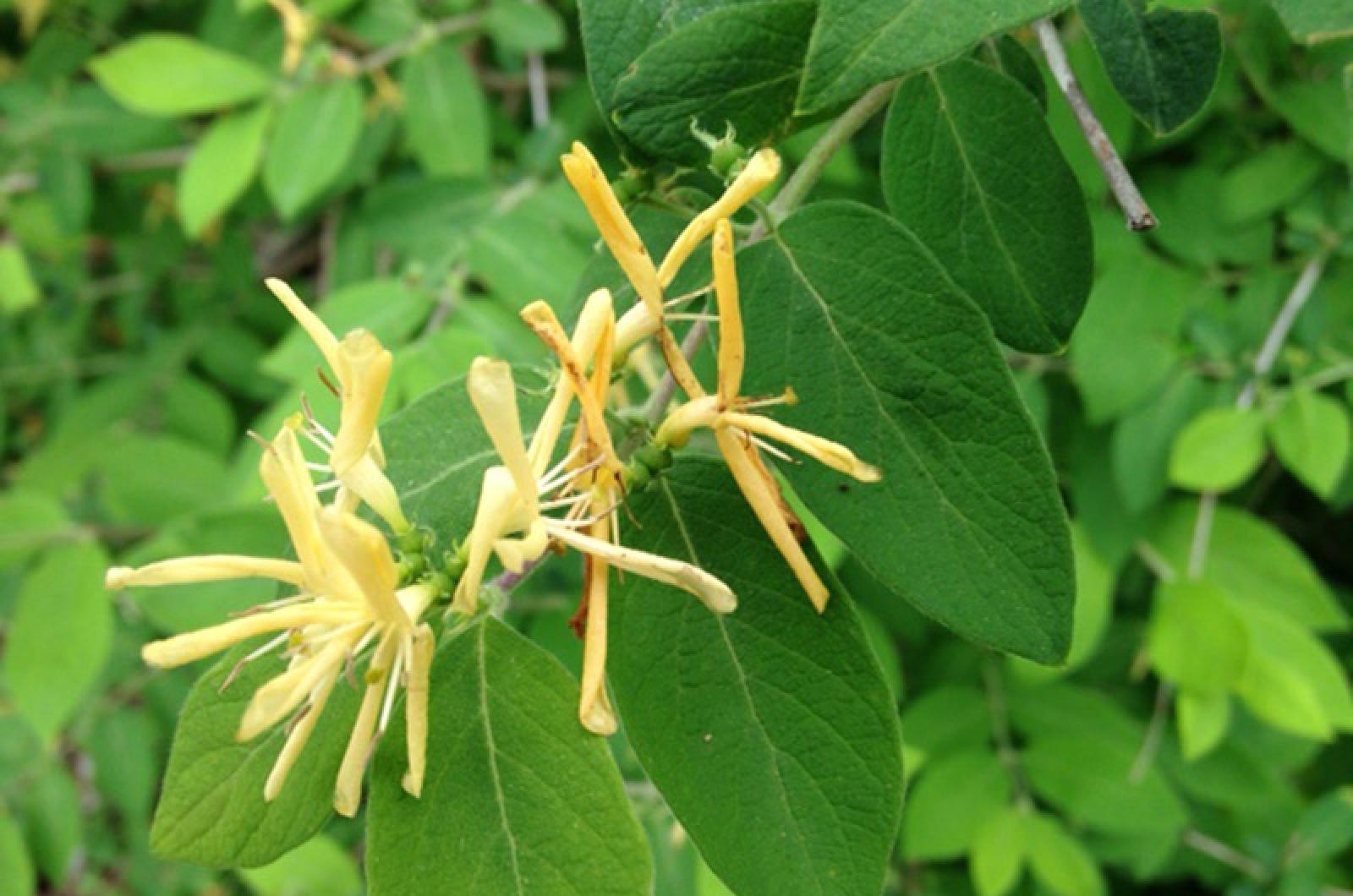
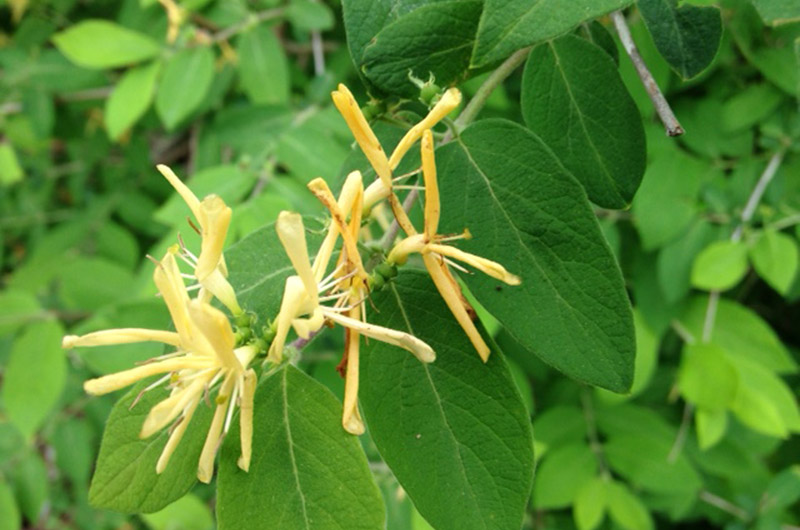
Honeysuckle, of the genus Lonicera, is loved and hated with equal fervor.
Oh how times change. In a 1974 book titled The Dictionary of Useful Plants, author Nelson Coon describes honeysuckle as “simply a must for having at least one plant in every garden for the joy of evening fragrance.”
While Mr. Coon does acknowledge that honeysuckle can “form dense jungles,” he nevertheless recommends its planting. We now know better. We know that it is among those introduced species that change wild habitats and outcompete native plants. More recent writings, including one article in Atlas Obscura, take a different tone. Author Sarah Laskow calls honeysuckle a “blob-like monster taking over American forests” and a “shape-shifting mega villain.”
So which is it? Probably both. Honeysuckle, of the genus Lonicera, is loved and hated with equal fervor. Childhood memories of sucking the sweet nectar are rivaled by more mature reflection on its invasive and aggressive nature. It may be a case of familiarity breeding contempt.
The 14th Dalai Lama embraced its appearance and fragrant scent, observing “spring came, and with it the outpourings of nature. The hills were soon splashed with wild flowers; the grass became an altogether new and richer shade of green; and the air became scented with fresh and surprising smells — of jasmine, honeysuckle, and lavender.”
Who am I to mess with the musings of a monk?
Though the sale of invasive honeysuckle is banned in many states, including Massachusetts, New Hampshire, New York, Vermont, and Connecticut, reasons have been found to turn the other cheek when it comes to this wicked weed. The main benefit I can find in these persistent plants is their edibility.
Food value can make a bad plant better. In the case of honeysuckle, if you can’t beat it, eat it. With its aromatic scent, it is not surprising that its nectar is so sweet. Noshing on the nectar is just the beginning.
Recipes using honeysuckle range from simple to sublime, and include a variety of options. Use the nectar for jelly, sorbet, or syrup. Make tea from the leaves, buds and flowers, or try a sparkling soda, cordial, brandy or even vinaigrette made from an infusion of the fragrant flowers. How about an infused butter that will make almost everything better?
The appropriate warning is to be sure you know how to identify this plant and remember that the flowers, buds and, sometimes, leaves are the edible parts. Leave the berries for the birds, as they can be toxic. And be wary of eating the leaves, which contain saponins, known to be problematic for some in small amounts, and toxic in large amounts.
Two varieties of Lonicera are found on the Vineyard: the viney Japanese honeysuckle and the shrubby Morrow’s honeysuckle. They are blooming prodigiously Island-wide, and are now ready for harvest.
Even with the earlier warnings, honeysuckle is believed to also have healing properties. Seemingly just about every malady from digestive to respiratory conditions is believed to be remedied with honeysuckle. Perhaps the touch of sweetness is nature’s placebo and just makes us feel better.
Suzan Bellincampi is director of the Felix Neck Wildlife Sanctuary in Edgartown, and author of Martha’s Vineyard: A Field Guide to Island Nature.
Comments
As with real estate, its
Mark Horn Madison, WIAs with real estate, its location, location, location. There are native species of honeysuckle throughout North America that are well behaved members of their respective plant communities. Unfortunately, several exotic species were imported to the US in the last century because they were easy to grow and hearty.
It is important to understand that native plants evolved with diseases, fungi, insects and animals that used them as food. Because lots of other things were trying to eat them many plants evolved coping mechanisms like producing huge amounts of seed, starting their growing season early and going dormant really late, exuding chemicals into soil to poison nearby plants or killing the microbes those plants need to live. Moving plants to a new location often means leaving many of their important predators behind. However, they still had the built-in defense mechanisms that now make them invasive.
Exotic honeysuckle has wreaked havoc on native woodland plants, especially spring ephemeral wildflowers. Non-native honeysuckle has severely disrupted the entire woodland plant community in millions of acres across North America. This one is a no-brainer; invasive honeysuckle is way more damaging than any pretty flowers or pleasant scents it may produce.
Add new comment