

<p>A series of recently-completed housing plans show a year-round population straining under the weight of rents and mortgages amid prohibitive building costs and the pressures of a seasonal real estate market.</p>
A series of recently-completed housing plans show a year-round population straining under the weight of rents and mortgages amid prohibitive building costs and the pressures of a seasonal real estate market.
Draft housing production plans — one for each town and one for the Island as a whole — represent the first major effort since 2013 to document the Island’s longstanding shortage of year-round housing and identify solutions.
The plans outline a number of strategies for expanding affordable year-round housing. They also include updates to a housing needs assessment issued by the Martha’s Vineyard Commission in 2013, which documented demographic and economic patterns.
On the mainland, housing production plans typically aim to give communities more control over state comprehensive permits under Chapter 40B, the state law designed to enable affordable housing projects. But on the Vineyard, where controls are already in place for comprehensive permits through the Martha’s Vineyard Commission, the main interest has been in improving long-term planning.
Consultants at JM Goldson of Roslindale drafted the plans, drawing largely from the five-year American Community Survey, which supplements the U.S. Census, the 2013 housing needs assessment and various town, state and federal sources. Planners also purchased a large amount of data from the Warren Group, a Boston marketing and research firm which compiles real estate and financial information for New England, including Dukes County.
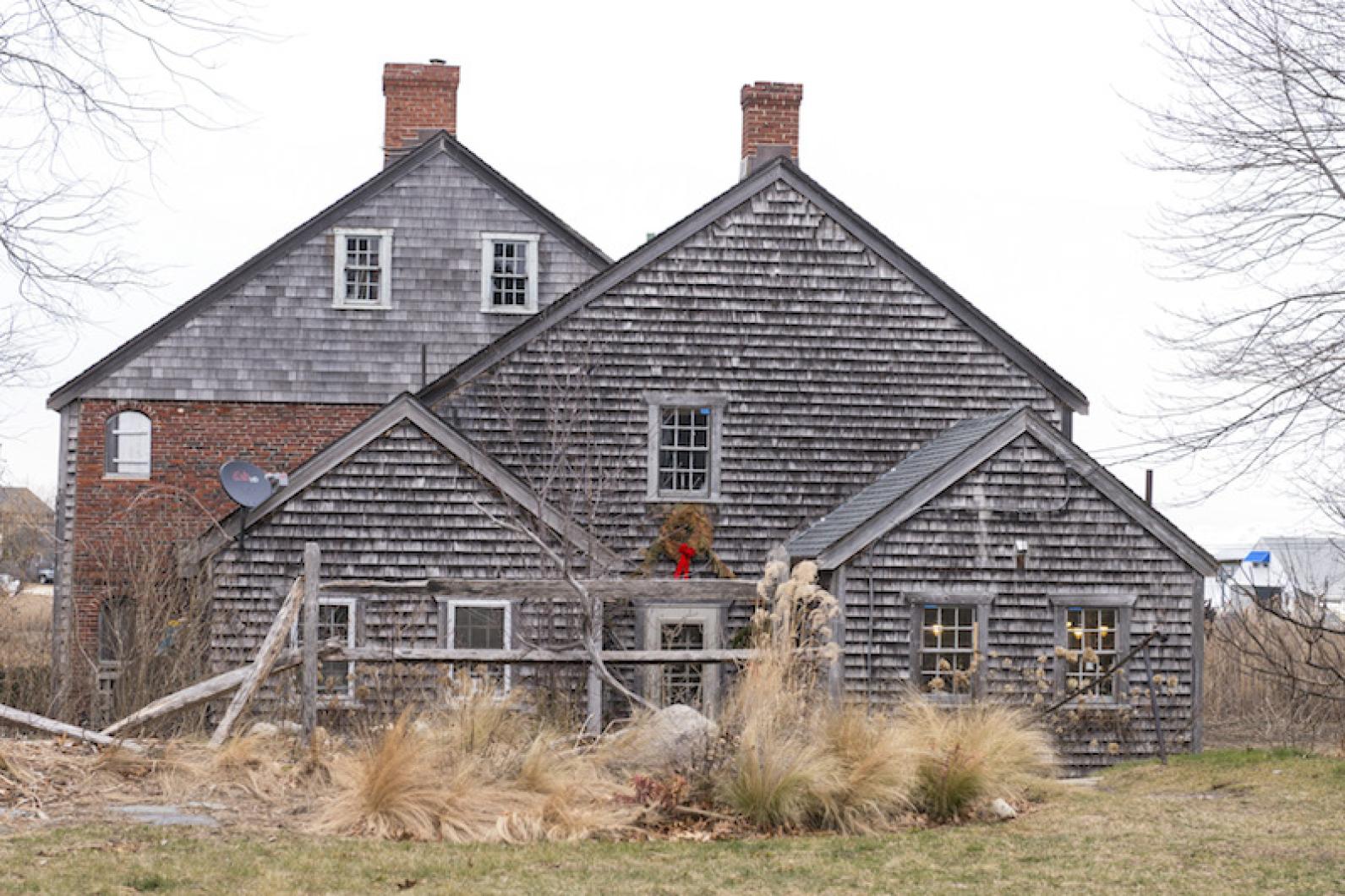
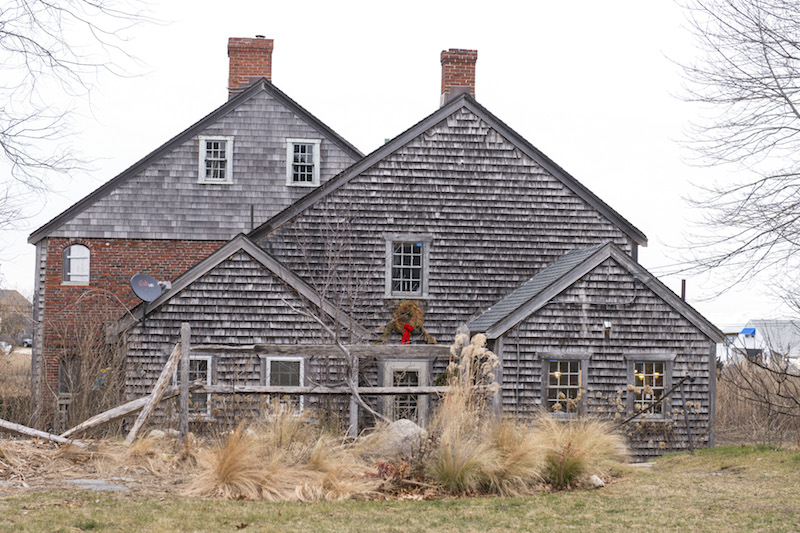
Renters and owners alike on Martha's Vineyard are severely cost-burdened when it comes what they spend on housing.
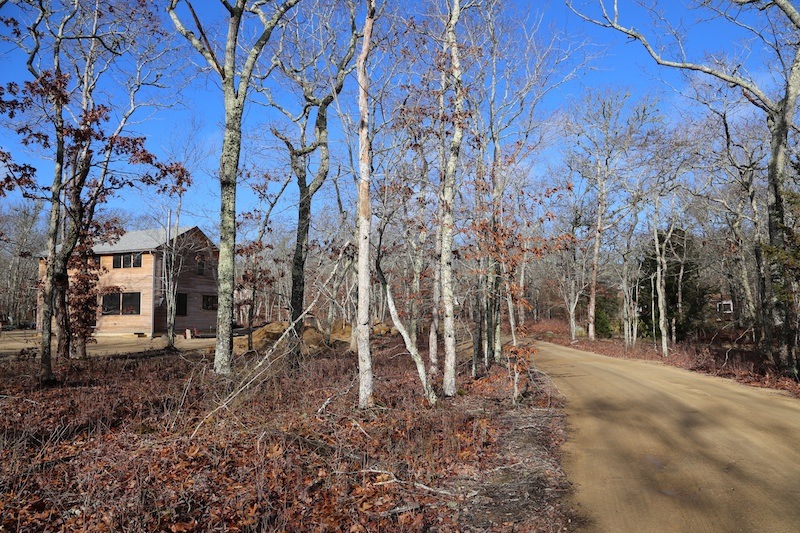
Renters and owners alike on Martha's Vineyard are severely cost-burdened when it comes what they spend on housing.
Updates to the housing needs assessment again highlight the struggle among renters with low and moderate incomes to find affordable housing (defined as costing no more than 30 per cent of an annual household income). The study finds that about a quarter of all Island households, both renters and owners, are severely cost-burdened, paying more than half their annual incomes on housing. Households with very low incomes are even more strained.
Small households were the most burdened, especially those earning the median income for Dukes County, about $64,200.
The plans also note a growing Islandwide population, with fewer rental and ownership opportunities. A projected 12 per cent growth in the overall year-round population by 2035 is expected to occur mostly down-Island, especially in Oak Bluffs. Chilmark and Aquinnah show an opposite trend. Projections for every town show more elders and fewer working-age residents. By 2035, the reports said, residents over the age of 65 may account for almost a third of the Island population, an increase of 148 per cent from 2010.
Between 2010 and 2014, the average household size on the Island increased from 1.95 to 2.86 people, while the total number of households fell from about 6,400 to 5,800. That suggests more people are living together, possibly as a result of higher housing costs, more multi-generational families, shifting cultural norms, or some combination of factors, according the Islandwide report.
Just under a quarter of all year-round households occupy rental homes, compared with more than a third in the state. And the number of people in nearly every age group with year-round rentals has declined in every town since 2010, often dramatically. In West Tisbury, for example, the number of renters aged 45 to 54 plummeted from about 70 in 2010 to zero in 2014. In every town, renters over 65 declined more slowly or showed an increase.
Judi Barrett of RKG Associates, who helped develop the plans along with JM Goldson, attributed the decline in renter households simply to a lack of opportunity. She noted that many properties that once contained rental units have likely been swept up in the seasonal real estate market and no longer serve the purpose.
“The big issue that makes all those towns different [compared to the mainland] is just the pressure of the seasonal housing market,” she said of the Island. And while each town could facilitate more year-round housing through amendments to bylaws, she said regulatory change alone will not solve the problem. “They need money,” she said. “The pressure of the seasonal market is too intense.”
Among year-rounders who own their homes, more than two thirds moved in prior to 1989. And the report states that houses passed from one generation to another often don’t stay in a family, given their high market value. In that case, they may end up as seasonal homes, which mostly remain vacant in the winter.
The median home value on the Island was about $660,000 — nearly twice the median value in the state. Overall, homeowners on the Island are slightly less affordably housed than renters, although renters are known to have the highest need in light of the shortage of rental housing.
Meanwhile, the cost of new construction has increased about 32 per cent since 2005, to about $734,300 for a single-family home. New residential construction has slowed in the same period. The report attributes the rising costs at least partly to a desire for larger and more seasonal homes.
As in 2013, the plans touch on the issue of homelessness, counting 47 individuals and eight families without stable housing in the first half of 2016, not including those displaced in the summer shuffle. People without stable housing face a tough challenge, the report notes, as they often lack the income, assets and rental history needed to sign a lease. The report adds that people without a home often have a history of addiction or other health issues. Compared to the state as a whole, Vineyard residents are slightly less likely to have a disability, according to the American Community Survey, although the report says that may simply indicate a lack of appropriate housing on the Island.
The housing assessment updates were delivered to town officials last fall. As part of the larger housing production plans issued two weeks ago, the assessments will now be subject to town review, with a public comment period open through Feb. 24. Final plans are set to be issued to Island towns in mid-March.
Comments
Boy, we really need high
James Roberts EdgartownBoy, we really need high priced survey studies to unearth these novel findings.....
The new emphasis of turning M
Lorraine EdgartownThe new emphasis of turning M V into a mainland bedroom community fuels this. I am always mystified by people moving somewhere and then wanting to change the new location. Countries, states, communities, it happens. Why, I will never understand.
It seems as if this island is
Ron Delaporte TisburyIt seems as if this island is up obsessed with holding forums in which sober-faced experts inform the crowd that there are serious problems the island is facing and action will need to be taken, then everyone can go home nodding their head saying "wow we really accomplished something tonight."
Soon, there will be no one
Mary EdgartownSoon, there will be no one left to serve those who buy up everything on the Island.
Hmmm. Seems to me there is an
Robert EdgartownHmmm. Seems to me there is an island east of us that costs more to live on and is more isolated from the mainland. Anybody ask how the are addressing the issue? Two heads are better than one.
Whoa, am I interpreting the
Lucia Giuttari New Meadows, NJWhoa, am I interpreting the survey results incorrectly? What about the younger generation families with young children who want to live on MV but want only to rent? People do rent for long durations (30 plus years and more here), keep their rentals beautifully, pay increased rents (as the world goes), have pride in their lifestyles, because they want to live all year on a beautiful island. AND Good Grief- whose negative mental processes came up with the homeless are addicts? ...no island resident disability? inference that MV will have significant %age of elderly if more rentals are available? and the anti-mainland bedroom community gal whose worried the island will become the same-is she just seasonal? otherwise she is living the same lifestyle only on a beautiful island and aren't renters allowed the privilege of doing the same? It won't change the island- only year round residents who love the island. Everyone is entitled...picture MV with months of only empty seasonal houses whose owners own the houses but not the island.
Let's go back to the time
Abraham L. Seiman Oak Bluffs, MALet's go back to the time when Martha's Vineyard was a place to live and not a tourist attraction. have been a homeowner for 51 years.
This island is becoming
Ron Delaporte TisburyThis island is becoming psychologically unraveled, it seems. People want more housing, lower costs, while preserving the "good old days" character of the island and ecological stewardship of the land. Something's gotta give, folks....
Add new comment