

Of the 2,500 masters who captained whaling ships during three centuries of whaling, at least 63 were men of color, five with Martha’s Vineyard ties, Skip Finley told a rapt audience Wednesday night.
Over nearly three centuries of whaling, some 175,000 men went to sea in 2,700 ships. Of the 2,500 masters who captained these ships, at least 63 were men of color, five of whom are known to have Martha’s Vineyard ties.
“At least three are probably buried here,” Skip Finley told a rapt audience of 75 during Wednesday night’s Sail MV event at the Black Dog Tavern in Vineyard Haven. Mr. Finley’s talk, titled Black Whaling Captains: Masters of the Sea, brought to life his three years of research into this little-known aspect of whaling history.
The original oil industry — at its peak, the fifth largest business in the United States — whaling offered rich opportunities to all men, regardless of skin color. Based on ships’ records, “30 to 40 per cent of everyone who ever went whaling were black,” Mr. Finley said. At sea, a black master could slap or flog a white sailor. On land, he couldn’t look a white man in the eye.
But the path to the quarterdeck was hard and hazardous. One whaling voyage was enough for most men, Mr. Finley said, naming some of the reasons: “Mad captains. Boredom. The British. Mutiny. No sex. Pirates. Poor clothing. Whales that fought back. Discrimination.” It was also one of the most dangerous occupations in the world, second only to mining.

Skip Finley has recently written a book about black whaling captains.
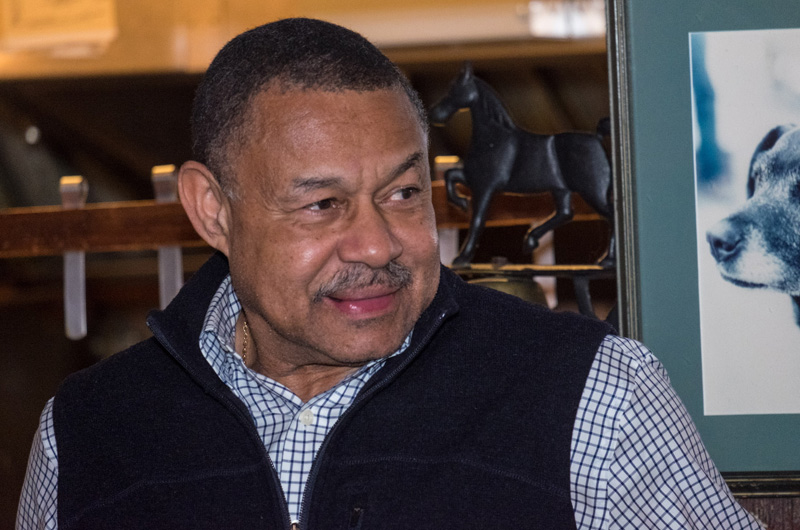
Skip Finley has recently written a book about black whaling captains.
Yet while 90 per cent of whaling crewmembers dropped out after one trip, black sailors — particularly during slavery — were more likely to return, Mr. Finley said. “Not just to make money, but to avoid being enslaved.” Aboard ship, they were treated like other men.
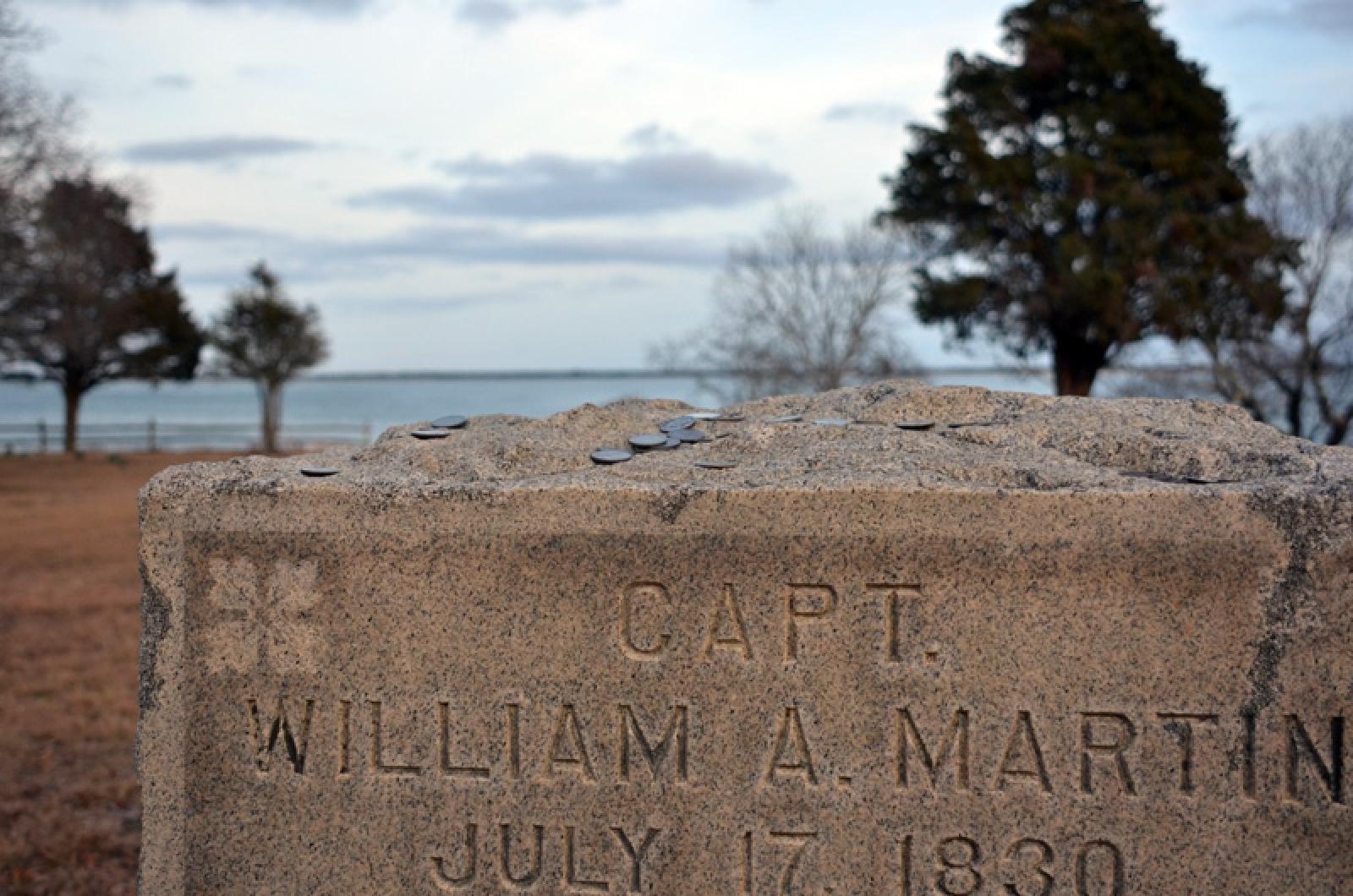
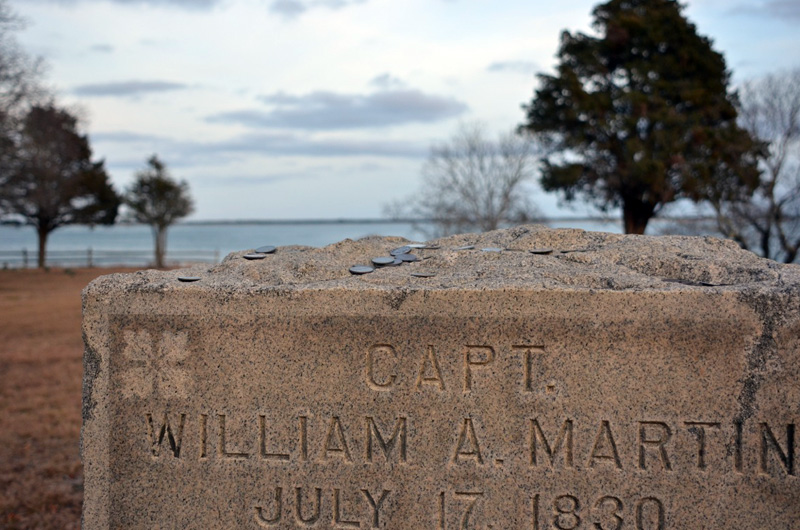
The whalers of color who persevered to become captains have fascinated Mr. Finley for years. In May, 2014, he published his first article on the subject, Not Your Average Ahab, in Martha’s Vineyard Magazine. It profiled William A. Martin, the great-grandson of a slave brought from Guinea to Chilmark in the eighteenth century.
Born on the Vineyard and buried on Chappaquiddick, where his home still stands, Captain Martin spent four decades in the whaling industry before retiring after an injury in 1887. At the time of Mr. Finley’s article, he was one of 30 known black whaling captains. Since 2014, Mr. Finley’s research has turned up 33 more, and he recently completed the manuscript of a book on the subject.
Most black whaling captains were of mixed heritage. The “one drop” doctrine, also known as hypodescence, meant that any trace of nonwhite blood was enough to define one’s race. The many shades of sailors’ skins, listed in ship records, included black, brown, “dark,” “yellow” and “copper.”
“Men with tans,” Mr. Finley said.

Lecture was the first of the season for the annual winter lecture series hosted by Sail MV.
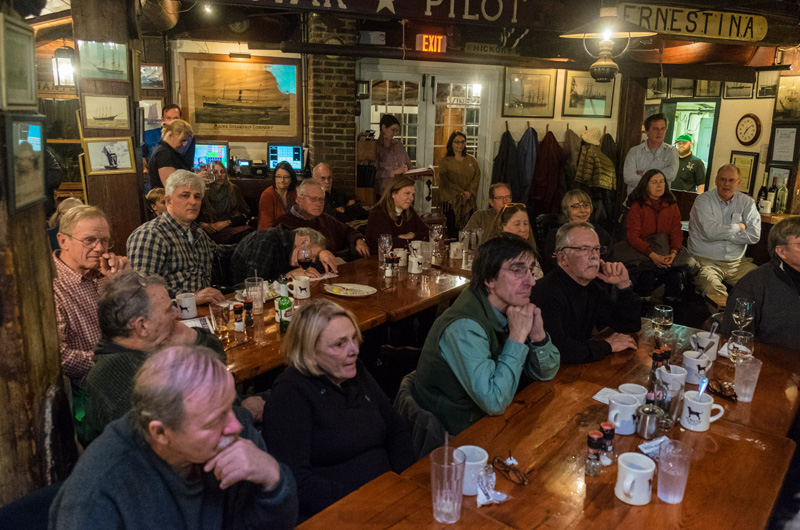
Lecture was the first of the season for the annual winter lecture series hosted by Sail MV.
Wampanoags and Cape Verdeans were among the most skilled whalers. “The Wampanoags invented whaling as we know it,” by seeking the cetaceans at sea instead of waiting for them to wash up ashore, Mr. Finley told his audience.
John Teofilo Gonsalves, a Cape Verdean, was the last master of the Charles W. Morgan and also captained the Eunice H. Adams — Captain Martin’s former ship — out of Edgartown in 1893. During his career, Captain Gonsalves killed more than 140 whales, brought back $1.6 million worth of oil and had an encounter with a German submarine. “He was a bad shut-your-mouth,” Mr. Finley quipped.
An earlier whaling captain of color was Paul Cuffe, whose first voyage took place in 1778 — the year Massachusetts granted voting rights to all men except those who were “Negro, Indian or mulatto,” Mr. Finley said. Captain Cuffe happened to be all three, but on the deck of a ship his word was law.
Of the 63 known black whaling captains, Mr. Finley said he’s convinced at least a dozen were former slaves, but he doesn’t know how they made their way to command. And while Captain Martin’s home is still standing on Chappaquiddick, none of the stately captains’ homes of Edgartown were built for masters of color, Mr. Finley said.
Comments
This is an excellent and
Tom West TisburyThis is an excellent and important piece of research by Mr. Finley. It is not easy to discover the ethnic origins of captains who were not white. To some extent this difficulty is the result of society's tendency to overlook the success of black men in the whaling era. Most people are familiar with the toggle harpoon, which was the standard in the industry, but they may not be aware that the inventor was an African-American who was a blacksmith in New Bedford.
Thanks Tom, and quite correct
Skip OBThanks Tom, and quite correct; Lewis Temple, a former slave who invented whaling said most important innovation never patented Temple's Toggle and died penniless leaving a family behind when he died. A statue in his honor is in front of the New Bedford Public Library. And thanks Louisa!!
Thank you for your comment. I
Jan Wotherspoon Spout Spring, Va.Thank you for your comment. I was born in New Bedford and never knew the Whaleman statue in front of the library is based on a real person. I am very interested in sea music and was very friendly with Barbara Carns who represented our area when it came to sea chanties. My favorite was Desolation which she said was based on whaling in the Vineyard. Thank you for your comment. Jan Wotherspoon [email protected]
Fascinating! Great article!
Alice Corte MaderaFascinating! Great article!
Skip has amassed a wealth of
Amy Goldson TCI and OBSkip has amassed a wealth of information on this subject . I look forward to the release of his wonderful book. ( It would make a great movie ) !
Amazing that in this day and
KharmaIsis Washington DC & OBAmazing that in this day and age there are still hidden histories of African Americans and Skip has done due diligence in bringing the history of the Black Whaling community to life. I not only look forward to the publication of this book, but the follow-up conversations, incorporated history lessons for all ages, general awareness and agree, it would make a GREAT movie. Kudos, Skip, on your dedication and determination to create what can only be described as a work of great informative art. Color me proud and impressed as hell.
African-American maritime
Melissa Moore Atlanta, GAAfrican-American maritime history absolutely fascinates me.
Wonderful Article, Mr. Finley
Shirley Washington NyackWonderful Article, Mr. Finley. I am always interested in adding to my knowledge anything about this wonderful island especially when it comes to people of color. I look forward to reading your book.
Leave it to Mr.Finley to help
edward redd oak bluffsLeave it to Mr.Finley to help explore subject matter that further enhances the incredible place that is the "Vineyard".Can't wait to read the book and see the movie!
Thanks to Skip Finley for his
Harry Seymour Oak BluffsThanks to Skip Finley for his diligence and significant contribution in uncovering one of so many unknown historical facts about the African American experience. When such important and documented aspects of black life are revealed and represented in movies as the current and amazing "Hidden Figures," one often hears "Why did we not know that?"Of course we know why, which gives Mr. Finley's work such relevance. Sorry I missed this event.
Fascinating, Skip. Thanks
Anne Richie Beachwood OhioFascinating, Skip. Thanks for sharing. My uncle - Henry Jourdain from New Bedford - worked on the boats in the summer. Unfortunately he is deceased and cannot relay his experiences. Love the history!
Amazing effort Skip. Cannot
W. Lynn Wallace Washington, DCAmazing effort Skip. Cannot wait to read the book. Kudos for your tireless effort to give form and voice to another invisible man.
Fascinating piece of our
Bob EdgartownFascinating piece of our history. MV museum should add an exhibit to tribute this.
Great thought!
Judith Hand Daytona Beach FLGreat thought!
That sounded like a great
WendyThat sounded like a great talk, would've loved to seen it. I only knew of Paul Cuffe growing up and later what I'd read in W. Jeffrey Bolster's book Black Jacks. So I'm excited to see someone finally pursuing black maritime history. Can't wait to read the book and the article. I also agree with the commenter about making a movie about some of these men, particularly Cuffe. A picture book or graphic novel would be amazing too.
There are a number of picture
Lee Blake NEW BEDFORDThere are a number of picture books about Paul Cuffe written for children. Here in New Bedford, a committee is organizing a symposium on Cuffe's legacy for September '17 and establishing the Paul Cuffe Heritage Trail, a biking and riding trail, that will highlight Cuffe's maritime contributions and all the properties he and his family members owned in Westport, MA.
Interesting information and
Terry Toliver Wilmington, DEInteresting information and nice article.
Congrats Skip, great to see
Jamir Finley-DavisCongrats Skip, great to see all of that intrigue and determination pay off. I can't wait to learn even more about a subject that certainly deserves more spotlight!
A recent transplant to the
Toni Kauffman Vineyard HavenA recent transplant to the Vineyard, my romance began here with the sea and the rich history. So sorry I missed the live lecture. Thank you for your passion in bringing such vital history to light.
Thanks to Skip for sharing
Solomon Watson NYCThanks to Skip for sharing this history of the black whaling captains and crew who were among the men who played such a large role in the whaling industry and who found a special freedom at sea and, in some cases, wealth ashore. I look forward to the book.
Fascinating, Skip! So glad
Jennifer EdgartownFascinating, Skip! So glad you delved into this - look forward to learning more from you and your book. Appreciate that Louisa covered your lecture and included so many aha moments. When's the book release?!
Cannot get enough of these
Lance Slaughter DC?OBCannot get enough of these stories and the historical context in which Skip present his vast knowledge of this subject.
More! More!
Excellent! I very much look
Allison Kotzig FloridaExcellent! I very much look forward to reading about the results of Mr. Finely's research!
WOW! What great scholarship
Avon Kirkland Berkeley CAWOW! What great scholarship by Mr. Finley. Thank you so much.
Add new comment