

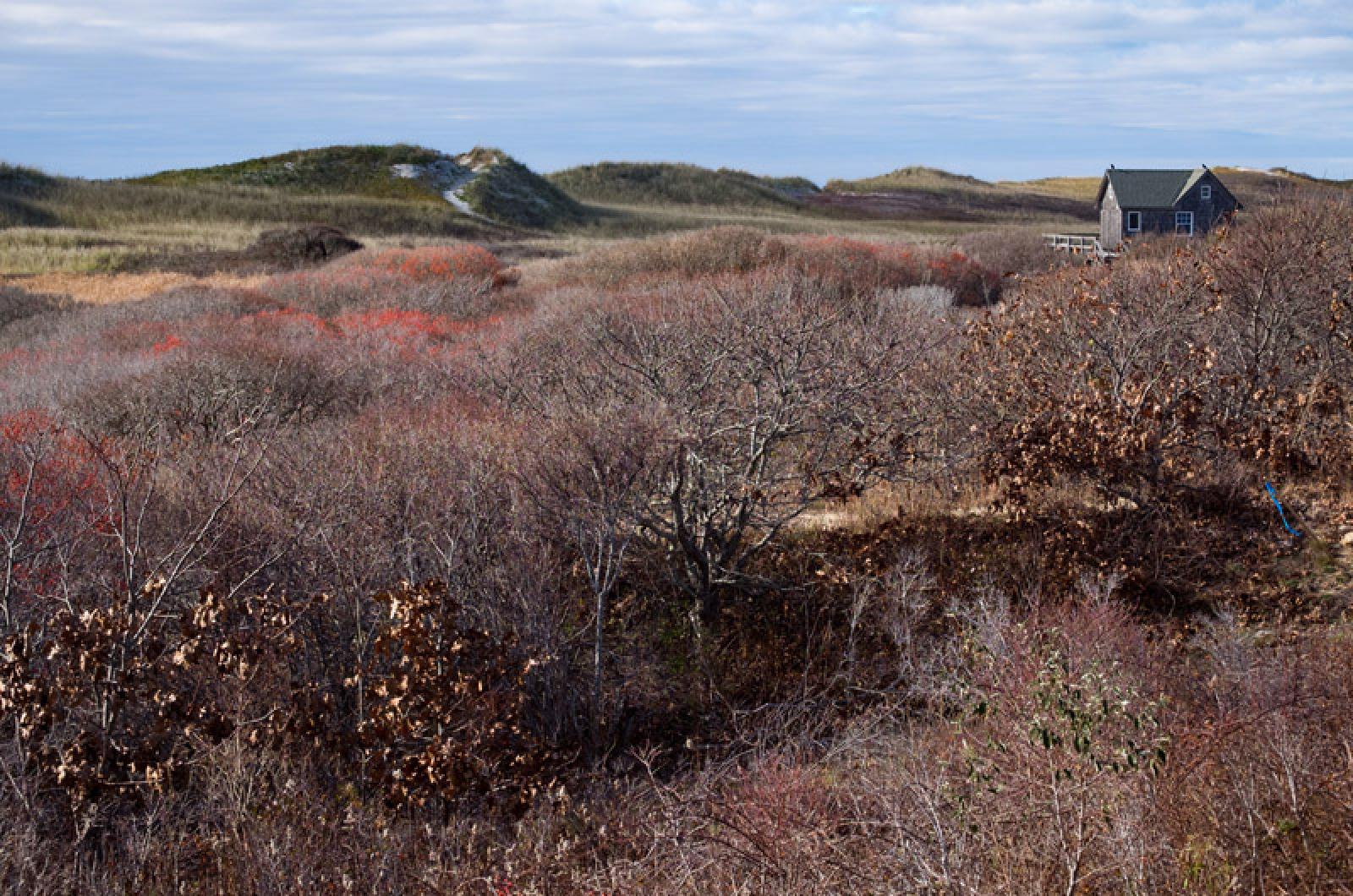
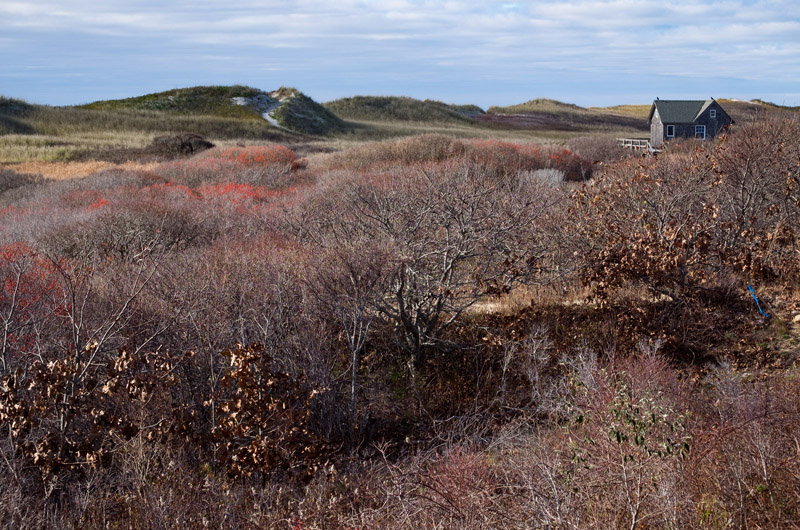
<p>A decision by the U.S. Supreme court closes the book on a decades-long court battle over whether private land off Moshup Trail can be opened up for development.
Closing the book on a decades-long court battle over whether a private expanse of land off Moshup Trail can be opened up for development, the U.S. Supreme Court this week declined to hear the Decoulos-Kitras case in Aquinnah.
James Decoulos and Maria Kitras had petitioned the nation’s highest court to take their case on appeal, after the Massachusetts Supreme Judicial Court in the spring found they did not have legal access to two landlocked parcels totalling about 30 acres off Moshup Trail.
On Nov. 28 the petition was denied.
“It’s the end of a chapter,” said longtime Aquinnah town counsel Ronald H. Rappaport this week. Reached by telephone at his office in Belmont, Mr. Decoulos said the decision came as no surprise. “There was not a huge national issue here for the court to decide,” he said, adding: “We’re not done. We’re going to continue to fight for our rights that we believe we have under the constitution.”
The complicated land-use case dates to the late 1990s and had pitted Mr. Decoulos and his wife Ms. Kitras against the town of Aquinnah, the Vineyard Conservation Society and others. VCS has been involved for many years in a conservation initiative to protect the salt-blasted Moshup Trail heathlands, which are considered globally rare.
The case could have had far-reaching effects on land titles throughout Aquinnah, and involved arcane issues of law, some dating to the late 19th century when most of the land in the town was owned in common by members of the Wampanoag Tribe of Gay Head.
The case bounced around in state courts for years, finally landing before the SJC last year. In a 25-page ruling issued in April, the court agreed with an earlier ruling by the land court that the plaintiffs could not prove legal access to their land.
In September, attorneys for Mr. Decoulos and Ms. Kitras formally petitioned the U.S. Supreme Court for a writ of certiorari. The town and other defendants in the case, including Caroline Kennedy and her husband Edwin Schlossberg, waived their right to respond.
VCS executive director Brendan O’Neill called the denial “a procedural end point for which we are grateful. Much credit goes to the town, the organizations and individuals whose commitment never flagged during these many years.” He concluded:
“The 20 years of legal defense speaks to the importance of watchfulness and tenacity and commitment over the long haul with respect to land protection issues like this one. And in the context of the unimaginable antiquity of the place we are trying to conserve — with its 50 million-year-old cretaceous soils — it’s a blink of an eye.”
Comments
Looks like no Trump condos
john at seaLooks like no Trump condos or golf course for Aquinnah
well we can always play the short course at the mini golf
That is to bad that we have
Bob EdgartownThat is to bad that we have 30 acres of land that could of been used for a place for someone to live. I am sure out of 30 acres both house and nature could of co exist. I am sure Brendan O'Neill even lives in a house that once sat on 50 million old land.
From the same people who
MarieFrom the same people who wanted a casino?
What on earth does the casino
Michael OBWhat on earth does the casino and this land have to do with each other.
Good lord, read and comprehend.
That is too bad we have 30
Dan OBThat is too bad we have 30 acres of land that could have been exploited by a land developer, allowing him to ascend the pecking order of the 1%. I am sure with all the beach-front property in the country we could keep 30 acres set aside uninterrupted. I am sure even Bob from Edgartown appreciates the beauty of one of the islands finest beaches.
"The complicated land-use
christopher stewart gray NEW YORK"The complicated land-use case ...." OK, Julia Wells, try us. Give the readers a hint. What are they prevented from doing? What do they want to do? The article seems to note they don't have "access". Were they trying to force access? Why couldn't they buy access? None of the other owners could sell? How does this relate to readers and citizens - if we have land with no "access" (is that to roads?) then are we sunk, too? Why did they think they were "owed" access?
This article, without a para addressing those issues, leaves the reader - even regular subscribers who have read about this case before - wondering. Especially if it is "closing the book".
We've added a link to an
EditorWe've added a link to an earlier story that contains a fuller explanation, thanks.
Add new comment