

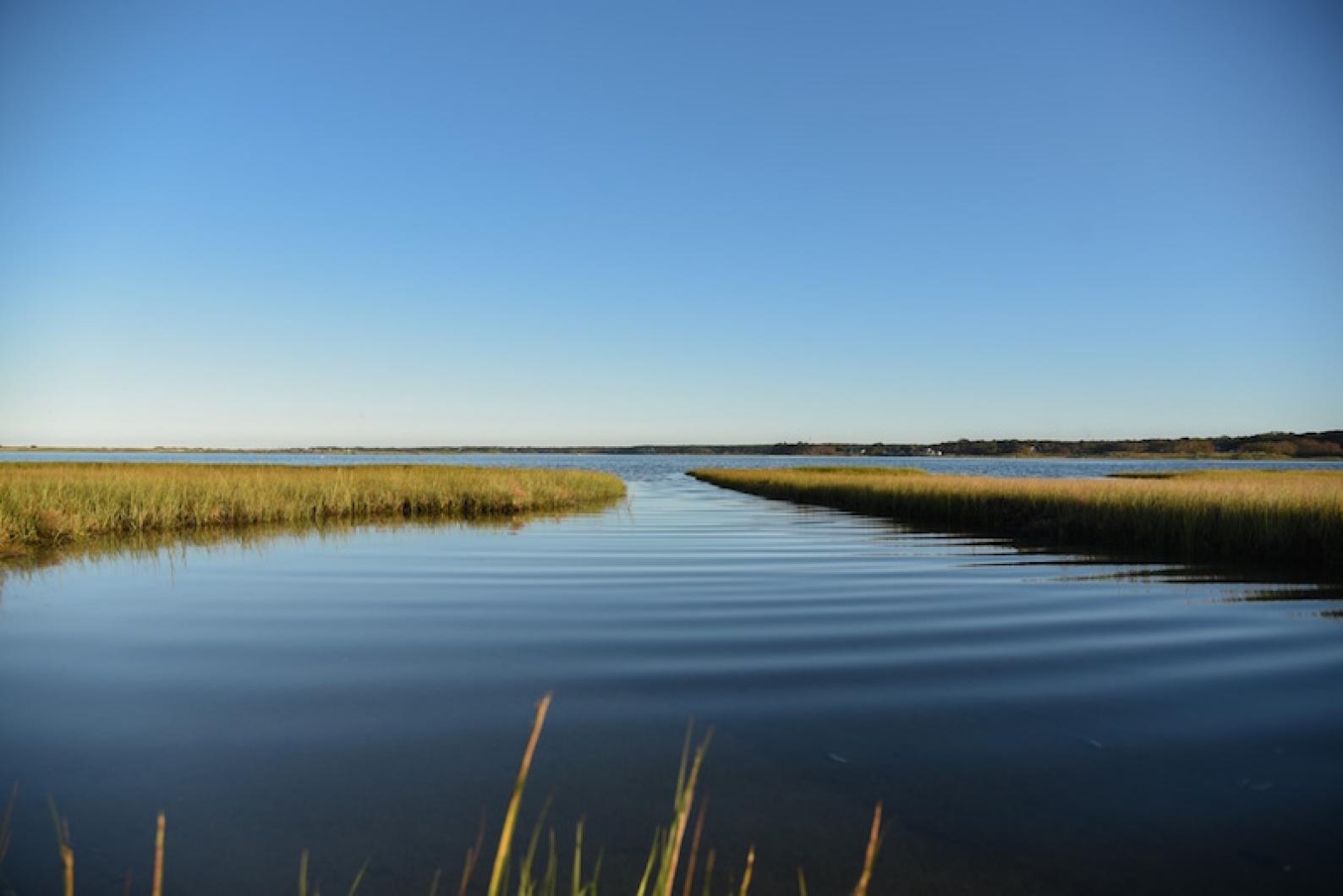
<p>A state-ordered shellfish closure due to toxic algae blooms was extended to Martha’s Vineyard late Sunday. All Island ponds and harbors are closed to shellfishing — except for bay scalloping.</p>
A state-ordered shellfish closure due to toxic algae blooms was extended to Martha’s Vineyard late Sunday. All Island ponds and harbors are closed to shellfishing — except for bay scalloping, which is allowed.
Vineyard shellfish constables were notified by the state Division of Marine Fisheries late Sunday that the closure, initially ordered for the Buzzards Bay area, including Falmouth, Bourne, Fairhaven, Marion and New Bedford, had been extended to all areas south of Cape Cod. The Vineyard, Nantucket and Gosnold are all included in the closure.
The reason is a bloom of the diatom Psuedonitzchia. The plankton concentrates in the gut of shellfish and causes amnesiac shellfish poisoning, a severe form of gastrointestinal illness.
Bay scallops and sea scallops are exempt from the closure because the muscle of the shellfish is eaten, not the gut.
Oak Bluffs shellfish constable David Grunden said be believes it is the first closure in memory from this type of algae bloom.
“Certainly in the last 30 years or so,” the constable and biologist said. He said he had not done water tests to determine the concentrations of the algae, but he noted that it is present.
The cause of the bloom is unknown.
“If we knew that we would all be famous scientists,” Mr. Grunden said. But he said errant algae blooms have been occurring with more frequency on the Island in recent years.
The extensive shellfish closure comes at the very start of the bay scallop season on the Vineyard. Family scalloping opened in Edgartown and Oak Bluffs, with commercial scalloping due to begin in another week or two.
Comments
According to the NOAA website
Steve FalmouthAccording to the NOAA website, toxic algae blooms are often associated with warm water and excessive nitrogen.... Do you think these may be contributing factors locally?
Excessive nitrogen? Here on
Slater MVExcessive nitrogen? Here on MV? No way!
Stop allowing developers and
shirley craig edgartownStop allowing developers and others to build or mansionize large dwellings on the edge of the wetlands.Duh---
It is a tough call. What's
Steve FalmouthIt is a tough call. What's more important to the Island, big houses with green lawns or a healthy ecosystem and viable fisheries?
Big houses with green lawns.
Gern Blanston Greenwich, Ct.Big houses with green lawns.
The first blooms known to
Peter Becker Port Angeles, WAThe first blooms known to cause problems were in PEI in the late 1950's and early 1960's.
And effects ranged from complete memory loss to partial that was recovered in time. Complete memory loss required permanent institutionalization.
PEI studied it ... it is related to upwelling events and you get it from the Labrador Current delivering it down the coast.
We have it off shore on the West Coast in Washington, originating in the Tully Eddy off Cape Flattery, WA and the currents transporting it down the coast. It may also occur in upwelling eddies off of other Capes! It contaminates the Dungeness Crab fishery in the fall and early winter, and the Razor Clam fishery( our off shore scallop fisheries off Oregon were decimated by former East Coast Scallopers in the 1970's--- Off Washington we decimated them ourselves by 1970!)
Soooo can't blame nutrients from McMansions,for this. It predates them by almost a century.
Do you think climate change
islandgirl WTDo you think climate change might be a causal effect? And while Peter Becker (whose experience and knowledge I respect) pooh poohs the McMansion effect, here the hedge funders and very wealthy (and those who seek and are enjoying the same tax advantages for rental properties [which we have in spades]and real estate development [and speculation] that a certain presidential candidate has used so extensively, use a lot of services for their huge houses which consume fossil fuels, all contributing to climate change. Just FYI, a great deal of the money that changes hands annually for those rental houses leaves the island and does not really trickle down to the benefit of our island community. So, yes, we can blame the big houses folks (and the private jets they fly in on, or the Range Rovers that they drive) and their ilk. Meanwhile those islanders who depend upon shellfish -- which is a truly sustainable resource, as well as nutritious and delicious -- just got punched in the face. The shellfish season for oysters is about to open, or perhaps I should write: "was about to open." Now I guess it is problematic. Fortunately scallops are not affected, but not all towns have scallop beds, and some of the towns do not have good scallop prospects for this year.
Add new comment