

<p>In the years when much of America was racially segregated, Oak Bluffs was a place of refuge for African Americans. The town will be included an in upcoming permanent Smithsonian exhibit in Washington, D.C. An event will be held Thursday at the Union Chapel.</p>
In the years when much of America was racially segregated, Oak Bluffs was a place of refuge for African Americans. In many ways it still is.
“It was, is and will continue to be a place of ideas, a place of social engagement, a place of people gathering and talking about issues,” said Paul Gardullo, curator of the Smithsonian Institution’s National Museum of African American History and Culture, which is expected to open in 2016,
The museum, at the National Mall in Washington, D.C., will feature stories and artifacts that reveal the richness and complexity of African American culture in the United States. It was established in 2003 by an act of Congress and will be the Smithsonian’s 19th museum.
Oak Bluffs is one of 10 communities that will be highlighted in a permanent exhibit called The Power of Place.
This Thursday, August 14, Martha’s Vineyard Magazine will join with the Smithsonian to present a short film and a panel discussion about what makes Oak Bluffs important to the black community. Oak Bluffs: A Place of Pride and History starts at 3 p.m. at Union Chapel in Oak Bluffs and will feature Cong. Barbara Lee, who co-sponsored the bill to create the museum, along with museum director Lonnie Bunch, Mr. Gardullo and several longtime Oak Bluffs residents.

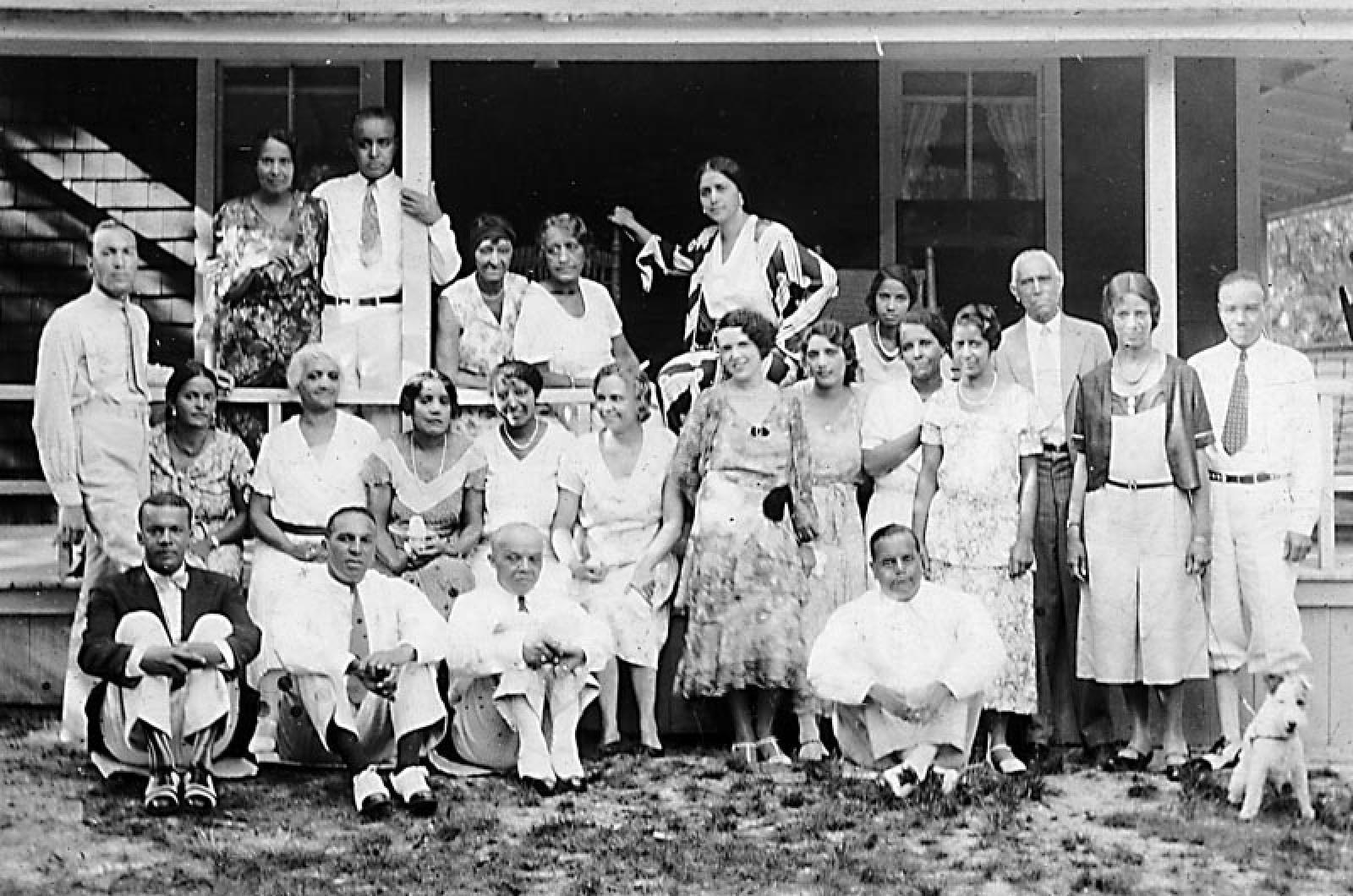
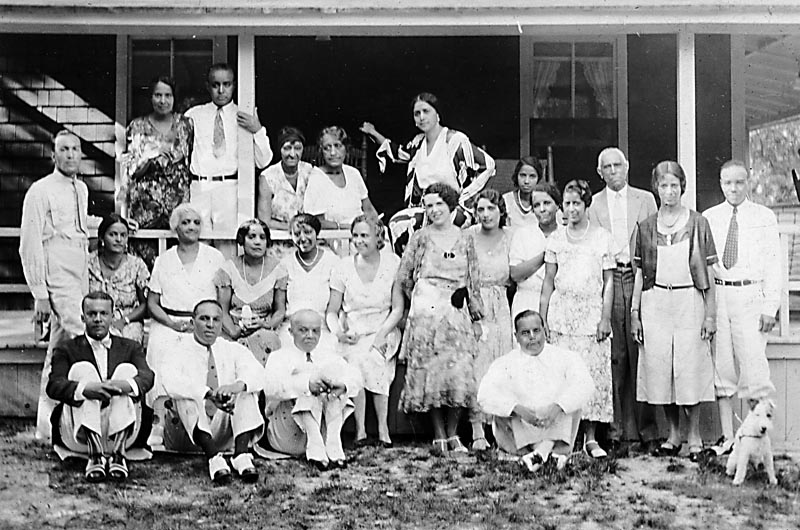
Inn was built by Charles Shearer and his wife Henrietta in 1912.

Inn was built by Charles Shearer and his wife Henrietta in 1912.
Ms. Lee said in a statement in 2003 that the decades-long effort to establish the museum was initiated by black Civil War veterans.
“With this museum, we now have the opportunity to educate all people on the rich cultural and historic struggle of African Americans from the Middle Passage to the Civil Rights movement to today’s continued struggle for equality,” she said.
Mr. Gardullo told the Gazette this week that one of the museum’s goals has been to cover “the widest geographic area” while also focusing on specific places. “We really wanted to capture what it means to be of or from a place in particular,” he said.
When the museum was brainstorming for the exhibit, Oak Bluffs was near the top of a long list of places with strong African American roots, he said. “And it always, always remained there because of the rich history and the incredible stories that it has in connection to African American history.”
The exhibit will feature a large collection of artifacts that together form a narrative of each place, while at the same time offering a more universal perspective on race and culture. About a half-dozen Oak Bluffs residents so far have contributed artifacts to the project.
Jessica Harris, a well-known cookbook author and longtime Oak Bluffs resident, served as a consultant for the museum in 2012, helping to conceptualize its cafeteria space. She has also donated several artifacts, including a kerosene lamp and an antique lawn mower.
But she said the center of her experience in Oak Bluffs has always been her house in the historic Copeland District, which she inherited from her parents.
“I can walk to the beach, I can walk to Circuit [avenue],” she said. “And it is very much unlike the house I grew up in in New York. It is the Oak Bluffs house.”
To reflect the town’s unique gingerbread architecture and small neighborhoods, the museum will reconstruct some of the front porches that line almost every street. They will focus on a few iconic cottages, including those owned by Charles Shearer, a former slave; and Adam Clayton Powell, a New York congressman during the Civil Rights Movement.
That aspect of the exhibit will showcase “what social life was and continues to be on Oak Bluffs,” Mr. Gardullo said. “And we really want to give people a picture of Black life during the era of segregation in particular.”
Project historian Kevin Strait, who spent almost every summer of his youth in Oak Bluffs, remembers his grandmother telling him long ago that the Vineyard was one of the few places where a Black family could purchase a vacation home.
While African Americans are less concentrated in Oak Bluffs than they were in the 1950s and 1960s, Ms. Harris said, “it still is the nucleus, if you will, of the African American community on the Island. But in certain years, if you were Black and you lived on the Vineyard, people didn’t have to ask.”
She recalls as a young girl being asked to leave an Edgartown beach because the color of her skin made it obvious that she did not live in Edgartown.
Over the years, Ms. Harris has watched the Oak Bluffs social scene become much more intense, especially in the summer.
“While there was all sorts of socializing,” she said, it wasn’t at the scale of today. “There are large parties and three and four and five events happening virtually simultaneously during the first two to three weeks in August,” she said.
She believes the exhibit will likely help to reconnect friends and families who haven’t been to the Vineyard in a while, “and make others who may not know about the Vineyard hopefully be intrigued and entranced.”
Research for the Oak Bluffs portion of the exhibit included meeting with the Martha’s Vineyard Museum and local historians, and touring the African American Heritage Trail of Martha’s Vineyard, which includes several houses in Oak Bluffs.
Mr. Strait said that about a half dozen residents so far have contributed artifacts, and that many more have helped to create the overall narrative. He added that the number of museum members from the Vineyard is unusually high.
Regarding the project as a whole, Mr. Gardullo said, “There are a variety of ways that we engage locally, regionally and nationally on the topic. And it happens in all sorts of ways, from photo identification parties to public speeches and panels, academic conferences.”
But he was not aware of other large public panels like the one on Tuesday. “Oak Bluffs is pretty special in terms of the kind of intellectual engagement that happens, especially in the summertime,” he said.
He said that he “is continually blown away by . . . the support of people and the desire of people to see the museum come to life and who are ready to support it in any way, shape or form that they can. And Martha’s Vineyard has been keen to that.”
The panel discussion, Oak Bluffs: A Place of Pride and History, begins at 3 p.m. on Thursday, August 14, at Union Chapel in Oak Bluffs. The event is sponsored by Martha’s Vineyard Magazine in association with the Smithsonian. A $50 suggested donation includes membership in the National Museum of African American History and Culture and a subscription to Martha’s Vineyard Magazine. For tickets, go to ticketmv.com, or call 508-627-4311.
Comments
In a time of angst and strife
TJ Donohue Simsbury ConnecticutIn a time of angst and strife, this story gives evidence and hope that our culture can be one of kindness, inclusiveness and civility.
Many, many years ago, when I
Susanna J. Sturgis West TisburyMany, many years ago, when I was the book buyer for D.C.'s feminist bookstore, the Feminist Press reprinted Dorothy West's novel THE LIVING IS EASY. I loved it. I especially loved the references to Martha's Vineyard in the first half of the 20th century. I was an occasional visitor to MV in those days, but I hadn't known about the thriving African-American community here. Finally it dawned on me that the Dorothy West who wrote THE LIVING IS EASY was the same Dorothy West who was then writing the Oak Bluffs column for the Vineyard Gazette. Talk about consciousness-raising! I've learned a lot since then. I'm so glad to see this being recognized at the Smithsonian. To anyone who hasn't discovered them yet, I recommend two books: Kevin Parham's brand-new memoir of being a summer kid on the Vineyard in the 1950s and '60s, THE VINEYARD WE KNEW; and Jill Nelson's not-so-new-but-classic FINDING MARTHA'S VINEYARD. There's so much more to this place than most off-islanders ever suspect.
Sooooo tired of this twaddle.
TedSooooo tired of this twaddle......
I think the donation should
Dee HamdenI think the donation should be smaller because you will miss out on a lot of oral history from seniors who are retired on Island with such valuable information. Such as copies of the Delegate from 1978 with a special on The Annual Orchid Ball of Phi Beta Sigma Fraternity New York- The house hold that I visit is full of historical artifacts and oral history! The section I enjoyed reading: NBC women with historical reference to great African American Women in broadcast journalism: Jeri Warrick-Crisman, Norman Quarles, Bonnie Boswell, Carol Jenkins, Melba Tollivet, Carole Simpson, and Verda Williams. I know it is a donation but please keep on mind the seniors who have wonderful artifacts and stories but will think twice about the cost, because when we are home in three weeks they are here all year!
Maybe some of the younger
Linda BrooklynMaybe some of the younger visitors could sponsor the seniors or pay half of fee which would solve the problem and not lessen the money being raised. Plus that would bring people together who may not have ever met one another and lastly it would allow the stories to be told that you worried wouldn't be.
Never been there, but sounds
Luella Hill Los Angeles, CaliforniaNever been there, but sounds like a place to visit.
The Hazzard farm was on
Bonnie Worcester, PAThe Hazzard farm was on Martha's Vineyard. Is there any record of that? An amazing African American family!
I visited Oak Bluff many
Liz Wilson KansasI visited Oak Bluff many years ago with friends. We rented a house and took turns cooking and managing our needs. It was wonderful. I walked throughout the island by myself and met folks everywhere. There was an African American festival while I was there. I thought of taking my grandsons there, where they could play outside, like zi did as a child. I went to the beach on Monday at the Ink spot area where African American women were swimming, singing and praying. It was wonderful. I visited many of the big homes in the area and thought if the history the homes could tell. It was an awesome experience.
I plan to visit there one day
earline a. bentley kansas city, moI plan to visit there one day soon. This is exciting!!!
Add new comment