

<p>Fderal and state agencies announced a management plan to allow communities to reopen beaches that would otherwise be closed to vehicles during spring plover nesting season.</p>
As piping plovers continue to recover along the East Coast, federal and state agencies this week announced a long-term management plan to allow communities to reopen beaches that would otherwise be closed to vehicles during nesting season in the spring.
The new 26-year habitat conservation plan, announced Friday, is the first of its kind for piping plovers in the state. Paul Phifer, assistant regional director of the U.S. Fish and Wildlife Service, said the plan promotes long-term conservation of the species while increasing the options for beach management.
“It really keys in on beaches where growing plover populations are affecting beach managers’ abilities to meet operational and recreational needs,” he said.
Under the new rules, communities can now apply to the state Division of Fisheries and Wildlife (MassWildlife) for permission to allow oversand vehicle access in nesting areas. But additional conservation measures will be required to offset potential shorebird loss, such as vehicle monitoring and predator control.
MassWildlife can adjust the number of allowed activities each year, depending on how the plover population changes. The rules allow for the loss of a percentage of the total plover population (up to about 45 breeding pairs based on the current numbers) but if the population drops below 500 pairs, then no takes would be allowed.
Piping plovers have long been listed as threatened under both the state and federal endangered species acts. Conservation measures since the 1980s have led to a dramatic comeback along the Atlantic coast. The number of breeding pairs in the state has grown from fewer than 140 in 1986 to more than 680 this year — about three quarters of all pairs in New England. Most breeding pairs in Massachusetts nest on the Cape, with about 10 per cent on the Vineyard, and five per cent on Nantucket.
Norton Point and Leland Beach on Chappaquiddick, managed by The Trustees of Reservations, typically close to four-wheel-drive vehicles when piping plovers and other shorebirds begin hatching. Pedestrian access is allowed.
The Trustees, which owns and manages some 600 acres of protected barrier beach on Chappaquiddick, has said it plans to apply for a permit that would allow continued vehicle access in some areas. Wasque, Cape Pogue, Leland Beach and Norton Point are all prime locations for saltwater fishing and birdwatching.
The towns of Plymouth, Orleans and Barnstable have already submitted requests for permits.
In the past, communities that wanted to allow continued access were required to develop their own habitat conservation plans and apply for a federal permit, although only the town of Orleans went that route. Communities may now apply directly to MassWildlife to relocate a nest or take other action that may threaten the plovers. Each site-specific plan may also incorporate public education, law enforcement and habitat improvement to mitigate the potential loss.
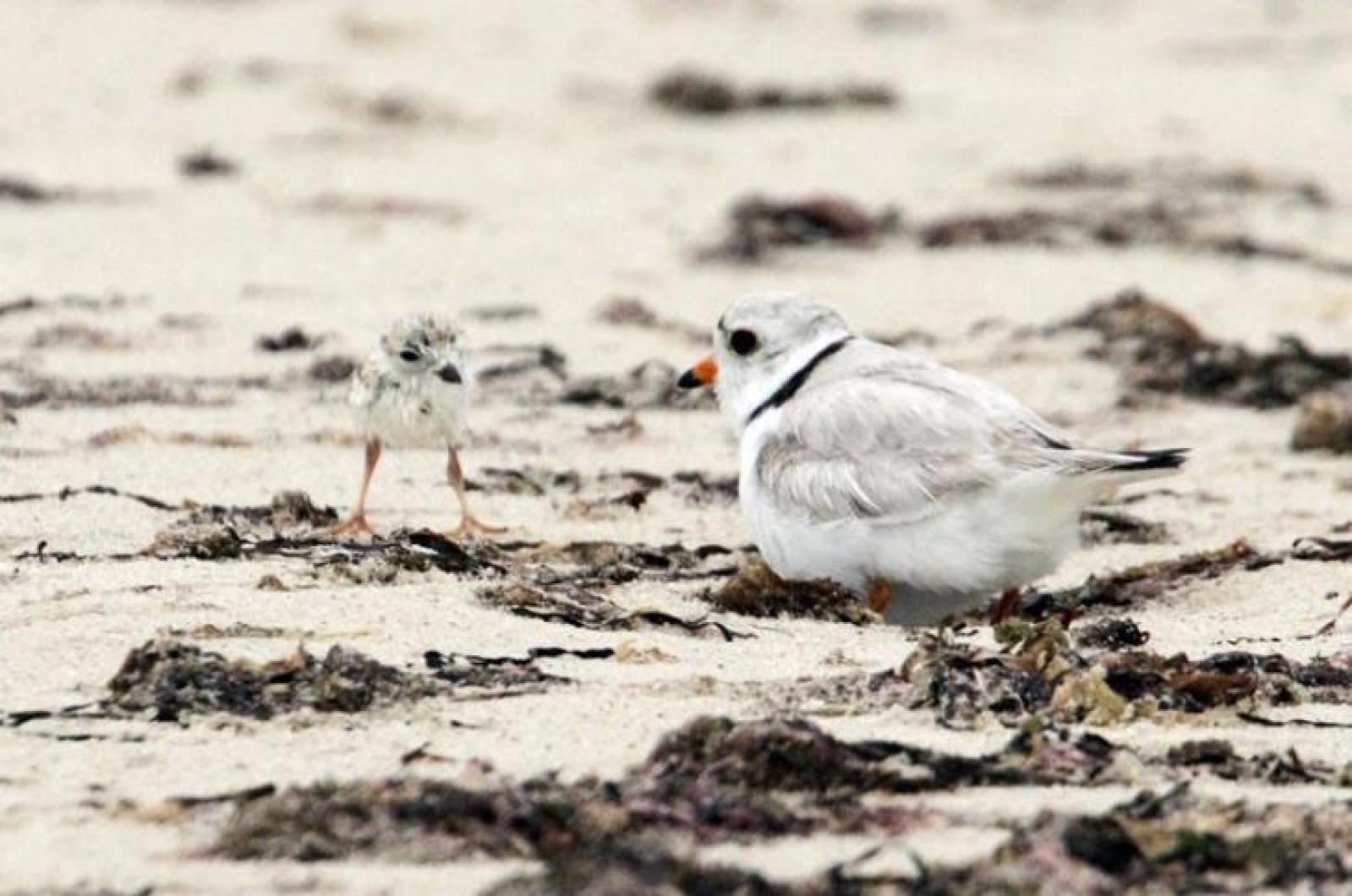
Piping plovers begin to arrive on the Vineyard around March and lay their eggs in scrapes in the sand on exposed barrier beaches. The chicks hatch in May or June. The tiny chicks are precocious at birth, feeding themselves in the wrack line along beaches, but will not fledge for weeks, making them vulnerable to vehicles. Temporary fencing can help protect the eggs from predators.
In a media call Friday announcing the new state plan, Mr. Phifer praised MassWildlife for its conservation efforts over the last 30 years. “They’ve really been the driving force for plover recovery,” he said. He also thanked the many stakeholder groups, including the Trustees, BiodiversityWorks and the Massachusetts Beach Buggy Association, for providing feedback along the way.
“This kind of large-scale, long-term planning is going to become a regional model, and Massachusetts is leading the way,” he said.
The habitat conservation plan for piping plovers is available online at fws.gov/newengland.
Comments
I really do question whether
Patricia Torres AlbuquerqueI really do question whether use of recreational vehicles is a wise choice. The ocean itself is still suffering from strain of human waste and climate change. Many people don't add all the factors into equation. The birds and their habits make beach goers a huge threat, as recreational activities don't include conservation, only fun. All shore lines are over due for breaks from human impact.
The ocean? Last I checked
Islander VineyardThe ocean? Last I checked bait fish were in abundance and fish population in vineyard waters seems to be higher then it has been in many years I don't see the ocean suffering to bad. And there's plenty of beach out there to let the ropes down enough to allow the people who pay a lot of money for permits to pass by no one wants to se them threatened but I think it's safe to say we have followed the rules for a long time and it shows, now we can not forget but relax them a bit to give back to the people who pay to use the beach.
Add new comment