

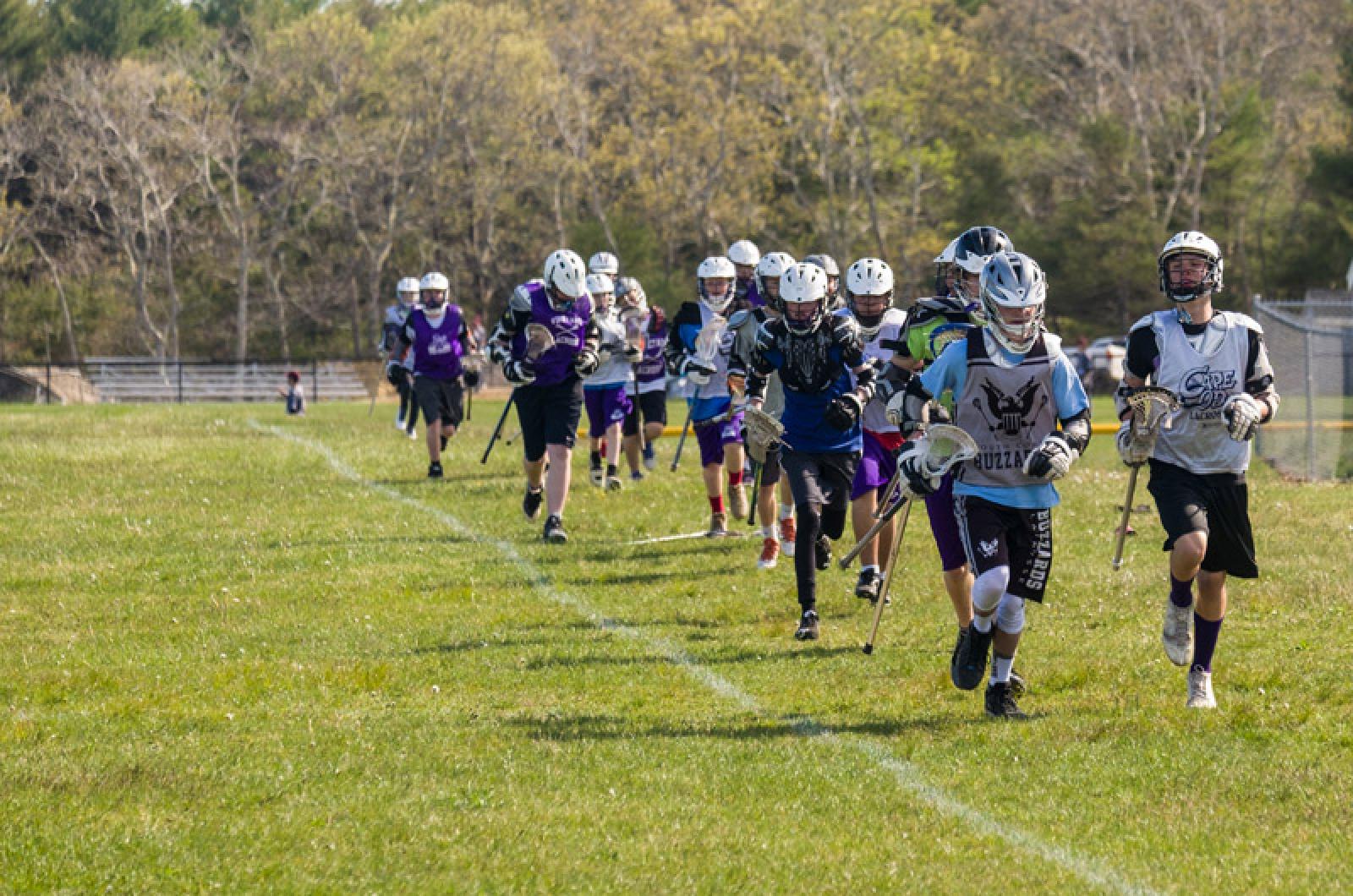
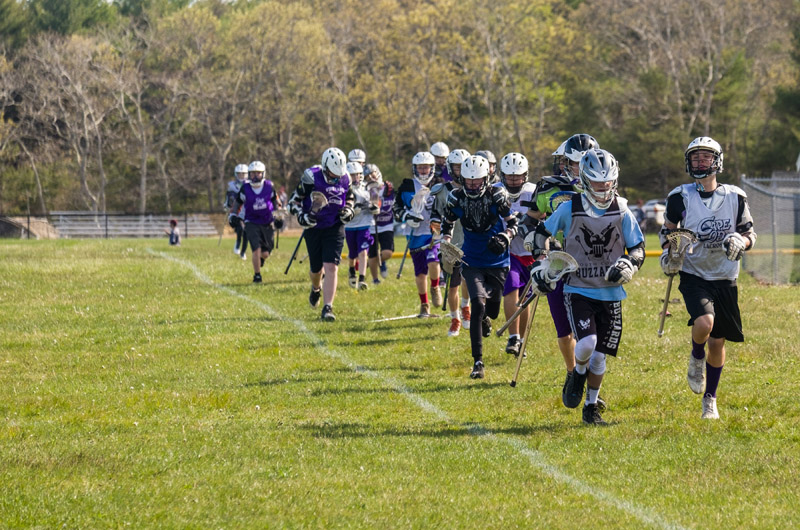
A plan to overhaul the athletic fields at the Martha’s Vineyard Regional High School with artificial turf is the subject of growing controversy.
A plan to overhaul the athletic fields at the Martha’s Vineyard Regional High School with artificial turf is the subject of growing controversy, as hundreds of Islanders line up on both sides of the issue.
The plan first surfaced publicly last month when a nonprofit group calling itself MV@Play came before the district school committee to propose an ambitious, privately funded three-phase project to upgrade the playing fields. Led by David Wallis, the group has said it intends to raise $12 million for the project. Phase one involves refurbishing the track and field at a cost of $3.5 million. The fundraising plan has not yet been fully explained, although Mr. Wallis denied reports that MV@Play has a large donor lined up. “We don’t have the money, so contrary to what people are talking about . . . . we have to raise the money,” he said during an emotional two and a half-hour school committee meeting Monday night.
Because the project would involve private funds for a public school, a license agreement must be drawn up between the high school and MV@Play and approved by the school committee. That agreement has not been completed, although Vineyard schools superintendent Matthew D’Andrea told the Gazette Thursday that the agreement is being worked on with the school attorney, the school business administrator and spokesmen for MV@Play. The terms of the agreement have not been disclosed.

Supporters and critics lined up to voice opinions at school committee meeting Monday.
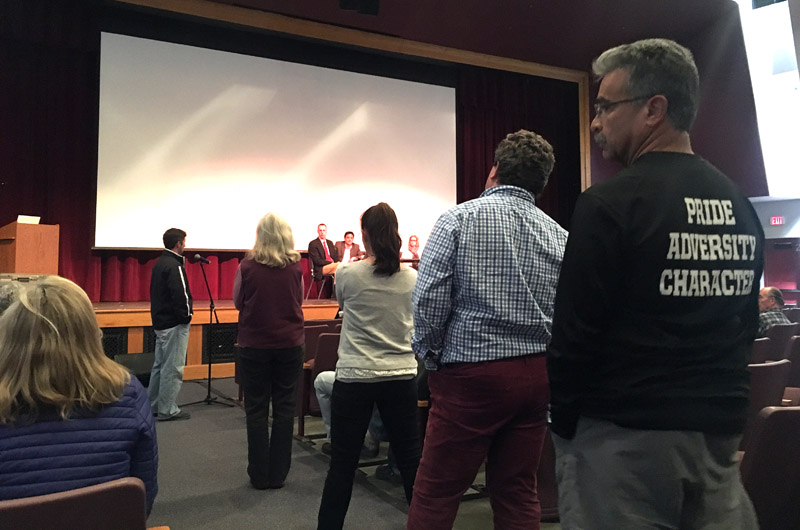
Supporters and critics lined up to voice opinions at school committee meeting Monday.
Meanwhile, on Monday night a large crowd turned out for the school committee meeting. In addition to charged testimony on both sides of the issue, the meeting was also marked by procedural confusion. It was announced at the outset that there would be no vote until the next meeting on June 6, but at the end the committee did take a vote, deciding 5-2 to back phase one of the MV@Play plan as currently designed. The vote came over the objection of two committee members.
At the center of the controversy is the question of whether to replace natural grass fields with artificial turf. After an early proposal to use crumb rubber infill on the interior of the track drew vocal protest from parents concerned about whether the material was potentially hazardous, MV@Play quickly switched to an organic infill made of cork, coconut husk and silica. But the group stands firmly behind using synthetic turf for the field inside the track, saying it is the only material that will withstand the use of high school and community practices and games, which they project to be 2,338 events each year.
“Nantucket just put one in, Sandwich put one in. This isn’t unprecedented, I just want to make that clear,” Mr. Wallis said at the forum.
The high school has eight playing fields that are used for nine sports in the spring and fall, including the track. Upkeep on the fields has been inadequate in recent years, as is the case with the school building facility which now needs repairs that are expected to cost millions of dollars.
Petitions are circulating on both sides of the artificial turf issue.
On Monday night a strong contingent of student athletes and coaches attended the meeting to support a synthetic turf field, along with a petition signed by 270 people in favor of the plan.
“It’s a privilege to be able to play on turf. It’s so fun to play on turf, it’s a completely different game,” said field hockey player Juniper Ezanno. “The fact that we could have the opportunity to do that every day — are you kidding me? How could any person not want that.”
John Wilson, the father of a recent high school graduate and two-sport athlete, also supported an artificial turf field. “I think as a community we need to decide what level of risk we’re willing to take versus what we know,” he said. “These fields have been studied endlessly for the last 15 years. I feel fortunate that my son made it through his high school career practicing on a horrible football field without getting injured.”
On the other side, a petition posted on Moveon.org opposing the synthetic turf plan had been signed by 684 people at the time of the meeting.
“It’s wonderful that MV@Play was so responsive to switching the proposed infill material, but they themselves admit there is a lot of uncertainty about what is the best alternative and what’s safe,” said Samantha Look. “Why are we not looking at how we can keep our grass in better shape? We know kids can play on grass and be healthy.”
Rebekah Thompson, an outspoken opponent of the plan, struck a philosophical note. “I feel it’s a moment for self reflection as a community, and when many of us are trying very hard to move away from plastics,” she said in part. “I know for some of you it’s just a year or two on those fields, but for some of us it’s 14 years from our mini kickers on up. I would just hope that the first field could be grass.”
A spokesman for the Massachusetts Interscholastic Athletic Association said Thursday that the association has no official stance on synthetic turf versus natural grass playing fields, and no record of how many high schools use one or the other. School athletic director Mark McCarthy said Island athletes are accustomed to playing on artificial turf at away games, including at tournaments.

At the center of the controversy is whether to replace natural grass fields with artificial turf.
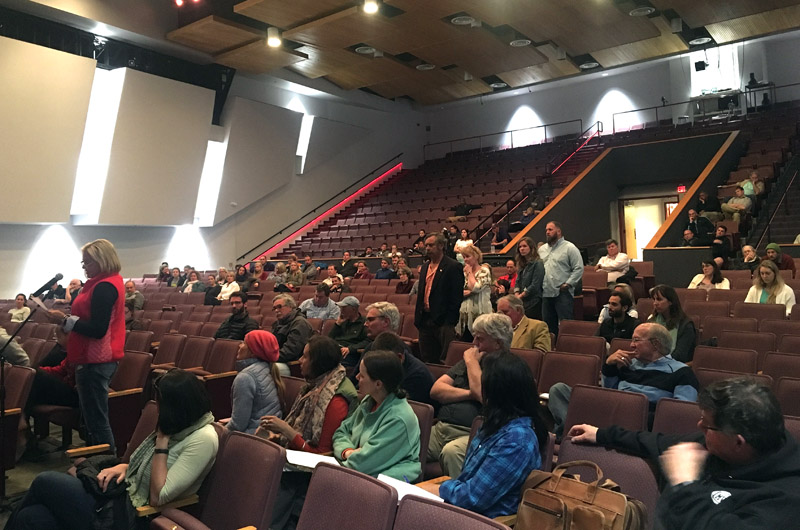
At the center of the controversy is whether to replace natural grass fields with artificial turf.
On Monday other concerns were directed at future maintenance costs. According to their proposal, MV@Play would foot the bill for the installation of new fields, but the high school would pay for the cost of upkeep and eventual replacement, estimated at about 10 years. Committee members discussed the possibility of user fees to help pay for maintenance.
Mr. D’Andrea said no matter what happens, the school needs a better maintenance program.
“So if MV@Play does not do this project, we have to come up with $1.2 million to do the track over and then we have to maintain it,” he said. “We have a budget now around $40,000 a year that goes toward the maintenance of these fields. It will not be enough money. We will have to increase that.”
At the end of the meeting, despite the earlier announcement that there would be no vote, Colleen McAndrews moved for the committee to take a vote.
Committee member Robert Lionette urged the committee to wait.
“There are huge issues that we have barely scratched the surface of — health, environment, cost,” he said. “Obviously we have a weighty responsibility to the whole community, that’s what makes this high school phenomenal, but at present I am not prepared to support this. I do not feel as though we’ve been provided with enough information to make a fully informed decision. There are still legal issues and financial issues that have yet to be resolved.”
Other committee members disagreed. Jeffrey (Skipper) Manter 3rd said without the MV@Play plan, the future looked bleak for the athletic fields.
“We know [the $1.2 million for the track] is not in the budget next year, we know it’s probably not going to be in the budget the year after,” he said. “I think the opportunity is here, and if we go to replace it in nine or 10 years, nothing says we have to put it back. We can put grass back in if we have to. We’re not committed to anything.”
In the end the committee voted 5-2 to back phase one of the MV@Play proposal. Mr. Manter, Kelly McCracken, Megan Anderson, Colleen McAndrews and Lisa Regan voted in favor, while Mr. Lionette and Theresa Manning voted against the proposal. Kris O’Brien and Janet Packer did not attend the meeting.
Comments
My town here in California
Carol Lampson CrockettMy town here in California came down on the artificial turf side of this issue several years ago, & regrets it. Now what - pull it all up? Lots and lots of plastic in the landfill, all that artificial turf!
Don't be foolish. Don't go for the plastic playing fields. They are neither maintenance- nor litigation-free.
Carol Lampson - I would be
Jan OCallaghan LittletonCarol Lampson - I would be very interested to know why they regret it.
I support the grass-roots
Bruce E. Nevin EdgartownI support the grass-roots groundswell of support for natural turf.
While natural turf is great,
Jeff Sherman Ocean Springs, MSWhile natural turf is great, the cost for up keep and maintenance is now considered out of reach for most schools and while the cost of turf up front is staggering, the life cycle costs are minimal. Years ago with only a few sports, grass could survive, today with all the sports going thru the seasons, it just does not give the grass a chance to recover. Further, today's turf is easier on the joints due to the give and cushion.
Go for it - I played on turf, my boys played on turf!
Always preferred playing
Shane EdgartownAlways preferred playing sports on grass opposed to turf/field turf.The field was never great when I played but that's part of home "field" advantage. Also couldn't our teams/horticulture program help out from time to time to maintain the fields...
Artificial turf? In this day
Adrienne DohertyArtificial turf? In this day and age? Are you mad?
The most truly absurd suggestion to come down the pike in years. Really, do some research!
I shot men's and women's
Rick Heath ChathamI shot men's and women's Lacrosse match at mass Maritime Academy earlier in the spring. All I saw were these black plastic pellets coming up from surface. In fact, when I downloaded my pictures, you could see this black "tint" to most of the filed. But that isn't the point, someone above referenced litigation? True. The jury is STILL out on even these new type artificial fields. Look at what they discovered in those child safe playgounds constructed of wood years and years ago. Maintenance on a grass field? What maintenance? Fertilize during the spring, and mow.
I don't believe this should
Ken Esq EdgartownI don't believe this should be classified as a war. For one, no one is trying to kill anyone else. More importantly, there's no reason for the Gazette to try and stir up negative emotions.
This is an ongoing discussion between concerned Islanders about the future of our athletic fields. It's great that we have people so willing to volunteer their time and money towards improving the facilities for our children.
Let's get this done right rather than done quickly as no matter what the choice is this is going to cost millions of dollars and require millions more in ongoing maintenance. The maintenance part is particularly concerning as there hasn't been a lot of attention paid to that in the past.
Thank you to everyone, on all sides of this discussion, for putting in the effort and keeping things civil and honest.
We should be doing everything
Geraldine Brooks West TisburyWe should be doing everything we can to make our schools greener, not heading in the other direction by laying down meters of petrochemical plastic products. It’s disturbing that this idea is being pushed through without full discussion. If there’s no funding in place and we have to fundraise, why not fundraise for better upkeep of our healthy natural grass?
Kids should play on grass,
Brian Smith Oak BluffsKids should play on grass, not plastic. I'm sure we could eliminate an assistant something or other on the staff that would cover the maintenance costs of real turf.
This sounds like a
Ricky Bobby The fast laneThis sounds like a development of regional impact and should be kicked up to the Martha's Vineyard commission.
There are a number of
Katherine Scott TisburyThere are a number of important health issues that haven't even been mentioned by anyone, such as surface temperatures on plastic (how do you like 117 Fahrenheit?) as compared to grass (80 F). People should inform themselves before any snap decisions are made. A good place to start is this document with comparison tables of everything from temperatures to maintenance and staff costs, put together by a nonprofit:
http://www.stma.org/sites/stma/files/STMA_Bulletins/NaturalGrassFields…
As an educator and long time
Ned Williams Potomac, MDAs an educator and long time summer resident, I can see both sides of the issue. My school in Bethesda, MD. installed a turf field eight years ago, while leaving two natural grass fields. We have seen a two fold benefit, the artificial turf field has taken some of the "pressure" off our natural grass fields so that they have become much safer and are in much better condition. The second benefit has been weather related, as we have been able to play games and have practices that would have been canceled on an unplayable grass surface. In my humble, a combination of grass and turf is the best answer. As far as maintenance is concerned, our artificial turf field requires far less maintenance than our natural grass fields, however we do maintain it to the specifications of the installer. Adding a artificial turf option is something that makes a great deal of sense to me, as long as natural grass options are not eliminated.
Lets see - tires are deemed
JIm Pazaris Concord, MALets see - tires are deemed hazardous waste. SO let's grind them up and put them on playing fields for kids. Oh, yeah -and there are thirteen known carcinogens in tires. You are an MD??????
Well maintained and managed
Matt Poole ChilmarkWell maintained and managed natural turf makes a fabulous playing surface. A dwindling few elite colleges and universities (read expensive) continue to support natural playing surfaces that rival the best golf courses. However, the maintenance of natural turf relies on the addition of fertilizer, aka plant nutrients (nitrogen and to a lesser extent phosphorus). It doesn't matter much whether the addition of nutrients is organic or synthetic as far as the grass or the environment is concerned. Nutrients are nutrients. Then you need to add the perfect amount of water to compensate for our climate which it seems is always too wet or too dry. The application of fertilizer and accompanying water management is a job for an EXPERT in order to provide the first class playing surface that the natural proponents suggest is possible. In order to maintain the correct blend of grasses in good health a stew of chemicals in the form of pesticides, herbicides and fungicides must be added to prevent invasive weeds, certain fungus and grubs, etc., from taking over the playing surface. The regular addition of chemicals that kill living things and prevent growth is required to properly maintain a natural grass playing surface. There are no dandilions growing on properly maintained natural surfaces for a reason. The problem is that we're not maintaining our current fields because this program is expensive to staff, equip, supply with product and we tend to try not to use chemicals on the Vineyard. If left to anyone other than an EXPERT, nutrients escape the root zone of the grass and end up in our water table and coastal ponds and the players and coaches are exposed to the chemicals used to fight the natural secession of plants and invasive weeds onto the field. And, just about the time that school summer break begins for the school staff and the tax payers emit a sigh of relief on salary expense...the grass keeps growing and the weeds keep creeping. There is no summer break for the turf management expert. And once school begins, assuming the manager is lucky enough to provide a surface in good condition after the summer, the day will come when a game isn't canceled for some reason and the game will be played in the rain. As a result the natural turf will get pretty torn up by some varsity team just playing the game they love. Now "our" beautiful natural turf field needs to be repaired by the turf manager. And it will be a battle because the high school sports schedule waits for no one. They'll probably have to use GMO seed to repair torn up patches if they want any chance to succeed. With several teams playing on a rectangular field each fall and spring, the combination of games and practices will pretty much guarantee the school won't be able to rest the field necessary to allow it to recover. Then we're on the familiar path of an expensive grass field in declining condition. Remember, this is not the nice lawn you view out the window that hardly anyone walks on. This is a field that gets daily use by teenagers wearing cleats!
The low/no maintenance "Vineyard type lawn" will not withstand the use a high school athletic schedule requires and does not provide the cushion necessary to ensure player safety when they hit the ground. Natural grass athletic fields require, a professional turf manager, lots of chemicals not mentioned by those opposing an artificial surface, and need lots of rest and water to recover. The good quality natural surfaces that remain in use today are all pretty much "game day only fields" supported by proper funding and scheduling which allows repair, recovery and team practice on an alternate field (usually artificial).
I have one son who played 4 years of college soccer and now coaches in the NE Revs youth academy program. I have another who just finished his first year of college soccer. I've seen a lot of college soccer games. I saw them play a lot of games on all the Vineyard fields as they progressed through youth and high school sports. I've seen a lot of sprinkler heads projecting above the "natural" playing surface, bare patches, sink holes and settled areas, and soil as hard as concrete. I would absolutely prefer they play(ed) their games, then and now, on a beautiful natural grass pitch (chemicals and all). However, it is not feasible for the Vineyard to support the amount of player traffic the high school sports teams generate on a natural grass field PLUS they're not nearly as eco friendly as the proponents claim.
The proposal approved by the school committee was for one durable artificial turf field (not astro turf) planned and funded by the private sector. In good faith, MV@Play revised their proposal to an upgraded material that typically satisfies crumb rubber opponents in response to concerns expressed by some re: the original infill material . Nearly all the detriments of artificial turf named by the opponents are incorrect or do not apply to this specific proposal. Simultaneously, natural turf has not received equal critical treatment. Hats off to all those involved who've taken on the task of contributing time and money to pursue the overdue effort to provide quality playing surfaces for Vineyard athletes, young and old. Play on...
History has shown that
History Repeats EdgartownHistory has shown that maintenance of many of the school properties isn't a priority and has often been totally neglected. What's going to happen when new artificial turf fields are installed, and the needed maintenance isn't performed? Maintaining artificial turf fields are less work and less expensive, but if you don't perform the necessary maintenance, the warranty is not going to be honored.
Whatever is done there has to be a funding plan in place for maintenance and, in the case of artificial turf, replacement in roughly ten years (at future prices). This could mean setting aside $1-million plus a year for replacement...or just let it slide, and we'll have unsafe artificial surfaces just like we have unsafe natural surfaces now.
I guess the question for me, isn't about which surface, but whether the school district is up to the task of maintaining and budgeting for the needs of either type of field. Their past record, especially at the high school, says they're not.
Matt Poole's comments are
Ned Williams potomacMatt Poole's comments are dead on. An artificial option has proven to be a good answer in thousands of jurisdictions all over the country.
How about eliminating sports
Ron Daley West TisburyHow about eliminating sports as a useless artifact of the 20th century and refocus the schools budget and resources on what it's supposed to be doing- educating children. Bouncing balls and chasing pucks is useless in preparing for the 21st century challenges. We can make this whole grass vs. turf argument irreverent and improve the outcomes for all students. Think about it.
irrelevant?
Ned Williams Potomacirrelevant?
There is certainly enough
Islander Off IslandThere is certainly enough room to install a field/track made from field turf and still have a that has natural grass. Give the teams an option on what to play on. I have played on both a d there is nothing like a good natural grass field. If it starts to get beaten up because of game conditions or over use then play on the field turf.
Where else but Martha's
Don Arnold TisburyWhere else but Martha's Vineyard are people perfectly capable of growing marijuana but scratch their heads and say growing grass is too complicated for them?
Theoretically speaking, the
Ned Williams PotomacTheoretically speaking, the marijuana growers do not have 30 to 40 seventeen year olds trampling over their crop three to four hours per day during the growing season!!!
LOL
This meeting was really just
StefanThis meeting was really just for show. The numbers presented were scewed in favor of the project and even then its going to require $130,000-$200,000 every year in extra expense to have this one field and it does fix the other 9 fields. Injury rates will go up. This is going to be regretted sadly.
@ Stefan, "just for show."
Just Wondering Vineyard Haven@ Stefan, "just for show."
Yep, kindalooked that way.
I kinda wondered about the "surprise" motion.
It looked kinda planned.
Demand production of emails and phone records?
Everyone seems to be missing
Rex Treadwell EdgartownEveryone seems to be missing the real issue while chasing the red herring. The MVRHS administration is looking at $10 million in repairs needed on the building- HVAC, water leakage, etc. When faced with a money-saving alternative, or at least the perception of one, they are eager to sign on to the plan. Thus, artificial turf and the lure of lower maintenance costs is manna from heaven to them. If a homeowner allows their house to fall into disrepair they are considered negligent and inept. If a landlord does this, they are vilified as a greedy slumlord. If a school administrator allows a facility to fall into disrepair by neglecting necessary repairs and using duct tape-and-chewing gum solutions instead of repairing or replacing necessary components of the facility, they are given annual pay increases while making lofty speeches about caring for children. If you read the fine print, facility oversight and maintenance supervision is part of the six-figure contracts these administrators sign. Of course, anyone who's earned their bread in the private sector knows that this kind of gross neglect and incompetence would cost you your position or business, yet a different set of standards applies to these self-proclaimed stewards of the future. Of course, why would you expect an administrator, who is a teacher who took some theory-rich courses in educational philosophy, to have any knowledge about what it takes to maintain a multi-million dollar facility?
A refreshing blast of truth
Don Arnold West TisburyA refreshing blast of truth and common sense. Thank You!!!
Add new comment