

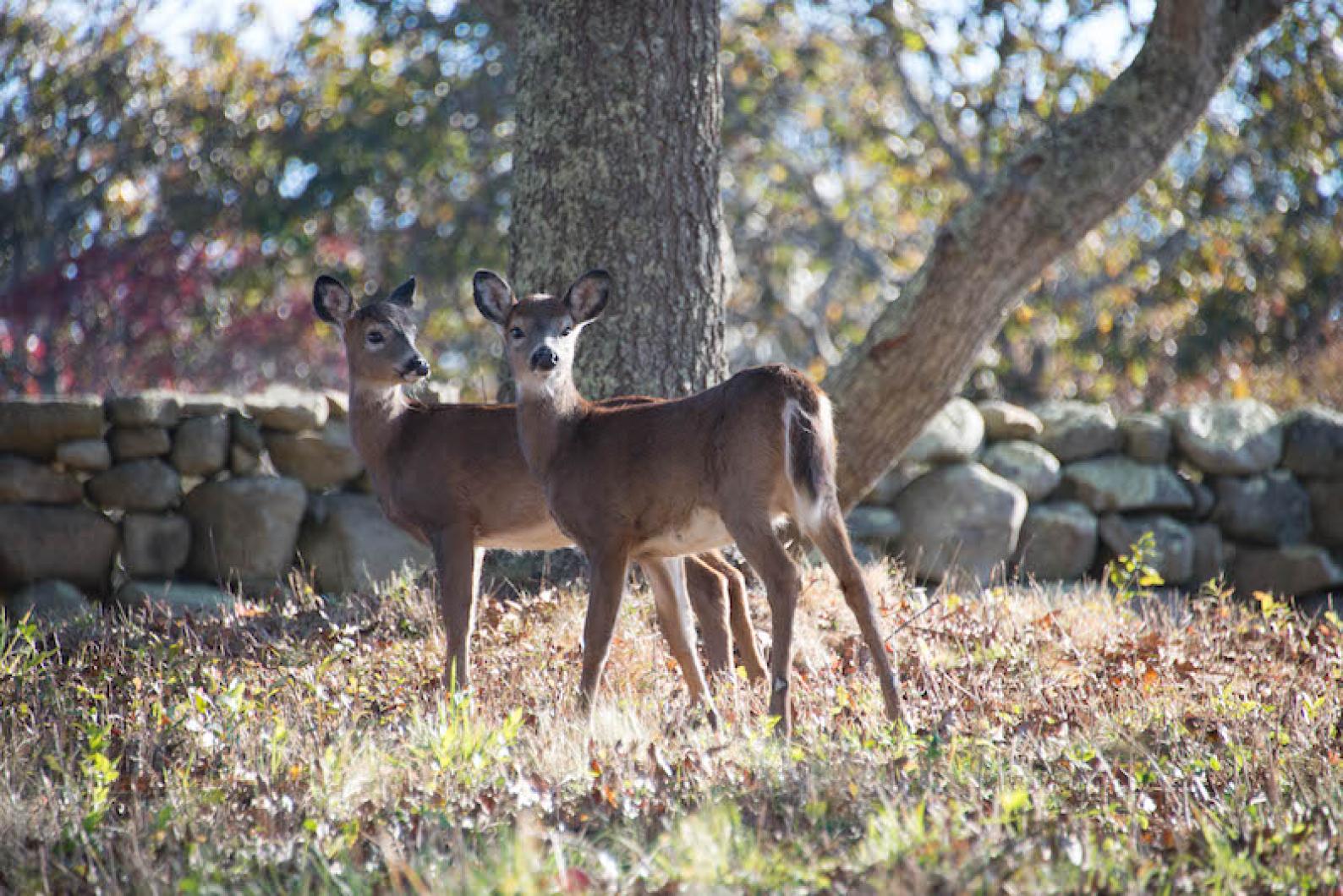
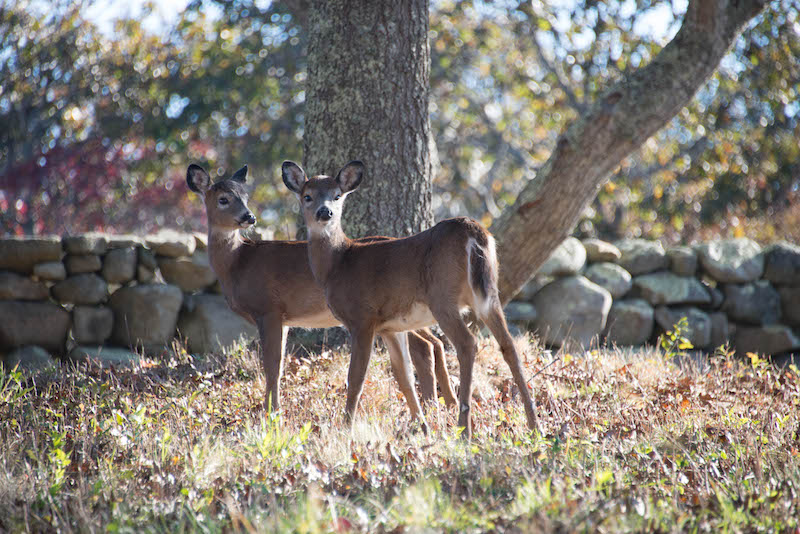
There appears to be considerable confusion about ticks, the role of their different host animals and what can be reasonably be done to reduce the high incidence of Lyme disease.
We read with interest the online comments in response to the article headlined “Vineyard Legislators Back Chronic Lyme Treatment Bill.” People clearly recognize the severity of the problems caused by Lyme disease and other tick-borne illnesses. However, there appears to be considerable confusion about ticks, the role of their different host animals and what can be reasonably be done to reduce the high incidence of Lyme disease and other tick-borne illnesses on Martha’s Vineyard.
People can do many things to protect themselves from tick-borne illness, including wearing protective clothing, using tick repellents and conducting frequent tick checks. There are also many things people can do to reduce the number of deer ticks in their yards, including removing dead leaves, trimming branches to increase sunlight, spraying the edges of the yard to kill ticks, and creating a three-foot-wide gravel or mulch buffer around the edge of their yard. Detailed information about these and other techniques can be found on the boards of health website at mvboh.org.
But while making individual yards safer is important, it represents a patchwork solution at best, given the Island’s large deer population. Aerial surveys and estimates from the Massachusetts Division of Fisheries and Wildlife indicate that Martha’s Vineyard may have as many as 5,000 deer, or 50 deer per square mile.
Significantly reducing the number of deer is the only documented economically feasible way to reduce the incidence of Lyme disease over a large area such as the Vineyard. Studies published in peer reviewed scientific journals demonstrate that reducing the number of deer in an area results in a decrease in the number of ticks and the number of people in that area getting Lyme disease.
A recent study done in a Connecticut community following a hunt to reduce the herd found that reducing deer density to 5.1 deer per square kilometer resulted in a 76 per cent reduction in tick abundance and 80 per cent reduction in resident-reported cases of Lyme disease. Closer to home, blood samples from seasonal residents of Naushon showed a 40 per cent decrease in Lyme disease antibodies after coyotes reduced the island deer population by 85 per cent.
Because deer ticks get the Lyme disease bacteria when feeding on white-footed mice, people have suggested we should focus on reducing mice populations instead of deer. In theory this could work. In reality, there are so many mice and they reproduce so quickly that it would be almost impossible to reduce the mouse population enough to have an effect on the number of people getting Lyme disease.
Deer play a different, crucial role in the deer tick life cycle. In the fall, female deer ticks feed on deer and other larger mammals, including humans. On Martha’s Vineyard, the only significant natural host for adult deer ticks is deer; there are no foxes or coyotes and deer ticks do not feed well on raccoons, skunks or rabbits. Adult males do not feed, but are on the deer looking to mate with the females. Once the female has fed and mated, she drops off and lays as many as 2,000 eggs. If the adult female doesn’t find a deer or other large mammal to feed on, she will eventually die without laying eggs.
In short, although deer ticks do not get the Lyme disease pathogen from deer, deer are responsible for deer tick reproduction. Reducing the density of deer will reduce the number of female deer ticks that feed, mate and lay eggs, causing the tick population to decline over time.
Another important consideration is the increase in lone star ticks on Martha’s Vineyard and the Elizabeth Islands, since lone star ticks also depend on deer for their life cycle. At the moment, with the exception of a few hot spots, lone star ticks are present in low numbers on the Vineyard. However, we expect their numbers to increase, perhaps dramatically, over the next few years. A significant reduction in the number of deer represents our best chance of preventing an explosion in the number of lone star ticks and the problems this has caused on other Islands, including Cuttyhunk, Long Island, N,.Y., and Prudence Island in Rhode Island.
We recognize that any serious effort to reduce Lyme disease and other tick-borne illnesses will need to employ multiple methods at multiple points in the life cycle of a tick. An excellent summary of these alternatives is available at the following link: snyderfarm.rutgers.edu/pdfs/Managing-Urban-Deer-CT.pdf.
Nonetheless, along with public education, we believe that a reduction in the number of deer is the most feasible and cost effective step we can take to reduce the incidence of tick borne illnesses on the Vineyard over the long term. Starting to manage deer more effectively now will make the Island safer for our children’s children.
We are currently involved in discussions with hunters about how more deer could be harvested. One issue that is always raised is the amount of land on the Vineyard that is no longer open to hunting. Therefore, we urge any land owners interested in helping to reduce tick-borne illnesses on the Island by working with us to allow safe, responsible hunting on their land to contact Dick Johnson at 508-693-1893 or [email protected].
Dick Johnson is an Island biologist working with the tick-borne illness prevention program, sponsored by the boards of health of the six Island towns.
Comments
Are deer indigenous to the
Christopher UKAre deer indigenous to the Vineyard and if so did they have any natural predators that once kept their numbers in balance and who could so again if they were reintroduced?
Studies suggest that the
Jim SterbaStudies suggest that the biggest natural predator of white-tailed deer since the end of the last Ice Age has been man; that homo sapiens probably killed more deer than all other predators -- including wolves and cougars -- combined. But modern man living in suburban, exurban and rural sprawl -- places like the Vineyard -- has largely taken himself out of the predation business with all sorts of restrictions enacted in the name of safety long before overabundant deer and Lyme disease became problems. Result: in just the last few decades, for the first time in 11,000 years, huge swaths of the whitetail's historic range are off-limits to perhaps its biggest predator.
Sterilization techniques?
Anne LuzzattoSterilization techniques?
Thank you for speaking out
John EdgartownThank you for speaking out about the deer problem and providing the research to back up this course of action to deal with the high deer density. As every islander has been affected by lyme, either by having it themselves or through friends/family members who have had it, we all know what a horrible disease it is. It is time for us to step up and address the deer population and make the island safer for us all.
Anne,
Matt Poole Edgartown Bd of HealthAnne,
Pages six and seven in the Rutgers study referenced in the Op-ed piece discuss sterilization as an option. It is both very expensive on a per deer basis, requires that a high percentage of the total female deer population receive treatment and is not approved for use at the federal level. I've included the link to the study here: http://snyderfarm.rutgers.edu/pdfs/Managing-Urban-Deer-CT.pdf
Lyme disease is not to be
Peter C. Fyler West TisburyLyme disease is not to be taken lightly or sloughed off. I know because I have chronic Lyme and am still suffering the effects of the disease. I am estimating I contracted Lyme almost 20 years before anyone would acknowledge it as the cause of the myriad of symptoms which eventually culminated in my needing the assistance of a cane in order to walk. It took me over 3 years of high dosage anti-biotic quinine drug treatment in order to get to the point where my pain was manageable -- I will never be cured. My wife and one of our sons had ‘acute’ Lyme and for them 6 months of treatment cured (?) them.
I am so concerned about deer ticks that I have practically clear-cut my entire 5 acre property that is in a community where hunting is prohibited. Some time ago I heard a statistic that said, per square mile, Martha’s Vineyard has the largest deer population after Bucks County, Pennsylvania. I don’t know if that is still true but the point is that we need to do something to reduce or eradicate the deer population here on the Vineyard. I know all the arguments concerning safety and personal property but something has to be done. Deer are a constant hazard to vehicular traffic, and they are decimating our gardens and shrubbery in rural areas. Just the other day I was sitting in my back yard and two deer (I have a small herd on the property right now) walked by the house, stopped not 20 feet away, and looked at me as if to say, what’s for dinner?
Get a life... Please
Pat Miller West TisburyGet a life... Please
Well, that seems pretty
Mr. B. Chilmark, MAWell, that seems pretty definitive and answers my earlier question in the previous thread. If you want to reduce the incidence of Lyme Disease, you need to reduce the deer population to normal levels. And yet we don't seem interested. Can the various boards of health on the island discuss methods for a substantial reduction of the deer population, to "normal" levels and make some recommendations to the towns?
Also, might we have a title for the photo? "Bringing Lyme Disease to your family" would seem to cover it nicely.
Why not do something about
Bebe ChilmarkWhy not do something about the mouse population? They carry the ticks at the nymph stage. If you are successful in reducing the deer population, the ticks will find other hosts. Will you then try to reduce the horse population?
My thoughts exactly.
GregMy thoughts exactly.
Think of all the folks you
Steve FalmouthThink of all the folks you could feed with fresh venison.... A new kind of Vineyard Derby
Lyme Disease is caused by
Carol ChilmarkLyme Disease is caused by tick bites and all should be done to reduce the deer populations. We have authorized 2 different hunters on our property in Chilmark. An even bigger threat to those who have been bitten is the medical establishments denial of the existence of Chronic Lyme Disease which I have been unnecessarily suffering from for 4 years. Even though I had the classic rash and positive tests, doctors refused to give me sufficient antibiotics for the first year after the bite. First an off-island ER and then my PCP would only give me 2 weeks of antibiotics. After waiting to see the infectious disease doctor at MGH for 9 months, she gave me only 5 weeks. Finally a Boston doctor and more recently a famous NY infectious disease doctor have been treating me with herbal and antibiotic remedies for 3 years so that I finally have my life back although never cured. Beware of ticks but also beware of doctors who will tell you 2 days or 10 days of Doxycyline will cure you. Why can girls stay on Doxycyline throughout adolescents to prevent acne but doctors act like the threat of a chronic disease is not as important as the worry about over-prescribing antibiotics?
I think the idea of a Deer
Dick AquinnahI think the idea of a Deer Derby is fantastic. There can be different prizes for Shotguns, for Long Bows, Compounds, Crossbows, maybe even a Kids section. And let's not forget the Flyrod Division: pull out the 12 weights and get ready to hear the reel scream.
I DEFINITELY am in favor of
Nancy Jephcote TisburyI DEFINITELY am in favor of reducing the deer herd. I cannot understand why people don't get behind this. Chronic Lyme has been such a burden for me most of my adult life and also in the lives of so many others, not to mention that it has caused deaths right here on MV. Getting professional hunters involved in reducing the deer herd is the safest way to decrease the risk of this fearsome, untreatable and under-diagnosed illness. I have seen such herd culling done in other places with very good results. Thank you for bringing the issue up so clearly.
The Rutgers study, which
Bill AquinnahThe Rutgers study, which seems very thorough, suggests that the most effective measure to reduce the deer population is hunting with bait. Maybe that wouldn't be considered sporting if one thinks of hunting a solely a sport. But as a population control measure it seems the most potent -- and cost-effective -- option available. If it's not allowed on the island today, I hope the authorities will give quick attention to permitting it.
Reintroduce the cougar,
Allyson Miller Oregon USAReintroduce the cougar, because they also eat mice as well as deer and humans can learn (again) how to co-exist with these amazing lions. Cougar are much safer than dogs, google how many people are annually killed or injured by pet domestic dogs, and you will find that cougars are much safer to live around than dogs. Cougars will also reduce deer-vehicle collisions.
Add new comment