

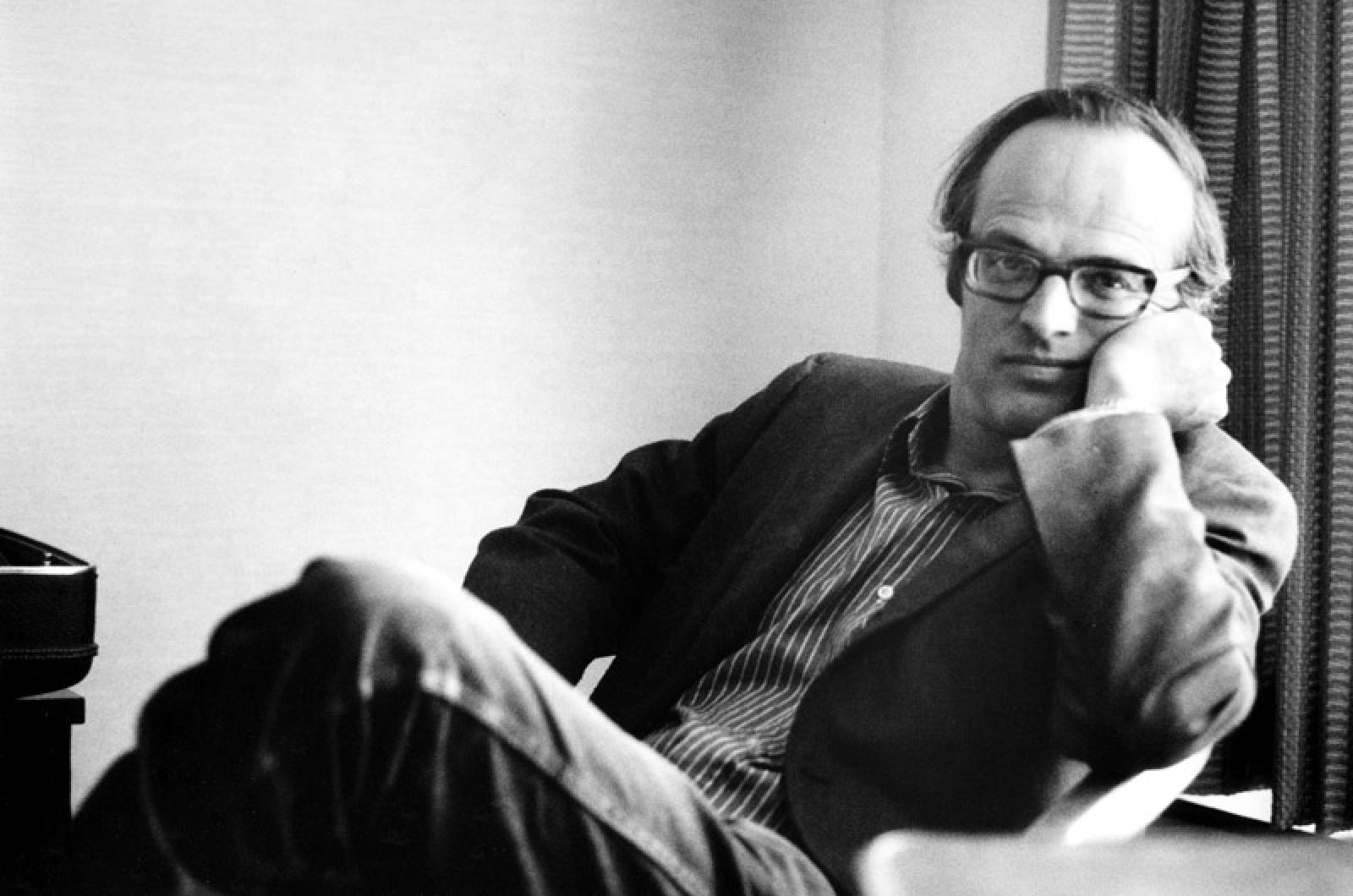
<p>Jan. 12 was the 60th anniversary of the publication of Edward Hoagland’s first book. Over the decades he has forged an unparalleled career.</p>
Tuesday, Jan. 12, was the 60th anniversary of the publication of Edward Hoagland’s first book, Cat Man. Since that time Mr. Hoagland has written 25 books, most of them collections of essays. Over the decades he has forged an unparalleled career as a nature and travel writer, and advocate for the environment and its species, including mankind.
Remembering the publication of his first book, Mr. Hoagland remarked that he was in the Army when it came out, drafted between the time he turned it in to his publisher and its actual publication. “My commanding officer came into the room and said ‘Are you Private Hoagland.’ I said yes, and he said, ‘Do you know you are in Time Magazine.’ A few days later, he returned. ‘Private Hoagland, do you know you are in Newsweek Magazine?’”
In the following essay the author looks back to his beginnings as a writer, when he lived in New York city and walked his essays over to the Village Voice and New York Times. For this essay, Mr. Hoagland walked down Summer street in Edgartown where he lives just a block away from the Vineyard Gazette office.
Newspapers in the old days were used to wrap fish in that you bought from a vendor when you finished with the sports page, so they had a special utility websites lack. It made for the joke, “an overcoat for fish,” of course, but they were fun to write for because you’d see people reading your stuff on the Staten Island Ferry or in the subway a day or two after turning it in.
I did write reviews and editorials for The New York Times, but also for the Village Voice, a tabloid-size weekly buffet of essays, Greenwich Village news and impressionistic riffs founded in the 1960s by Norman Mailer, among others. I rode tugboats around New York harbor for them and covered a Gambino Mafia trial, wrote about love and pain and dogs and turtles, and a lunchroom in the meatpacking district where I lived, where a naked girl in high heels paraded down the counter above you as you slathered ketchup on your cheeseburger.
Feminism, folk and jazz music, busking and street demonstrations — not the least Halloween’s — flowered in the neighborhood, and like the Times, the Voice was simply walking distance from our apartment, as was the Nation, another weekly I wrote for.
Often my pieces for the Nation or the Voice would be edited for use right in front of me, which was a luxury and a delight, and I wrote 25 altogether for each. Similarly, at the Times, a 30-block walk, the editorials I did could be readied for publication while I sat at the boss’s desk.
My daughter was born as I began to write essays, which furnished a nursery of new ideas. Being up at all hours doubly sparked my productivity. Our rent in an artists’ housing project was $200 a month, but my wife was a magazine editor uptown, and although the Voice only paid me $35 for my tribute to turtles, for example, it was soon being anthologized. When Sports Illustrated read it they sent me to Texas and Minnesota to write about red wolves and black bears. Outside Magazine, in New Mexico, also read The Village Voice and flew me to India, and Andy Warhol’s publication Interview forwarded me to Yemen. For The New Yorker I went to Khartoum, and so, with my daughter attending a Quaker school on 16th street, Islam’s universal call to prayer alternated for me with Silent Meeting.
Harper’s Magazine too soon picked me up and became my mainstay among the monthlies, running stories on Eritrea and Nairobi. By good fortune, in 1950 I had lunched with John Steinbeck at Sardi’s, and in 1964 sat next to Leonard Bernstein on the stage at the American Academy of Arts and Letters. So I was not a greenhorn. Yet a writer must consider himself a greenhorn to learn much.
“How do you trap muskrats? Hey, if you’re eating them let me taste it.”
Freelancing for more than 60 years is a long haul, but I also ate off my Simon and Schuster editor’s plate at The Four Seasons when I first met her. I remember greenbacks being called frogskins and when edema was dropsy. If somebody forgot to pay, you could call and say, “I haven’t seen the color of your money.”
Now, on Martha’s Vineyard at least, it’s gotten so fancy that when a Fortune 500 company I’d written a piece for forgot to pay me, I wrote to remind them that their CEO summered on this Island. I threatened to picket his house — being a veteran of Martin Luther King’s march on Washington in 1963 — if they didn’t get on the stick. The check arrived with an extra zero tacked on the end.
I’m not in favor of highway robbery, to borrow another eclipsed phrase, just socialism.
An old girlfriend later described me to her husband as “the man with a thousand questions.” That’s what we writers do, ask questions. The person queried may feel that her choices in life are being challenged, if the experience is novel, but usually our effort is simply to understand. Why have you severed your ties with that parent? Why the career switch at 42?
We look up Francois on Main street for a back story, or Don on Dock street. That’s what news is, a narrative. And newsprint was my vehicle for half a century. I loved it.
Comments
Wonderful stuff. I would
Gregory Williams Marstons MillsWonderful stuff. I would devour any writings by my friend, Ted Hoagland, including his grocery lists. His novels and essays are unstintingly honest. If you have not read any of his criminally underappreciated books, please visit Amazon now and charge away.
Few if any writers live this
Howard Frank Mosher Irasburg, VTFew if any writers live this kind of knockabout, freelancing life in our era. Instead, they attend MFA programs and then comfortably settle in to teach in them. Contemporary literature has been impoverished by this trend. Edward Hoagland's MFA program has been the wide world. So far from seeking out a safe harbor, he has sailed the seven seas. Those of us who still love to read are the fortunate beneficiaries of Mr. Hoagland's odysseys.
I am delighted to be
Rosalie Cohen Hidden CoveI am delighted to be enlightened about Edward Hoagland's literary career and will go to my kindle today and order away. Also, I am in two book clubs and they will hear about him and I will show the article to them.
Always happy to find writers and their work that I have missed. Thank you for the article.
I read with interest and
Douglas F Kiorves AIA Edgewater NJI read with interest and nostalgia your early years in the West Village. Although a little younger, I knocked about the "Meat Rack" from the 50's through the 70's.
First as a grade schooler in the 50's as my Brooklyn classmate's father owned a butcher shop and we went to market with him at 4:30 on Saturday mornings and watched blood-soaked men in white aprons and coats carrying sides of beef on their shoulders to trucks and cars. We then went and had breakfast at that corner diner with all the meat workers smelling of fat and blood.
In the 60's, my friend was one of those lucky people to get one those lofts as we both had Richard Meier, the Architect of Westbeth Artists Housing, as our architectural instructor at Pratt.
In the 70's, my wife and I befriended Joel Oppenheimer who also lived in Westbeth. I tried hard as I could to get him and his bride up to our house on the Vineyard but, he had a manic phobia about being trapped on an island. He did not consider Manhattan an Island. Joel always wanted to be an architect instead of the fine poet he was and loved baseball and his Mets. He would draw plans of his dream house on Brooklyn Dodger Stationary he got when they demolished Ebbitts Field.
I crashed around the clubs of the West Village into the wee hours when I had a client who was a rising fashion designer by the name of Perry Ellis in places like 12 West and the Anvil.
Thank you for stirring my memories of: coming of age in The West Village, the Voice, and the print media - when people thought, wrote, read and absorbed content.
Add new comment