

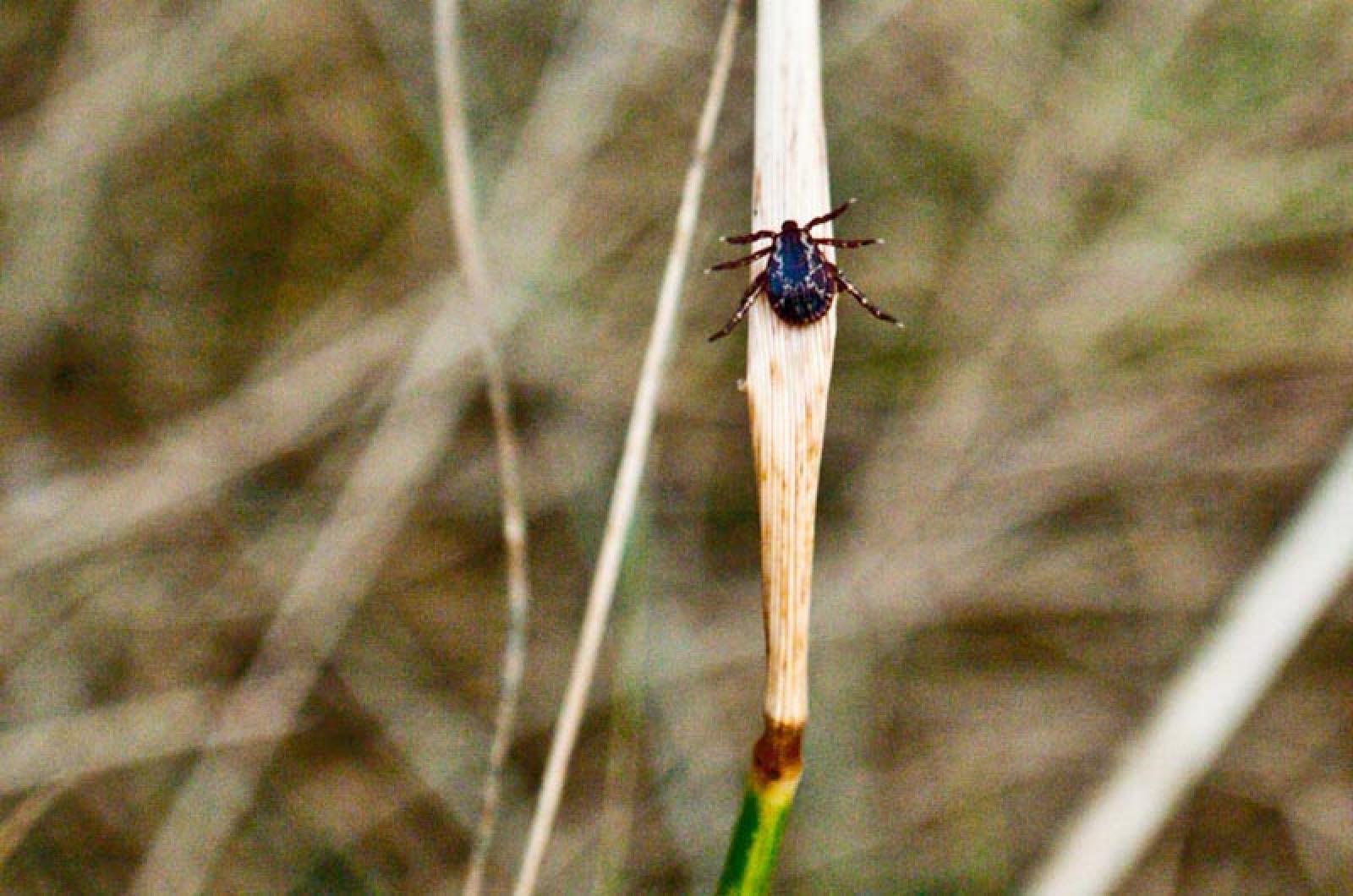
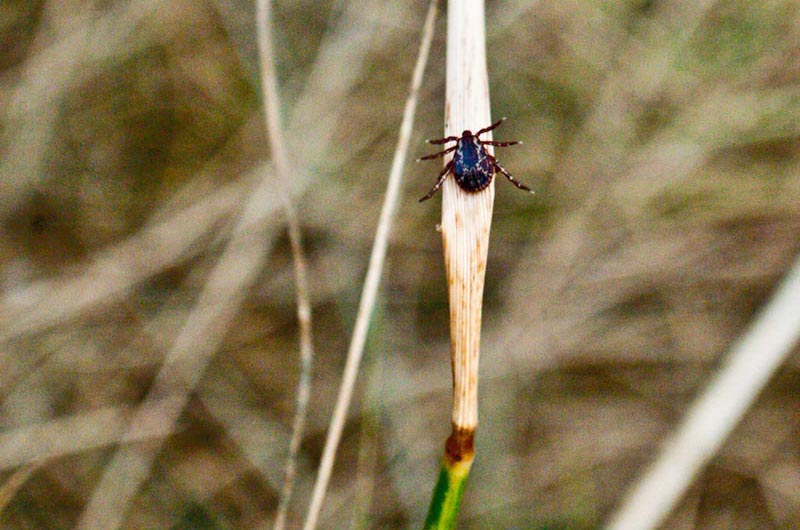
Our Island and neighboring areas are faced with a full-blown epidemic of these diseases. Accordingly, we need to plan and act.
Over the past year, I have read many articles and editorials in the local Vineyard papers regarding the number of deer on Martha’s Vineyard, Lyme disease, and more recently, the discovery of new type Lone Star ticks here. All are written with care and by well-informed individuals. Many of my friends, family and Vineyard acquaintances have been infected with Lyme at one time or another and some have been afflicted with other tick-borne diseases. Many have had painful and debilitating experiences, while others have been more fortunate being cured by timely treatment with antibiotics.
Articles mention deer as a carrier for ticks and the relatively high population of deer on our Island. Despite all the current efforts, it appears that the number of human cases will escalate unless something is done. This disease also takes a similar toll on our livestock and pets, which presents an additional financial and emotional burden.
The Island is fortunate to have such a large number of dedicated physicians, conservationists, biologists, and civic leaders. They have offered both good educational information and treatment plans and made these available to the general public. The boards of health and physicians have put together excellent video and print media relating to the prevention and treatment of Lyme and other tick-borne diseases.
Now some of the attention should turn toward the other tick borne diseases such as babesia and ehrlichia, which can also be transmitted by deer ticks and induce illness in tandem with Lyme disease. Our Island and neighboring areas are faced with a full-blown epidemic of these diseases. Accordingly, we need to plan and act. We need to engage the public and to spell out what the adverse medical implications are for allowing the deer population to continue to expand unchecked. We need to interrupt the life cycle of the deer tick in white-footed mice and deer. Several nearby communities have depleted the size of their deer herds and noted decreases in tick-related disease. Perhaps the time is now ripe for such a stance to be taken by our Island community.
I have a great respect for nature and fully respect the views of those who may wish to leave the status quo alone. Comments such as “I have always got by in the past — we have antibiotics available . . . . so why not leave well alone” may appear appropriate. But all is not well and the status quo is not satisfactory. There are those among us who have had awful chronic manifestations of Lyme or other equally debilitating tick-borne diseases. Recent articles in the scientific literature as well as newspapers in Rhode Island add to the urgency of confronting this medical epidemic. One recent story appeared in the Providence Journal (Dec. 29, 2015) where we learned that deer tick-borne babesia and ehrlichia can be transmitted by blood transfusion. As a result in Rhode Island, all blood will now be screened for babesia prior to its use. This added expensive safety procedure is also being adopted in other states within the nation.
We also have to consider what tick diseases may fully represent to us as a community in the present and for the future. What is the economic impact of the cost to our tourist, rental and real estate community, for tending to our livestock, horse farms and pets, to the landscaping costs from foraging damage, and of course our medical insurance costs; all related to ticks and associated with the expanding numbers of deer.
I believe now is the time for all views on this subject to be openly and honestly discussed, with full respect being given to all views and opinions. A candid debate is now called for as to how and to what extent the deer herd needs and should be culled. A decision also needs to be made as to whether to embrace other approaches including anti-fertility strategies for the deer, and whether to extend any overall strategy to include the white-footed mice, the major reservoir for the source of Lyme disease.
We need to learn from the experiences of other nearby communities, to develop a consensus within our Island community for a potential plan to reduce the deer herd, and to design a plan where the outcome is considered sustainable. Such conversations need to be conducted with clarity and in an open manner. A well-formulated plan developed here on Martha’s Vineyard is now paramount. If successfully designed and implemented, it could be used as a blueprint for other nearby towns and communities. It most likely will require state input and resources. What we decide could be emulated throughout the nation.
David J. Morris, Ph.D., is emeritus professor of pathology at Alpert Medical School at Brown University in Providence, R.I. He owns a home in Vineyard Haven.
Comments
I've had Lyme twice, so I
Brian Hays Brookside, NJ and ChappyI've had Lyme twice, so I think about it a lot. The birth control in food is only temporary. Did the experts ever consider using tranquilizer darts on bucks, give them a vasectomy, then put a tag in their ear to identify them as "done". Bucks fertilize many does a year.
Great idea! Save the humans
deb hart VHGreat idea! Save the humans without sacrificing the deer. Love it.
Vasectomies for bucks?
Dick AquinnahVasectomies for bucks? Really, this is the best you've got? Is it now time to pull out the old "vas deferens" canard (he asked looking to somewhat duck the issue)?
Do you have a better idea?
Erin VHDo you have a better idea? Nothing should be off the table while the ticks are winning.
We need to burn the
Beau BeginWe need to burn the underbrush and the fields like was done in the past. Fire is nature's way to purge the scourge.
Get rid of the humans.
Paulie Pete edgartownGet rid of the humans.
We're fortunate to have
Brad ChappyWe're fortunate to have someone in our midst with the experience and knowledge of Mr Morris. Moreover, we're lucky that he is taking an active role. The time has long passed for flippant remarks or casual dismissal.
I agree with Erin (and Brian) that there are no "bad" ideas at this juncture. I hope our community embraces this opportunity to work the ideas of interested and experienced people. The spirit in which Mr Morris approaches this issue is to be commended, and I'd urge all to put aside politics and our penchant for argument. We need to work togethertoward a resution of this very serious problem.
Thank you, Brad. As always,
Megan Lait san carlos, Ca & chappyThank you, Brad. As always, words of wisdom.
Since I am a seasonal
Roz Glazer New YorkSince I am a seasonal resident and have only had Lyme disease 3 times, erlichia once, and babesia once, and was out of commission
for a month each time, lying around believing no one when they said I would eventually get better, I am in in favor of extending the hunting season for deer so we can significantly diminish the population in the name of public health. Short of that, it's only going to get worse.
Deer contraception has worked
Joy West TisburyDeer contraception has worked in other communities. It is more likely to be successful on an island. There is science to this. We should be discussing it. http://www.deerfriendly.com/deer-population-control
I'm all for a serious
Dick AquinnahI'm all for a serious discussion of the topic, but regarding buck vasectomies, what do the stirrups look like and just how do you get the animals into them?
A spring deer hunt added to
Robert EdgartownA spring deer hunt added to an extended fall hunt without deference to sex for five years would have a meaningful population impact. Then a tick population and associated disease study would determine the soundness of the action.
We need to reduce the size of
Mr. B ChilmarkWe need to reduce the size of the deer population significantly and then work from there. There are simply too many deer on the island. I am not sure expanding the season by itself would help much, as I don't have a sense that folks are getting deer for anything more than eating it. And, who is coming to the island to hunt? However, I think we should consider an expanded season and a one-year "bounty" on deer to see if that gets the population down to the point that "science" can control things.
Do we have a deer problem or
T.S. MVDo we have a deer problem or do we have a human population on this island that has tripled in the past 15-20 years causing more people to be exposed to ticks? Should we be looking a fuller picture? Do we have people in local government here who are capable of looking at a fuller picture?
We've been coming to the
Gayle Turowski New YorkWe've been coming to the Vineyard for 35 years in June. Last June we bought a guide book and did several hikes in places we had never visited. One place (I think it was Quansoo - name escaping me ) but it consisted of fields and woods. We started out in the fields and in no time we had so many ticks on us that we had to abort our hike. We were protected with heavy socks ouside of our long pants and still I found that the ticks burrowed through my socks into the cuffs of my pants. Even shaking out our clothes, checking our hair, on the way back we had ticks crawling all over our car and within the hour one had attached itself to the nape of my neck. I am always out in woods and fields at home and never had I experienced this many ticks in a short amount of time. Not sure what the solution could be. Bring in the owls to eat the mice who carry the ticks. The deer just give them a 'ride' to other areas.
Many human lives are
banger377 RehobothMany human lives are destroyed by these ticks. Mice are a main vector and they can be treated inexpensively with home made tick tubes (everyone treat their own area). As for the deer, hunt them to extinction on the islands with a year long open season. They're animals and can be replaced if really wanted.
I lived year-round on MV for
Diana Roberts Islesboro, MaineI lived year-round on MV for over 20 years and first got Lyme there in 1982 when Dr. Russell Hoxsie was sounding the alarm about this "new" disease. Now I live on a small island in Maine where there were no ticks until about 10 years ago. Our summer people are up in arms and have rallied around the idea of hiring a sharpshooter to reduce our very significant deer herd population, as they did in Monhegan. The islanders voted the idea down, feeling huffy that the wealthy could just buy back Paradise and mess with Nature. Islanders wanted an extended hunting season but didn't get it from the state. We have no shotgun season as we're too small an island, and bows and arrows aren't doing the trick. All in all, it's become a very divisive issue, full of emotion and "I know what's right and you don't." No solution yet in sight. Will be curious how my old island handles it. And for all you castrating jokers, I believe the deer are made infertile by a pill, not an operation!
Ridicule of new ideas is not
Nancy Jephcote Vineyard HavenRidicule of new ideas is not new, of course, but really, THANK YOU for bringing these issues to the fore and starting a vital conversation. In my home town of Iowa City, Iowa they permitted and hired sharp shooters to seriously cut back the deer population in a way that hunting could not do.
Anecdotes from a sample of
Frank Partel ChappaquiddickAnecdotes from a sample of one. I have had a house on Chappaquiddick for 30 years, and I began spending three months each year on Chappaquiddick 16 years ago. For 28 years I was never bitten by a tick although I certainly removed several wood ticks during that period. Two years ago I experienced my first deer tick bite. Last summer I was bitten twice. Over this period I progressively cut pine trees in the woods opening them to sunlight and expanded mowing our meadow. Bob Johnson regularly samples our meadow for ticks, and none of these measures seem to have reduced the tick population. Deer cross our land within 30-40 feet of our house virtually every night before dawn. White footed mice find their way into the garage and other interstices each fall and winter.
65 years ago my father owned 14 acres of pristine, wooded land and habitat on Lovejoy Pond in Maine upon which he built a camp. Raccoons, chipmunks, skunks and porcupines were regular neighbors. We could hear loons and deer barking at night, but deer tracks and the deer themselves were rarely seen. A farmer was pleased if he got and slaughtered one deer. Ticks were unheard of although black flies, aka, “no-see-ums” and mosquitoes were legendary.
It seems paradoxical that as development has increased so has the deer herd and the commensurate tick populations. It also seems apparent that action needs to be taken; not another study, but action that will reduce the threat of serious and fatal diseases. Centuries ago Europe was afflicted by bubonic plague that was carried by rats and decimated certain populations. Science and epidemiology have progressed since then and enable us today to take preventative action. Dr. Morris has rationally sounded an alarm that we have all heard before while the risks continue to rise. We can continue to study ticks like global warming, or we can come together now for effective action.
I have been among many
nita fandrayI have been among many analyzing the "deer management" issue in the community of Mt. Lebanon, PA. May I point out a deal-breaking flaw in the suggestion that male deer or bucks be neutered? It would not work. At first glance, it seems like a great idea, I agree. However,if you sterilize all but one buck on the Vineyard, that buck will impregnate more does than you can imagine. Bucks get around. That is why buck sterilization has never been implemented. Why not sterilize the female deer or does? Especially in an island setting, you would not be confronted with the "compensation" effect. On the mainland, killing deer in any area does not mean that the following year you will see a reduction in the herd. Deer move in from neighboring places to take up the spaces left open by the dead deer. I believe that Fire Island, NY, may have sterilized its doe herd. You may want to start by talking to those folks.
Kindly allow me to add an
nita fandray pittsburghKindly allow me to add an important note about Lyme Disease. The Pennsylvania Game Commission has never met a deer it didn't want to kill. PA is a HUGE pro-hunting state. That said, even the PGC has announced that "there is no clear relationship between deer density, tick abundance and Lyme Disease incidents. Deer are a dead-end host for the Lyme disease bacteria. They do not infect ticks with the bacteria that cause Lyme disease nor do they contract the disease when an infected tick feeds on them. Deer play no role in the transmission cycle." So, if you have had the unfortunate experience of contracting Lyme Disease, you most likely contracted it from woodland mice, especially deer mice and eastern chipmunks. Indeed, the disease was named after the Deer Mouse. It was not named after deer.
All of the above comments are
Carol formerly ChilmarkAll of the above comments are good. I'd like to also mention the importance of not using poison to kill the mice (or rats, for that matter), because it kills owls, raptors & snakes that then feed on the poisoned mice. And you want those predators around - one barn owl family can consume 3,000 rodents in one breeding season! Links:
http://www.hungryowl.org/education/natural_history.html
http://www.raptorsarethesolution.org/
Lyme disease hosting and
Ben West TisburyLyme disease hosting and transmission is a complex and challenging problem. Tick infection, hosting and transmission are far broader than mice and deer. Vertebrates including skunks, rabbits and migratory birds also host, infect and transmit deer ticks. Our yard in WT has all in abundance.
Acknowledging that deer are
Sam Hiser West TisburyAcknowledging that deer are only one part of this systematic catastrophe, a case could yet be made for ZERO DEER. This potentiality could be a part of an open-minded exchange. The point is a conservative one, since there were no deer on the Island as recently as the 1940s.
Add new comment