

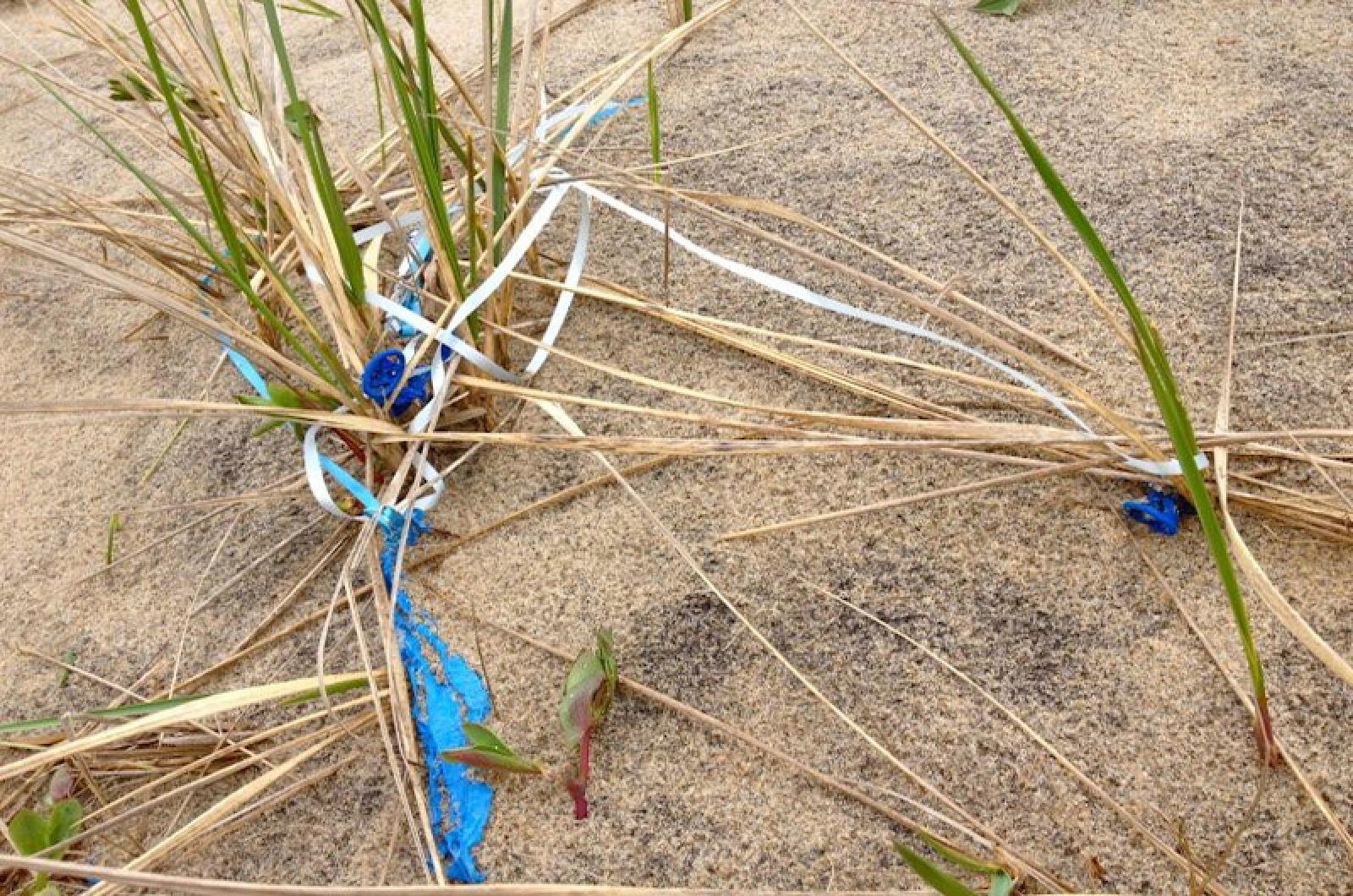
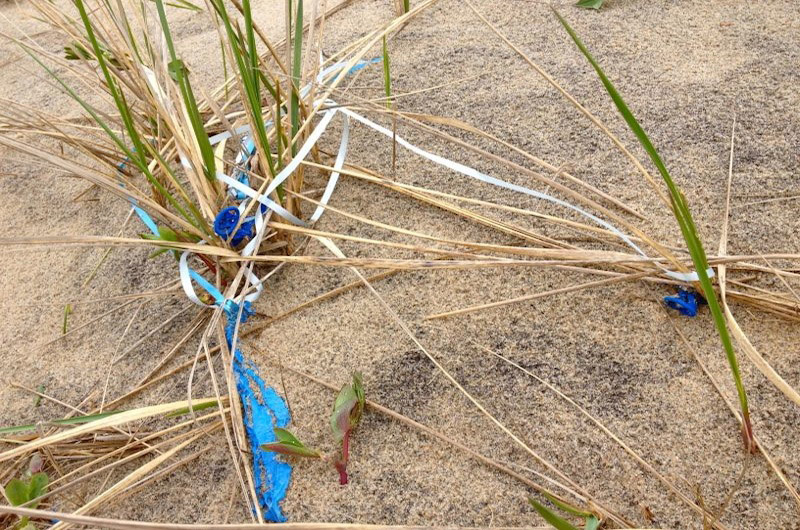
Constance Messmer, along with others, is taking a stand against balloons.
“Never doubt that a small group of thoughtful committed citizens can change the world; indeed it is the only thing that can.”
This quote by Margaret Mead might describe the visions and dreams of a small group of Island activists led by Constance Messmer.
Constance, along with others, is taking a stand against balloons. They are floating a trial balloon, so to speak, asking local businesses to not sell balloons. Cronig’s Market has taken up the charge and even gone a few steps further, deciding not to sell balloons, but also glow sticks and Styrofoam, all of which end up littering our beaches and endangering wildlife.
Though the glow sticks and Styrofoam are human-made plastics, most balloons are made of latex, which is arguably natural since it is made from a plant. However, paradoxically, this natural material is treated with chemicals that retard breakdown and create more colorful orbs, causing them to linger longer and potentially pollute.
Since what goes up, must come down, those balloons that drifted up to the sky will fall back down to earth. Helium-filled balloons float up inspirationally, but will eventually, unhappily, fall back to the ground or explode into many pieces.
The foil (mylar) and latex balloons are both believed to be a problem in the environment, causing distress and death to marine mammals, cetaceans, birds and other wildlife. Damage is done when animals ingest balloons or pieces of balloons. In the case of marine life, many species that eat jellyfish or squid confuse balloons for their particular prey. Though the latex can biodegrade, it can take anywhere from six months to five years for that to happen.
And those colorful ribbons that hold them cause their own problems. Animals can ingest them or get tangled in them, causing lacerations or strangulation. A favorite Island bird, the osprey, will collect and use the ribbons in their nests. In the worst circumstance, those ribbons can harm the bird or its chicks if they get tangled in them, making their natal nests a source of possible peril.
There are other concerns since both types of balloons are sometimes filled with helium. It turns out that although helium is a very common element, it can only be found naturally in the environment. Humans have not figured out how to manufacture helium. In this case, where the rubber meets the road is that helium is a very important element for cooling, specifically the cooling of medical equipment. Every bit of this precious gas that is wasted in balloons will never be recovered or remade for more important uses.
The worst offenders are the mass balloon launches, where many of these orbs are released simultaneously to celebrate or honor an occasion or person. Weddings, funerals, special events and openings are occasions that have included mass balloon releases.
This practice, however, is going out of favor. Many states, organizations and businesses have banned the activity, including New York, Florida, Texas, Tennessee, Virginia, Connecticut, Walt Disney World, the National Park Service and even the White House.
Far be it from me to make balloon animals extinct, or sadden a balloon-loving child, but consider alternatives and use balloons responsibly. Bubbles, flags, banners, streamers and paper pompoms or flowers are all things to get kids excited about, but that won’t harm our wildlife.
While these suggestions might go over like a lead balloon, please do consider these alternatives. Your choice could make a difference out on the open ocean or at a beach near you.
Suzan Bellincampi is director of the Felix Neck Wildlife Sanctuary in Edgartown, and author of Martha’s Vineyard: A Field Guide to Island Nature.
Comments
Happy that I'm not the only
Marg ChilmarkHappy that I'm not the only one despising those balloons. It's baffling to me why some choose to celebrate with releasing trash. 'Whee I just graduated, turned 40, got married etc, lets pollute the planet and kill sea turtles'.
There was an organization out of Florida called Baloons Blow, that was raisimg awareness, maybe a Vineyard chapter?
Now if we could just rid the beaches of styrofoam....
A group of us are moving to
constance messmer ChilmarkA group of us are moving to rid the Vineyard and coastal states of the Styrofoam as well! Now is the time for responsible living and laws to help with our efforts. Happy that I am not alone! Long live aquatic life and healthier oceans!
Each time I buy something at
Lindsay allison ChappaquiddickEach time I buy something at the Black Dog stores and am offered a balloon, I have tried to tell the salespeople there how dangerous they are.After working in a clinic for sea turtles off Sicily and seeing how many animals have ingested balloons and needed surgery to remove them, I find there being given away in stores, on an island,
to be unconscionable.
Lindsay, I couldn't agree
Constance Messmer ChilmarkLindsay, I couldn't agree more. I've heard that The Black Dog has been asked to stop selling balloons, but won't. This surprises me, especially since the Douglas Family are seemingly such ocean lovers. Perhaps this is the year that they will change their ways and join with us as we bring about this important change in our evolutionary journey. Our goal is to have Vineyard balloon suppliers or businesses join with us, before moving to a necessary ban. But we will do what it takes, since it is unconscionable, as you say. With such popularity, The Black Dog "letting go of their balloons" once and for all would be such an inspiration around the globe. They could make it part of a wonderful media campaign. Let us both write them a letter.
We share you opinion, and we
Fred FranceWe share you opinion, and we wrote last week an article about balloon release. It's so bad for environement that we decided to make a vote ans a list of person who realse ballon without thinking a second of wildlife : http://decoration-ballons.over-blog.com/pour-ou-contre-le-lacher-de-bal…
Please share it and join us on facebook for the big vote
More people need to be
Rebecca AustraliaMore people need to be alerted to the harm caused by balloon releases. It is hard to pass on this message if they are grieving and angry and mistakenly think balloons will reach loved ones in "heaven". I am sure the deceased relative would be turning in their grave to think people were mass littering and harming marine life in their memory.
Add new comment