


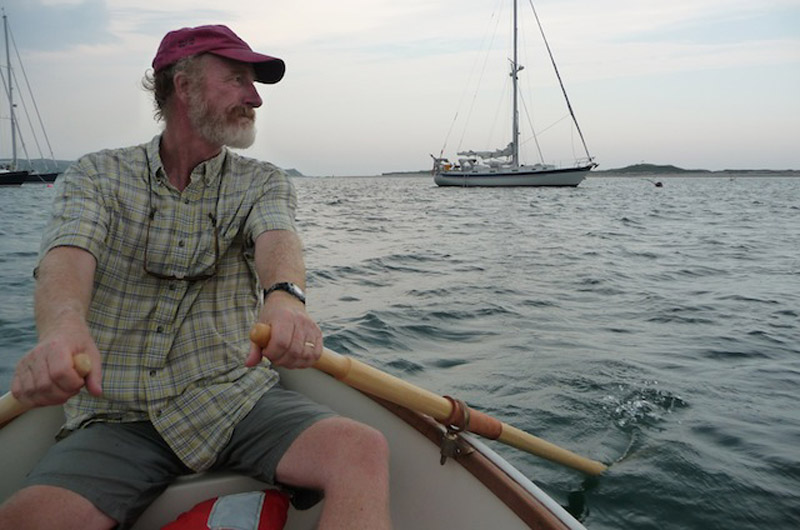
Three years have passed since the publication of the book, The Mortal Sea, but its impact continues. The 378-page history of the dramatic decline of fish in the western Atlantic took 10 years of investigative work to write.
Three years have passed since the publication of the book, The Mortal Sea, but its impact continues. The 378-page history of the dramatic decline of fish in the western Atlantic took 10 years of investigative work to write. The book opens when European fishermen sailed these waters in pursuit of cod and finishes in relatively recent times, with the introduction of diesel powered draggers 60 years ago.
Jeffrey Bolster, the author, continues to give talks and share his book’s mission. On Sunday, Oct. 11, he will speak at the Chatham Historical Society.
In a phone interview with the Vineyard Gazette, Mr. Bolster said: “By the time I finished writing the book, I realized that I had written a parable. You will always have scientists saying we have taken too much. And you will always have someone say that the science isn’t enough. Whether you are talking about potable water in California, about plastics in the ocean or global warming, there will always be someone on either side of the issue, someone saying we need to proceed with caution. On the flip side, they will press on regardless.”
The fish in the ocean once numbered the grains of sand in the Sahara, he said. “And there was thinking that there was nothing we could do to touch it. Yet, it turns out, the killing of the fish in the ocean was far easier than the killing of all insects on the land,” Mr. Bolster said.
Author Jeffrey Bolster.
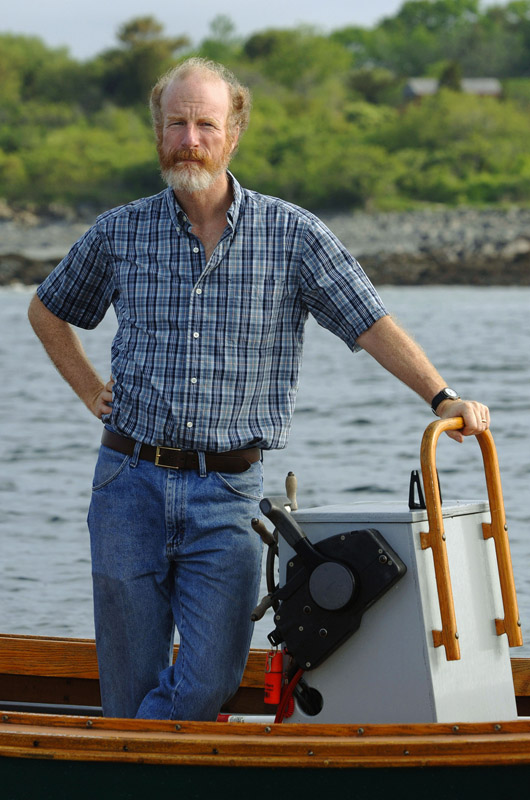
Author Jeffrey Bolster.
Today most striped bass caught along the eastern seaboard were spawned in the Chesapeake Bay. Yet more than a century ago, striped bass spawned in many of the rivers of the eastern seaboard all the way up to Maine.
“The story of efforts by society to curb fishing have been in discussion since the Civil War,” Mr. Bolster said. “The discussions about whether there will be fish in the future didn’t start with the Manguson Act. It didn’t start with the Russian factory ships. It starts from the Civil War in New England, Canada, Norway and in England. The question was, will there be fish in the future.”
Mr. Bolster, 61, is a history professor with the University of New Hampshire. To research the book, he, along with a crew of student scholars, went through public documents in state houses, in newspapers and many other sources.
“There is a huge paper trail,” he said. “Going into the state archives of Massachusetts, Maine, Nova Scotia, the paper trail is extraordinary... My hunch was that if that was the case, I can write a book. People have had an impact on the abundance of fish in the ocean well before GPS, well before diesel and polyester nets.”
Mr. Bolster said the notion that humans can quickly fix such a long standing problem they created is a mistake.
“We have a problem with depleted oceans,” he said. “It goes back hundreds of years. We keep trying to fix it by imposing short-term solutions which don’t last. Ecological time and political time are not the same. Residents of California are under great duress. They have asked people to stop watering lawns. They have a deep problem. They continue to grow the consumption of water, yet the water supply keeps getting smaller.”
Mr. Bolster continued to illuminate the problem with parallels to other issues, including those where species have seen drastic declines and comebacks. Mr. Bolster said the National Audubon Society worked very hard to restore endangered birds. Further, he said in the 1970s, there have been productive efforts to bring about the return of the seal.
“We have our success stories, but it turns out that managing fish stocks is far more difficult,” he said. “They aren’t as charismatic. This is part of the problem. Until you can convince people that sushi from a bluefin tuna is something [too precious to harvest] like eating a polar bear, then the fish won’t have a chance.”
Comments
Jeez - If Mr. Bolster's
Nils Stolpe New Smyrna Beach, FloridaJeez - If Mr. Bolster's subject is fiberglass sloops that are +/- 40 feet long your photo/caption really works, and he might have more of a handle on California's water problems than most of us. However, when it comes to (domestic) fisheries, while people have certainly has an impact on fisheries, that's what it's gonna take to keep over seven billion of us fed, and not necessarily fed and happy. I can't speak about the world's oceans, but considering our U.S. "oceans' (the EEZ), we are in better shape than we have been in in several generations. Overfishing is almost completely a thing of the past in U.S waters and the only thing standing between us and the yields of the past is an unrealistic, ineffective and oft-times punitive regulatory regime.
But keep turning out these articles and pushing these books, because we know that recovered fisheries doesn't sell to the public and doesn't swell either the ENGO's or the eco-alarmist's coffers.
Add new comment