

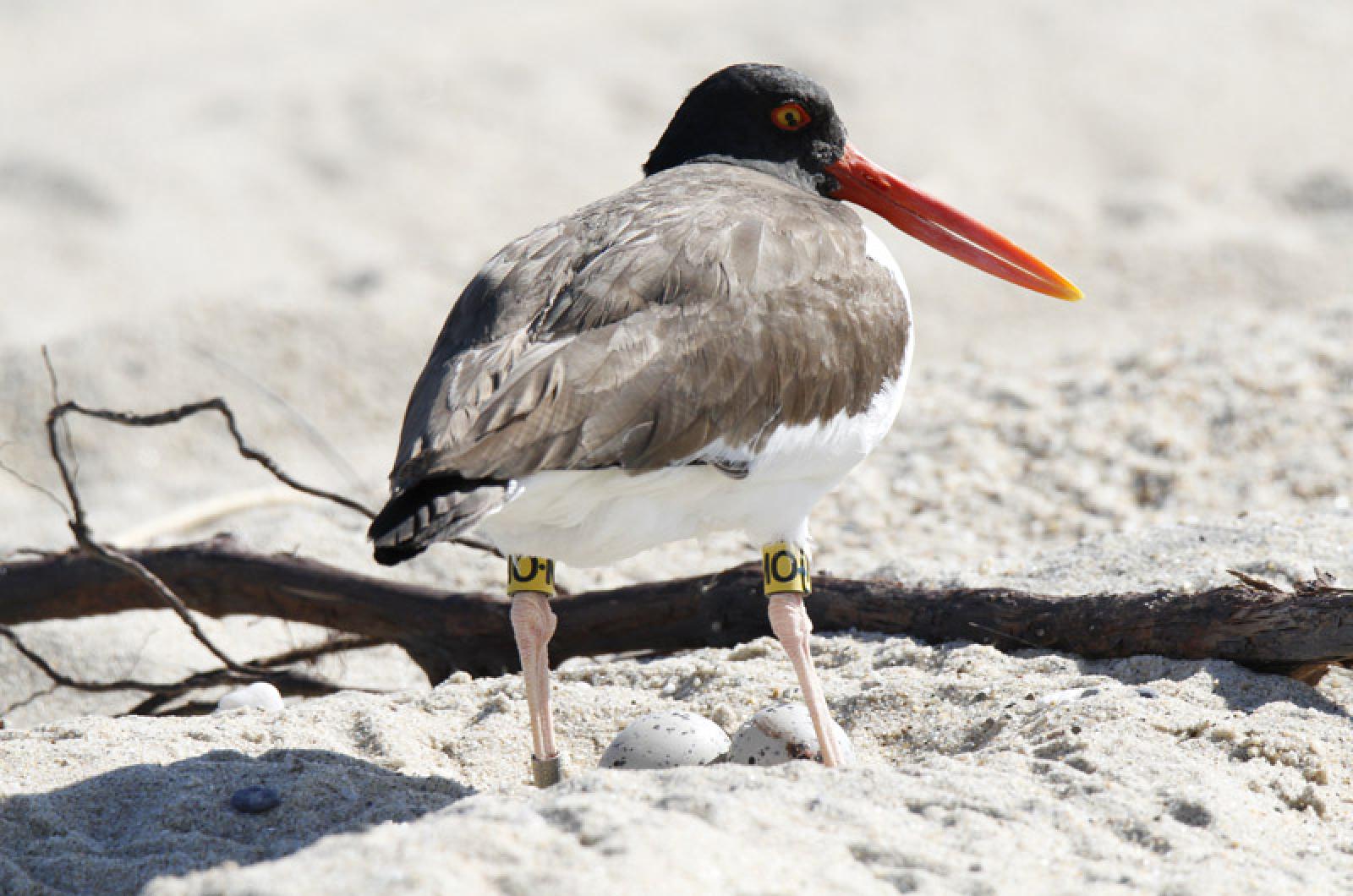
<p>Cape Pogue was closed to vehicles this week as plovers and terns begin to hatch. Shorebird protection programs have been in place for decades. But this year’s closure has fueled the concerns of local fishermen who have been enjoying one of the best bluefish runs on Chappaquiddick in years.</p>
Fences and signs have sprung up on Chappaquiddick as the annual brood of plovers and terns begins to hatch. To comply with state and federal guidelines, The Trustees of Reservations closed all of Cape Pogue to over-sand vehicle traffic this week. Dogs are also prohibited on the beach.

Four-wheel drive vehicles are banned from beaches for a few weeks each year while piping plovers are nesting.
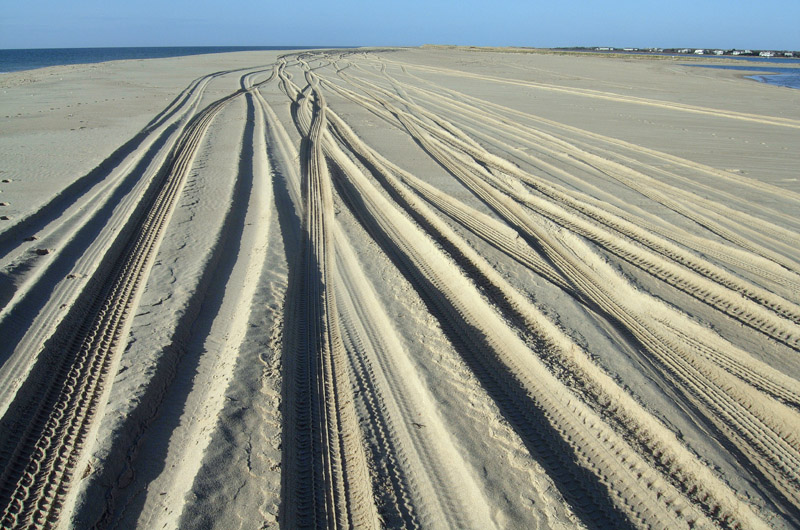
Four-wheel drive vehicles are banned from beaches for a few weeks each year while piping plovers are nesting.
Shorebird protection programs have been in place at Cape Pogue for decades. But this year’s closure, while not unexpected, has fueled the concerns of local fishermen who have been enjoying one of the best bluefish runs on Chappaquiddick in years.
“As they get more birds it gets worse and worse and worse,” said Cooper Gilkes, owner of Coop’s Bait in Tackle in Edgartown, a popular stop for Island surfcasters. Business at Coop’s picked up this year with the restoration of Wasque Point, on the south shore of Chappaquiddick, which was severely breached during a storm in 2007.
Two weekends ago, dozens of vehicles and fishermen lined the beach, where newly restored rip currents were teaming with bluefish. After a few slower days last week, the bluefish are running again, but so are the plovers, and many fishermen feel sidelined. On Wednesday, a dozen trucks were parked at Wasque, as people relaxed in lawn chairs or silently cast into the surf. Riding over the sand in his pickup truck, Mr. Gilkes pointed out the circular fences surrounding new plover nests. “When these things hatch, there goes your beach,” he said. The line of trucks stopped at Wasque Point, where Leland Beach continues north along Cape Pogue.
The closures allow for continued foot traffic near the water, but many fishermen say they depend on vehicles to access Norton Point and the remote beaches around Cape Pogue.
“You’re not going to walk very far in heavy waders,” said Harry Taylor, who earlier in the day was at Coop’s to pick up some gear. Mr. Taylor also questioned the practice of selling over-sand permits for beaches that are closed.
Mr. Gilkes said tackle shops from here to Maine are suffering from the closures. “We are doing all right,” he said. “But there’s people that are going borderline and then the next thing you know it’s too late and nobody is there to throw a rope to them.”

Tiny plover chicks are born precocious, making them vulnerable.
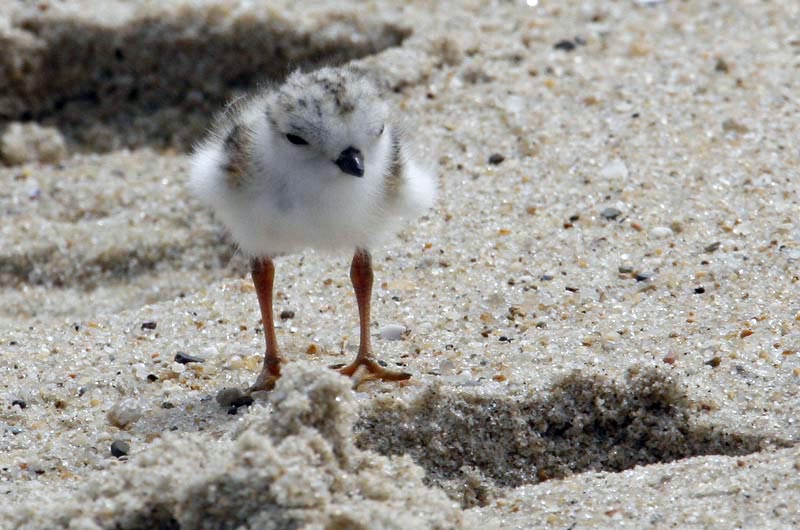
Tiny plover chicks are born precocious, making them vulnerable.
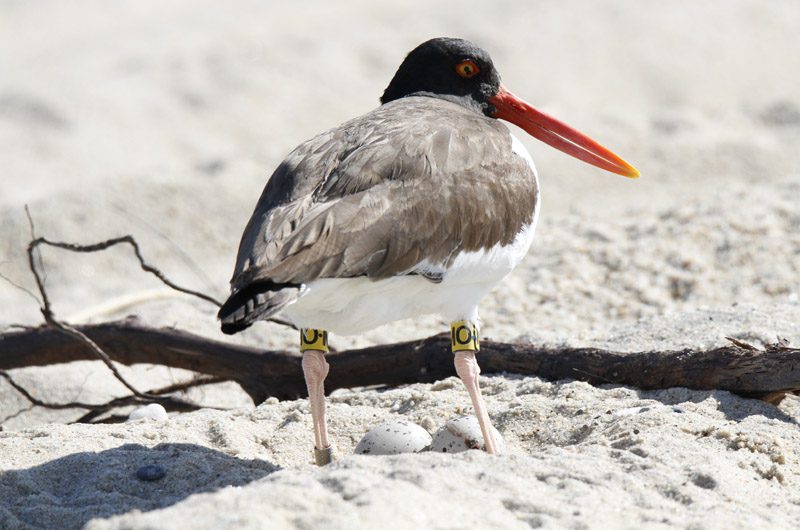
Shorebird protection efforts began in the 1980s, and by the 1990s had spread across the Island. Today several environmental groups, including the Martha’s Vineyard Land Bank, Mass Audubon, BiodiversityWorks and the Sheriff’s Meadow Foundation, monitor five shorebird species, including American oystercatchers and three species of tern.
By most accounts, the efforts have been a major success. From 1990 to 1994, the number of piping plover pairs increased from 22 to more than 50. There are now about 60 pairs on the Island, and more than 600 in the state.
Susi von Oettingen, an endangered species biologist for the U.S. Fish and Wildlife Service, said the number of plover pairs in the state has exceeded the New England recovery goal of 625. By comparison, she said, Rhode Island has about 70 pairs and Connecticut has less than 50. Plovers are currently listed as a threatened species.
Martha’s Vineyard is something of a model, she said: “You have a number of unbelievably cooperative land owners and organizations . . . that really manage the habitat and the birds to the maximum extent. It’s really, really impressive.”
But more work is needed to reach the state goal of 1.24 chicks per pair. On Chappy, the average is .88. Eventually, the guidelines for protection will become more flexible, biologists said. But the monitoring will continue.
“You can’t just delist [the birds] because then they will just be right back where they were,” said BiodiversityWorks director Luanne Johnson, who oversees about 15 shorebird nesting sites on the Island.

Eastern willet forages shoreline for food.
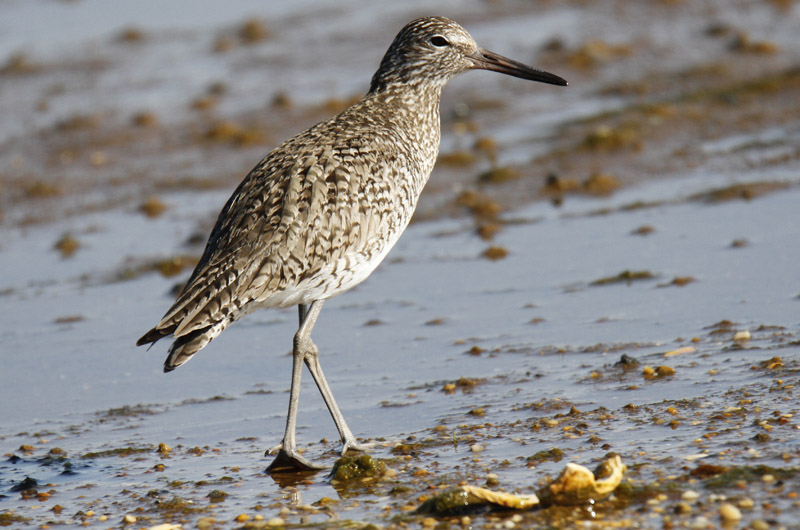
Eastern willet forages shoreline for food.
BiodiversityWorks spends between $28,000 and $33,000 per year to monitor shorebirds. The costs are covered by grants and donations, which Ms. Johnson said indicates strong public support for the program.
Caitlin Borck, an ecologist for The Trustees of Reservations, manages the shorebird program on Chappaquiddick. “This year we have exclosed almost every single one of our piping plover nests and they are all quickly hatching this week,” she said Monday. She counted 11 pairs in all, including four on Leland Beach. As one promising sign for fishermen, she said, most of the plovers nested within a week of each other, which means they will hatch at around the same time. “So hopefully these closures will open up just as quickly as they closed,” she said.
Later in the season, Norton Point Beach will almost certainly close as terns begin to hatch. That’s often more of a wild card, Ms. Borck said, since the terns there tend to nest at different times.
In the case of plovers, the beach may reopen only after the chicks are 35 days old, or have demonstrated the ability to fly continuously for 50 feet.
Ms. Borck said plover chicks are extremely vulnerable. “They are just little puff balls that are the same color as the sand,” she said. When threatened, adults let out a call and the chicks hunker down in the sand without moving, even in the path of an oncoming vehicle. “The vehicle will just run them over,” Ms. Borck said. “They won’t move. And even if they did move, they are so small that somebody in a truck up high isn’t necessarily going to see them.”
Mr. Gilkes has another viewpoint. “We have nothing against the birds,” he said. “It’s the program.” He also emphasized that most fishermen understand that biologists are simply doing their job. But at the same time, he said, most fishermen are fed up with the regulations. As one alternative, he suggested assigning one monitor for each chick and allowing for continued vehicle access. He also raised concern about kids growing up on the Island and losing touch with the culture of fishing.
“You’ve got kids right now sitting in front of TVs . . . when they should be out on the beach,” Mr. Gilkes said. “And all we’re doing is closing our beaches for the birds. Does that make sense?”
Common terns.
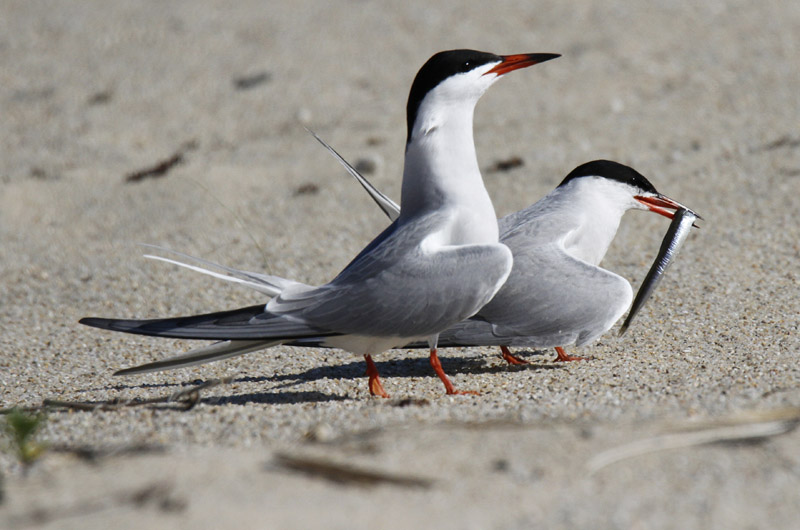
Common terns.
Donald Scarpone, president of the Martha’s Vineyard Surfcasters Association, was relaxing beside his truck Wednesday, as the surf rolled in at Norton Point. He agreed with Mr. Gilkes that the shorebird program was unfair and that closures are avoidable. He said nearly all 120 members of the surfcasters felt the same way. “We are out here to enjoy life and enjoy the fishery and we can’t,” he said. “The beaches get closed and everybody gets mad about it, and it’s over a little bird.”
He added that the closures this year were earlier and more abundant than in the past. But with only 120 members, he believed the surfcasters would be powerless to bring about changes at the state level.
The state does allow for some flexibility in areas that have reached their restoration goals, said Ms. von Oettingen. But that also comes at a cost. “The more flexibility you want, the more you are going to have to have intensive management,” she said. “And that means daily monitoring.” She noted that the town of Orleans has a three-year plan that allows for some limited off-road vehicle access.
Mr. Gilkes recalled the days when he could drive unrestricted on Island beaches. Now only Norton Point and Cape Pogue allow over-sand vehicles. “You would think that they would give a little on these particular two beaches because you can’t go anyplace else on the Island,” he said.
But some fishermen are more resigned to the closures. Jeffrey Canha, owner of Done Deal Charters in Vineyard Haven, said Island charter companies have actually benefitted from the increased demand for boat fishing. He saw no problem with the closures, as long as they didn’t last too long.
Fisherman Kib Bramhall walks to almost all of his fishing spots, but sympathized with his friends who drive to the Chappaquiddick beaches.
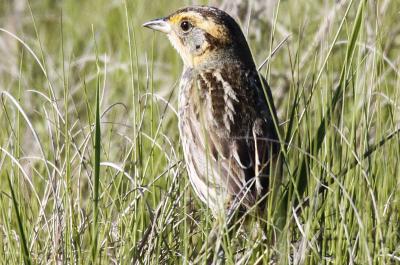
Saltmarsh sparrow.
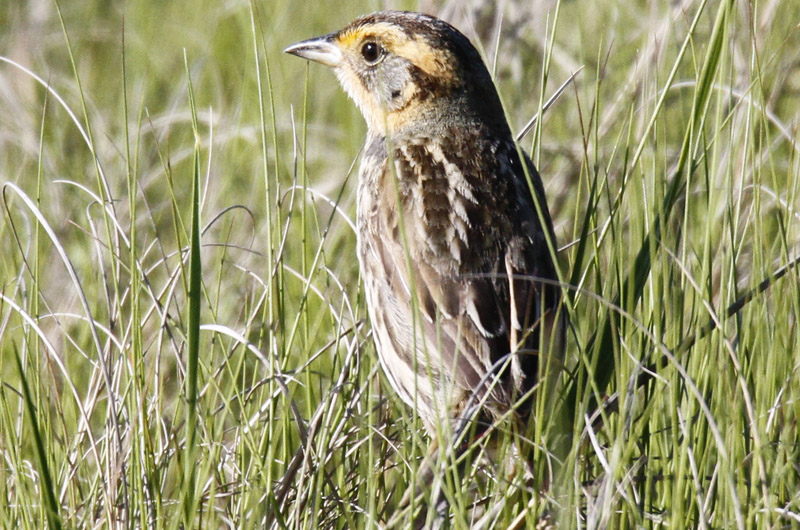
Saltmarsh sparrow.
“Chappaquiddick is really the jewel of Vineyard fishing from shore,” he said. “And yes, there are many other places on the Island which are accessible by foot where you can catch striped bass and bluefish. Perhaps they are not as good as Chappaquiddick, however.”
Meanwhile, the Trustees are working to maintain a balance between beachgoing and shorebird protection. As one example, they have worked with the state to allow secondary access to Norton Point during closures. In regard to complaints from the public, Ms. Borck said: “We try to hear them out and make concessions where we can. We just legally can’t always do anything.”
Comments
“We are out here to enjoy
Chris Vineyard Haven“We are out here to enjoy life and enjoy the fishery and we can’t" all because of a little bird. An threatened bird. That is threatened because of humans enjoying life in ways that are not sustainable and respectful of other living things. I say throw on a backpack and walk in. No one stopping you from foot traffic. How did people fish before 4x4 trucks? There is no reason that beach habitats need to include vehicles. Time to give the rest of nature a break!
Agreed!
Steve FalmouthAgreed!
Mr. Gilkes comments show that
Tracy Schaller ChappaquiddickMr. Gilkes comments show that compliance with state & federal programs, that creates limited access for a limited time is better than NO ACCESS: 'Mr. Gilkes recalled the days when he could drive unrestricted on Island beaches. Now only Norton Point and Cape Pogue allow over-sand vehicles. “You would think that they would give a little on these particular two beaches because you can’t go anyplace else on the Island,” he said.
To answer your very
To Chris from VHTo answer your very condescending question "How did people fish before 4x4 trucks" as far back as our history books explain they used "Horses" to fish!!!!!
Chris is exactly right. I
Sam EdgartownChris is exactly right. I walk from the parking area at Dike Bridge all the way to Wasque, with all my rods, pack, and waders slung over my shoulder. The complainers are just lazy fishermen. We all have to give a little to protect the creatures we share our wonderful beaches with.
There are plenty of islanders
Parent VHThere are plenty of islanders who can't afford the costly vehicle beach sticker, or who don't have a vehicle suitable for over sand driving, who fine plenty of great places to fish. I also have to say I chuckled a little at Mr. Gilkes comment about kids sitting in front of the TV that should be out on the beach instead... I am pretty sure that the beach closures have no relation to those kids who are TV bound or playing video games. However, if you succeed in tearing them away from the TV for a while, a nice long walk on the beach out to their fishing spot sounds like a great idea! ;)
Agreed!
Steve FalmouthAgreed!
I agree with Chris and Sam -
Donna Pittsburgh, PAI agree with Chris and Sam - the birds and wildlife on this planet must be protected. Did any of you read Rachel Carson's Silent Spring? Her focus was on environmental hazards, especially to birds, primarily chemicals. But other environmental hazards, like 4 wheel, over-the-sand vehicles, are just as damaging to precious, fragile habitats. Here in the Pittsburgh area, we have, over the past several years, re-established the Bald Eagle population after 150 years' absence! What a wonderful accomplishment to have these magnificent raptors back! The birds on the Island deserve the same chance at survival. We deserve the same chance to enjoy them!!!
As a long time visitor to MV, especially Chappy, I too would enjoy being able to have access whenever I wanted it to go to the Lighthouse on the Cape Pogue tour vehicles, but come on, people, what's a few weeks of inconvenience to help maintain the reason we all love the Island so much? It is the environment, all of it!, that we need to respect.
If the fishermen/women can't tolerate a few weeks of finding "another way" to get their blues, then they need to suck it up and be grateful that they have them there in the first place.
Add new comment