
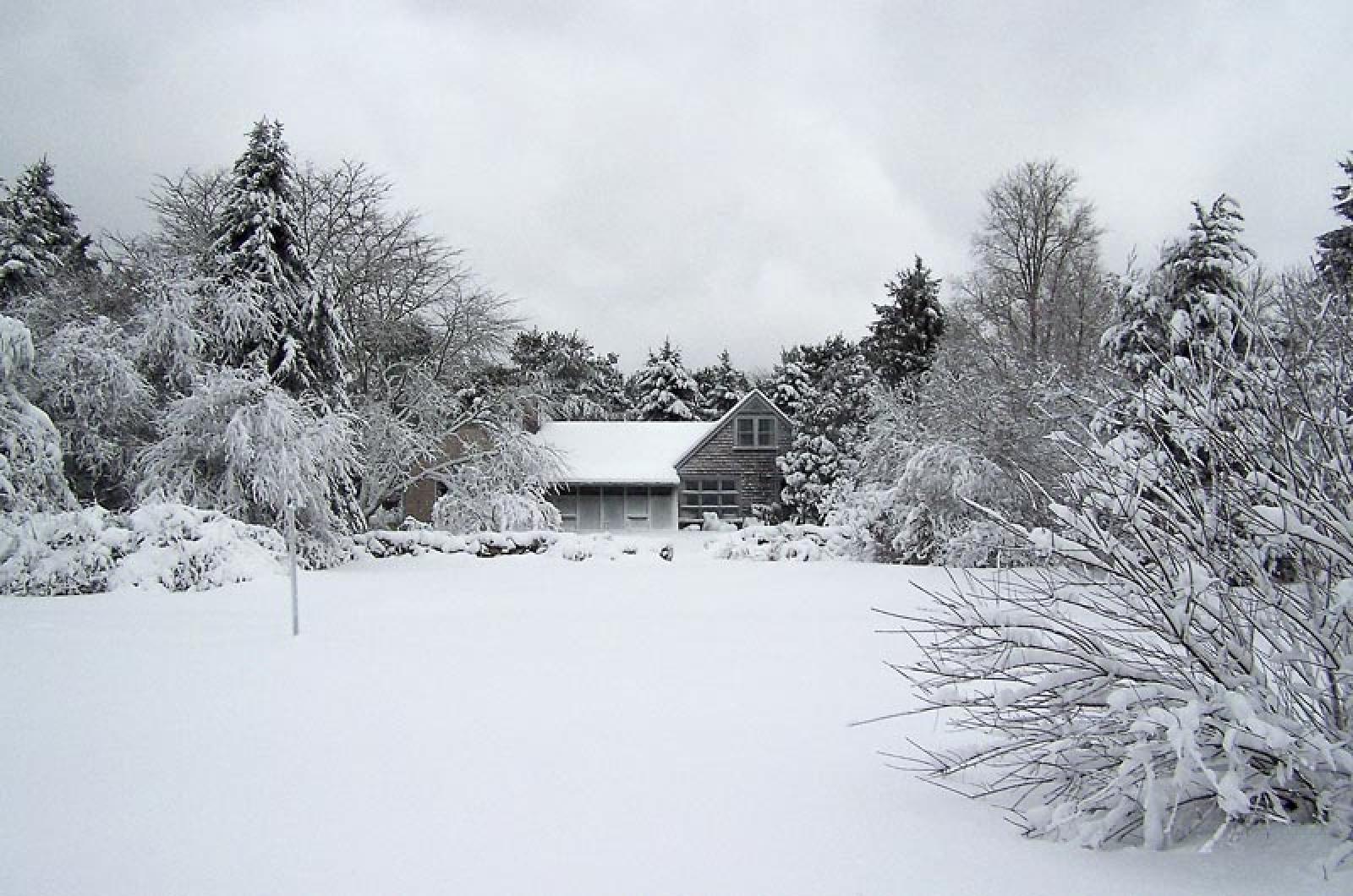
In 1957, struggling to make a living in the oyster business on Tisbury Great Pond, my husband and I built our house off Music street.
In 1957, 10 years married and with three children, struggling to make a living in the oyster business on Tisbury Great Pond, my husband and I built our house off Music street. With four bedrooms and two bathrooms, it cost us $16,500. We had to borrow $12,000 of that and the mortgage rate was five per cent. We struggled to pay $85 a month, and for nine years we rented it out in the summer time and moved into a small camp, often with no electricity or plumbing. The most total summer rent we ever got for our house was $1,900, but we only paid $400 for a camp, so that covered our mortgage payments.
In 1958 our property was assessed at $5,350 and our taxes were $192.60. Five years later, it was still assessed at $5,350 and the tax was still $192.60.
By 1981 the value of our property had risen to $8,200 and the tax rate was $69, bringing our payment up to $282.90.
And so it went, the value of our house and land going up every year, but not enough to alarm us — at least not until the turn of the millennium. One day we woke up, years into our retirement, to realize that we had become millionaires without ever doing anything to deserve this title. Our modest home was presently assessed at $1,922,200 — and rising. In 50 years our taxes have risen from $192.60 to over $10,000 per year. And our income was greatly reduced when we both retired in 1986.
Now, it’s too late for us, as we have given our house to our children to get it out of our estate. But I have a suggestion as I imagine there are many other Islanders in the same boat, although we are dying off at an alarming rate. For those elderly homeowners who have reached the status of Senior Citizen and have lived in their homes most of their adult life, with every intention of dying in them unless they can no longer afford the taxes and have to move to Northern Maine, why not allow them to freeze their real estate taxes when they reach the age of 65. Their incomes have, no doubt, already been frozen, or perhaps diminished, while the prices of food, gas, propane, homeowner’s insurance, real estate taxes and ferry rides have continued to rise. This practice has actually been tried in some states.
The great fear of many of us elders is that we will have to leave the home we have lived in and loved for so many years because we can no longer afford to pay the rising taxes as well as the rising homeowner’s insurance, let alone the maintenance of our house and property.
I have survived many of the Island friends of my generation, but our children are now of the “Boomer” generation. Elder housing will be a huge problem in a few years, as well as increased spending and decreased income.
This is not a problem that can not be solved quickly. It requires a lot of thought and a lot of planning for the future, but it will benefit our greatest asset — our year-round population.
Shirley W. Mayhew lives in West Tisbury.
Comments
Why?
JeffWhy?
Shirley - thank you for being
William Waterway EdgartownShirley - thank you for being so candid and for sharing your thoughts.
Yes, it would be a wonderful thing to freeze taxes on a person's homestead if they survive to age 65. At a minimum, we should research other communities that have explored this alternative tax structure.
I have a different suggestion
Juleann VanBelle West TisburyI have a different suggestion -- perhaps the Town needs to become more financially conservative when deciding to spend money. Tax rates are a reflection of both spending and property value.
Local taxes cannot be frozen at age 65 without an assessment of other financial assets. There are plenty of people over 65 who have healthy portfolios and are able to pay their taxes without worry. I'm not sure the under-65 group should have to pick up their tab.
Ms Mayhew's tale of woe is
Peter Fyler West TisburyMs Mayhew's tale of woe is certainly compelling but not uncommon. And, I agree with Juleann's point about our Town needing to be more financially conservative as well as her point about the under 65 group having to 'pick up the tab'. Sadly we do not have the same sensibilities as do some Asian cultures; we live in a 'move over and get out of the way' society, where some of our children can be heard grumbling under their breath, "We'll probably have to take care of them someday ...". Those who have not planned well for their retirement (i.e. a 'healthy portfolio') are surely facing a challenging end to life. It's a different world today where I would say 'Grace Happens' less and less.
Mrs. Mayhew's suggestion is
Catherine Burns Seal Beach, CA, formerly of EdgartownMrs. Mayhew's suggestion is excellent, entirely do-able, simple to do fairly, and simple to professionally manage. It also enables us to restore a bit more Grace to each/all of us, in the latter part of our lives.
If the unpaid property taxes resulting from Mrs. Mayhew's proposal are accrued (on a time-valued basis) and made payable out of the estate-- the property being sold to pay them, if necessary -- then a normal ebb-and-flow (i.e., of people dying, over time, once a short transition period occurs) -- assuming the Town accountants are competent to properly budget the ebbs-and-flows -- will ensure that the property tax burden is not, in any way, passed on to unrelated parties.
This provides at least another choice for the elderly who find they cannot gracefully manage their property taxes over the longest run. NONE of us, no matter how clever, can foresee, perfectly, the future course or length of our lives, and even the best, most reasonable, appropriate retirement planning can come up short. Life Happens... Life Changes... and it's very true that Grace does NOT necessarily Happen. Rather, we must choose to bring GRACE to our Lives, and restore it whenever possible.
To do otherwise, in this scenario, would be inexplicable and would reflect either simple laziness, and/or an inability to understand the simple mechanics of this, and/or an unwillingness/inability to change with the times and circumstances, or perhaps a begrudging meanness or coveting of one's neighbor's goods -- your choice.
Add new comment