

A proposed zoning bylaw that would prohibit dilapidated buildings in downtown Oak Bluffs has earned the disapproval of the town planning board, despite concern about the state of some buildings.
A proposed zoning bylaw that would prohibit dilapidated buildings in downtown Oak Bluffs has earned the disapproval of the town planning board.
During a public hearing late this week, members of the board agreed that the town should not regulate the aesthetics of commercial structures.
“I would like to look at why we are not enforcing the capabilities that we already have and focusing there versus creating new statutes,” said planning board member Ewell Hopkins.
The bylaw was first drafted in fall of 2013, following a summer of several vacancies on Circuit avenue, the main commercial street in town.
At that time, selectman Walter Vail suggested that the town adopt a bylaw requiring landlords to keep their buildings up to par.
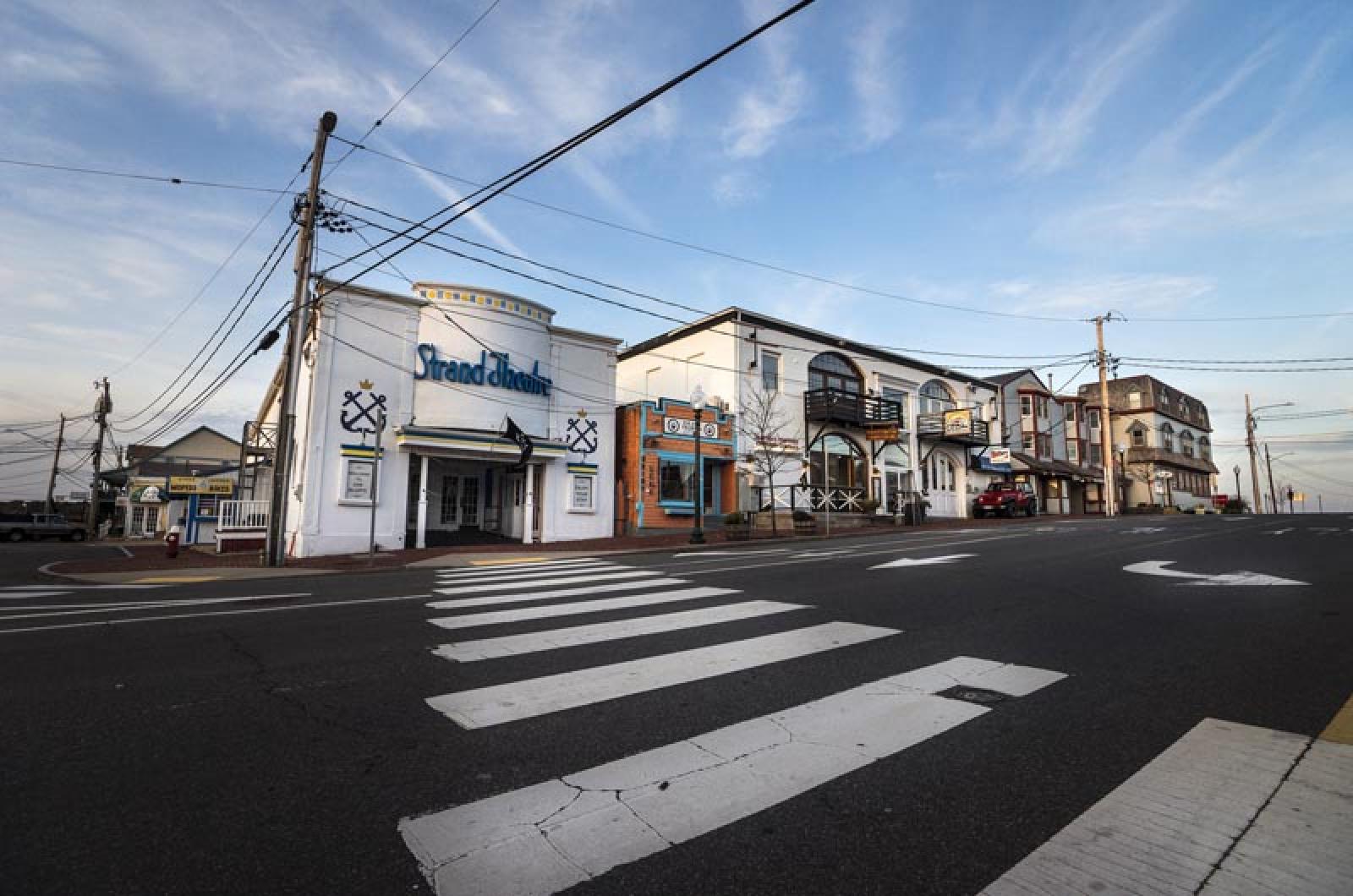
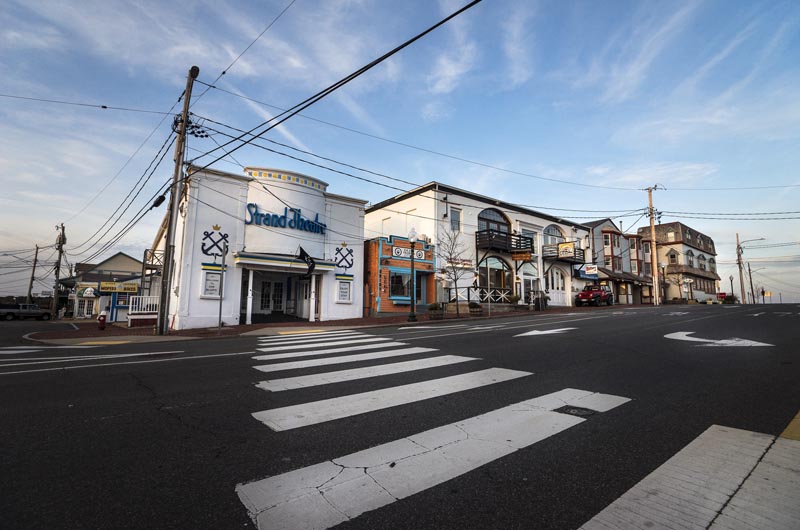
In particular, Mr. Vail said he wanted to do something about the two vacant movie theatres that had become eyesores; one had lost letters on its sign and the other had lost a roof.
The resulting document outlined property maintenance requirements for buildings in the commercial districts B-1 and B-2. The bylaw, which proposed a registry of vacant buildings to track the maintenance of commercial buildings, would be enforced by the town building inspector.
But building inspector Mark Barbadoro said at the hearing that he had doubts about the practicality of the bylaw, which he said lacked specificity.
“The way I read it, it’s not very specific and I am afraid it’s going to turn into something where feuding businesses or feuding neighbors will just use it as a weapon,” he said. “It will take a lot of my time to address something that isn’t specific. To what level of decay is acceptable, to what level of weathering?”
Brian Packish, a planning board member who had recused himself and joined the audience because he owns a property included in the bylaw’s jurisdiction, said there was nothing in the bylaw that wasn’t already on the books, according to a conversation he had with the health agent.
Lead is present in the paint of all older buildings, he said, and when it chips it can be a health hazard, enforceable by building and health codes. Standing water is also a health hazard, he said.
Mr. Barbadoro, the building inspector, said in extreme cases, the building inspector, board of health and selectmen have the power to order a building razed.
Edgartown resident Benjamin Hall Jr., who spoke on behalf of the ownership of the Strand and Island movie theatres, had many objections to the draft bylaw. He said it was written to force him to tear down the theatres.
“The nature of [this bylaw] is really directed at trying to get those theatres in better shape,” he said.
Though he acknowledged widespread frustration with the appearance of the buildings, he said a combination of external factors had slowed the process of restoring them.
“We kind of got caught up in a whirlwind of political fervor that I don’t think is in the best interest of anybody,” he said.
He described a series of obstacles that have prevented the renovation of the historic Island Theatre, which was built circa 1915.
Last summer the building inspector ordered that all work on the building stop, deeming the building unsafe for workers.
“All we could do is sit around and watch the water pouring in the building,” Mr. Hall said.
Two weeks ago, he said, the cease and desist order was reversed after an appeal to the state.
“To this day I don’t think anybody wants it torn down,” he said. “They want it fixed and refashioned.”
He said he is applying for the correct permits for work to commence on the roof and walls.
Several potential tenants have come forward who “seem to be very eager to do something with that building, whether as a performing arts center, a movie theatre or some other purpose that has not yet been determined,” Mr. Hall said.
He also indicated that the bylaw would have no teeth if applied to his buildings.
“This is a zoning bylaw therefore you can’t enforce it against preexisting nonconforming conditions,” he said.
Ultimately, public opinion at the meeting favored ongoing efforts to revitalize the town through improvements to public infrastructure instead of a regulatory approach. The town is engaged in a broad effort to study the downtown area and identify ways to encourage further business development.
Mr. Packish said he had already seen the fruits of a renewed sense of civic pride in town, noting that three-quarters of buildings downtown had been repainted.
“We have a resurgence in our town that I’ll venture to say is unprecedented,” he said.
Comments
The photograph by Timothy
Look closelyThe photograph by Timothy Johnson is filled with irony, symbolism, color, and geometry giving a wide perspective on modern life. The photograph on the surface is that of one of the theaters that is the subject of this thankfully, repealed bylaw. But if you look closely you will see that the large crosswalk painted on the road is carefully framed to echo the perspective view of the buildings forming a strong composition in both black and white and color. That in itself makes it a stunning photograph. But look at the sky - and here you have the irony. The sky forms its own receding perspective with diagonals formed by geo-engineered contrails which is an effort to reduce global warming by using artificially induced cloud cover to reflect the sun inducing albedo effect into the global equation. And so, the theater which is weathered naturally and the subject of a bylaw to try to affect change is framed by the weather which is un-natural in a composition that looks innocent enough on the surface, but is ultimately the poster child of our civilization's secret war against the environment.
All I see are power lines.
Dan ObAll I see are power lines.
And your point is?
Joe EdgartownAnd your point is?
And your point is?
Joe EdgartownAnd your point is?
If we look at this photograph
environmental relativityIf we look at this photograph and see the chemtrails in it we should think about the relativity of time and how little time we have to deal with the environmental changes around us.
The speed of time.
What is time – is it a measurable quantity that we can claim is definitively identifiable or is it a relative quantity?
Einstein in his theory of relativity states that it is a quantity that changes with speed – and so a person traveling at the speed of light in essence would be traveling in a world which ages around him, but who would actually be living at a pace that is slower than his surrounding environment.
As we get older, we feel that time is moving faster, and this is an example of the relativity of time. When we are one year old a day is a very long time – and it should appear to be since 6 months is one half of our entire life at that point. When we get to be 70 years old, an entire year rushes by until by our 100th year it seems that a decade was just yesterday's news.
And so by the same token, time is relative to activity and to population. A world with a horse and buggy moves much more slowly than driving on a ten lane expressway with fossil fuel powered super vehicles all moving at nearly 100 miles per hour in a stream that we take as normal but is actually as far from normal or natural as we can imagine.
We have built ourselves an imaginary cage that is a time machine.
Time is no longer the time of our childhood and certainly not the time of our parents or our grandparents childhood and is moving at a pace that we are so enveloped in that we hardly notice it. Time is moving faster, and faster and faster.
Ten years is no longer ten years. I would say that at present ten years equals 10 squared, or one century. As we progress farther and farther along the path of ignoring our climate, letting our politicians deny that anything is happening, we live in a surreal world in which our leaders not only deny the existence of climate change, but also deny the existence of the relativity of time - and that we do not have another 10 years – which relative to climate is a century, and in ten years from now – our planetary biosphere will be enduring the effects of mankind upon it where in one year, more than a century of change will have taken place on it.
The exponential rapidity of the passage of time relative to the environment is real, and is happening before our very eyes – but we can not see it.
So sorry you won't use your
tom hodgson wtSo sorry you won't use your real name, Mr. "X". I have enjoyed discussing this subject with you elsewhere, and will not be so crude as to disclose your identity. But please, consider the benefit to public discourse, and attach your name to your opinions.
Mr. Hall, gotta hand it to
Sara Oak BluffsMr. Hall, gotta hand it to you ... you are a master of spin. Truly, you should be a politician. Your theaters in OB and VH, and the "yellow house" in Edgartown continue to despoil the three down-Island towns, and you continue to find rationale for not fixing up/selling the properties in a timely fashion. Viewing these messes brings a whole new level to the word "quaint." How sad that you continue to put your own pecuniary interests over the public benefit.
Add new comment