


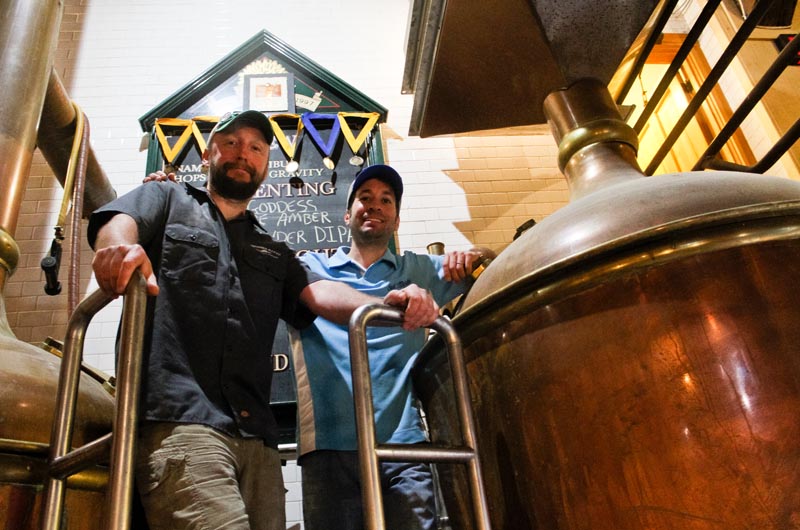
Inside a large copper mash tun at Offshore Ale House, nearly 250 gallons of malted grain mixed with water were slowly beginning the process of changing into beer.
Inside a large copper mash tun at Offshore Ale House, nearly 250 gallons of malted grain mixed with water were slowly beginning the process of changing into beer. Starches broke down into simple sugars and became wort, which would eventually be mixed with hops and allowed to ferment. Brewing is ultimately an act of purposeful blending: disparate ingredients mixed together to create something greater than their parts.
And the soon-to-be beer was a collaboration in another way.

Grape leaves will be featured ingredient in the new beer.
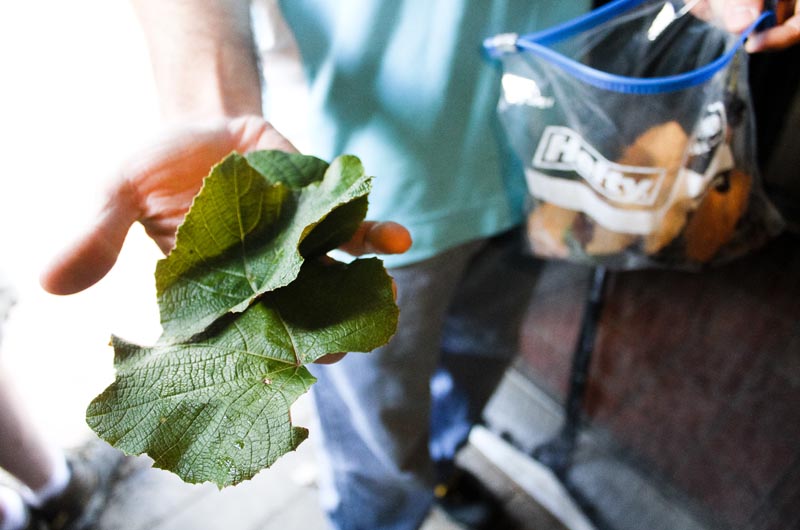
Grape leaves will be featured ingredient in the new beer.
Earlier in the morning on Thursday, master brewers Neil Atkins and Jim Carleton had worked together to creat the mash that was fermenting. Mr. Atkins is the master brewer for Offshore. Mr. Carleton is the general manager and master brewer for Bad Martha beer, which recently opened a tasting room in Edgartown. The two businesses had come together in — what else — the name of beer.
Both men have been brewing for more than a decade. They had discussed the idea of a collaboration earlier this year, but in the wake of a busy summer season there wasn’t time to plan for one, let alone create it.
Fall, though, was perfect.
“Once the season’s done, let’s do it,” Mr. Carleton recalled saying.
The partnership is a “show of Island unity,” he said. Collaborations are common in the craft brewery world.
“Craft brewing is a tight-knit community,” Mr. Carleton said.

Checking the mash that will become an English old ale.
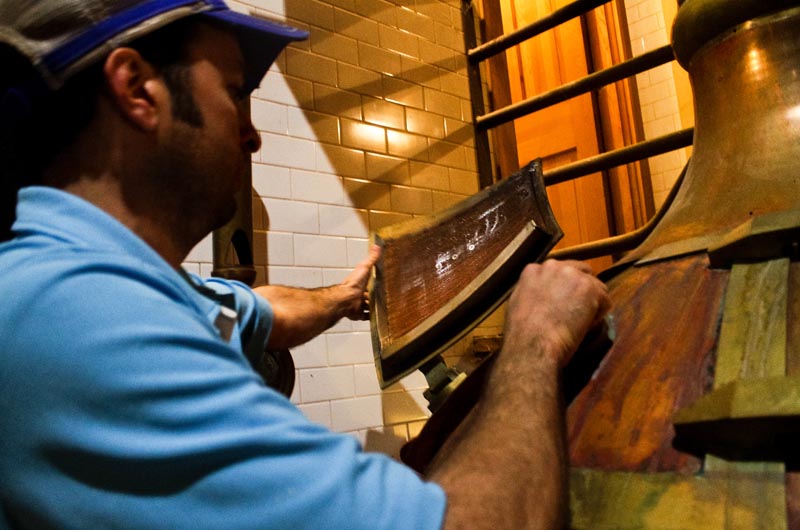
Checking the mash that will become an English old ale.
The brew of choice is an English old ale, featuring malted oats, molasses and wild grape leaves gathered on the Vineyard. The brewers spent the morning preparing the mash, blending ingredients and coping with a boiler that was not cooperating, Mr. Atkins said. (The boiler eventually began to work properly.)
The final product will be a dark and malty beer. In determining what to make in their first collaboration, the pair said that it was the season that ultimately decided it. English old ales are brewed in the winter.
“We wanted something that could age,” Mr. Atkins said. They plan to release some of the brew over the holidays, since Bad Martha’s will reopen during Christmas in Edgartown. But most of it will go into bourbon barrels for aging to be tapped in the spring. The length of time the brew stays in the barrels will determine the character of the beer.
One thing the blend doesn’t have yet is a name.
“We might have to taste it first,” Mr. Atkins said.
Comments
"The length of time the brew
humble homebrewer"The length of time the brew stays in the barrels will determine its alcoholic content." This is almost certainly not true, or at best just barely true. The vast majority of the ABV is determined in the first few weeks of fermentation; only a tiny bit of alcohol is created during long-term aging. Unless it's on a bourbon IV drip while it's in those barrels . . .
Correct, it would be more
Jim Carleton EdgartownCorrect, it would be more accurate to say that the length of time in the barrels will determine the character the beer develops from the barrels.
Thanks to both the readers
Editor Vineyard GazetteThanks to both the readers for pointing out this clarification. We've updated the article.
Also, would it not be more
Max New YorkAlso, would it not be more accurate to say: "Starches broke down into simple sugars and became wort, which would eventually be mixed with hops and yeast and allowed to ferment." Hops add aroma and bitterness, but are not responsible for fermentation. That is the yeast's role.
Add new comment