

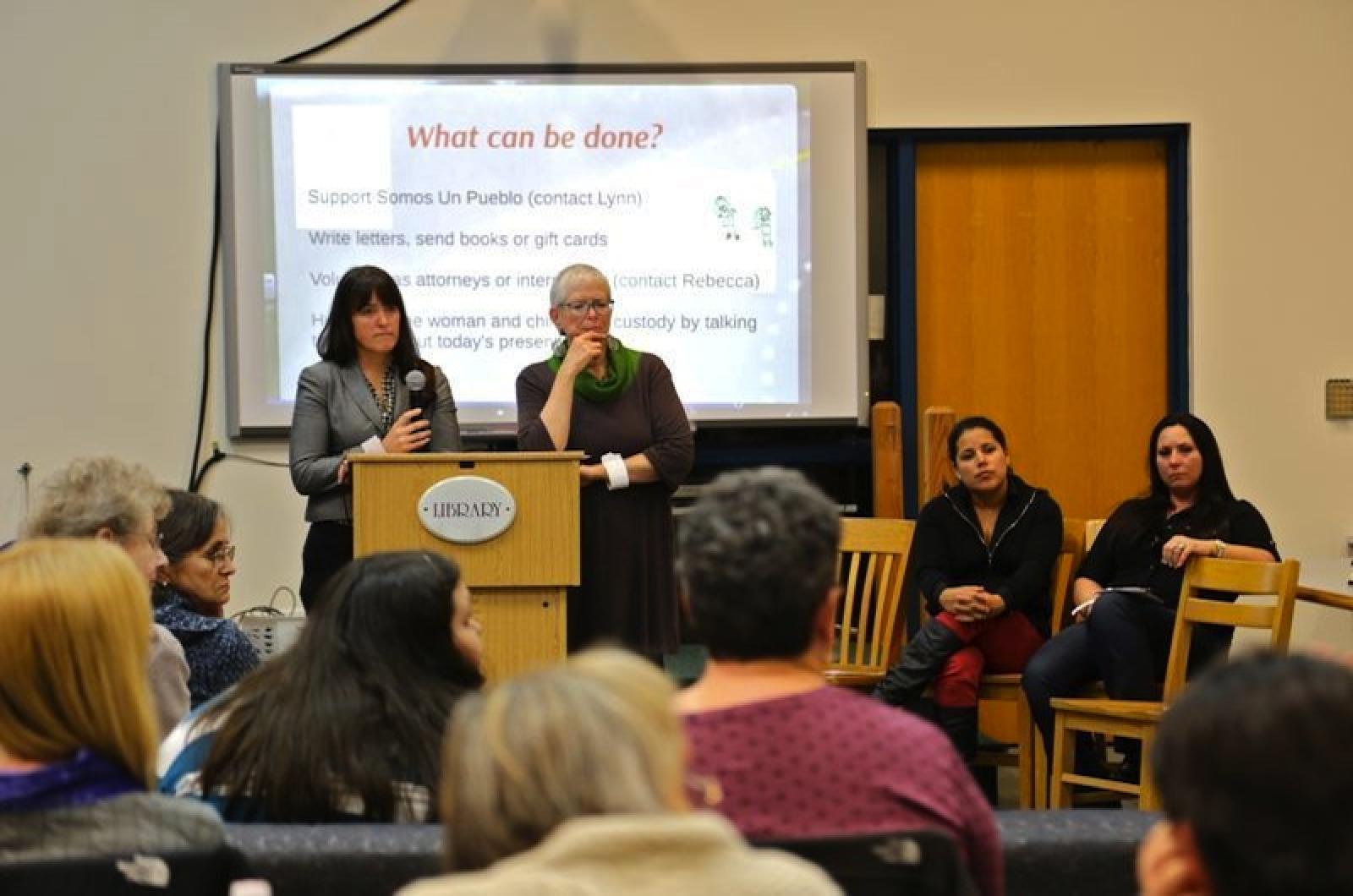
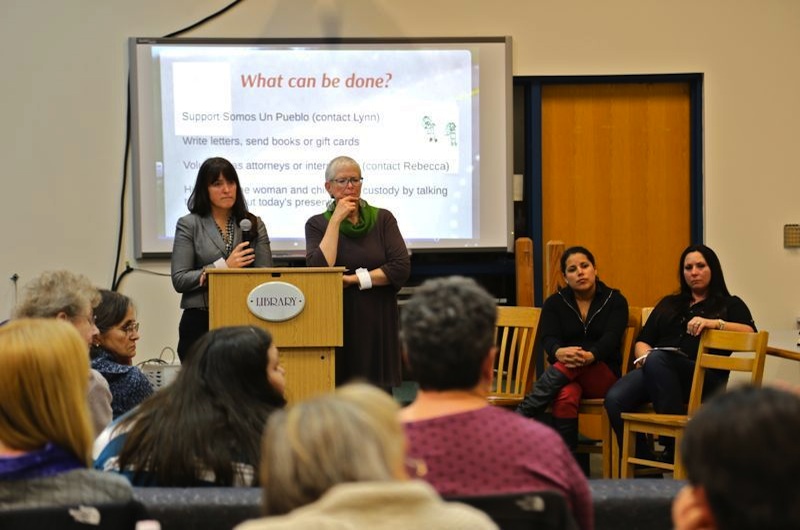
On Thursday night at the regional high school, two Island women, Lynn Ditchfield and Rebecca McCarthy, gave a presentation on their recent journey to the Artesia Detention Center in New Mexico to help Central American refugees seeking asylum from violence in their home countries.
The women and children in the Artesia Detention Center are known not by their names but instead by their “A” numbers. This is an identification system assigned to families after being transported by customs and border patrol officers in Hildago, Texas to the small desert town of Artesia, New Mexico.
The facility was opened by the Department of Homeland Security in late June after a large influx of immigrants - mothers with children, as well as unaccompanied minors - began entering the U.S. via the Mexican border seeking asylum from violence in their Central American countries. On Thursday night at the regional high school Lynn Ditchfield and Rebecca McCarthy discussed this process in a presentation called Eyewitness Report: From the Border.
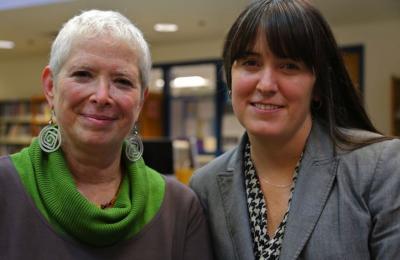
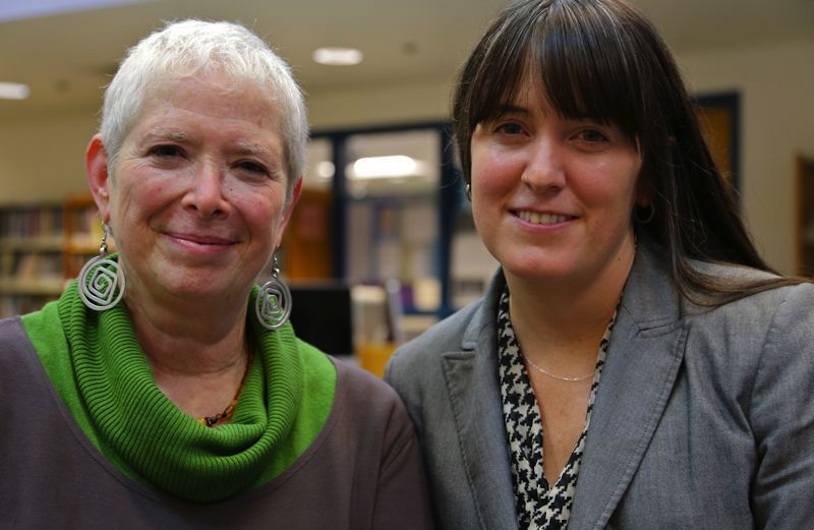
Lynn Ditchfield and Rebecca McCarthy spent two weeks at the center helping immigrants from Central America seeking asylum in the U.S.
Lynn Ditchfield and Rebecca McCarthy spent two weeks at the center helping immigrants from Central America seeking asylum in the U.S.
“It’s a very involved and complicated process and without representation it’s hard enough...never mind going through this after you’ve travelled half the world with your three-year-old,” said Ms. McCarthy.
Ms. McCarthy, a local immigration lawyer, and Ms. Ditchfield, an educator and translator, joined the American Immigration Lawyers Association pro bono project at Artesia for two weeks in September.
“We hope that you leave with a deeper understanding of the people that we met,” said Ms. Ditchfield on Thursday evening. “If you don’t leave with that, I hope you leave with the amazing feeling of being free,”
During the presentation, the women discussed the past, present and future of the detention center, shared personal narratives and explained the legal process for asylum - a three-part process that enables the families to stay in the United States and be eligible to apply for citizenship.
“Credible fear” is the main criteria for asylum. The Department of Homeland Security defines the process as such: “Asylum officers conduct a credible fear of persecution or torture interview when a person who is subject to expedited removal expresses an intention to apply for asylum, expresses a fear of persecution or torture, or expresses a fear of return to his or her country.”
Once families have been deemed to have a credible fear case by asylum officers, the case then goes to an immigration judge.
As Ms. McCarthy explained, all of the women they came in contact with had credible fear cases. The rise of domestic violence, gang violence, femicide (the killing of women) and lack of police protection are cited as the main reasons for the increase in women and children crossing the Rio Grande to Texas earlier this year. Accounts of religious persecution and violence based on sexual orientation were also shared with officers.
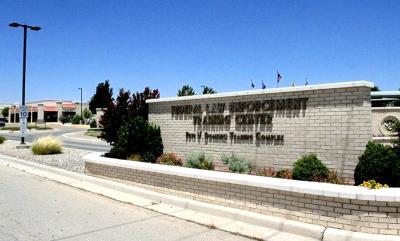
Artesia was originally a training center.
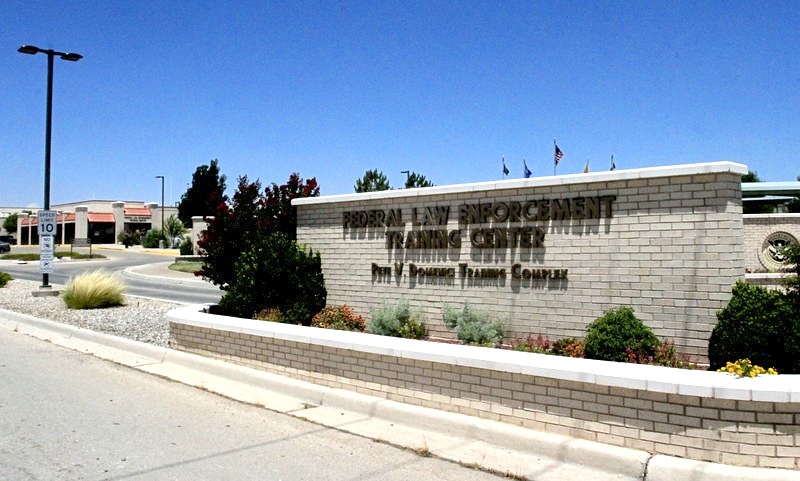
Artesia was originally a training center.
In July alone, 7,405 adults with children and 5,501 unaccompanied minors were apprehended at the border.
At the Artesia center, the women and their children were all from the Central American countries of Guatemala, El Salvador and Honduras.
“These applications are intense, and to have the idea that someone could walk into court and explain the complexity of their situation is why it’s so important for women and children to have representation,” said Ms. McCarthy.
Initially, Artesia was meant to be a holding center for these families with the thought that they would be soon be deported. But because such a large number of women have been found to have credible fear cases, Artesia has become more of a long-term residential site as the families wait for their cases to be heard by immigration judges. A new site in Dilly, Texas is opening soon to help house the large number of families.
Before AILA arrived on the scene in July, the legal process was much more challenging for the families, in part because of the language barrier.
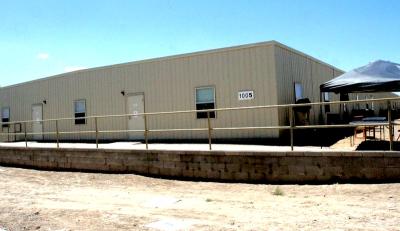
Dorm facility where several families live in one room with bunk beds.
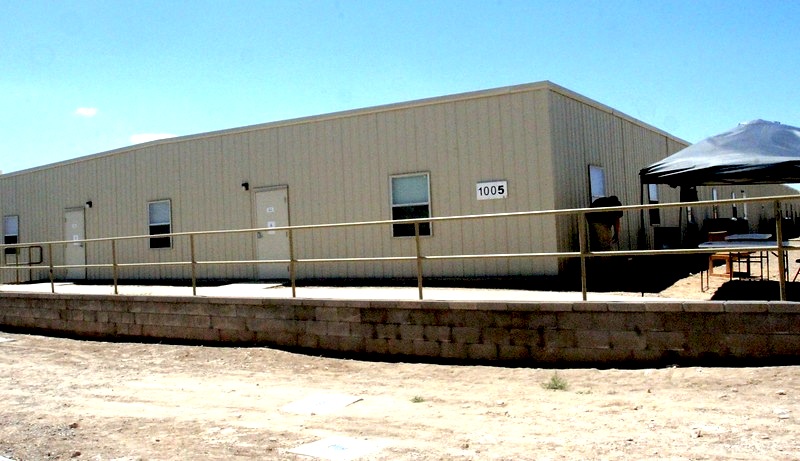
Dorm facility where several families live in one room with bunk beds.
“Many of the officers are bilingual but many are not,” said Ms. McCarthy. “An officer would enter the room, call out an A number, grab the woman and pull them into court. The woman would have no idea what was going on. A lot of the reason we were there was not necessarily to represent the women but to explain what is going on. The questions that the judge is asking are going to determine how the entire process is going to proceed, so to have an attorney there is so important.”
For those who spoke a language other than Spanish, such as any one of the 31 Mayan languages, translators were available by telephone.
In addition to sharing information about the legal process faced by the women, Ms. Ditchfield discussed the conditions inside Artesia, in particular for the children.
“The kids were clinging to their moms, it didn't matter if they were babies or six or seven,” she said. “The moms were talking about murder and death threats in front of them because it was hard for them to leave their mothers. They’re kids and they're wonderful and they're resilient but this was not a place for children.”
Food and nutrition were also major concerns. “We took many questionnaires and people were saying that their children weren't eating and losing weight,” said Ms. Ditchfield. “And the food is not culturally sensitive at all.” Children were given a daily snack at 4 p.m. - one apple each.
But while the conditions need improvement, Ms. Ditchfield remains positive.
“We saw some changes in attitude which is really important,” she said. “As time went on and as the lawyers appeared in masses and as more focus was put on the area, we saw some folks that were quite kind.”
The children were also given a small but welcome distraction while their mothers were being interviewed.
“Each kid got three crayons and a ripped out page of a coloring book to doodle with when their parents were talking with us,” Ms. Ditchfield said.
There is also more medical and psychological assistance available to the families, many of whom have gone through serious emotional trauma.
“Since the Artesia facility was thrown together so quickly there were many growing pains,” said Ms. McCarthy. “It was difficult for everyone to sort out the needs of the facility.”
For example, Ms. Ditchfield said that there were donations of much-needed clothing and books sitting at the Artesia chamber of commerce that Immigration and Customs Enforcement were not allowing into the facility. However, more recently, a local community activist group, Somos Un Pueblo Unido, began working with U.S. Immigration and Customs Enforcement to make sure the donations reached the center.
As of this month, a school has also been set up at the facility, which children attend for one hour a day.
Bond amounts have also been lowered significantly, so that some families have the opportunity to be released from Artesia and then return for their court dates.
“All of the people that we interviewed had family members here or someone who was willing to sponsor them,” said Ms. Ditchfield. “They wanted to go with family members instead of being prisoners.”
But for now, the families wait to hear the outcome of their asylum cases, hoping to end this journey with the beginning of another one - a new life in the United States.
Comments
With over 11 million
John Gault Oak BluffsWith over 11 million immigrants in the United States illegally (as of 2012), the issue of illegal immigration continues to divide Americans.
Some people say that illegal immigration benefits the US economy through additional tax revenue, expansion of the low-cost labor pool, and increased money in circulation. They contend that immigrants bring good values, have motivations consistent with the American dream, perform jobs that Americans won’t take, and that opposition to immigration stems from racism.
Opponents of illegal immigration say that people who break the law by crossing the US border without proper documentation or by overstaying their visas should be deported and not rewarded with a path to citizenship and access to social services. They argue that people in the country illegally are criminals and social and economic burdens to law-abiding, tax-paying Americans.
CBS News reports: Despite the unemployment rate plummeting, more than 92 million Americans remain out of the labor force.The fall in the unemployment rate was due mainly to the exodus of people who stopped looking for work.
After November the 4th Obama will try and give Executive Amnesty to 32 MILLION illegal immigrants. Who pays for this? Well the person reading this if it past the Gazette censors.
Too simplistic yet confusing
Daniel A. Jaimen Navarrete 石家庄, People's Republic of ChinaToo simplistic yet confusing an economic analysis. The fact is that illegal immigrants (which by the way, are not criminals according to the law itself) create jobs for legal residents and workers by virtue of the kind of jobs that would go otherwise unfulfilled. Illegal immigration has kept the value of the U.S. dollar in check because money isn't worth anything if workers start asking for wages much higher than those of competing economies in the world scene. The derailment of the proposed immigration bills of 2007 was the cause of the real estate crack because nobody wants to pay for a house over a thirty or even fifteen year period, only to realize there will be not many buyers.
Illegal immigration divides American along income lines. The American middle and upper class, definitely benefit from it and not just because of the specific services rendered by illegal immigrants but also because of the opportunities for tax fraud.
John Gault, since when we
Matt oak bluffsJohn Gault, since when we have 32 million illegals?
you probably should read a bit more about the issue..
When the Obama administration
John Gault Oak BluffsWhen the Obama administration asked posted a RFP for the GREEN Cards.
U.S. Citizenship and Immigration Services plans to seek a vendor to produce as many as 34 million blank work permits and 'green cards' – the paperwork that authorizes illegal immigrants to live and work in the United States – as the White House prepares to issue an executive order after the Nov. 4 midterm elections. A draft RFP – a Request For Proposal – is typically published in advance so government contractors can prepare to submit their bids when the final version is published. According to a draft solicitation published online, the government agency will look for a company that can produce a minimum 4 million cards per year for five years, and 9 million in the early stages. Sorry I was wrong with the 32 million.
Think globally act locally,
George Stein Edgartown, MAThink globally act locally, seems like more jobs in the papers on the Island than usual for this time of year. Not enough housing for sure let alone affordable. BTW to work in US you need SSN or work visa.
Add new comment