| Day | Max (Fº) | Min (Fº) | Inches |
|---|---|---|---|
| Sept. 19 | 75 | 55 | 0.00 |
| Sept. 20 | 64 | 45 | 0.00 |
| Sept. 21 | 71 | 62 | 0.00 |
| Sept. 22 | 74 | 64 | 0.02 |
| Sept. 23 | 76 | 51 | 0.00 |
| Sept. 24 | 67 | 48 | 0.00 |
| Sept. 25 | 70 | 59 | 0.00 |



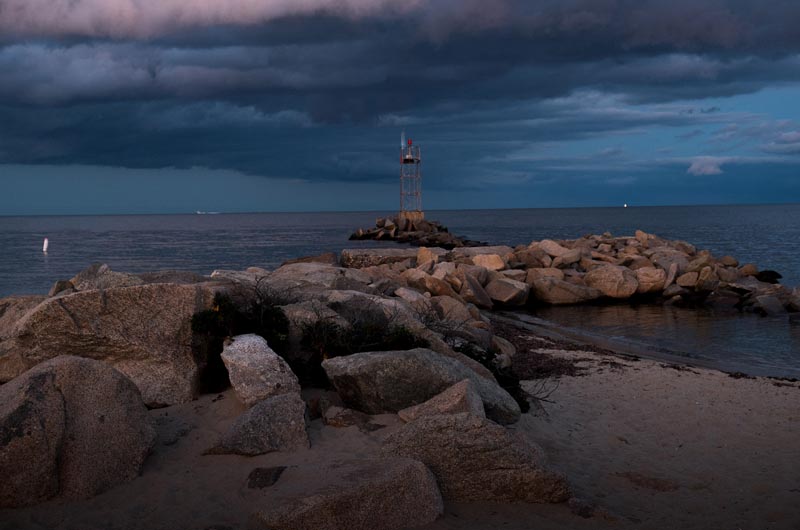
The crescent moon moves through the southern constellations Libra and Scorpius this weekend. These two constellations are low in the southern sky, and the time to look up is right after sunset. You might be able to see the thin crescent moon tonight, low in the light of twilight, but you probably have a better chance tomorrow night when the moon appears near the yellow planet Saturn. The moon is at the edge of Libra, and near Scorpius. Saturn is the brightest celestial object nearest the moon.
On Sunday night, the moon appears more easterly, higher in the sky and near the red planet Mars. Mars is in the zodiacal constellation Scorpius.
There are two reddish colored celestial objects in Scorpius. The red star Antares is a regular. It is the brightest of red stars in that area of the sky. But having Mars nearby, above it, makes for a reddish twin.
It is not often Antares and Mars are visually so close together for easy viewing.
Mars was in the news this week. Maven, a new exploratory satellite just arrived and is now in orbit circling the red planet, and collecting information about the planet’s atmosphere. Astronomers want to understand why, through time, Mars appears to have lost its atmosphere.
Mars is 140 million miles away and it takes light over 12 minutes to reach us. Antares is 550 light years away. It takes light 550 years to reach us from this distant star. By comparison, Saturn is 988 million miles away, and the moon is only 250,000 miles away.
| Day | Sunrise | Sunset |
|---|---|---|
| Fri., Sept. 26 | 6:32 | 6:32 |
| Sat., Sept. 27 | 6:33 | 6:30 |
| Sun., Sept. 28 | 6:34 | 6:29 |
| Mon., Sept. 29 | 6:35 | 6:27 |
| Tues., Sept. 30 | 6:36 | 6:25 |
| Wed., Oct. 1 | 6:37 | 6:24 |
| Thurs., Oct. 2 | 6:39 | 6:22 |
| Fri., Oct. 3 | 6:40 | 6:20 |
| Day | Max (Fº) | Min (Fº) | Inches |
|---|---|---|---|
| Sept. 19 | 75 | 55 | 0.00 |
| Sept. 20 | 64 | 45 | 0.00 |
| Sept. 21 | 71 | 62 | 0.00 |
| Sept. 22 | 74 | 64 | 0.02 |
| Sept. 23 | 76 | 51 | 0.00 |
| Sept. 24 | 67 | 48 | 0.00 |
| Sept. 25 | 70 | 59 | 0.00 |
Comments
Why is sunrise getting later
Wes Andrews blackalls parkWhy is sunrise getting later and sunset getting earlier - shouldn't days be getting longer as we enter spring? Seems we're going backward some how.
this is for northern
sleightofhand brisbanethis is for northern hemisphere, not southern
Since this article appears
brad Perth, WASince this article appears all around the world, perhaps it might be good to note in it where exactly the proposed observer is located? The only clue is right at the bottom, noting the water temperature in Edgartown harbour (Martha's Vineyard Magazine could be anything...) It turns out that this is half a world away in Massachusetts, USA. So while the celestial objects will appear in roughly the same place noted, the times will be incorrect from Perth, Western Australia :)
Add new comment