



<p>Anecdotal reports suggest it was an average or slightly above-average season for tick-borne illnesses on the Vineyard. By far the most prevalent illness is Lyme disease. A new venture intends to focus on clinical research into tick-borne illnesses.</p>
As tick season winds down this fall, Island health professionals are taking stock of the incidence of tick-borne diseases.
Though hard data is not available yet, anecdotal reports suggest it was an average or slightly above-average season for tick-borne illnesses on the Vineyard, which include Lyme disease, babesiosis, ehrlichiosis, anaplasmosis, Rocky Mountain spotted fever and tularemia. But by far the most prevalent illness is Lyme disease; the Vineyard is considered a hot spot for this bacterial infection which is carried by the tiny deer tick.
The state Department of Public Health collects information on suspected cases of Lyme disease and other tick-borne illnesses but will not have numbers until the end of the year.
An online database that went into effect on the Vineyard about six years ago has made reporting easier and more efficient, health officials said this week.
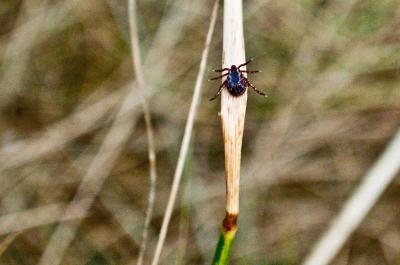
Martha's Vineyard is considered a hot spot for Lyme disease.
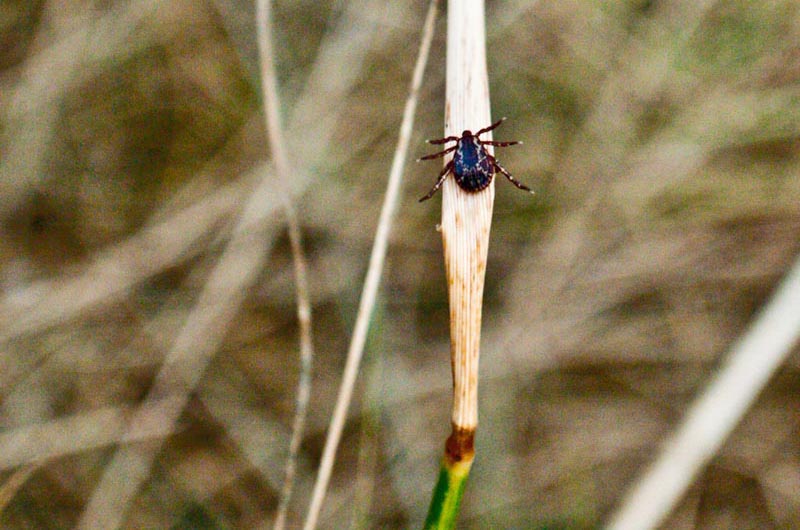
Martha's Vineyard is considered a hot spot for Lyme disease.
The database, known as the Massachusetts Virtual Epidemiologic Network (MAVEN), allows local boards of health to see and track in real time cases of various reportable infectious diseases. These include tick diseases, water-borne illnesses such as Vibrio, mosquito-borne illnesses and influenza.
Most of the diseases tracked on the Island database are tick-borne illnesses.
Data collected at the Martha’s Vineyard Hospital laboratory indicate a slight jump of one to two per cent in the number of positive Lyme disease blood tests processed at the hospital in the past year, roughly 375 since last October.
Still, these numbers don’t tell the whole story, since many health providers treat patients for Lyme disease without ordering a lab test.
“There are a lot of clinicians who just immediately go to treatment if a patient has the characteristic signs,” said Lena Prisco, director of the hospital laboratory and a partner in a new Vineyard venture that intends to focus on clinical research for tick-borne illnesses.
Tick diseases continue to be under-reported by the medical community statewide, especially Lyme disease, said Catherine Brown, a state public health veterinarian. “For the patients that never have a lab test and don’t need one, it would require the physician to independently report it,” she said.
Research at the Centers for Disease Control in Atlanta suggests that the true infection rate may be as much as 10 times the reported rate, Dr. Brown said.
In addition, visitors who contract a tick-borne illness on the Island may not be included in the reported cases. “If they get exposed on vacation, they don’t get counted as a Vineyard case,” she said. “It does make it difficult to accurately document what the true burden is.”
And current Lyme disease tests don’t always diagnose the disease accurately.
“The lab tests we have now do not turn positive early in the treatment, they don’t turn positive early after infection, and they stay positive sometimes for years after the illness is treated,” said Michael Loberg, chairman of the Tisbury board of health and a partner with Ms. Prisco in the new research center. “The ability to confirm active infections is not good enough,” Mr. Loberg said. The new research center will be part of Vineyard Medical Care in Vineyard Haven, which also operates a walk-in primary care clinic. The venture partly aims to improve Lyme screening techniques. The center is being established as a nonprofit and will be called the Vineyard Center for Clinical Research.
Ms. Prisco will conduct research with bioMerieux, a diagnostics company based in Washington, D.C. In trials that will involve blood samples from Vineyard clients, she will begin testing new ways of diagnosing the disease.
Companies interested in Lyme disease research have long sought opportunities on the Island, but have been hampered by a lack of expertise in the area, Ms. Prisco said. Mr. Loberg and Ms. Prisco have that expertise. Both worked at Bristol-Myers Squibb in Connecticut, although in different areas there. Both hold doctorates — Mr. Loberg’s is in chemistry, while Ms. Prisco’s is in pharmacology.
“We intimately understand the bounds of a trial and how to conduct a trial,” Ms. Prisco said.
Most cases of Lyme disease and other tick-borne illnesses are present in the summer months, though adult ticks can be active anytime temperatures are above freezing, Dr. Brown said. But it is known that there are peak periods for tick activity when the risk of contracting illness is higher. Those periods run roughly from May through July and then again from mid October through December.
Dick Johnson, an Island biologist who performs yard surveys of tick populations, reported finding deer ticks later than usual this year. Mr. Johnson said the nymphal stage for deer ticks runs from May to August, a time when the ticks are no bigger than a period on this page and are hardest to see.
Tularemia, perhaps the most serious of tick-borne diseases, has been present on the Island for many decades, but became more visible following an outbreak in 2000.
Dr. Brown said the theory is that rabbits, which were originally imported from somewhere else, brought tularemia to the Vineyard. But the bacteria also seems to have spread to the tick, skunk and raccoon populations, she said.
Though the peak season for tick-borne illness is behind us, Dr. Brown says Islanders should continue to protect themselves against infection, using repellent, long clothing and by checking the body for ticks.
“The best prevention is what you can do to protect yourself,” she said.
Comments
Dark Field Microscopy is a
Prof. Noel Campbell AustraliaDark Field Microscopy is a good start to testing.
F-Scan compact testing & treatment with DIRP overcomes the changing phenotypes of the infections
It's unbelievable the
Luv4art Long IslandIt's unbelievable the ignorance the medical community is given on Lyme disease. Simply put, much of the time you do not get a rash and the tests are from the 90's based on immune response and many times do NOT always come out positive when you are infected! I was running from specialist to specialist tring to find out what was wrong with me until a very smart doctor decided to go against conventional testing and give me a PCR test. By that time my lyme had gone into the brain and I was woken up every night with migrating tremors! Forward almost two years later I am still on antibiotics ( and I very much Need to be on them). Tremors are very light now and not every night but I still feel the colonies and know they are much less but somewhat present. Here is what I learned that most people including most doctors don't understand but should know. Testing for lyme is poor and needs to be changed. Lyme bacteria can be easily killed if found in the earily stages however again if the testing fails you are on your way for a very long road. Lyme does not like oxygen and un diagnoses will find its way deep into the tissues including the brain and nervous system. Lyme bacteria grows every 26-28 days so takes many months to kill it ( you can only kill bacteria when it grows). Lyme has many different forms and it will develope a bio film of natural substances in the body and the immune system see this as friendly bacteria ( just one reason tests don't work) . Present lyme test was created from the belly of ONE TICK and there are over 100 different bacteriums (so again the test may come out negative when positive ). Most of my information I read from microbiologist and is not common knowledge with the medical community. I have also read most people with chronic lyme are sick for an average of 2 pluss years. I am hoping to help someone, I have gotten so much better mixing western medication with natural approach I have lived it and I am still living with it. Many people because of the faulty testing are missed diagnosed with many other illnesses like lupus, chronic arthritis
What do you mean by "feel the
Capt Everett 02539What do you mean by "feel the colonies"?
For the record, I contracted
Susan Bernard ChilmarkFor the record, I contracted tularemia this August but on my first visit to the ED at Martha's Vineyard Hospital was told I tested negative for tick-borne illnesses and was diagnosed with a viral syndrome. A week of 104 degree fever, swollen glands, a growing ulcer, and two more visits to the ED -- finally transferred to MGH. Tularemia is rare but more awareness is needed.
Add new comment