


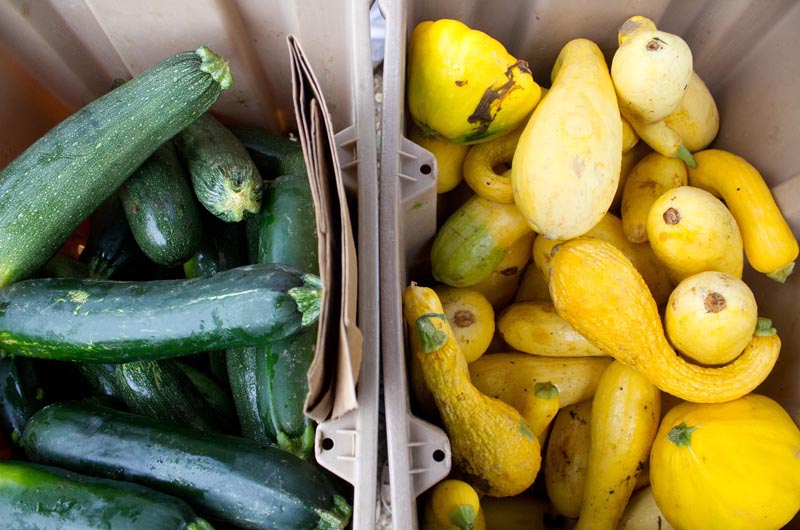
Though larger zucchinis are tougher and more fibrous than their smaller and sweeter sisters, the most ardent zucchini eater will not be dissuaded.
“When I pass a flowering zucchini plant in a garden, my heart skips a beat.” — Gwyneth Paltrow.
The object of Paltrow’s affection has a similar effect on many, even now in the season when there is so much and so many of this vegetable to love.
Zucchini fans will never refuse a sizeable squash. Though larger zucchinis are tougher and more fibrous than their smaller and sweeter sisters, the most ardent zucchini eater will not be dissuaded.
Englishman Bernard Lavery holds the record for the largest zucchini ever grown. His behemoth was just under seven feet and weighed in at 65 pounds!
Some zucchini gardeners might disagree with Ms. Paltrow about the allure of this squash. Dave Barry humorously observed, “The trouble is, you cannot grow just one zucchini. Minutes after you plant a single seed, hundreds of zucchini will barge out of the ground and sprawl around the garden, menacing the other vegetables. At night, you will be able to hear the ground quake as more and more zucchinis erupt.”
With regard to its fruitfulness, and more simply put by an unknown poet, "Zucchini’s terrific! Like bunnies, prolific!" One plant can produce up to nine pounds of fruit!
Even with zucchini’s ability to yield garden abundance locally, the squash is commercially grown and even imported into this country to feed our demand. Florida, California, Georgia and New York are the top domestic producing states, and most imported squash comes from Mexico.
Though we are at the height of the zucchini season, I am not yet tired of these stupendous squash, which are, botanically speaking, a fruit. The part that is typically eaten is the swollen ovary of the flower. The flower, though, is also a delicacy, commonly consumed stuffed, in fritters or tempura, or sautéed.
Eat voraciously, since zucchini are known for their health-giving qualities. Choose the darker ones for the most nutrition value. Though they are just about 95 per cent water, zucchinis have more potassium than bananas and are a good source of vitamins C and E. And with less than 30 calories for a typical-sized zucchini, don’t be shy about busting out the butter!
If you’re feeling festive about this fruit, here’s good news: zucchini celebrations are as eruptive as this plant. April 25 is National Zucchini Bread Day and August 8 is National Zucchini Day. Consider also the many special events commemorating this fabulous fruit, including the annual Zucchini Festival in Ohio, the Hayward Zucchini Festival in California, the Windsor Zucchini Festival in Florida, or any of the other half-dozen festivals given in zucchini’s honor annually in North America.
Though clearly a famous fruit, the roots of zucchini are humble; the variety that we eat today was likely brought over by Italian immigrants, though squash as a more general plant goes back more than 10,000 years. The Italians called it zucchina, or zuccho, which translated into small pumpkin. The French say “courgette,” and the British prefer the term “marrow.” And summer squash is a catch-all term that includes zucchinis.
And for those who argue that larger zucchini are less palatable than the smaller versions, it is good to remember this saying from an anonymous author: “Let my words, like vegetables, be tender and sweet, for tomorrow I may have to eat them.”
Suzan Bellincampi is director of the Felix Neck Wildlife Sanctuary in Edgartown, and author of Martha’s Vineyard: A Field Guide to Island Nature.
Comments
Recipies! PLEASE! I am recipe
Margot lane MenemshaRecipies! PLEASE! I am recipe desperate!! Got two 18 inchers.
Sautéed Zucchini with Mint,
Elizabeth ChilmarkSautéed Zucchini with Mint, Basil, and Walnuts
By Marian Bull • June 27, 2014 • 11 Comments
♥ 155 SAVE ⎙ ✉
◅▻
Sautéed Zucchini with Mint, Basil, and Walnuts
1 of 2 Photo by Eric Moran
Author Notes: Adapted ever-so-slightly from Deborah Madison's always reliable "Vegetable Literacy." - Marian Bull
Serves 4 as a small side, or 2 as a meal.
1
pound zucchini (or any summer squash), sliced into 1/2-inch rounds
3
tablespoons olive oil, divided
3
small cloves garlic
10
mint leaves
5
basil leaves
1
heaping tablespoon capers, rinsed
2
tablespoons walnuts or pine nuts, lightly toasted
1 to 2
teaspoon red wine vinegar
Sea salt and freshly ground pepper, to taste
Additional mint and basil, torn, to garnish
Ricotta and your favorite bread (optional, for serving)
Heat half of your olive oil in a 10-inch skillet over medium-high heat. When the oil is hot, add half the zucchini and sauté, flipping and turning every few minutes, until golden brown, about 15 minutes. Don't salt them yet! While your zucchini cooks, chop together the garlic, mint, basil, and capers so that they intermingle and turn into a sort of knife pesto. When the zucchini is golden, remove it from the pan and cook the remaining zucchini in the remaining oil, just as you did the first batch. Then add the first batch back into the pan, along with the herb-garlic mixture and the vinegar, to taste. Taste for salt; add a good pinch, plus a few cracks of pepper. Toss well. Scoop everything out onto a serving plate. Right before serving, sprinkle on the nuts and extra herbs as a garnish. I like to carve out a corner of my serving dish, dollop on a big pile of ricotta, and serve everything together with thick slices of crusty bread. It also makes for some mean crostini.
This recipe is a Community Pick!
Add new comment