

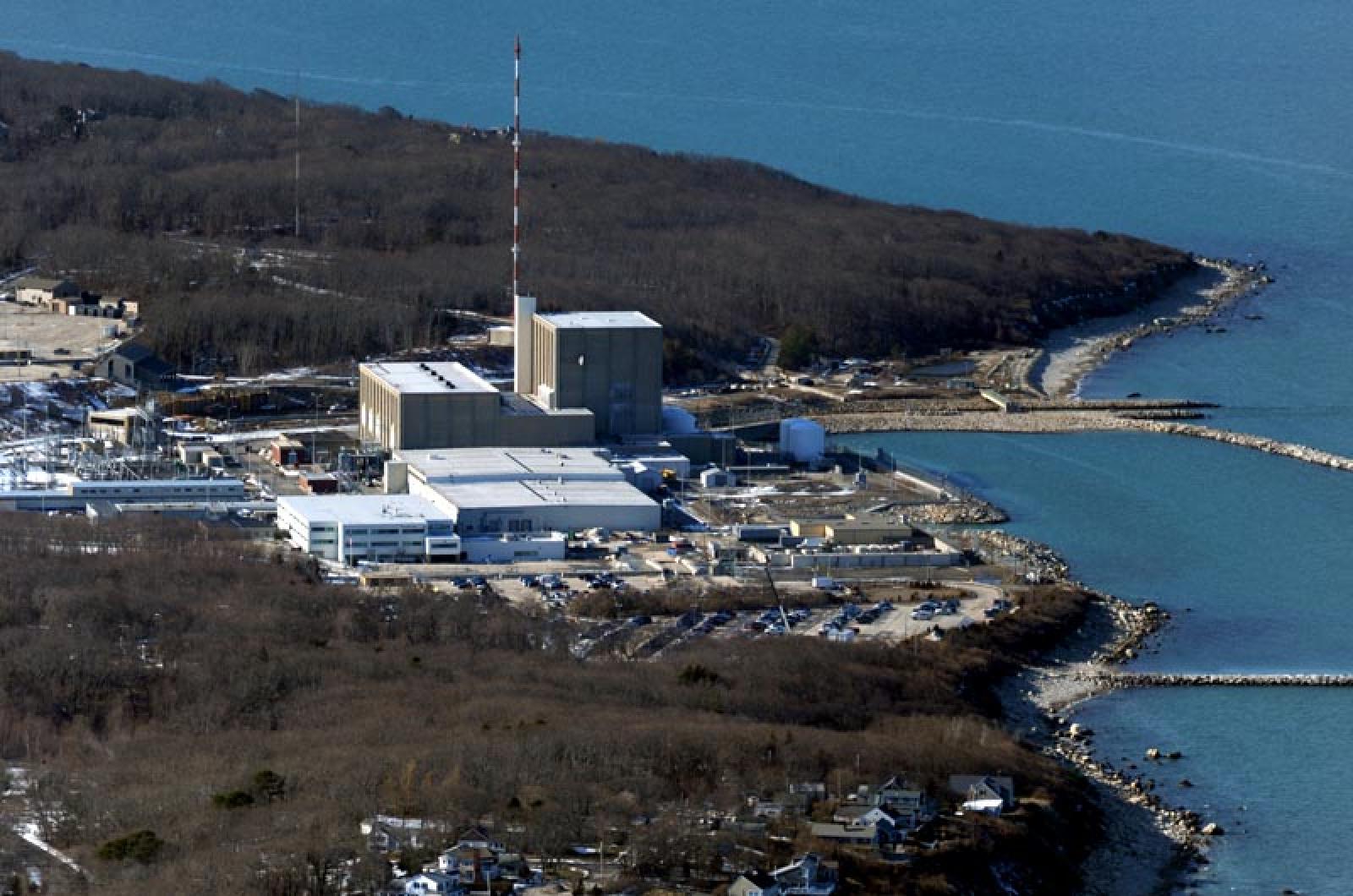
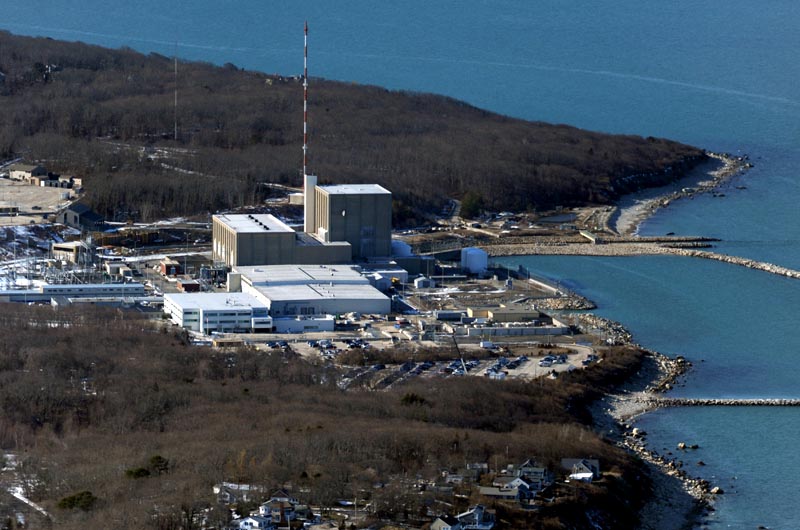
<p>A movement to close the Pilgrim Nuclear Power Station is gaining ground on the Vineyard. A public forum is set for tonight at 7 p.m. at the Katharine Cornell Theatre in Vineyard Haven. Cape and Islands Sen. Dan Wolf will attend.</p>
A movement to close the Pilgrim Nuclear Power Station is gaining ground on Martha’s Vineyard, where some Islanders have begun to voice concerns about their safety in the event of an emergency.
The Island, like much of the commonwealth, stands in the shadow of the state’s only nuclear plant.
A public forum is planned for Monday at 7 p.m. at the Katharine Cornell Theatre in Vineyard Haven; the event is titled Pilgrim Nuclear Power Station: Could Fukushima Happen Here?
Pilgrim provides 15 per cent of the electricity for southeastern Massachusetts, according to a 2014 report by ISO New England, the region’s electric grid operator.
This past spring, Island voters expressed overwhelming support for the decommissioning of the plant at their annual town meetings and at the ballot box. Nonbinding resolutions urging Gov. Deval Patrick to press for closure of the Plymouth plant were supported by most towns. In addition, the Martha’s Vineyard Commission and the Dukes County Commission signed letters to the Nuclear Regulatory Commission asking for the decommissioning of Pilgrim.
“Public safety, particularly that of Cape and Islands residents, cannot be assured,” the resolutions read in part.

Christina Miller of Edgartown has studied, kept records of nuclear power plant.

Christina Miller of Edgartown has studied, kept records of nuclear power plant.
Last year, all 15 Cape towns passed similar resolutions, asking for the decommissioning of the power plant.
In the event of an emergency at Pilgrim, releases from the plant could potentially involve the inhalation and ingestion of radioactive material. State and federal legislators have also expressed concerns about the plant’s safety, and have asked the NRC to monitor the plant closely.
The primary concern for the Cape and Islands has been the lack of an evacuation plan in the event of a nuclear emergency. While the state has a plan in place to evacuate those living within a 10-mile radius of the plant, the Cape and Islands are not included in that region.
“Basically, we on the Cape and Islands would be sheltering in place and then slowly relocated, which makes us sitting ducks for ingesting any radioactive plume that should be released,” said Ann Rosenkranz of West Tisbury.
But emergency management officials say firmly that there is no imminent risk to the Cape and Islands from inhaled radiation in the event of an accident at the plant. The Vineyard sits roughly 40 to 50 miles away from the plant.
“The Vineyard potentially is at risk from a release, but it is not due to an imminent urgent inhalation that would require an emergency evacuation,” said Kurt Schwartz, director of emergency management for Massachusetts. “There is not a circumstance in which the state would call for an evacuation of the Cape due to the release from Pilgrim,” Mr. Schwartz said.
Emergency planning zones are determined by the Federal Emergency Management Agency and Nuclear Regulatory Commission which work in tandem to ensure safety around such plants.
The 10-mile radius is based on scientific research by the federal agencies. “The science indicates that when radioactive particles are released into the atmosphere, by the time they travel 10 miles, their level of radioactivity has dropped to a level to where they don’t present an imminent health risk,” Mr. Schwartz said.
Strong winds and precipitation further reduce the amount of radioactive particles in the air in a given area, he said.
Mr. Schwartz, a longtime Vineyard homeowner, said the Island could be at risk for possible long-term exposure to radioactive materials.
“If you ingest the materials over time there is a substantial health risk, but it is something that happens over a prolonged period of time,” he said.
But he said when it comes to an emergency evacuation plan, the Vineyard does not need to worry. In the event of an emergency, within the first 24 hours, state and federal officials would come to the Island and map the regions that have high radioactivity. Depending on what they find, some residents might have to relocate.
“The Vineyard issue is not needing an emergency evacuation plan — what the Vineyard might experience in the aftermath of a significant emergency would be a normal Steamship relocation,” Mr. Schwartz said. “We would be able to manage that type of relocation.”
Zach Niemi, left, and Chuck Cotnoir, county director of emergency management.
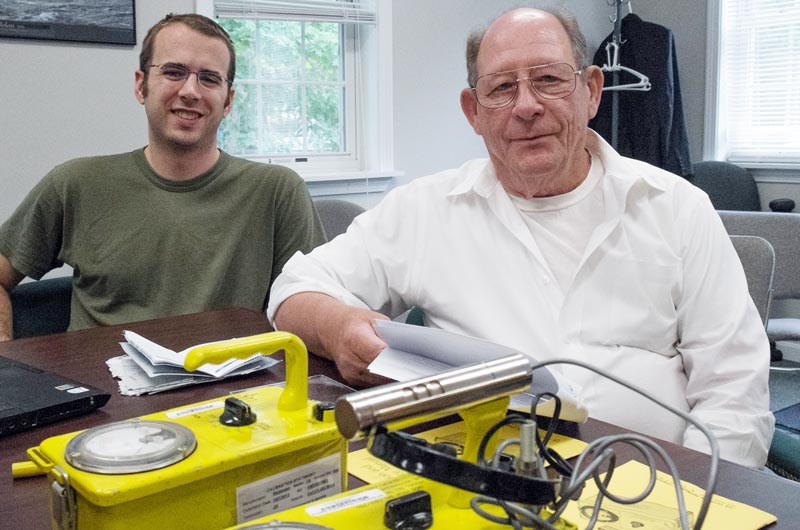
Zach Niemi, left, and Chuck Cotnoir, county director of emergency management.
Despite communicating this position clearly in the public arena, Mr. Schwartz said his comments have been taken out of context by advocacy groups working to decommission the plant.
“I have in the past said that the Cape potentially is in harm’s way if there is a release from Pilgrim. The Cape is at risk of this longer-term ingestion-related health issue, but I have also clearly said that the people on the Cape are not at immediate risk of inhalation illnesses,” the director said.
He said in any emergency, the state is immediately in contact with local emergency management personnel, including Charles Cotnoir, emergency manager for Dukes County. “The Vineyard would be getting very clear guidance from us about what is going on and what might be required,” Mr. Schwartz said.
Mr. Cotnoir has developed a detailed plan for nuclear power plant emergencies, and has secured radiation testing devices for use on county property. He is also working with volunteer Zach Niemi to develop a GIS mapping program to track radiation readings around the Island.
“It’s always good for people to be ready for a possible natural or man-made disaster,” Mr. Cotnoir said this week. His plan is specific to Dukes County property and its employees. Island boards of health now have supplies of potassium iodide — a drug used to protect the thyroid gland from radiation — available for public distribution.
Three Cape Cod activists will join the panel on Monday, including Mary Lampert of Pilgrim Watch, Diane Turco of Cape Downwinders and Karen Vale of Cape Cod Bay Watch.
Cape and Islands state Sen. Dan Wolf, who has called for closing the plant, will also speak Monday.
A group called 350 Martha’s Vineyard Island, a local organization founded in early 2013 to address climate change, has also been vocal on the issue.
Though not directly related to climate change, founder Mas Kimball said sea level rise and sea temperature rise could imperil the plant in the event of a storm. The warming of bay waters could also compromise the necessary cooling of fuel rods, he said.
“Climate change is impacting the plant,” said Ann Rosenkranz. “Rising seas, warming waters, the severity and frequency of the storms, all of those things are really imperiling what is not a safe situation to begin with and making it even more dangerous.”
Christina Miller, an Edgartown resident, has been rigorously tracking the plant since it was first built.
Her family owned a summer home in Manomet, just three miles from the power plant.
An avid environmentalist, Mrs. Miller took an interest in the plant from the very beginning, clipping nearly every article printed on the topic in regional and local press.
The thick binders that hold these clippings present a nearly complete history of the state’s only nuclear power plant, she said. Her binders have been circulated widely around the Cape by those looking to educate themselves about the plant.
Now, it’s time for Islanders to inform themselves as well, she said.
“I think people have to come to the realization that we are as vulnerable as all the communities on the Cape,” Mrs. Miller said.

Exhibit at Gay Head Gallery related to forum on Pilgrim Nuclear Power Station features stark photographs by Barbara Norfleet.
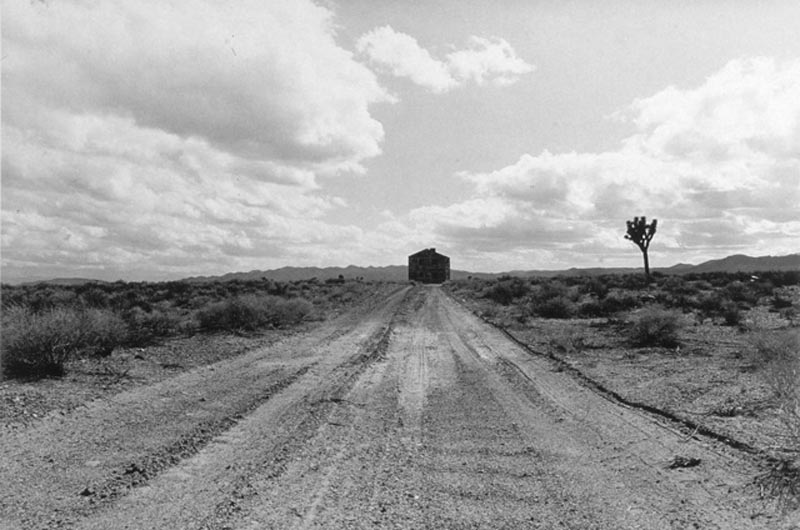
Exhibit at Gay Head Gallery related to forum on Pilgrim Nuclear Power Station features stark photographs by Barbara Norfleet.
Articles filed in her binder more recently show that in the wake of Fukushima, more attention has been paid in the press.
Mr. Schwartz acknowledged the heightened awareness. “Fukushima reminds us that anything is possible,” he said. “When we think about Pilgrim, I think it is important to do worst-case scenario planning, and we planned for that extremely low probability, high impact event.”
The Pilgrim Power Plant was built in 1972 and operated by Boston Edison Company until l999. At that point, the current owner, Entergy, purchased the station.
Despite voices calling for decommissioning, the Pilgrim Plant was granted a license renewal in 2012 for 20 more years.
This year, the NRC determined that the plant required more scrutiny as a result of unplanned shutdowns that took place last year.
Organizers of the Monday forum say they hope it will continue a dialogue on the Island about the safety and environmental risks involved with the Pilgrim plant.
“It is about our community trying to figure out if we have a reasonable plan,” said Megan Ottens-Sargent, who owns the Gay Head Gallery in Aquinnah. This weekend she will open a new show featuring haunting black and white photographs of nuclear testing facilities. Called Landscape of the Cold War, the show aims to portray the impact that nuclear technology can have on landscape and the culture of a place.
Though he is unable to attend the Monday forum, Mr. Schwartz said he hopes a balanced dialogue will take place. “There are a lot of groups out there that have an agenda,” he said. “If you look across the Cape, there has been a lot of bad information that has been disseminated that is really leading people to have an erroneous understanding of the risks. People need to understand the real risk, and there are real risks.”
Comments
Seems like a great place for
Stir-er of Fires OBSeems like a great place for some windmills !
Coal power plants spew about
Wayne LaMontagne Hyannis, MACoal power plants spew about 10,000 times more radioactivity into the air than a nuclear power plant. You get more radiation exposure taking a sun tan for one hour than you do from living next to a nuclear power plant for a lifetime. A 4 hours airline flight gives you the equivalent of about one xray of radiation. People are so ignorant about background radiation. Nuclear power plants are safe and getting safer. The number of people who die from coal, oil, and natural gas plants (from mining to burning the fuel) numbers in the hundreds of thousands. Only a few died from the Japanese nuclear meltdown. Climate change is mandating that we use zero carbon fuels such as nuclear. What energy source will the people use if the nuclear power plant is closed? They are really uninformed about the real dangers for the future.
Misinformed about the real
David Agnew Harwich, the CapeMisinformed about the real dangers? Only a few died? Take a look at http://capedownwinders.org/chernobyl-summary/ - one million dead (New York Academy of Science), and the radioactive burden in the environment and the genome will continue to take a toll for generations.
I'm not a fan of fossil fuels, but an accident at a fossil fueled generator wouldn't leak 3,000 tons of radioactive water into the environment 3 years into the accident as Fukushima has, nor would 160,000 people be displaced, most of them to this day. In just 40 years, one percent of all commercial nuclear reactors worldwide have exploded with massive releases of radiation. The odds with the Mark 1 design are 1 in 11. I don't see how anyone can call that safe.
Alternative energy sources? see http://www.ted.com/talks/amory_lovins_a_50_year_plan_for_energy
Nuclear emits less greenhouse gasses than coal or oil, but it is NOT carbon free - see Valuing the greenhouse gas emissions from nuclear power: A critical survey Metastudy by Benjamin K. Sovacool: https://www.nirs.org/climate/background/sovacool_nuclear_ghg.pdf
Bogus, Wayne. If you're so
Anna Baker Marshfield, MABogus, Wayne. If you're so confident about nuclear radiation, why don't we use your backyard to store some of the waste?
So...does the NRC believe the
Susan Desmarais Oak BluffsSo...does the NRC believe the wind doesn't blow northeast? Those nuclear particles would get here quickly in a nor'easter...
Who wants to double down on
Don Barton MashpeeWho wants to double down on this risky bet? Rationally link the cumulative data points. Old infrastructure, antiquated design, inadequate containment structure, poor safety record, on NRC watchlist, rated #2 of 100 for earthquake risk in May, 600 metrics tons of nuclear waste sitting above ground in over crowded spent storage pools. The waste is equivalent to 1200 Hiroshima A Bombs with no where to go. It's ironic, neither do we on the Cape and Islands. Shut the plant down! Speak up! It is time.
Thanks Don - well said.
BruceThanks Don - well said.
So how does NIMBY group
Paulli D EdgartownSo how does NIMBY group propose to make up the 15% electrical supply when they shut the plant down? Cape Wind, or turbines off shore? So while I understand the possible nightmare scenario, what is the plan for making up the difference and not blowing the costs of electricity sky high?
solar roadways ought to do it
pgsolar roadways ought to do it
I keep reading articles about
ARTHUR plymouthI keep reading articles about Plymouth nuclear power plant stating that it is inexpensive energy.. How can they make such a statement knowing that all the nuclear waste that has been produced by that plant is still on the grounds in Plymouth. It stays radio active for 20,000 years so when this company goes bankrupt who's going to be guarding the material on the grounds in Plymouth for the next 20,000 years. I am sure that there is a cost to that.
The plant has only been
Nuke BoyThe plant has only been running safely for 45+ years. Let's give the operators some credit for running a safe, clean, reliable plant. And yes, I agree, if you want to close it then a couple of hundred windmills a mile or two of the Cape Cod and Vinyard shores would be a good look for the area!
Well it's only been licensed
David Agnew Harwich, the CapeWell it's only been licensed for 42 years. And it spent a solid 2 years offline in the late eighties. And last year it had more unplanned shutdowns than any other U.S. reactor. And it started operation in 1972 with failed fuel, which likely contributed to the increased leukemia in the area documented in two health studies. And in 1972, the regulators knew that this Mark 1 design's containment structure was incapable of containing a severe accident. The workaround? Install VENTS in the CONTAINMENT. See anything wrong with that sentence? I give the workers credit for doing the best they can, but it is not safe, clean, or reliable. It was designed to last 40 years, and it has. Wouldn't it be prudent to quit while we're ahead? See my other post on this page for the alternative energy solution.
A mere 200 wind turbines
G.R.L. Cowan Ontario, CanadaA mere 200 wind turbines wouldn't even *average* the same electricity output as Pilgrim. That would take around 600 of today's largest. But much of the replacement power would have to come from natural gas, because wind farms often are simultaneously becalmed over continental expanses.
Much of the replacement power for what you're now getting from $0.20/MMBTU uranium would have go come from $4/MMBTU gas, and that $4 includes 50 or 75 cents for your federal government. So it, and friends of federal revenue, are not disinterested participants in the discussion.
Given recent wind turbine fatalities, and of course numerous recent natural gas fatalities, it is likely their safety concerns are not genuine.
--->See how every state can
Sam USA--->See how every state can be powered ENTIRELY with Renewable Energy:
www dot thesolutionsproject dot org
---> Learn what happens when nuclear energy goes wrong:
www dot enenews dot com
There is no disputing the
Roger Prentis Edgartown, MAThere is no disputing the safety record of Nuclear Power in America. Have we had "issues" at some plants, of course, but the NRC is on them ASAP. Nuclear provides safe, reliable energy that is growing in demand. I echo some comments here, please give us the alternative. We are shuttering coal, most hydro is offline or going offline both due to crushing EPA guidelines, so then, what are we to do, I applaud conservation from every angle but even the best solar and wind at this juncture is far away from competitively providing sustainable energy. We are creating an unsustainable energy grid without reliable power production. Without a viable alternative, we should all see this as an affront to our very way of life here on the Vineyard
"NRC is on them ASAP". Do you
David Agnew Harwich, the Cape"NRC is on them ASAP". Do you really think so? Did you know that a fire at Browns Ferry, which nearly caused a double meltdown 35 years ago, resulted in new fire safety standards for U.S. reactors? Or that the NRC considers fire to be the most likely precipitating event for a meltdown? Did you know that today nearly 70% of our reactors are not in compliance with those regs? Including Browns Ferry!? I'm not clever enough to make this up. Or how about Davis-Besse, where boric acid at a large hole 8" through the pressure vessel, which was 8 3/8" thick. Citizens had been asking the NRC to require an inspection of that known problem for years, but the NRC said, 'no problem'. That's not vigilance. And there are several reactors in the midwest downstream of old dams. NRC staff has found that if any of the dams broke, well, you know: virtually guaranteed VERY BAD NEWS. What's being done? Nothing. No viable alternative? Google 'Reinventing Fire'.
In total agreement. Those who
Linda Muckerheide Needham MAIn total agreement. Those who advocate the shut down of nuclear plants must first consider the unintended consequences!
Fukushima had operated safely
Susan Carpenter South Dennis, MAFukushima had operated safely for decades until it didn't. Just because Pilgrim has not had an accident does not mean its safety is assured. When Pilgrim shuts down for a month, our power continues without interruption. When Japan shut down all its reactors, Japan did not live in the dark. Certainly if Germany can obtain 84% of its power from renewables, we can do without the power generated by Pilgrim.
Add new comment