

The night my mother had died I slept on the lawn in a sleeping bag under the stars. I woke the next day and felt the same emptiness.
It was early December. I was working in New York at the time and was home on the Island to visit my family for the weekend. My mother had passed away three months earlier, three weeks shy of her birthday. She had been sick for a decade, all of my twenties, which sent me home to care for her just as I had begun to spread my wings on a new life somewhere else. I was working in a kitchen in the city, having fought my way through the trenches of the grill, sauté and pasta station to become a young, doe-eyed sous chef long before I was ready. I had been kept up with nightmares almost immediately after my first day cooking branzino, squab and guinea hen.
There was a light snow on the ground and it was well below freezing the morning my brother brought me along with him to hunt ducks. We set up camp in our father’s barn, where my brother inspected his neglected shotgun, armed himself with bird shot and we both made sure we had on plenty of layers.
We walked to the pond. Driving may have been quicker but would have disrupted the dawn calm that blanketed everything. I wore a one-piece snowsuit and my Dad’s boots that were two sizes too large, my feet swimming in them. The deer slept and the gravel beneath our feet was the only sound. The night my mother had died I slept on the lawn in a sleeping bag under the stars. I woke the next day at the same hour of the morning and felt the same emptiness. Her hair was combed, her body cleaned and she was placed in a body bag that I helped carry to the car. She would be cremated in a cardboard box because we could not afford wood. Half her ashes were swum out to a giant boulder in the sea where they were scattered before we swam in them, and were once again with her. The other half waited to be spread in New Mexico, a place she had never been but had hoped to go, hearing the air was drier and the spirits were accepted as spirits, not as ghosts.
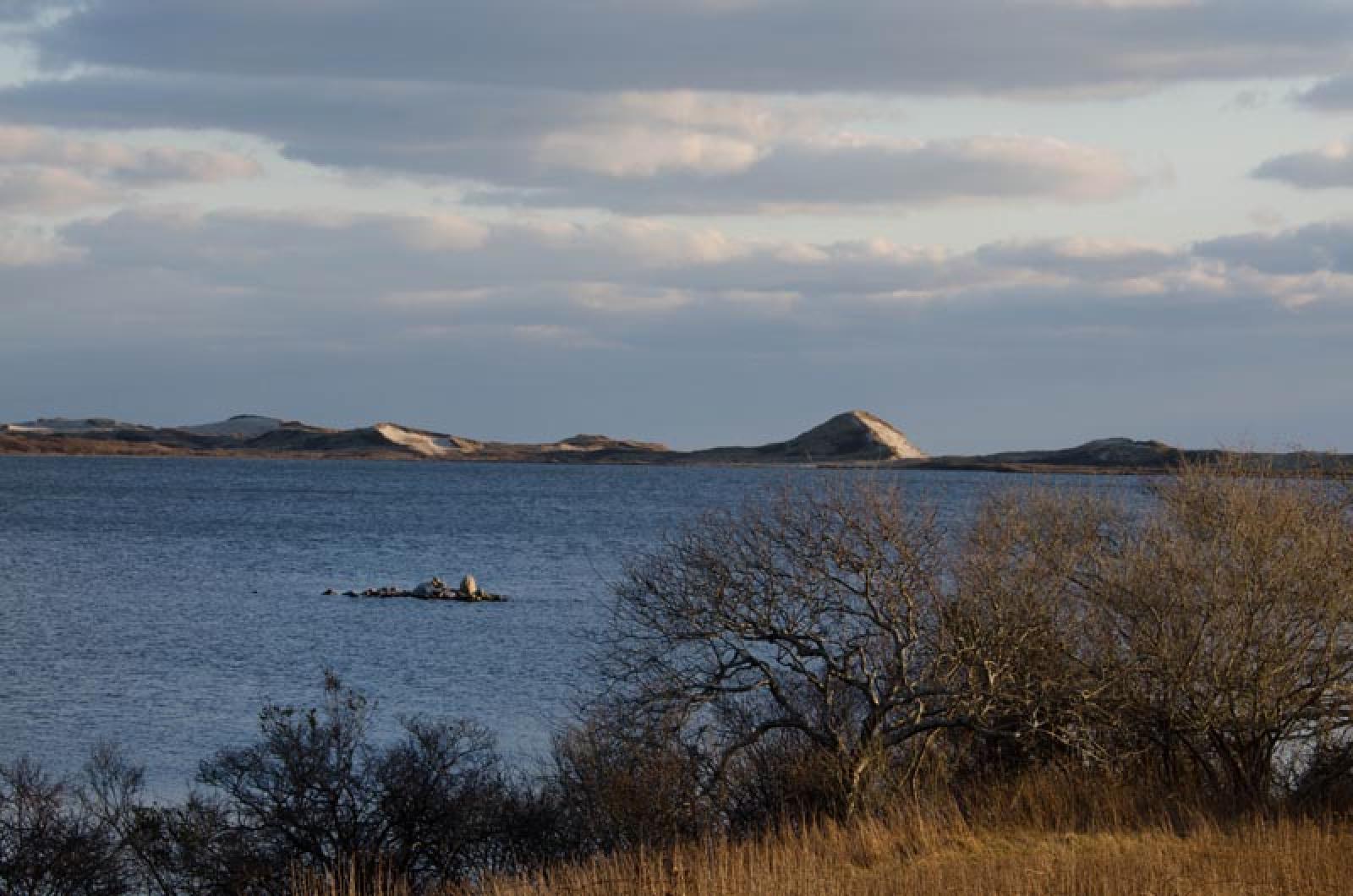
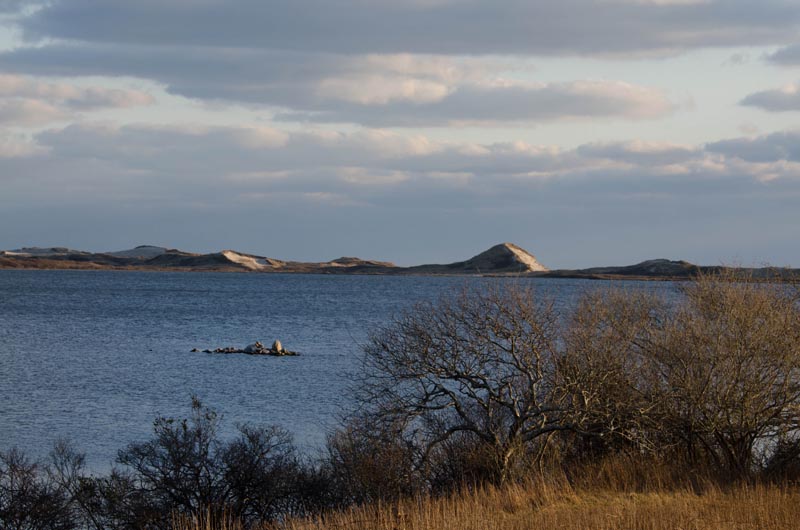
My brother and I walked on, making our way from the gravel road to mowed paths that led us to a south-facing hillside, shaped like an amphitheatre overlooking Squibnocket Pond and the dunes behind it. When we found our spot in a thicket, the underbrush acted as a cushion and our layers did the trick. Our hands were warm and only the tips of our noses, eyes and lips were exposed to the elements. It was too dark still to see our breath, but there was now a deep orange glow on the horizon. New York’s omnipresent hustle and stimulation combined with the stress I felt trying to serve 300 people a night had put me on edge. I was having trouble sleeping, though I was always tired. The earth was calm in front of me and I briefly fell asleep, dreaming about my mother’s cold hands on my back struggling to apply sunscreen to my robust shoulders while she sat on a milk crate, her legs little more than skeletons, with a catheter hanging from her waist and barely enough strength to hold herself up. She used me to do so as she tried to care for me in her final days, for the last time.
I woke calmly and the day slowly began to show shape as the sun rose. Watching the night fade and the blueness of the coming day take over the sky gave us focus, and we watched for birds. Staring at the entire sky, waiting to detect movement is both soothing and strenuous and makes you feel alive. So does walking down a deer path through the woods after something unknown, or away from something imagined. The morning cold burned my lungs a little with each breath. Tracking deer can be physically more stimulating than sitting and waiting to spot a bird flying high above, though in that moment nothing could have helped me feel more present. The still landscape looked severe, with the sky casting its blue tones onto the pond, the hills rising and falling. The birds began to stir and common backyard wrens flitted around us. The brush began to make noise here and there, and far off, sea birds soared from one side of the horizon to the other.
More light brought more texture to the world and a few lonely lights from distant homes and smoke from their chimneys were proof that others inhabited what felt like our own world. We did not speak. Nothing was on my mind as I yearned for a mallard or a teal to happen upon us.
Once the darkness broke, it crumbled quickly and long before most were up it seemed as though the night had never existed. We shifted our bodies now and then, my brother cleared his throat occasionally and the ducks never came. The wind awoke as well and painted strokes on the pond surface like a rake on sand.
A nod from my brother in the direction of home signaled our exit. He had probably given up long before but knew I needed to be there. We both did. My mother had left us far too early and neither of us were taking it well. The shared peace in the dawn provided words we would never speak to one another. We trudged home at a brisker pace to generate warmth and the noise under our feet didn’t matter anymore.
Comments
Chris - you are a writer as
Shirley W. Mayhew West TisburyChris - you are a writer as well as a chef - this is a lovely piece and made me feel all over again, the sadness of Jeannie's early death.....I remember, too, the early death of Lucy Ann, your sweet grandmother, my friend and neighbor for a few summers, back in the 1950s......they both would be so proud of you!
so beautifully written, I
virginia yorke aquinnahso beautifully written, I especially liked "spirits" not ghosts and am trully enjoying your work.
Thank you, Chris. Nothing
Rex Jarrell West TisburyThank you, Chris. Nothing connects us mortals like grief well shared. Your example radiates beyond our February quiet island, and I imagine this piece strengthens many personal connections as I know it does mine to you.
I am grateful to have known your mother, and to live with a community that loves her still.
Beautifully written, Chris.
Roz Glazer New YorkBeautifully written, Chris. Who knew your talent as a writer!. I had the pleasure of knowing your mother all those years ago when
you and your brother were but little men. She was a very fine woman and you will always carry her love and devotion in your heart.
Chris, This is a beautiful
Ann DeWitt Athens, GAChris, This is a beautiful tribute to your mother and the bond you and your brother had with her. She was a wonderful woman and not forgotten by those who knew her. I feel blessed that she touched my life and Tim's as well. She would be so proud of the men that she raised. Live strong in her presence, she is always by your side. I often quote something I learned from her... she taught me that worry was a negative emotion and that prayer was the positive one... so never worry always pray. Her spirit lives on!
We sit 500 miles away, on the
Donna Russell Braddock Bay, New YorkWe sit 500 miles away, on the shores of Lake Ontario, with tears in our eyes this morning, touched by Chris Fischer's grief…touched by the beautiful tribute to familial love and loss, honoring the mother who sustained her children. Our shores are seasonally populated with the warmly layered and camouflaged, who sit quietly among the reeds and rushes, shotguns ready, decoys afloat, waiting. Every season, we hear the calls of duck or goose flying repeatedly over our house, desperately searching for its mate that loudly, abruptly disappeared from a space in the sky beside it. The flock flies on. The bird, which mated for life, searches for days or weeks. If it eventually leaves, it will return next year, alone, still searching. It will not mate again. Grief is universal in the animal world, of which we are merely a part. Grief is not reserved for humans. Many native peoples pay homage to every life, every spirit, taken for necessary sustenance - goose, duck, deer, branzino, squab or guinea hen. Give thanks often for who and what sustains you. Grief will thus subside.
Patrick forwarded your
Dottie Sullivan Rochester, NYPatrick forwarded your article to me and I just wanted you to know that I thought it could not have been written any better. I did not know your mother but being a mother myself, I felt like I did. All the Sullivans are so happy that we know you. As I wipe the tears from my eyes after reading your article, you must know that your mother is very proud of you. May God bless you always, Chris. I look forward to seeing you on MV soon.
Ah, Chris, you always were
Diana Roberts Eleuthera & islesboroAh, Chris, you always were such a bright light in my classroom and gave me hope for the persistence of spirit, the written word, and the value of good mothering. Your mom and I shared the raising of sons. She cottoned onto me as I did to her upon first meeting, tho I suspect she was as warm and open with everyone. Still, I always felt her presence in your presence, clear as day and, bingo, here she is again, so beautifully graced with life via your prose. I give this an A.
Loved that, loved the totally
Skip OBLoved that, loved the totally amazing and appropriate picture too. Still... :-(
Wow, beautiful beautiful
David GuilfordWow, beautiful beautiful stuff Chris.
As i read I remembered your mothers line drawings of the coast and the ponds. I remember her well, she must be so proud of you and your writing and farming and cooking. You da Man!
Brilliant work. Your Mom was
sally apy edgartown,maBrilliant work. Your Mom was a treasure and she left an incredible legacy; not only with you & Andrew, with every child she taught.
Beautiful. Just beautiful.
Lisa Foster Los AngelesBeautiful. Just beautiful.
Chris u re indeed great, juz
David Jose NigeriaChris u re indeed great, juz make ur mum proude
Beautiful. I wish this story
Autumn Hruby NYCBeautiful. I wish this story kept going.
Add new comment