

With the deadline now past to apply for commercial casino licenses in Massachusetts, the chairman of the Wampanoag Tribe of Gay Head (Aquinnah) said the tribe will not pursue a class three license from the state but will continue to press for a high-stakes bingo hall in Aquinnah.
With the deadline now past to apply for commercial casino licenses in Massachusetts, the chairman of the Wampanoag Tribe of Gay Head (Aquinnah) said the tribe will not pursue a commercial class three license from the state but will continue to press for a high-stakes bingo hall in Aquinnah.
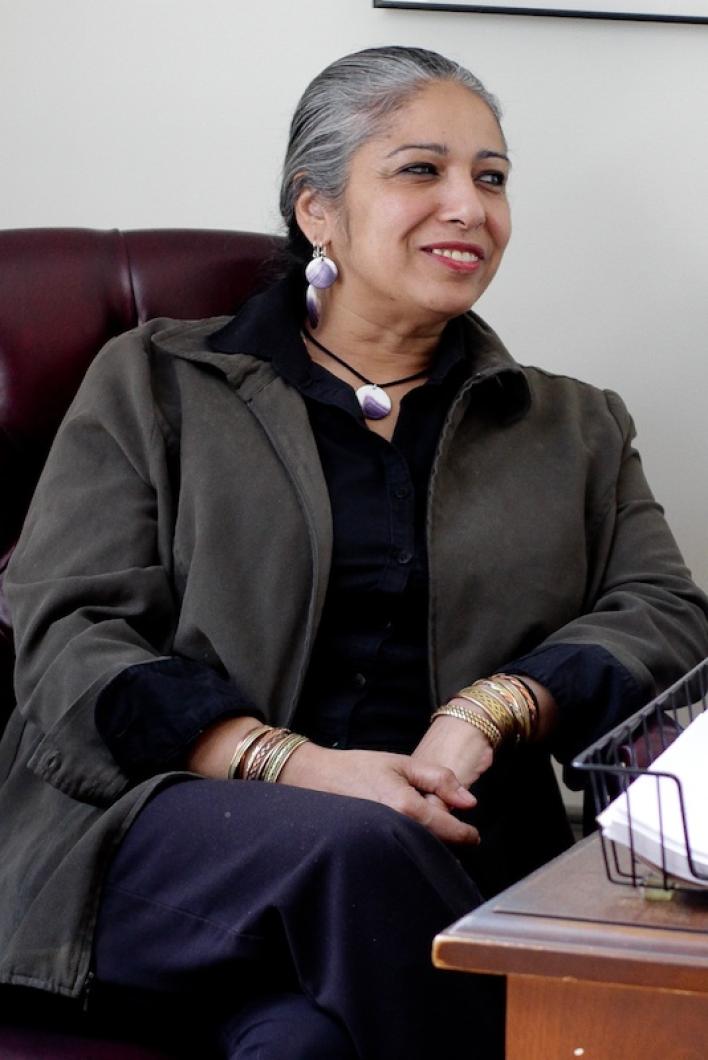
And tribal chairman Cheryl Andrews-Maltais singled out for strong criticism two of the three Aquinnah selectmen who are also tribal members, saying they have failed to support the cause to build a bingo hall.
“I always support the idea of having tribal members on the board of selectmen,” she told the Gazette in a telephone interview Thursday, referring to selectmen Spencer Booker and Beverly Wright. “I don’t understand why . . . . they don’t declare, ‘I’m going to represent the tribe’s interest.’”
In a January newsletter that went out to tribal members, Mrs. Andrews-Maltais was also strongly critical of the two selectmen. “We currently hold the majority of votes on the town board of selectmen but yet, they have voted against the tribe’s rights on a regular basis. There have been no initiatives to benefit the tribe,” she wrote in the Toad Rock Times, a tribal newsletter. “We have always tried to assist the town, but there is little reciprocation. It’s time for our tribal representatives to decide whether they are loyal to the members of our tribe or loyal to the constituency of the town.”
The tribal chairman also criticized Aquinnah seasonal residents. “It doesn’t seem to be the majority of year-round residents trying to oppress us,” she wrote. “It is more of the nonresidents that are simply protecting their investments and property values. These are the same people, who without us agreeing to clear their titles as part of the [1983 land claims] settlement, would not have their vacation homes in Aquinnah today.”
Mr. Booker, who is chairman of the selectmen, fired back a lengthy email to Mrs. Andrews-Maltais in response. “Your chairwoman’s update has once again proven beyond a shadow of a doubt how willing you are and how far you will go to mislead the general membership of the tribe,” Mr. Booker wrote in part in the email obtained by the Gazette. “You want to establish a business within the boundaries of Aquinnah . . . that could impact the town to the point of bankruptcy in terms of police, fire, EMS, road maintenance . . . all the while Beverly and I are just to sit back and let that happen? If you were a selectman in the town you lived in would you let that happen? I don’t think so.”
Mr. Booker said he had invited the tribal leaders to come and discuss matters with the selectmen, with no reply. “I’ve been waiting for the email or phone call,” he wrote.
Speaking to the Gazette Thursday, Mrs. Andrews-Maltais confirmed she had recently taken steps to bar Ms. Wright from serving on the tribal council because she is also a selectman. “We have an issue here,” she said. “You cannot separate yourself. No elected officials can be loyal to the same levels for two different masters with differing opinions. You cannot split yourself in half. I told her, you took your oath here first.”
Mrs. Wright could not be reached for comment.
Also reached by telephone, Mr. Booker confirmed that tension is building between the town and the tribe over the casino issue amid serious communication problems.
“It always comes back to silence from them,” he said. “The don’t-call-us, we’ll-call-you kind of thing.”
The Vineyard tribe has been pursuing casino plans, both on the Island and in southeastern Massachusetts, since November 2011 when Gov. Deval Patrick passed a gaming law creating three casino licenses. One is reserved for a federally-recognized American Indian tribe. But Governor Patrick has refused to negotiate with the Vineyard tribe for a license, claiming the tribe waived its sovereignty in a land settlement agreeing it signed in 1983. The governor signed a compact with the Mashpee Wampanoags in July 2012 that was later rejected by the U.S. Department of the Interior. The Mashpees are working to develop a new compact.
Meanwhile, a complicated lawsuit is pending in U.S. District Court involving a commercial developer who is suing the governor over a state gaming law section that gives tribes first rights to a casino license in Southeastern Massachusetts. The Vineyard and Mashpee tribes, town of Aquinnah, Gay Head taxpayers and state are all involved as potential intervenors in the KG Urban case. The state gaming commission concluded its first phase of commercial casino applications on Tuesday. There are now 11 applications from developers for commercial licenses in western Massachusetts and the Boston area.
Mrs. Andrews-Maltais said the tribe had “no intention” of filing a commercial application by the Tuesday deadline.
“The tribe would never make money on a commercial license,” she said.
The tribe will continue to pursue its rights under the federal Indian Gaming Regulatory Act for a high-stakes bingo hall at the tribal community center, she said.
The community center is an unfinished building with no occupancy permit. In June 2012 the tribe applied for an electrical permit from the town for the building. In an April 2012 opinion, town counsel Ronald H. Rappaport said the tribe could not operate a casino on land it owns in Aquinnah. The tribe has vowed to sue in federal court to protect its rights.
Mr. Booker said he has repeatedly asked the tribe to come to the table for discussion with the selectmen, with no response. “I’m sure they have their reasons . . . but I’m not sure what the reasons are,” he said.
In his email he wrote: “You just decided to build a casino and that’s it — no dialogue, communication, or outreach at all to any community you wish to pull money from . . . I encourage you and the tribal council to somehow find your way to the table to discuss how best to achieve your goals of a casino in Aquinnah.”
Comments
Cheryl Andrews-Maltais please
spencer bookerCheryl Andrews-Maltais please call B.O.S Chairman Spencer Booked to have dialogue about your casino plans!!!
The tribe has no
Quansoo ChilmarkThe tribe has no understanding of normal business practices, they seem to think they can do anything they want and the law. Everyone in town would suffer from this ill conceived plan but they don't seem to care about anyone but themselves. And since when is protecting property values wrong? She acts like it's a dirty word...because it conflicts with her plans. UGH
It's easy to dismiss the
Jean AquinnahIt's easy to dismiss the importance of property values in a town where you do not live.
Your correct in stating that
Sam ChilmarkYour correct in stating that there is nothing wrong with protecting you property values but the Tribe has the right to do what it wills. They are Federally Recognized tribe and that means they are a sovereign nation. Do I believe it's okay for them to not consider others? No, I don't. You have to ask or think about how long have they had to to yield to the town when the Tribe itself is basically its own country. That's what people fail to understand in America today. The five hundred and sixty five Tribes that are Federally Recognized are their own self governing nations. This means that any government outside that nation (USA) has no say in what the Tribe does. The town and Tribe need to find a better solution to their issue.
Gambling has never brought
Coastal EddyGambling has never brought good to any Indian or anyone else. Forget greed, and put your energy into working for the betterment of yourselves and your community.
Tribal sovereignty is and
Sam AquinnahTribal sovereignty is and will continue to be a concept that is highly misinterpreted and disregarded if both the media and people continue to present it as anything less than its own governing body. Just as the states operate under individual systems, all federally recognized tribes operate under the same individuality and separation from both community and state supervision. A sovereign nation by definition is not subject to restrictions placed by any governing body unless otherwise carved out in its own tribal compact and legislation. So, the Wampanoag Tribe of Gay Head/Aquinnah therefore relies solely on the consent of its members and council for any ventures or economic development taken up within the boundaries of the provided "trust lands" or lands granted by the government to the tribe directly. In regards to tribal consideration of the townspeople, the Chairwoman had previously stated in a quote, and I am paraphrasing in saying that one of the many positive products of this economic endeavor is the resulting increase in not only tribal but local economy with little stress on the surrounding community. Over decades, there have been various areas of business that Indians have used as a financial tool. Examples include smoke shops, both commercial and small-scale gambling facilities and much more. You see, it is not that the "Indians" wish to perpetuate the use of cigarets and other tobacco products, or get people hooked on gambling, but these areas are all high-demand, low-cost ventures that have proved beneficial to tribal economies across the nation (tribal economies being the most impoverished areas in the nation). The goal of a financially independent "Indian Country" should sound nice to most native peoples, their supporters, and also all the conservatives out there who would rather see the American Dollar invested elsewhere. In the case of CHAIRWOMAN Andrews-Maltais, many would argue that her work in the business sector of tribal governing has placed her people on a path to future financial success, while setting a precedent for all tribal governments, located on or near the East Coast in the midst of gaming battles, of possibility and optimism for the continuing advancement of Native peoples.
Add new comment