


All Outdoors

What a dirty trick! Old Zeus couldn’t get the girl, so he had to create a complicated ruse to possess her. In Roman poet Ovid’s book, Metamorphoses, Zeus’s subterfuge is described:

In The Hitchhiker’s Guide to the Galaxy, writer Douglas Adams makes this observation, “Man has always assumed that he was more intelligent than dolphins because he had achieved so much . . . the wheel, New York, wars and so on . . . while all the dolphins had ever done was muck about in the water having a good time. But conversely, the dolphins had always believed that they were far more intelligent than man...for precisely the same reason.”

American entomologist William Harris Ashmead had an eye for detail and an infatuation with insects. He must have liked fruit, too.
Living in Florida, he founded a publishing house to print agricultural tomes with a focus on bugs. His passion for pests was palpable, and in 1880 he penned a book called Orange Insects: A Treatise on the Injurious and Beneficial Insects Found on Orange Trees in Florida. This was just the beginning of his love affair with insects.

I seem to go round and round on this. My conundrum, like its source, is never-ending. I love wreaths. Certainly they are very natural, very creative, and very beautiful. However, for me, the wreaths we see decorating homes and businesses have an interest apart from any religious significance that might be attached to them. The tradition of wreaths predates Christianity. Their precursor came in ancient times. A head decoration, called a diadem, was worn to indicate royalty or importance.

It is by far the oldest thing I own, and its antiquity will certainly beat anything else I could acquire in my lifetime.
While new to me, this brilliant object’s origins likely go back around three billion years, making this gem two-thirds the age of the earth. Though I am not convinced that diamonds really are a girl’s best friend, they do make for some fascinating science.
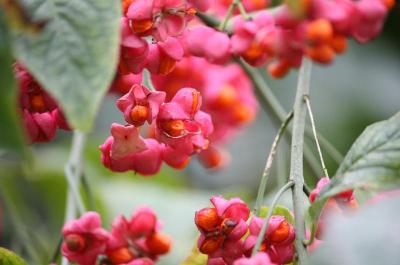
“The beginning of wisdom is to call things by their right names.”
William Turner, the “Father of Botany,” knew this. In his book, Grete Herbal, he created a common name for Euronymus europaeus because he couldn’t find an English name for this plant.