

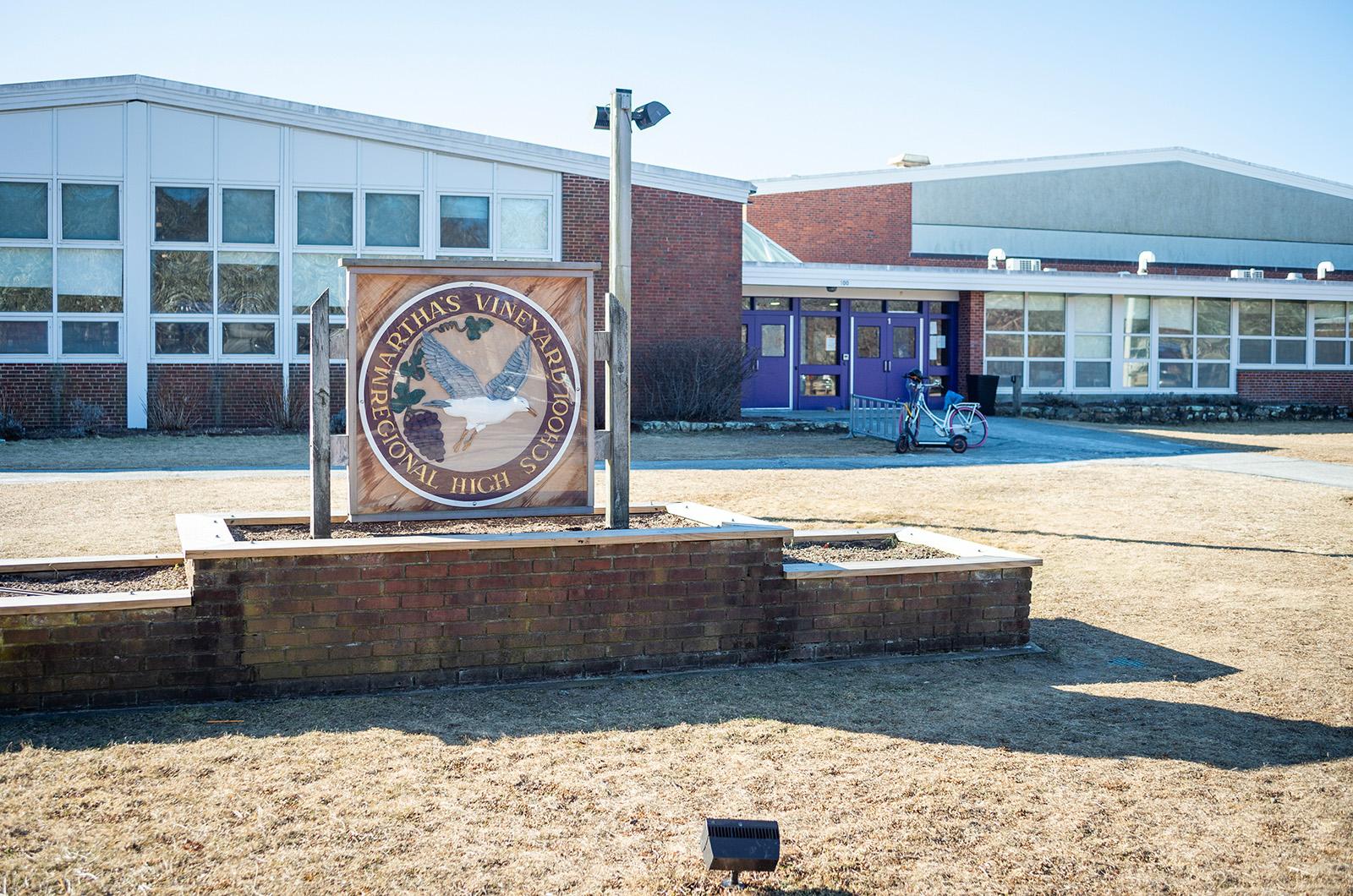
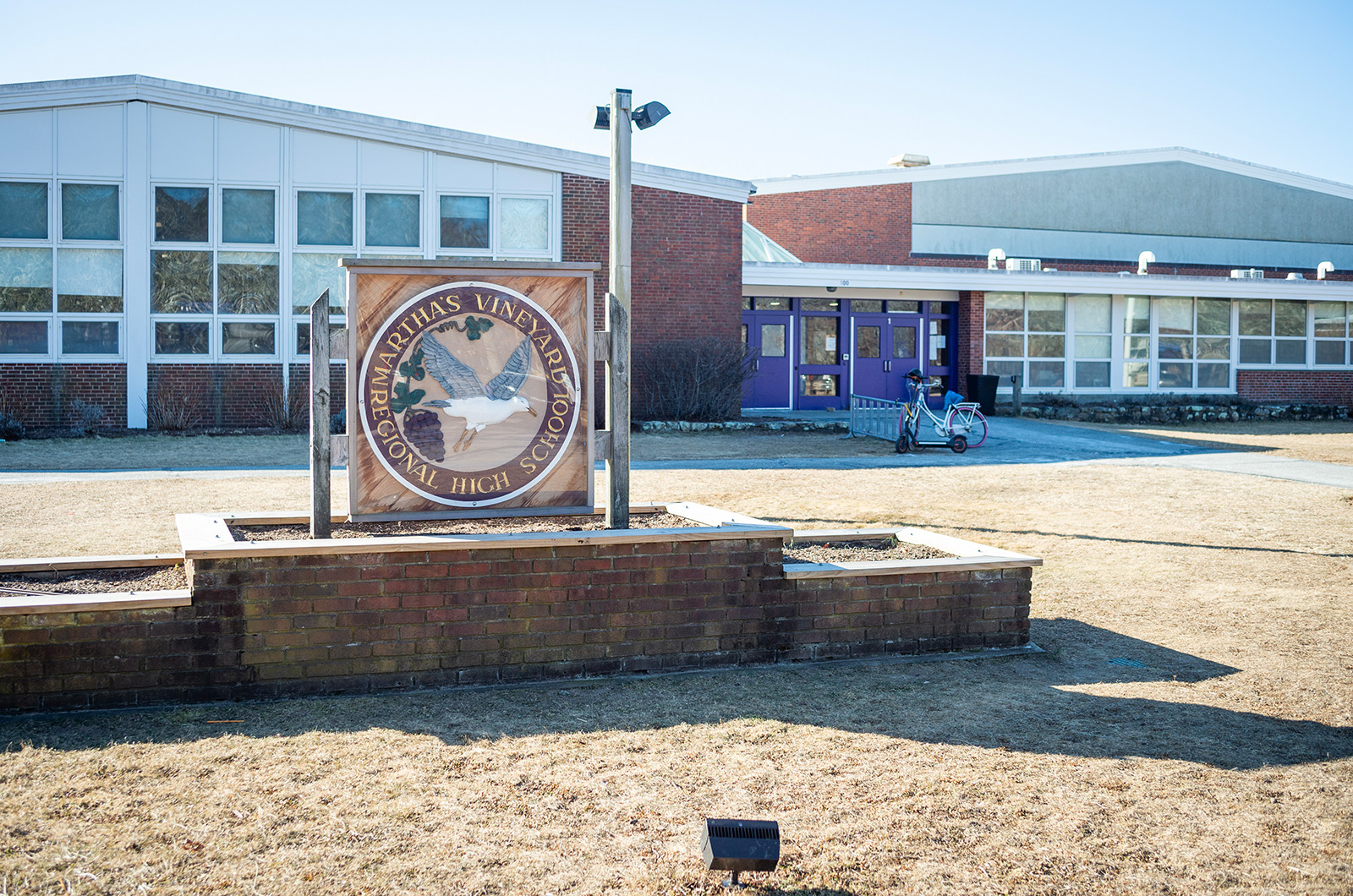
The search for the next principal of Martha’s Vineyard Regional High School enters a new phase this month, as superintendent Richard Smith begins reviewing job candidates’ applications with the help of a 20-member review committee.
The search for the next principal of Martha’s Vineyard Regional High School enters a new phase this month, as superintendent Richard Smith begins reviewing job candidates’ applications with the help of a 20-member review committee.
Current principal Sean Mulvey, who took the position on a provisional basis last summer after longtime principal Sara Dingledy left for a curriculum job in Mr. Smith’s office, has chosen to resume his work as a high school counselor this fall.
The New England School Development Council, which is conducting the search for Mr. Mulvey’s successor, began advertising the position Dec. 4 with a closing date of Jan. 16, Mr. Smith told the high school committee at its monthly meeting Monday night.
While the search has targeted New England, New York and Pennsylvania, Mr. Smith said, some candidates have applied from much farther away.
“Of our nine applications to date, two are from Alaska,” he said.
For the next phase of the process, Mr. Smith said he is recruiting a review committee from members of the 40-member group that assisted in selecting Mr. Mulvey to succeed Ms. Dingledy. He plans to start looking over the applications with the new committee on Jan. 15, Mr. Smith said.

Sean Mulvey, interim principal, will return to his role as guidance counselor next year.

Sean Mulvey, interim principal, will return to his role as guidance counselor next year.
Also Monday, Mr. Mulvey laid out additional academic requirements for graduating from the high school.
Although voters in 2024 abolished the mandate that students pass the 10th-grade MCAS (Massachusetts Comprehensive Assessment System) examinations in order to qualify for a diploma, the state still requires school districts to set competency requirements based on the educational standards the MCAS is designed to test.
Beginning this spring, Martha’s Vineyard Regional High School students will need to show their command of core subjects by passing at least two years’ worth of course work in English language arts and mathematics and one year of science, Mr. Mulvey said.
In 2027, the state will add American history to the subject list, he said.
The high school now is in the process of contacting former students from the class of 2025 whose school work met these requirements but who did not pass the MCAS test in order to provide them with a state competency determination based on the new rules, Mr. Mulvey said.
The competency determination alone does not guarantee a high school diploma; individual districts may set additional graduation requirements.
At Martha’s Vineyard Regional, where a full-year class carries 5 credits, graduating students must have earned at least 20 credits each in English and social studies, 15 credits each in science and math, 12.5 credits in health/physical education, 5 credits in art and 32.5 credits in elective classes.
Although the MCAS is no longer a high-stakes test affecting students’ futures, educators are still taking the examinations seriously as a measure of how well students are learning the standards. For example, lackluster mathematics scores led the high school to begin daily algebra classes for ninth and tenth graders last year.
At Monday’s school committee meeting, algebra teacher Kelly Magnuson said the program appears to be having the desired effect, although the proof won’t come until the next round of MCAS testing this spring.
“I taught for a number of years where we saw the students every other day, and then last year we transitioned to seeing them on a daily basis and I’ve seen great improvements in terms of how much the students are understanding,” Ms. Magnuson said.
To further prepare students for the statewide exams in March, she said, the school’s algebra teachers have joined forces to develop a common teaching and testing strategy.
In addition to raising students’ comprehension, the daily algebra classes provide a sense of stability for incoming ninth-graders from the town schools, mathematics department head Carole Flanders told the school committee Monday.
“When they transition and they get to see the same teacher every day, I’ve just heard in the hallways that that’s a little bit of a comfort zone for them,” Ms. Flanders said. “It’s kind of nice that they have that one connection every single day.”
In other business Monday, the high school committee voted to certify a $30,275,376 operating budget for the fiscal year beginning July 1, with a total assessment to Island towns of $25,341,141 after revenue from grants and other sources.
Mr. Smith, Mr. Mulvey and business affairs manager Mark Friedman will begin presenting the budget to town finance and advisory committees later this month, Mr. Smith said.
Add new comment