

James Henry Emerton drew a lot from his studies of spiders. An entomological illustrator, or self-proclaimed “zoological and botanical draughtsman,” Emerton was a learned local who made a name for himself in arachnology.
James Henry Emerton drew a lot from his studies of spiders. An entomological illustrator, or self-proclaimed “zoological and botanical draughtsman,” Emerton was a learned local who made a name for himself in arachnology. From humble beginnings, Emerton proved the value of mentorship and the importance of places to learn about and study nature.
Emerton was born in 1847 and grew up in Salem the son of a druggist. As a youth, he worked with his father in his apothecary, but became inspired by a coworker’s interest in nature. From those first few expeditions with his new friend, he was quickly hooked into a life of outdoor pursuits and the study and documentation of the fascinating creatures he encountered.
Spiders were a favorite, and over his lifetime Emerton collected and studied more than three hundred unique species. Salem’s spider man edged into his career by spending time at the Essex Institute, which morphed into today’s Peabody Essex Museum. Making connections with other like-minded naturalists who encouraged his interests and affinity for drawing, Emerton was launched into an illustrious career that included work at the museum and the publication of books on spiders and many other natural history topics.
You never knew where his name would show up, including as illustrator of books on ferns, embryology, marine invertebrates, butterflies and eventually paintings of the ocean and ships, inspired by his regular visits to Gloucester and Ipswich. Emerton also was a sculptor who created museum models of marine life for institutions, including the Museum of Natural History in Washington, DC.
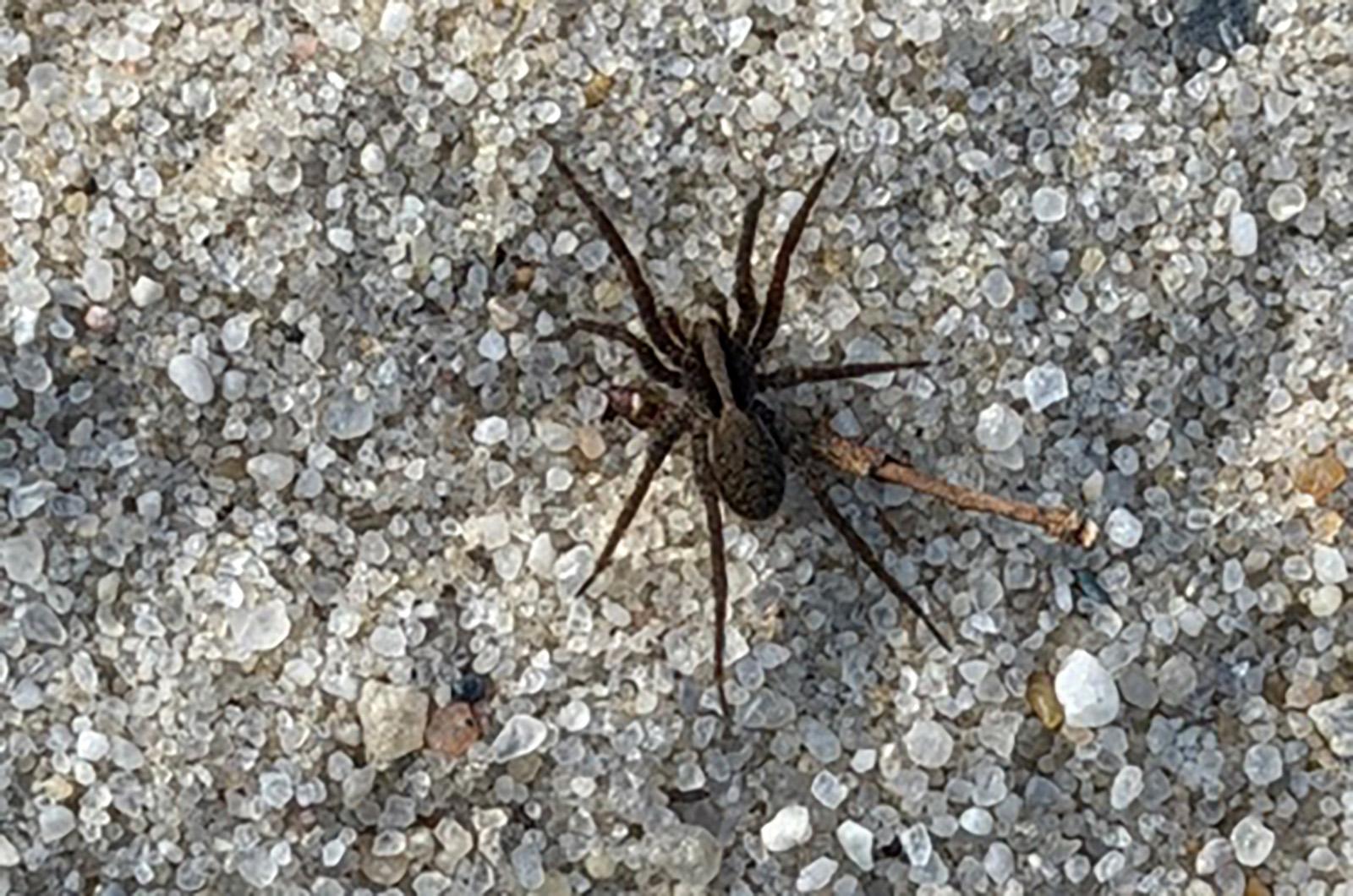
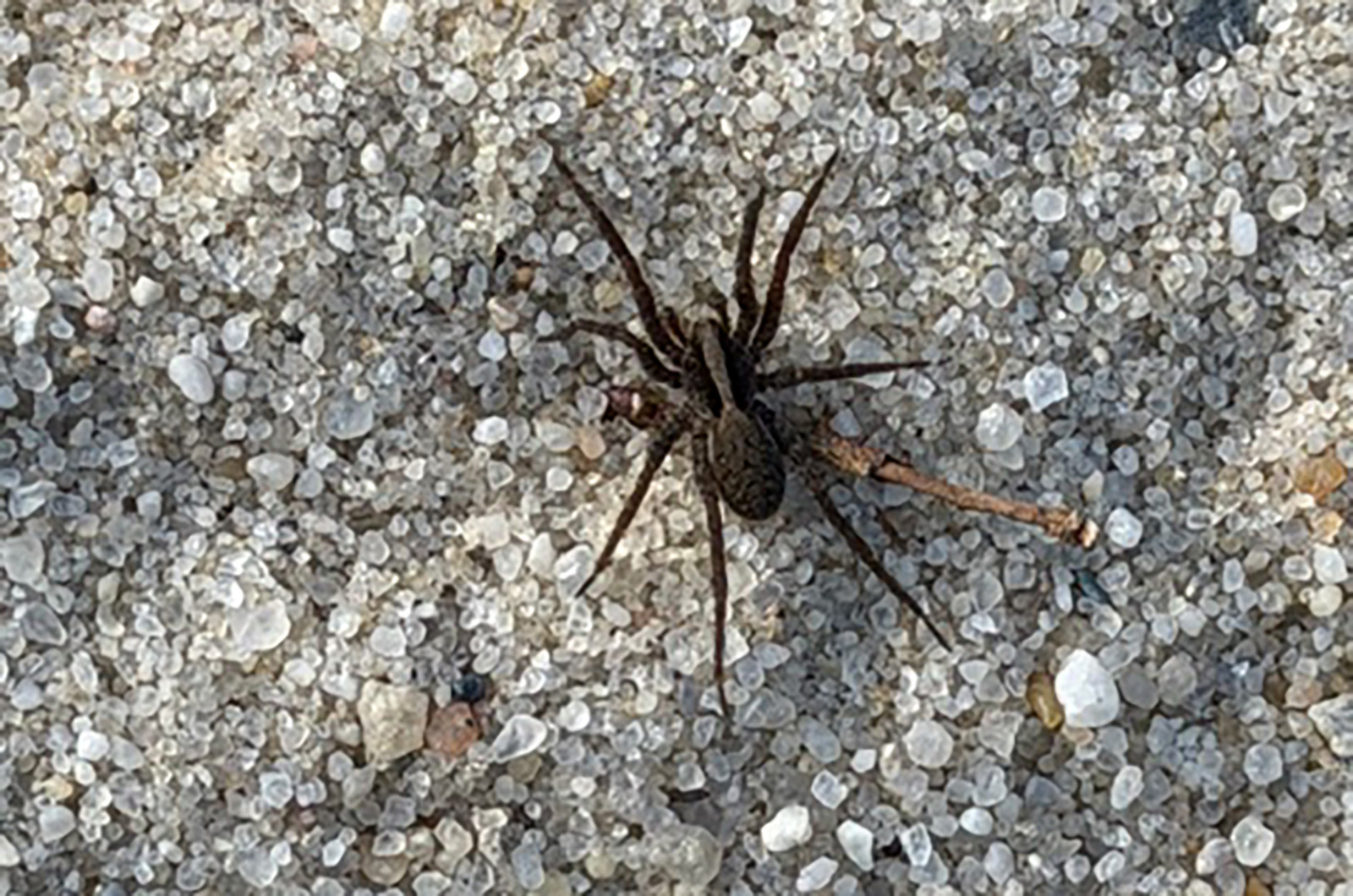
Nor could you know where his subjects would turn up. Last week, I was surprised to come eyes (my two) to eyes (her eight) with a forest wolf spider, one of the species Emerton is credited with documenting. The spider, who clearly wasn’t minding the sub-freezing temperatures, was scurrying across a dirt road without a care in the world.
It is not as surprising as one would think to see a spider scampering about in December, and this one clearly was not worried about the season. Some wolf spiders, often the older males, will perish before the season get cold, and others, including the young and females, can overwinter. While spiders can’t warm their bodies, they accomplish survival through the use of a cryoprotectant, or natural antifreeze, called glycerol and by sheltering in burrows, behind bark or amongst the leaves in the subnivean zone.
Winter survival is not this spider’s only superpower. With long legs for running, wolf spiders can sprint up to two feet per second when chasing prey, though they can’t maintain that pace.
Wolf spider eyesight is excellent and, like 99 per cent of spiders, they have eight eyes. Those eyes are retroreflective, meaning that they reflect light with minimal scattering, sending it back to its source. This is what creates the bright eyeshine seen when you flash a light in their direction. Wolf spiders have the third best eyesight among all spider groups, behind only the jumping and huntsman species.
Web building is not this species’ forte, since they don’t need that strategy to obtain prey. And they do it (or don’t do it) all on their own. Unlike Emerton and his buddy band of naturalists, wolf spiders live in solitude and hunt alone.
Emerton’s life was not a tangled web. He was a man of purpose and community, known to spend an hour a day educating museum visitors, rather than hiding away with his books, pencils, and spiders. He knew the value of his work, observing: “It is probably undeniable that an illustrated book on any branch of natural history is more acceptable to the public—certainly more attractive—than one wholly devoid of pictorial illustrations.” A picture is truly worth a thousand words.
His life was illustrative of the importance of nature and the people who are gifted with the ability to inspire its study and appreciation, mentor others, and are able to draw it all together.
Suzan Bellincampi is director of the Felix Neck Wildlife Sanctuary in Edgartown, and author of Martha’s Vineyard: A Field Guide to Island Nature and The Nature of Martha’s Vineyard.
Add new comment