

This book is a labor of love — of Lake Michigan, and, in particular, of North Manitou Island, today part of a national park but for generations before that, an island for farming, fishing and vacationing.
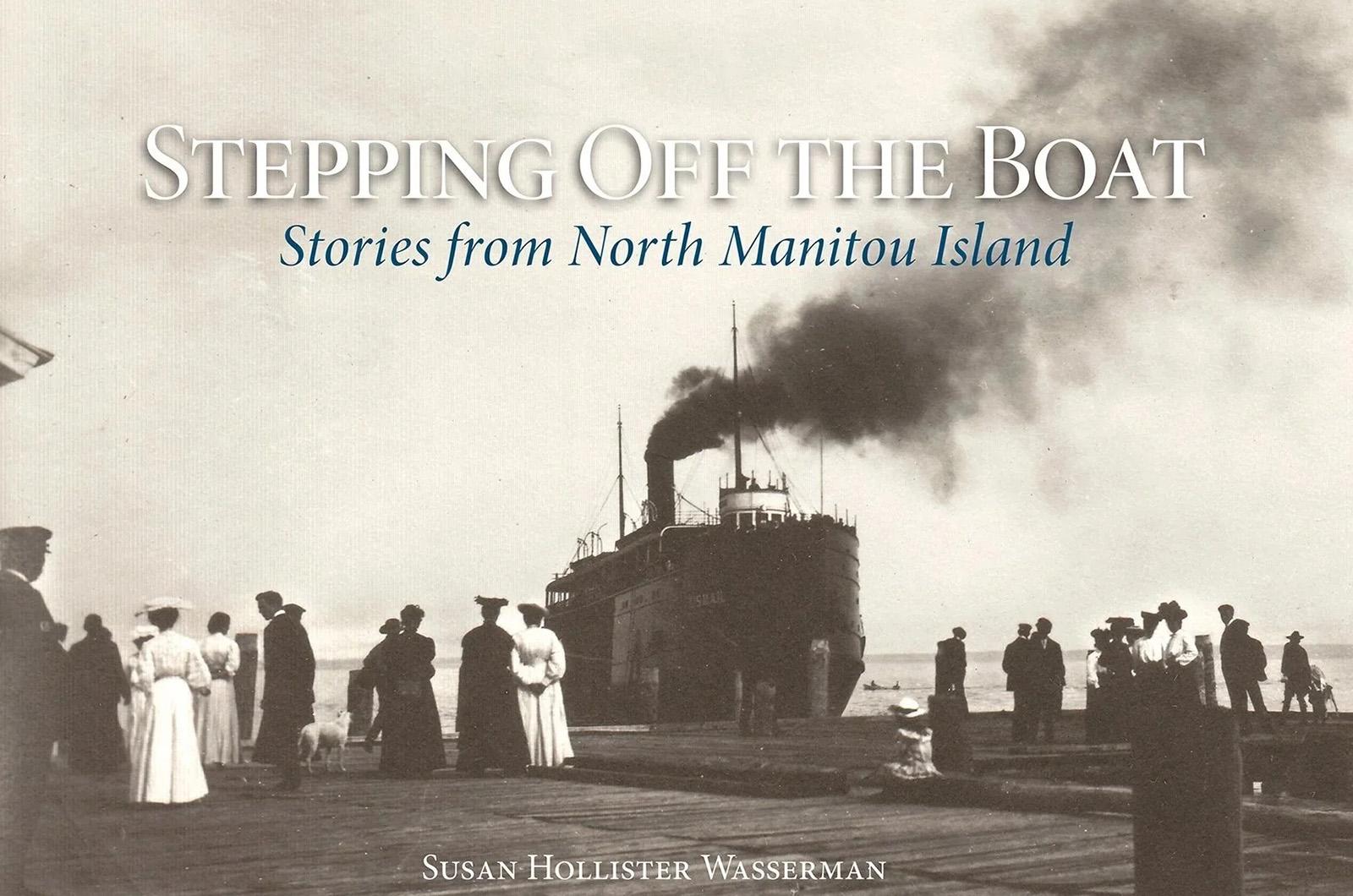
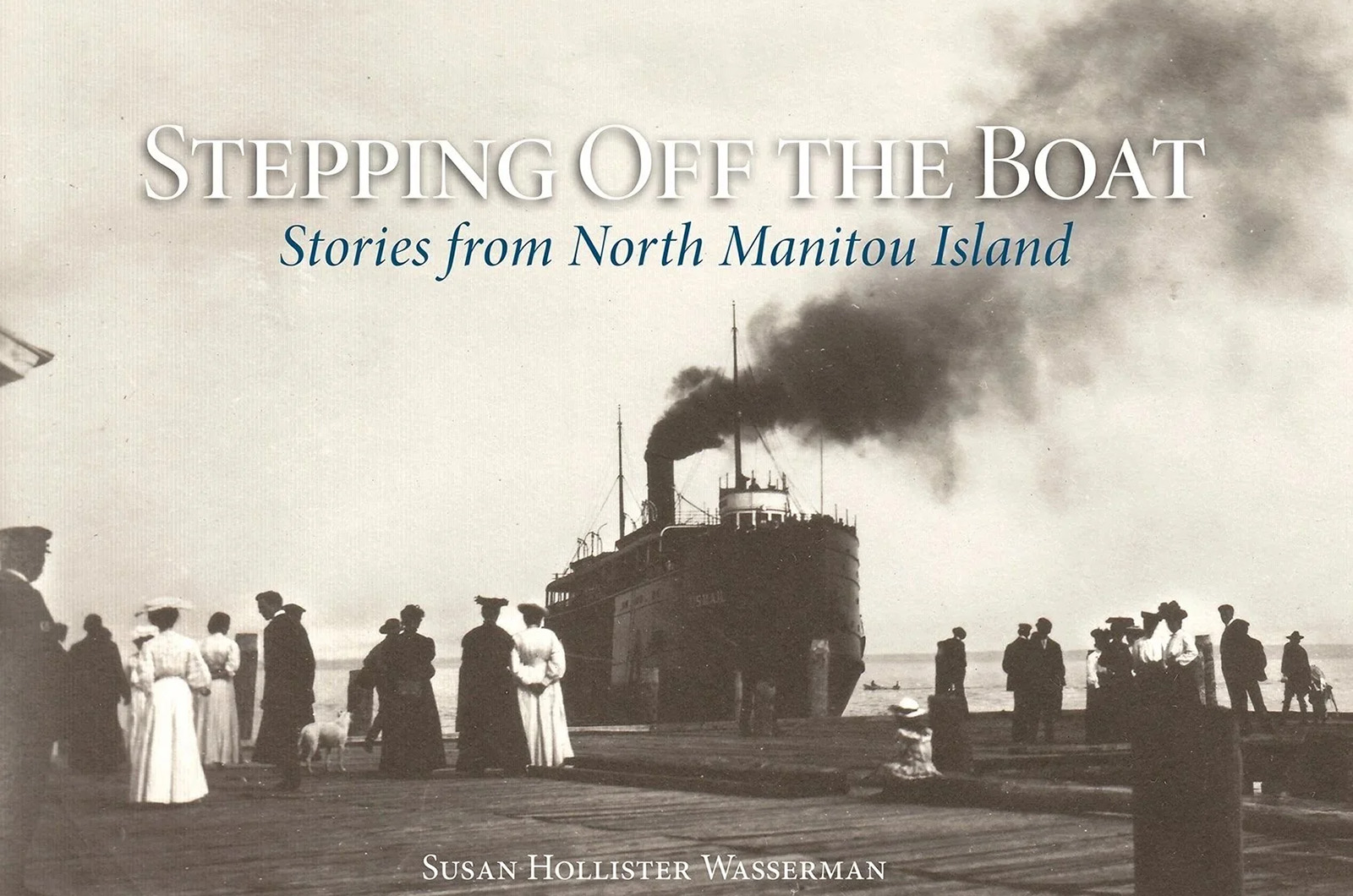
Stepping Off The Boat: Stories from North Manitou Island by Susan Hollister Wasserman, 204 pages, Leelanau Press.
This book is a labor of love — of Lake Michigan, and, in particular, of North Manitou Island, today part of a national park but for generations before that, an island for logging, farming, fishing and vacationing.
Ms. Wasserman, a longtime West Tisbury resident, also has a long personal history with North Manitou, a pear-shaped island roughly half the size of Nantucket situated 12 miles off Leelanau, Mich., with pristine beaches, high ridges, sand dunes and two inland lakes. The author began summering on North Manitou in 1947, continuing a tradition dating to her grandmother’s first visit to the island in 1893. The family house was built with materials from the Chicago World’s Fair on a high bluff known as Cottage Row. Today it the last privately-held residence on North Manitou, whose wilderness areas were designated part of the Sleeping Bear Dunes National Lakeshore in 2014. The island is open to visitors for hiking and rustic camping with no amenities.
Stepping Off the Boat chronicles the unusual history of the island through text, maps, newspaper clippings and dozens of striking photographs — most of them collected by the author’s mother and grandmother, to whom the book is dedicated.
In the opening chapters, the author tells the Chippewa and Ojibwe account of the formation of the Manitou islands, where a mother bear and her two cubs were driven into the Lake Michigan by a raging forest fire on the Wisconsin shore. The bears swam for several hours. The mother bear reached the Michigan shore first and climbed a high bluff to watch out for the cubs, but they drowned within sight of the land and the Great Spirit took pity on them and their grieving mother and turned them into North and South Manitou.
Historical accounts detail the island’s lighthouse and lifesaving service from 1854 through 1933; there also are stories of the side-wheel steamers that carried passengers from Chicago and Buffalo on three-to-four-day elegant trips on the Great Lakes; and pictures of the small farms that homesteaders built after the Homesteaders’ Act of 1882 allowed them to have land. Immigrants on the island included many Scandinavians and Germans who lumbered and farmed the land. The northern Michigan climate and sandy soil were ideal for growing apples and cherries.
The book also shows the trajectory of the island becoming a sought-after summer resort, especially for wealthy families from Chicago.
In the early 1900s, when Chicago was having a building boom, a tent city called Crescent was established on the island and soon became a town with its own post office, hotel and houses. Construction on a 600-foot dock would make it the longest at the time in Lake Michigan.
Stepping Off The Boat concludes with a chapter on life on North Manitou, pictures of its children and of Crescent, its pagoda-shaped post office built before 1898; baseball players of long ago; the harvesting of ice in winter for old-fashioned ice chests; the tapping of maple trees for syrup for supplemental income; and information about William R. Angell, a reclusive Chicago investor who eventually bought up most of the island and introduced white-tailed deer for private hunts.
For a number of years in the 1930s and ‘40s, Mr. Angell mounted an effort to close the island to visitors, placing a gate across the road to the dock and posting giant private property signs warning that trespassers would be prosecuted. Mr. Angell died in 1950, his quirky legacy consigned to history (the publisher of the book is a nonprofit dedicated to Leelanau history, art and literature).
As different as North Manitou is from Martha’s Vineyard, its story — as this West Tisbury author tells it — makes a fine addition to any Vineyarder’s bookshelf.
The West Tisbury Library will host an author talk with Susan Hollister Wasserman on Dec. 11 at 4:30 p.m.
Comments
I am thrilled to have my own
Tim Boland West TisburyI am thrilled to have my own copy and, better yet, a friendship with Ms. Wasserman. The world is so quirky at times. Let me explain. In 1978, I began an extended kinship with the islands in Northern Michigan through a high school course called Wilderness Survival. As a result, I would travel as a rustic camper to the islands off the Northwest Coast of the lower peninsula. Later in graduate school, I spent three weeks botanizing on South Manitou. The flora is rich, and the trees are magnificent, especially the giant red cedars, which are never cut down because of their rugged location. I was particularly fascinated by the expansive dunes rising nearly 500ft in spots, and by the wet zones within the back dunes called inner dunal swales.
When I started at the Polly Hill Arboretum, Suzi read my bio in our newsletter; she knew both Polly and Julian Hill. She came over and introduced herself shortly after I started as Curator in 2002. It was an easy relationship, given our midwestern roots, but also the fortunate fact that we were both islanders in more ways than one! In many ways, I ended up here because of my affinity for islands, and I stayed because of the fantastic people I've met, like Suzi.
When you go to North Manitou, you are transformed. This book also brings you there, as the history is so vivid from a place that few have traveled to. I encourage anyone with a weak spot for islands to procure a book and perhaps also consider gifting it to another friend. Stepping off the boat is something islanders can relate to! I hope you take that next step and read this gem!
Add new comment