

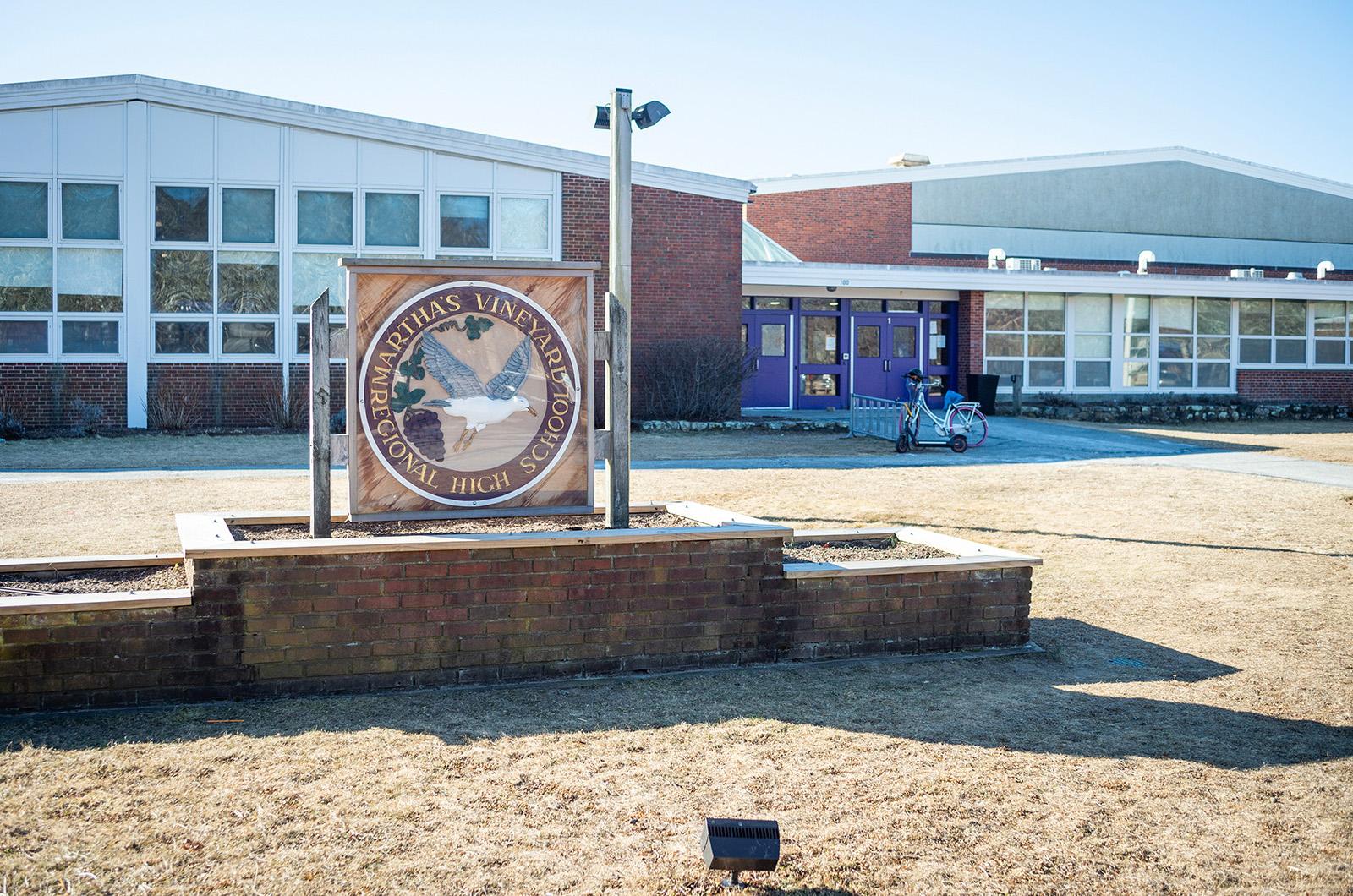
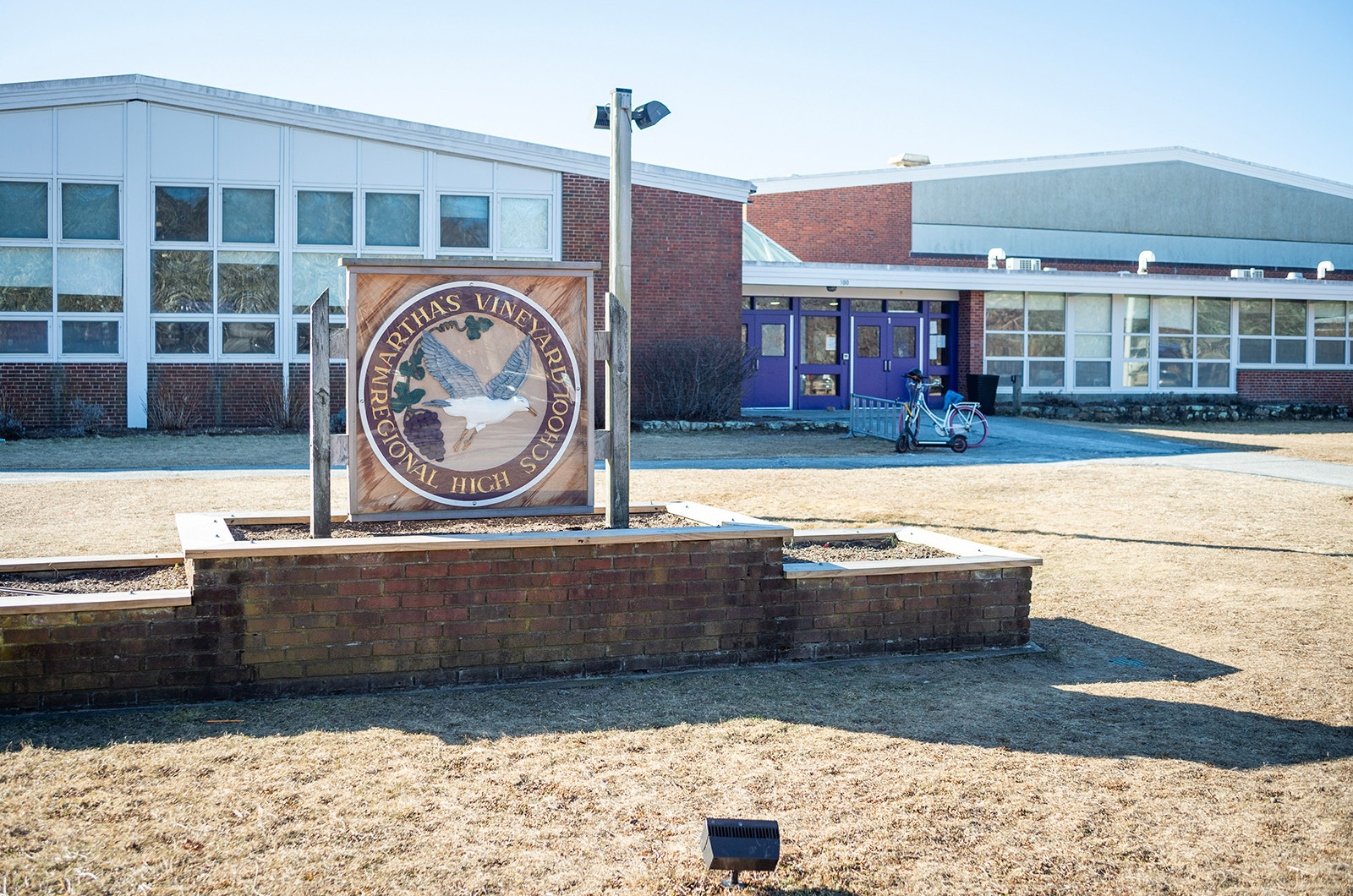
The long-fought campaign to renovate and expand Martha’s Vineyard Regional High School is advancing to a decisive state-set milestone this month, with Dec. 18 the deadline to submit schematic designs and cost estimates to the Massachusetts School Building Authority.
The long-fought campaign to renovate and expand Martha’s Vineyard Regional High School is advancing to a decisive state-set milestone this month, with Dec. 18 the deadline to submit schematic designs and cost estimates to the Massachusetts School Building Authority (MSBA).
The state agency will then have more than two months to study the high school submission before its board votes Feb. 25 on whether or not to reimburse Island towns for a significant percentage of their expenses for the multi-hundred-million-dollar project.
Potentially the costliest building project in Martha’s Vineyard history, the high school renovation and addition has been looming large on the fiscal horizon for towns that would need to borrow well outside their limits.
Firmer numbers are still emerging, but recent estimates put the overall project cost at roughly $340 million before MSBA reimbursements, which could lower the total by $70 million to $100 million or more.
The state money will flow only if Island voters approve their towns’ share, estimated at $220 million to $270 million overall. The high school committee recently voted to bypass the town-by-town legislative process for what’s called a district vote, in which all six Island towns hold a coordinated election on the same day.
The ballot election is tentatively scheduled for June 2, 2026.
Island school officials have spent years trying to gain admission to the state program in order to update the high school, which was first built in 1959 and has long-outdated heating and air handling equipment, dilapidated roofs that leak and classroom space that no longer meets education codes.
The MSBA, which funds its reimbursements from a portion of the state sales tax, turned away the MVRHS project several times before agreeing to consider it in 2023.
To become eligible for acceptance into the program, the MSBA required Island towns to agree on a six-way, cost-sharing formula for the capital project, as well as a complete overhaul of the much-amended regional agreement on high school operating costs, first hammered out in the 1950s.
The MSBA rules also required the creation of a school building committee, which now has been meeting regularly for more than two years, and voter approval for a $2 million feasibility study, which came with the spring, 2023 town meetings.
After similar votes had failed during earlier bids at the reimbursement program, the state authority was running out of patience with the Vineyard, according to the MSBA’s president at the time, Joseph McCarthy.
“We...said, ‘this is your last chance.’ There were times I didn’t think you were going to make it, but perseverance is a beautiful thing and you persevered,” Mr. McCarthy, who has since retired, told high school officials after the June, 2023 meeting when the MSBA board formally voted the high school project eligible for reimbursement — again, with many conditions to meet along the way.
The state authority’s strictly-defined process and timeline has included periodic check-ins with the MSBA board, which earlier this year signed off on a conceptual design by Tappé Architects to renovate the existing 165,000-square-foot school and add a two-story classroom wing.
Since then, the school building committee has been working with Tappé Architects on a detailed schematic design with a total of just under 200,000 square feet. Committee members — who represent all six towns, the Wampanoag Tribe of Gay Head (Aquinnah) and other Island constituencies — are scheduled to take their final vote on the MSBA submission Dec. 16.
Estimated costs for the building project will be ready at the end of next week, Tappé architect Chris Sharkey told the committee Tuesday night.
The Massachusetts School Building Authority is expected to provide an estimate of project reimbursements ahead of the June 2 Islandwide vote, but according to a timeline from the project management firm CHA, it will be well over a year before construction managers Rich-Shawmut Partners will have guaranteed maximum prices from all the contractors once the schematic design has been finalized.
If the spending question passes at the ballot box in June, each town also would need to pass a debt exclusion measure, also known as a Proposition 2 1/2 override, allowing it to borrow above the annual limits set by Massachusetts voters in 1980.
School officials have said the project could be completed by 2030, with renovations taking place in phases so that students and teachers don’t have to relocate to rented modulars — a steep expense for which the MSBA does not reimburse.
Comments
There are a number of issues
Tough to swallowThere are a number of issues surrounding a project I’d like to find a way to support. The “islandwide” vote removes a town to decide for a town which is respectful and sovereign. The MSBA doesn’t cover a blanket 30% it has limitations and they’ve been clear. The funding formula can’t go without real change prior. The lack of transparency is tough to swallow.
Add new comment