

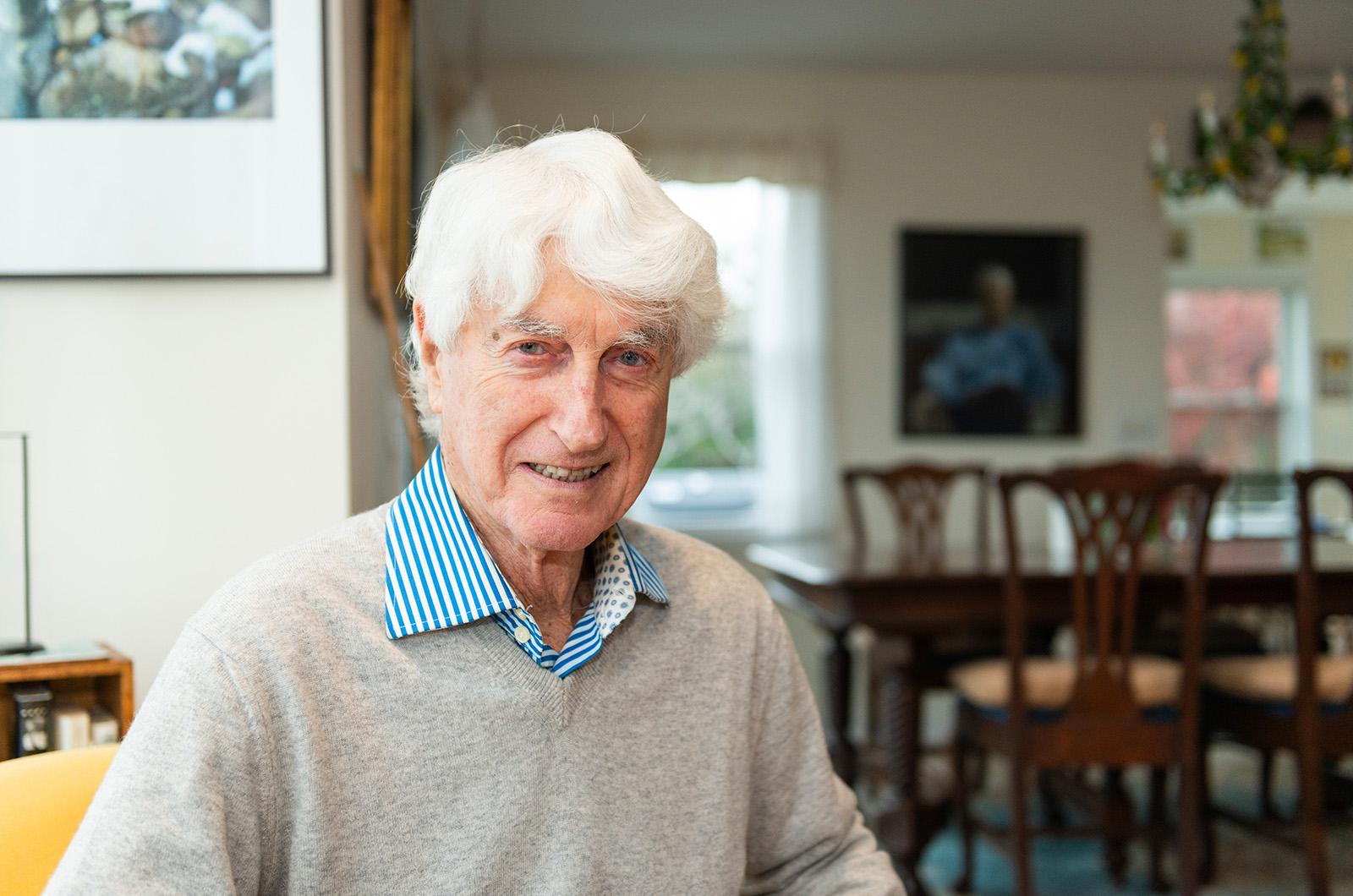
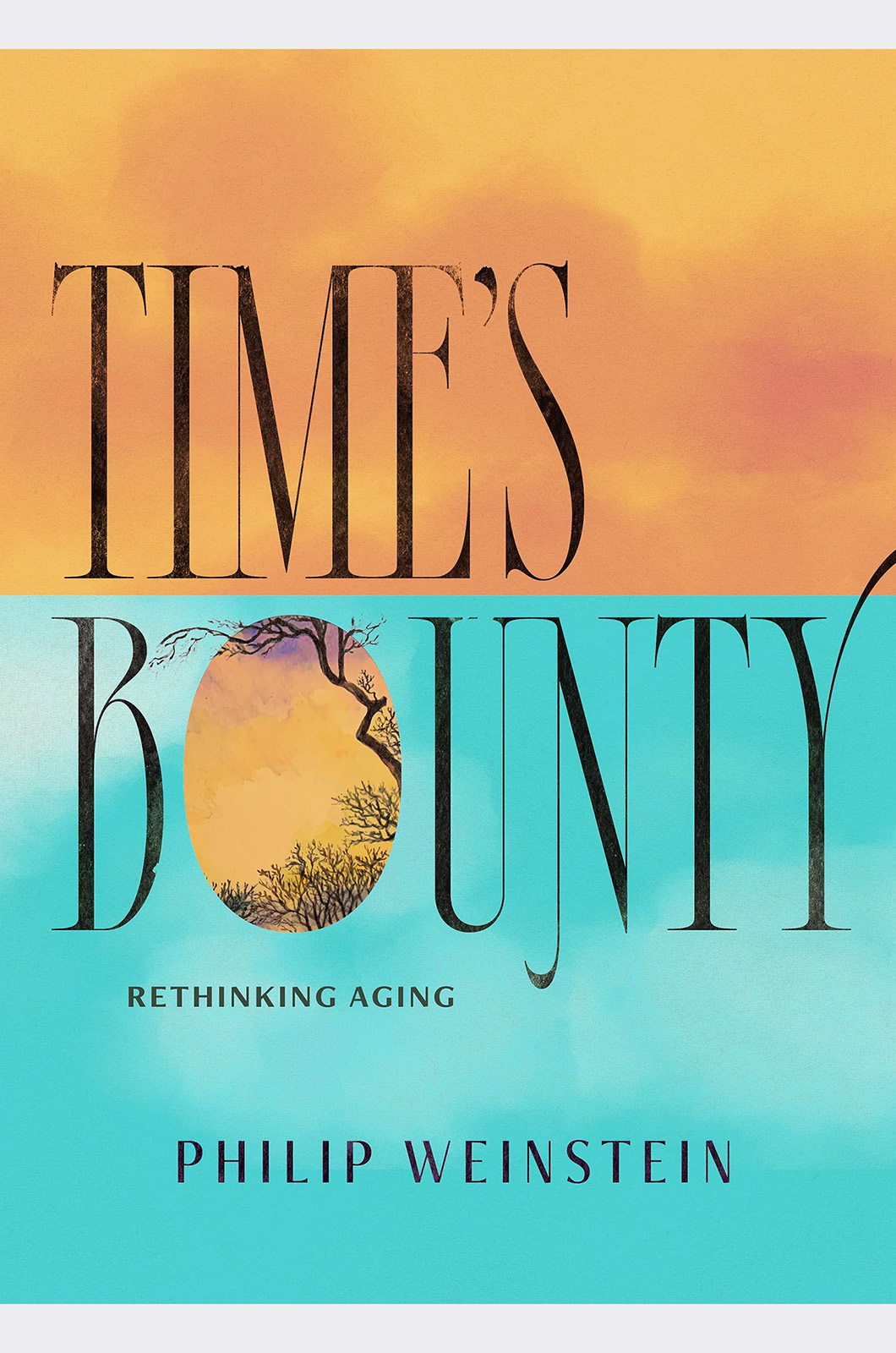
Phil Weinstein’s new book, Time’s Bounty, is a collection of personal essays about getting older. The collection comes out on Nov. 11, and he will give a talk about the book on Nov. 13 at the Martha’s Vineyard Hebrew Center.
Phil Weinstein’s study is filled with floor-to-ceiling shelves packed densely with books, some of which he wrote during his career as an English professor at Swarthmore College. Eight books published by various university presses on the giants of modernist literature — including Marcel Proust, James Joyce and his main subject, William Faulkner — bear his name.
But after entering his 80s and retiring to Aquinnah, he decided to probe a new topic: himself.
Mr. Weinstein’s new book, Time’s Bounty, is a collection of personal essays about getting older. The collection comes out on Nov. 11, and he will give a talk about the book on Nov. 13 at the Martha’s Vineyard Hebrew Center.
As a professor and author of literary criticism, Mr. Weinstein spent years excising his most private self from his writing. But after finding some distance from academia in retirement, he wanted to write something that spoke to a universal human experience.
“When you retire from something... you see the other side of it more openly than when you’re in it,” he told the Gazette in an interview at his Aquinnah home. “I think I’ve been wanting for a long time to allow the personal to come in.”
Mr. Weinstein may have wanted Time’s Bounty to be personal, but he did not want it to be confessional. He wanted it to be informed by, but not dominated by, the literary works to which he’s devoted his life. And most of all, he wanted to write something in which readers could recognize themselves, whether they are at the end of their life or just getting started.
“Other people have to see themselves in the mirror,” he said.

For Mr. Weinstein, the project is also an attempt to reframe conversations about aging. In his experience, such conversations are either rife with complaint or, perhaps even worse, saccharine and overly sentimental.
Instead, Time’s Bounty explores late life’s contours as a series of “dramas,” lush with new curiosities, liberations and questions.
“There’s no way out, but there are ways in,” he said.
Each chapter is a “way in” to thinking about aging. One chapter approaches aging through the idea of “dormancy” — that aging wakes up what was once dormant inside of us, whether it’s new revelations or a terminal disease. Another uses poet Wallace Stevens’s idea that “death is the mother of beauty” to explore how the end of one’s life unlocks new modes of self-liberation.
The final chapter, the “sweetheart chapter,” centers around a routine that is integral to his retired life: sharing his morning coffee ritual in bed with his wife, Penny Weinstein.
“Earlier I would have thought, what’s writable about that?” he said. “And then I thought, well, we’re running out of time, but we actually have all the time in the world until we don’t.”
Despite being a departure from his typical scholarship, Time’s Bounty is shaped by its literary underpinnings. Henry James, William Shakespeare and Friedrich Nietzsche make appearances.
Instead of using these essays to explain or deepen existing works of literature, Mr. Weinstein uses literature as a “meaning extender.”
“I feel that literature articulates what it’s like to be alive,” he said. “Literature is not alive, but life speaks through literature.”
Of course, he couldn’t resist invoking the great modernists.
While he admires the tidy shapeliness of Victorian-era fiction (he concedes there’s “nothing better” than Anna Karenina), he feels it has little in common with the way a life unfolds. On the other hand, he finds modernist works uniquely conducive to writing about aging. Writers in the movement, such as Proust and Faulkner, tried to capture the experience of human consciousness by fragmenting time sequences and writing in a stream-of-consciousness style.
In analyzing his own life’s progression, Mr. Weinstein said, these writers’ perspectives were an asset.
“[The modernists] write how things happen,” he said.
When Mr. Weinstein turned to writing personal essays he didn’t feel fearful — he felt ready.
“There’s a dimension of not having to play it safe that comes with getting old, and a kind of candor,” he said. “You have an unachieved future in front of you when you’re younger... so you have to be a little careful getting there. I know what my future is. It’s not that interesting. I’m in the present now.”
Mr. Weinstein has chosen to spend his present in Aquinnah, where he lives year-round, in a cozy house with high ceilings and a view of Lobsterville Beach. He was eager to leave Swarthmore behind for the Island, where he and his wife have spent summers since they were a young couple.
He noted that as a retiree on the Island, he is in good, lively company.
“There are a lot of old people on this Island,” he said. “It’s a culture.”
Mr. Weinstein is still writing his way through time. He writes “something between doggerel and poetry” for his kids and grandkids on their birthdays, marking the passage of their own lives. At his granddaughter’s recent wedding, his officiant speech called on Shakespeare’s marriage sonnet, the same one he called on for his daughter’s wedding 34 years earlier. He discovered that he reads the sonnet differently now than he did half a lifetime ago.
“The beauty of writing, I think, is that in doing it, things come to you,” he said. “Writing is how I make sense of everything.”
Phil Weinstein will hold at talk on Nov. 13 at the Martha’s Vineyard Hebrew Center, beginning at 5 p.m. The event is hosted by the Vineyard Haven Public Library.
Add new comment