

It should have been as clear as black and white. But it wasn’t. The dead black beast that presented itself along a trail in West Tisbury last week caused quite a stink.
It should have been as clear as black and white. But it wasn’t. The dead black beast that presented itself along a trail in West Tisbury last week caused quite a stink.
A friend sent a picture wondering if it was possible that the animal was a fisher, as that was the response of his Google reverse-image search. Not likely, but I’ve learned to never say never (think coyote on Island). The creature was quickly identified as a skunk, but the almost all-black appearance of its coat made for some confusion.
Don’t believe the name. Striped skunk, Mephitis mephitis, is the species seen in most of Massachusetts. In the Commonwealth, only the Elizabeth Islands and Nantucket are skunk-free.
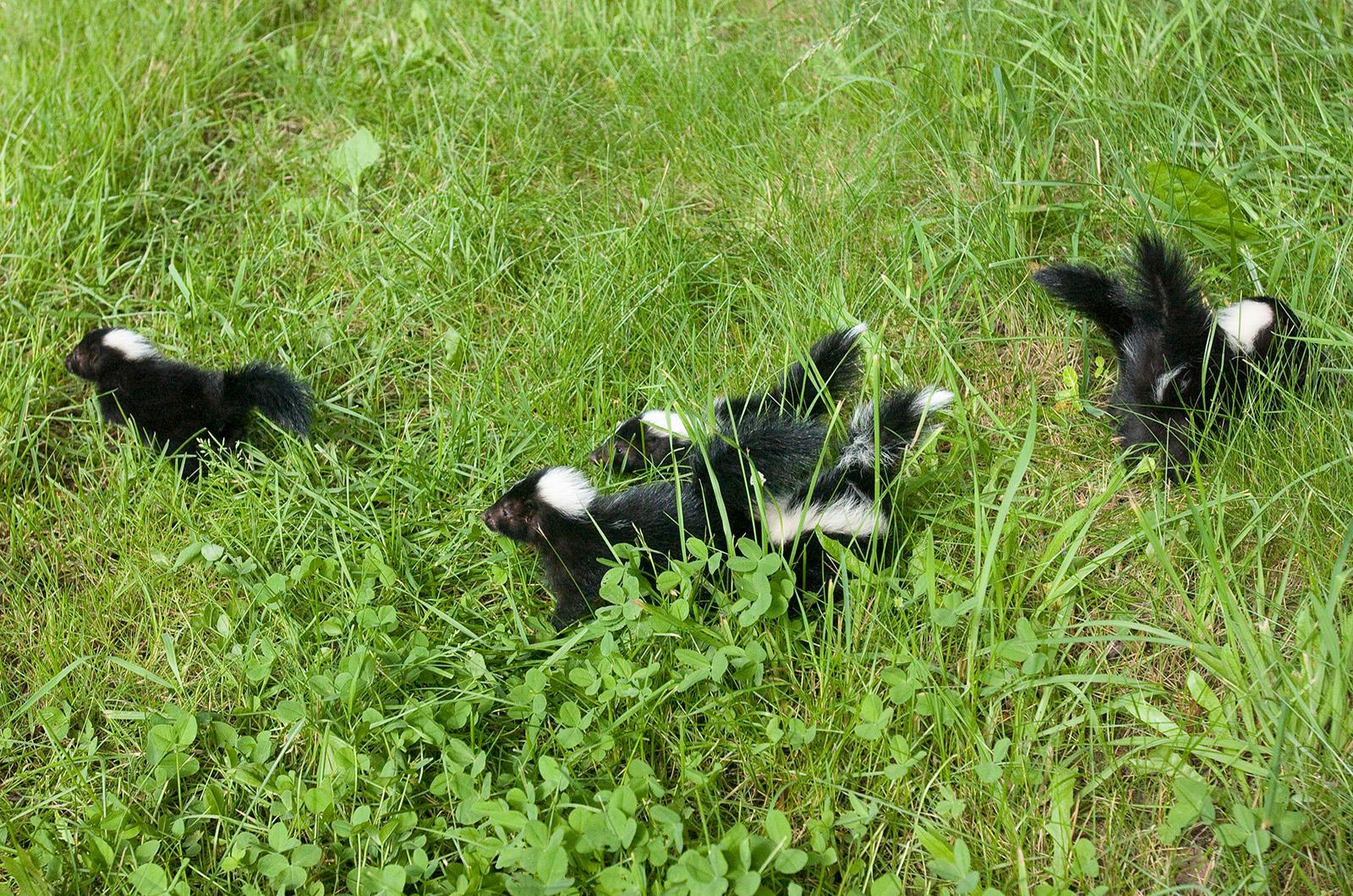
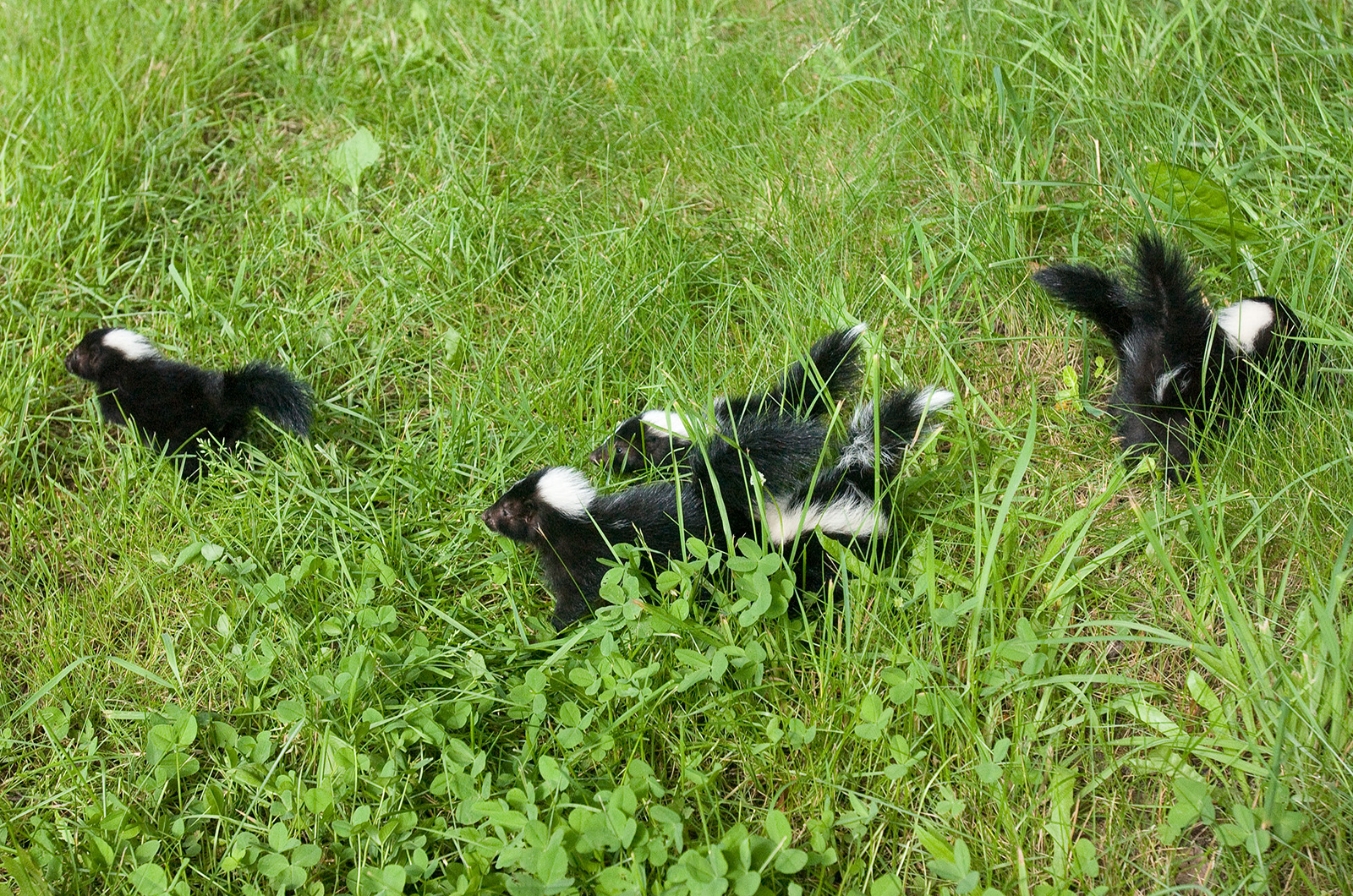
When thinking of this mammal, we conjure up images of Pepe le Pew, or Flower from Bambi, with their black-with-white striped fur. The aforementioned animal was a skunk of a different color, lacking those iconic stripes.
Turns out that skunk coat color can be almost as unique as fingerprints, and results from genetic and environmental factors. Skunks are “aposematic,” meaning that they use warning colors to alert predators of their undesirability. Effectively, I might add. Skunks have adapted perhaps the single most universal “do not approach” marking displays in the animal kingdom. Those stripes direct attention to the animal’s hindquarters, which contain their special chemical weapon.
The skunk’s modus operandi is spray and pray (that they don’t become prey). The scent of their musk has been described by Boy Scout founder Ernest Thompson Seton as “a mixture of perfume musk, essence of garlic, burning sulfur and sewer gas... magnified a thousand times.”
Those white warning stripes are less important in a place where there are fewer predators — such as here on-Island. A 2023 study in the journal Evolution found that predation pressure is a factor in pelage coloration. In simple terms, research indicates that when there are more predators, skunks that don’t have the warning stripes are often preyed upon, leaving the striped survivors to pass along the striped trait to their offspring.
For the Island, which has fewer skunk predators, the result is that there are more color options per litter. Skunks aren’t being weeded out on the basis of their coloring, and there is therefore little reason for natural selection of their fur variation to favor those white stripes.
Historically, mostly black skunks have been highly valued. At one time, skunks were the second most harvested animals for their pelts (after muskrats) and were graded higher according to the amount of black fur. This popularity caused the extirpation of almost all of the black skunks.
Farming of skunks began in the late 19th century for fur production. This selective breeding resulted in a rainbow of skunks with black, brown, gray, white, apricot, albino, lavender, champagne and mahogany-colored animals being created. While that sounds odd, it isn’t different from all many varieties of dogs being bred.
Natural selection can provide fewer — though also interesting — variations in colors: brown, white or cream-colored mutations in the pelt are possible in nature. However, it is the presence and locations of the iconic white marks that are the most inconsistent. Skunks can have the typical double stripe down their back, a single white patch on their chest, on the outer surface of their limbs or simple star or shooting-star patterns on their head or shoulders. In eastern Tennessee, five per cent of skunks have that star marking.
Though you may think they are going against convention, the unusually colored or patterned skunks may have an advantage, as they are not quite recognizable to predators as their stereotyped brethren, and thus less targeted as prey. These skunks of a different color reek of originality — oh, how they reek! — and remind us to celebrate diversity, as it may be the key to survival.
Suzan Bellincampi is director of the Felix Neck Wildlife Sanctuary in Edgartown, and author of Martha’s Vineyard: A Field Guide to Island Nature and The Nature of Martha’s Vineyard.
Add new comment