

From the October 12, 1990 edition of the Vineyard Gazette: Cranberry Day in Gay Head this year wasn’t just the observance of an age-old Wampanoag custom, it was a celebration of nationhood.
From the October 12, 1990 edition of the Vineyard Gazette:
Cranberry Day in Gay Head this year wasn’t just the observance of an age-old Wampanoag custom, it was a celebration of nationhood.
The two dozen young tribal members who were excused from school Tuesday to take part in the festivities began the day piling into the back of three pickup trucks and heading into the tribal lands.
They saw the ground clearing has already begun. They saw the ridge overlooking Squibnocket Pond and the wide basin that may someday become a tribal amphitheater. Here work will begin soon on a tribal council office building and later on tribal housing.
That something is happening in Gay Head was clear by the talk of council members around the fire in the bogs Tuesday. While the kids picked and scooped the berries, council members talked about designs for tribal housing, the possibilities for economic development and a recent national tribal conference.
Cranberry Day has been observed in Gay Head for as along as anyone can remember. The celebrants grew sparse for a time, but in recent years there has been an effort to bring back the tradition.
Todd Vanderhoop and Kyle Marden are both seven years old. For them the ride through the woods on tribal land and down to the bogs in Willard Marden’s pickup truck was a great way to spend the school day. But their elders said this was part of a fundamental education. They were walking on the land that is the future of the tribe and playing in the bogs that connect the future to the past.
Adriana Ignacio is coordinator of the title IV Indian Education Program. She oversees the department of education grant that funds traditional education programs for some 60 Wampanoag tribal members in grades kindergarten to 12. Through this grant, Gay Head has seen the return of the drum circle, shawl dancing, traditional crafts and the recognition of Cranberry Day as a Wampanoag holiday in the Island schools. The program is 17 years old but Mrs. Ignacio said this is an important juncture. Recognition has brought financial benefits but also a revitalization of tradition.
“I think even older people are realizing the importance of it and trying to participate again,” she said as she tended hot dogs and rolls cooking on the wood fire. Out in the bogs Amelie Vandal and Tiffany Vanderhoop gathered cranberries in plastic bags.
The days of Linus Jeffers leading his oxen to the bogs are gone but Wenonah Silva wrote about many Cranberry Days as a columnist for the Gazette, and she remembers as a girl when her father Napoleon Madison would bring the berries home in his lunch pail.
“Members of the Gay Head Wampanoag Council and others interested in the perpetuation of Gay Head’s culture and tradition gathered at the bogs on Tuesday to pick the berries and participate in an afternoon of merriment and feasting,” she wrote almost two decades ago. Like this year’s, the cranberry yield was small in 1973.
“Due to the fact that the bogs were so wet, not many of those who participated in the afternoon’s festivities took any away from the area. One of the few who filled his bucket was selectman Leonard Vanderhoop,” she wrote.
Donald Malonson, traditional chief of the Gay Head Wampanoags, said the harvest never quite recovered from the hurricane of 1938 when the groundwater turned from fresh to salt. He remembers years ago in the bogs that when someone was thirsty all he had to do was dig down a few feet and the hole would fill in with fresh water.
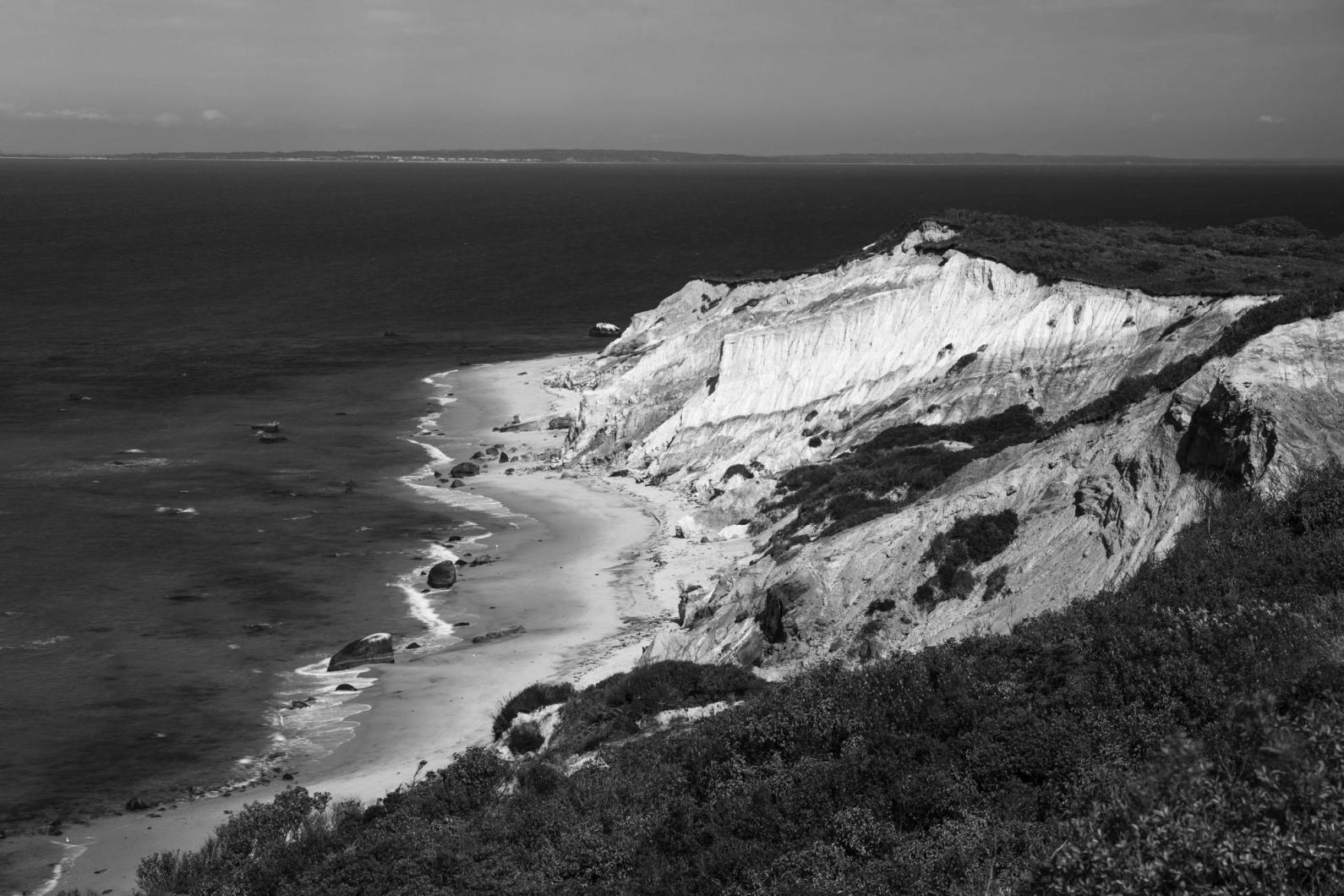
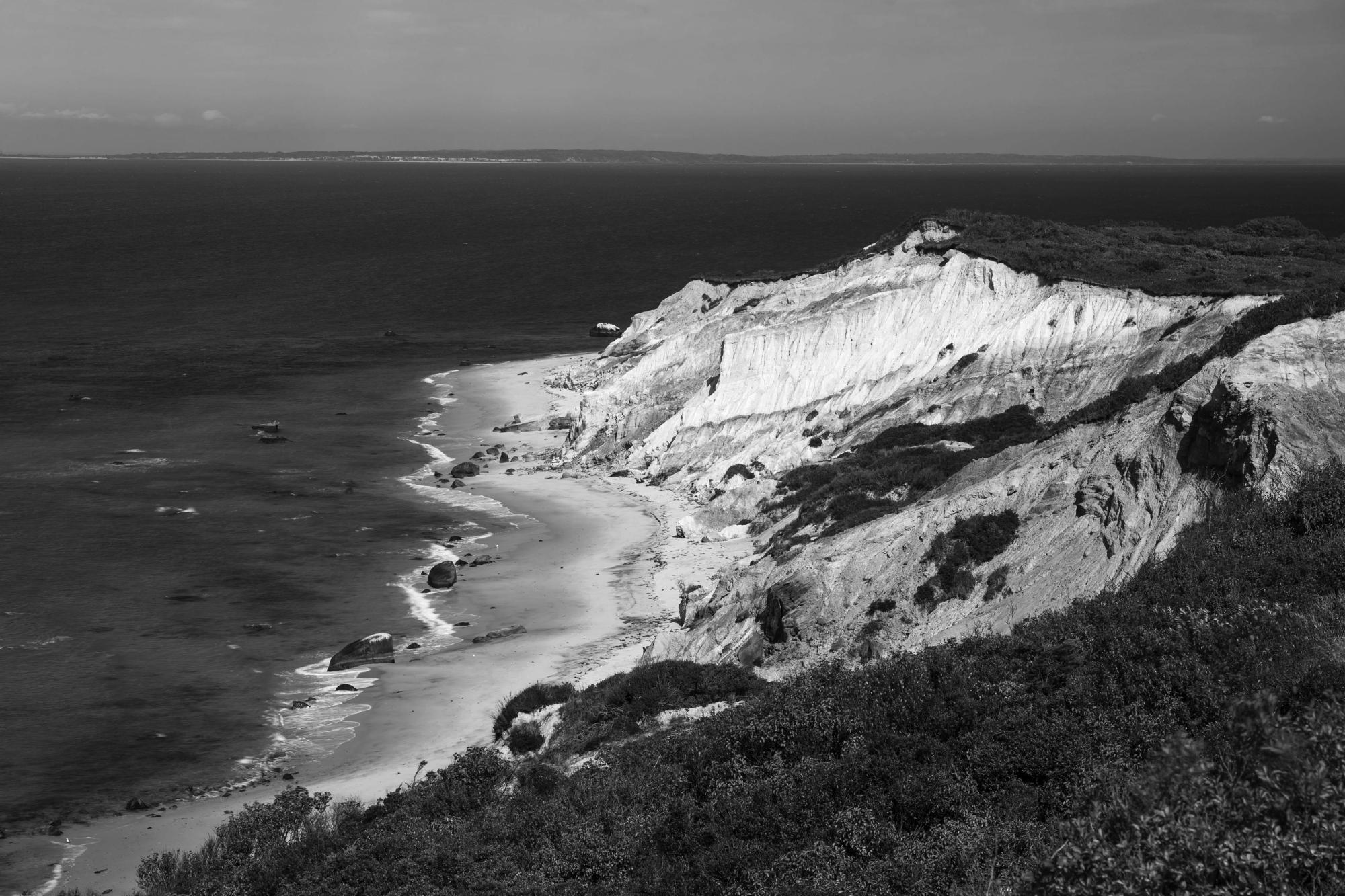
Even if the cranberry harvest was slim there is a sense of growth in Gay Head now. Just a year ago the bogs, the Herring Creek and the face of the clay cliffs became tribal common lands. Tribal council president Donald Widdiss led the youngsters to the stone on the south shore marking the beginning of the cliff common lands that wrap around Gay Head to the north.
When the convoy stopped at the end of the new road cut into the tribal reservation lands, Mr. Widdiss pointed out the natural basin to be cleared for an architectural study.
When everyone finally arrived at the bogs Carl Widdiss had the fire going, ready for another year’s celebration. Mr. Malonson put a pot of succotash on the fire just as someone has for more than a century, and Gladys Widdiss made sure everyone got some. Laura Marden, Robbie Manning and Jeanette Vanderhoop wandered into the bogs.
Five-year-old Misha Vandal came up to Wenonah to show her the berries he had gathered. His sister Amelie said they would smash the fruit. They are good to eat, they were told. From the dunes came the sound of rap music. One of the older boys brought a stereo. Council members Carl Widdiss and Willard Marden talked about housing designs. Around the fire people were eating succotash and hot dogs.
A hawk floated over the bogs.
“Look how easy he flies. Just beautiful,” Mr. Malonson said. “Man’s still got a long way to go.”
Compiled by Hilary Wallcox
Add new comment