

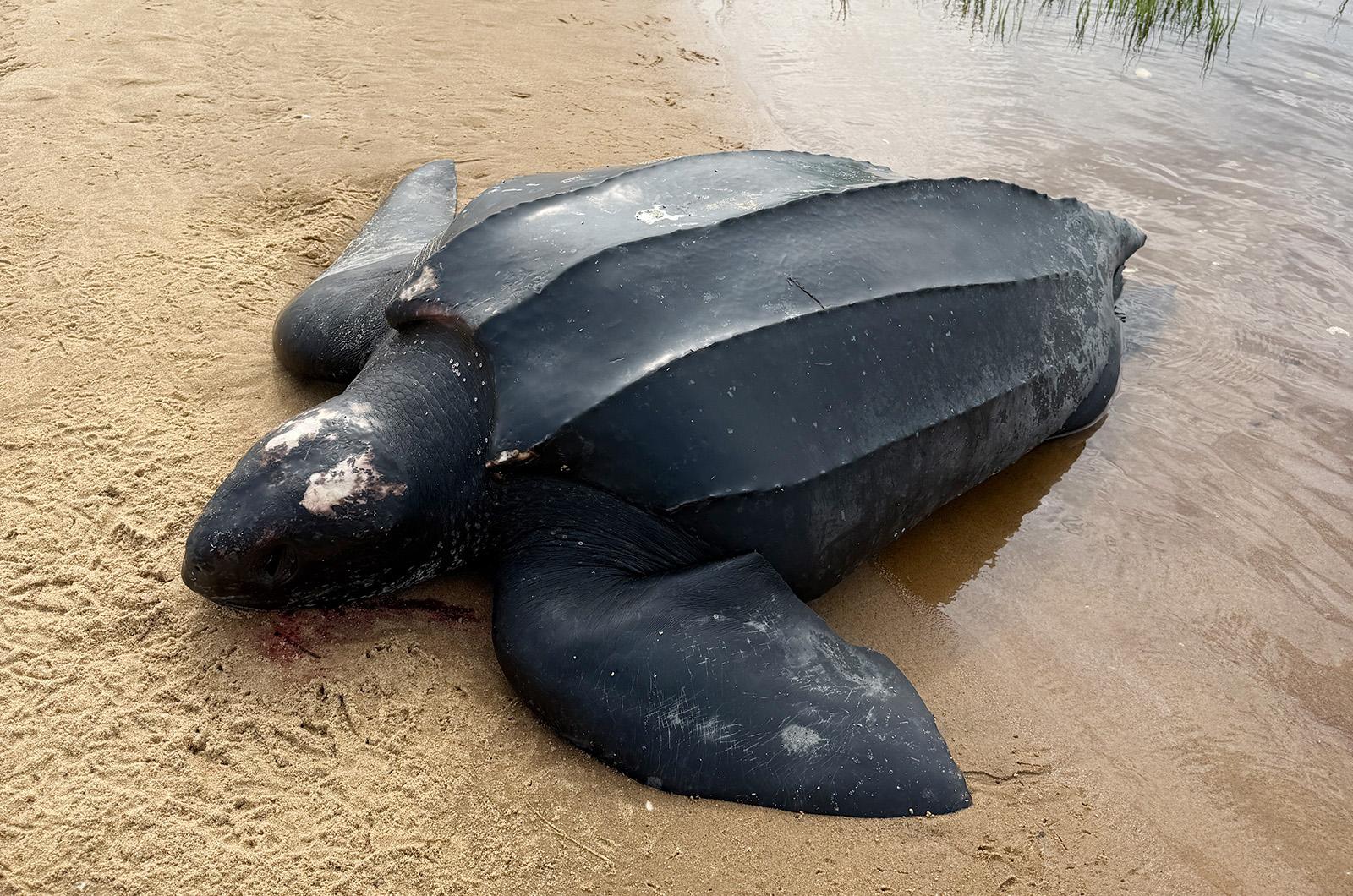
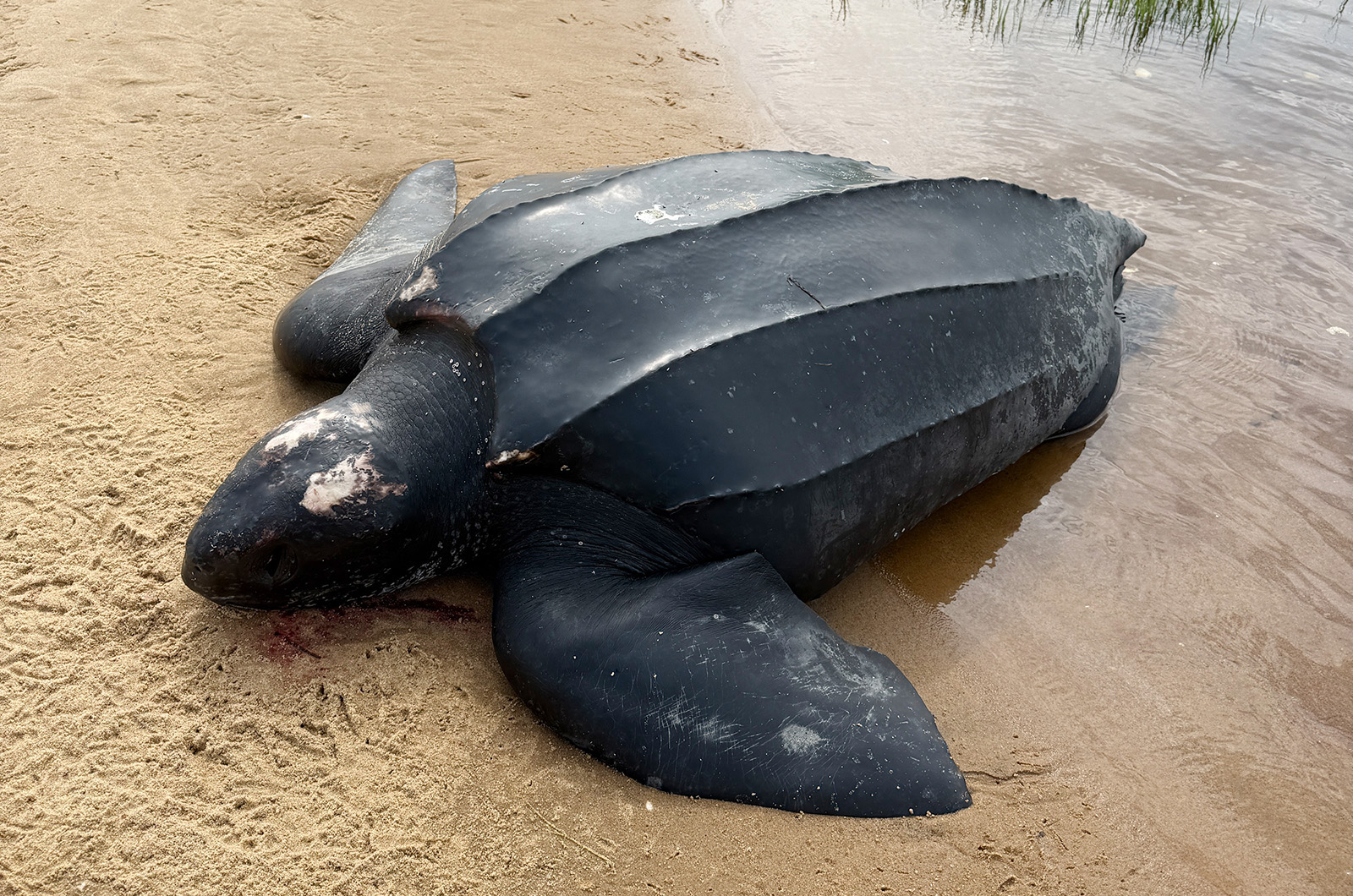
Leatherback turtles swimming near the shores of the Vineyard are especially vulnerable to vessel strikes, according to new research categorizing the Cape and Islands as a lethal hotspot for the species.
Leatherback turtles swimming near the shores of the Vineyard are especially vulnerable to vessel strikes, according to new research categorizing the Cape and Islands as a lethal hotspot for the species.
Leatherback turtles are one of four species of sea turtles that swim off the Massachusetts coastline and they are considered endangered under the federal Endangered Species Act. The National Oceanic and Atmospheric Administration estimates their population has decreased by 40 per cent over the past three generations.
The new study, titled Navigating danger: Watercraft-related mortality of sea turtles in the United States Atlantic and Gulf coastal waters, analyzed all four species of sea turtles and found that between 2010 and 2022, the highest percentage of leatherback turtle deaths caused by vessel strikes occurred in Dukes and Barnstable County.
Dr. Mariana Fuentes, a professor at Florida State University who led the study, and her team analyzed stranding data collected from the northernmost point of Massachusetts to the southernmost tip of Texas.
The study reports that out of 337 leatherback turtle deaths from vessel strikes, 88 of the incidents occurred around the Cape and Islands, where there is heavy boating activity. About 96 per cent of the leatherbacks died.
Though the overall number of leatherback turtle strandings due to vessel strikes has decreased, the report said the percentage of vessel strike strandings in the Cape and Islands region increased potentially due to the rise of watercraft collisions.
Karen Dourdeville, the sea turtle stranding coordinator for Mass Audubon Wellfleet Bay Wildlife Sanctuary who responds to sea turtle strandings on the Vineyard, is a co-author on the study and said the information could help inform conservation efforts.
“I think it’s important in terms of raising awareness on the part of boaters and perhaps regulators,” Ms. Dourdeville said.
Ms. Dourdeville said climate change could also be at play. Leatherback's main prey, the lion’s mane jellyfish, tends to flourish in colder water. As the oceans warm, Ms. Dourdeville explained that leatherback turtles could be moving north where the water temperature is cooler and their prey is more prevalent.
“A lot of species, in a nutshell, are moving north… and that may be exactly what we’re seeing with leatherbacks,” she said.
Leatherbacks represented the lowest total number of strandings compared to the other species, Kemp’s ridley, loggerhead and green, but had the highest number of vessel strikes. This is in part due to leatherbacks’ tendency to swim and feed on the surface of water, according to the study.
Leatherback sea turtles are the largest species of turtles in the world, stretching as far as six feet wide and weighing up to 1,000 pounds, according to NOAA. They are the only species to have one hard shell on its back, rather than scales, and are highly migratory, swimming over 10,000 miles each year between nesting and foraging for jellyfish.
In mid-June a leatherback turtle washed up on Red Beach in Aquinnah. Ms. Dourdeville responded to the stranding and said the cause of death was not due to a vessel strike, but remains unclear.
Another leatherback was found heavily decomposed on the west side of Chappaquiddick in September last year. Ms. Dourdeville said cuts along the body indicated it was killed by a vessel strike.
MassAudubon helps sponsor the Martha’s Vineyard Striped Bass and Bluefish Derby to encourage boaters to report sea turtle sightings, Ms. Dourdeville said. The information goes a long way to help inform studies like the leatherback report, which can help protect endangered or threatened sea turtle species.
Ms. Dourdeville said many derby contestants have reported sea turtle sightings off the east coast of Nantucket.
If someone finds a turtle dead or alive in the ocean, they are urged to call the Mass Audubon sea turtle hotline at 1-888-732-8878 or report findings to seaturtlesightings.org.
If a turtle is found on the shore and appears to be alive, call the Center for Coastal Studies entanglement hotline at 800-900-3622. From there, a team will collect the turtle, analyze its condition, give it treatment or send it to a larger facility, such as the New England Aquarium for help.
Add new comment