


It is hard not to be mesmerized by milkweed and the minions that monopolize it.
It is hard not to be mesmerized by milkweed and the minions that monopolize it.
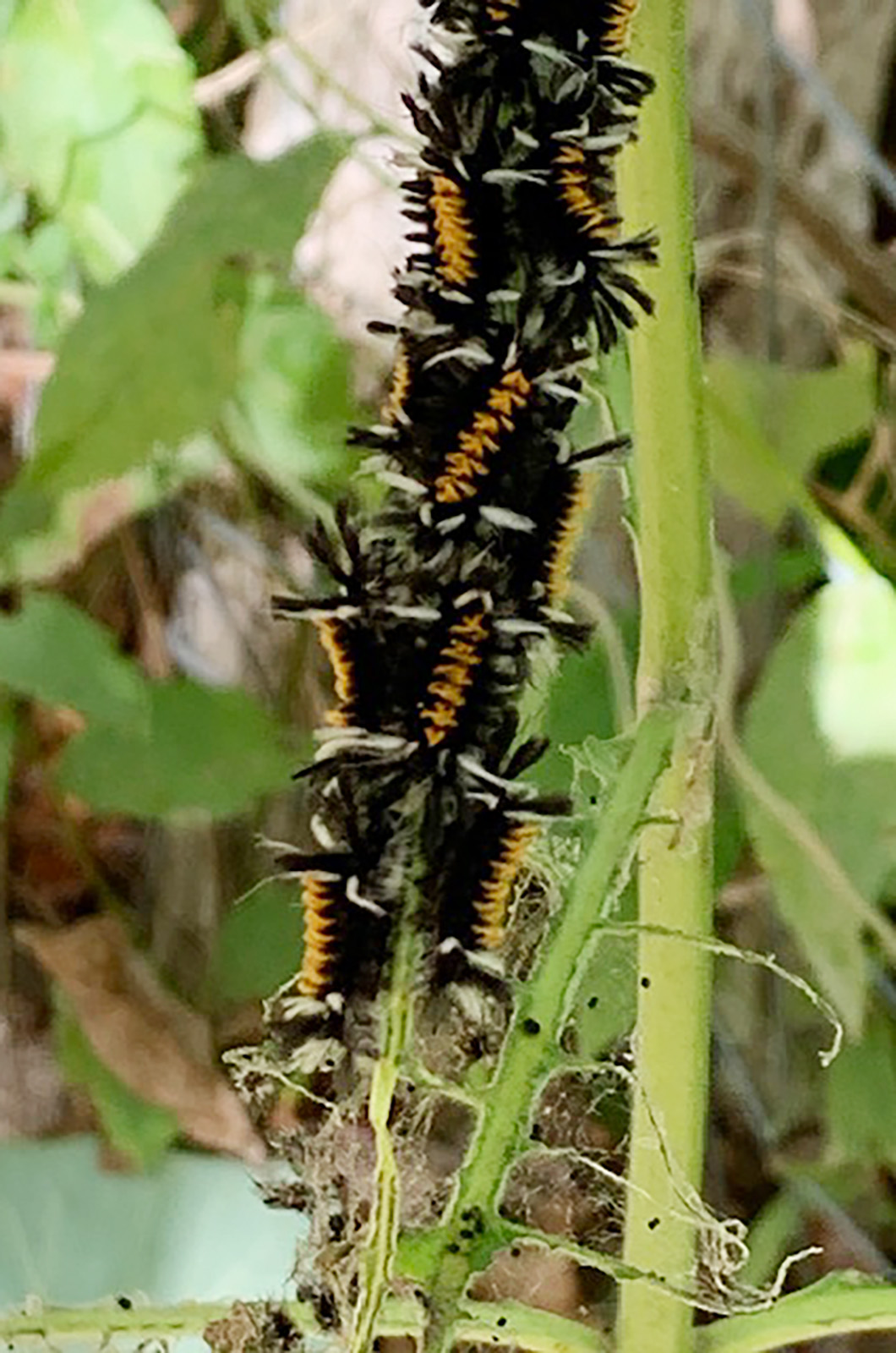
Another peculiar picky eater of this plant has been observed in large numbers. Milkweed tussock moth caterpillars are gathering gregariously on the season’s waning milkweeds. As is their fashion, a considerable quantity of hairy orange, white and black caterpillars congregate and consume the last of the leafy greens before the plant dies back.
Unlike monarch caterpillars, whose eggs are laid singly, tussock moth caterpillars emerge from eggs laid en masse. An army of hatchlings do their business and munch the milkweed, skeletonizing a significant number of leaves and leaving the milkweed almost bare. Another difference is that these tussock moths prefer milkweed but can also consume dogbane, so are not a one-plant wonder.
Perhaps that massing habit is why Dru Drury, 18th-century British metalsmith and entomologist, described this species and gave it the scientific name Phalaena egle, which over time changed to its current Euchaetes egle.
Breaking down the name, Euchaetes loosely translates to well haired or bristled. Egle is also intriguing, as it is a popular Lithuanian name that means spruce or fir, after the tree. More intriguing is that it is also the name of a character in a Lithuanian folktale.
Egle is a maiden who is tricked by a snake that demands she marry him. When her parents refuse, the serpent sends thousands of snakes to her home to coerce her parents into relenting to the nuptuals. Eventually Egle agrees to the pairing with the snake and becomes the Queen of the Serpents. The teeming serpents closely track to the teeming caterpillars — perhaps a stretch, but no doubt a good story that may connect the caterpillars to their name.
Milkweed tussock moth caterpillars are also called milkweed tiger moth caterpillars and also harlequin caterpillars. The latter describes their pattern, reminiscent of the French passion play devil or demon character who wears a checkered costume.
Whatever Dru’s intention in naming, his notoriety remains not from this single species, but from his collection that was gathered by others. Offering “6 dimes for any insect of any size from officers of merchant ships travelling afar” is how his collection grew. And he was quite specific in his requirements for his helpers, which included a “three-page pamphlet on instructions for collecting” for those amateur bug suppliers.
If only those caterpillars could have heard their human predators, they might have survived capture. While the tussock moths can’t hear us, as adult moths they can communicate with each other and even with their predators. Using their tymbal organ, these tiger moths can produce ultrasonic sounds that can be detected for mating purposes and even perceived by bats. The bats understand that this signal comes from a prey and is a warning that that meal is dangerous and should be avoided. Miracle moths for sure!
Moths will emerge from cocoons that overwinter in the ground after the caterpillars finish their final milkweed meal in the fall. The moths are not fancy dressers akin to their caterpillar stage. They are simple, nondescript grey moths that you would likely not notice.
It is one of the many moths that hide in plain sight, yet it’s hard to ignore its showy larvae. While you may be looking for monarchs on your milkweeds, tussock moth caterpillars can’t help but catch your eye, reminding us of the power of native plants to and their bounty of biodiversity.
Suzan Bellincampi is director of the Felix Neck Wildlife Sanctuary in Edgartown, and author of Martha’s Vineyard: A Field Guide to Island Nature and The Nature of Martha’s Vineyard.
Add new comment