


He sowed others reaped.” This epitaph can be found on Ephraim Wales Bull’s gravestone at Sleepy Hollow Cemetery in Concord.
“He sowed others reaped.”
This epitaph can be found on Ephraim Wales Bull’s gravestone at Sleepy Hollow Cemetery in Concord. Bull was a 19th-century metalworker by trade. He was what was called a goldbeater, and his job was to hammer gold into sheets for gilding and decorative arts.
That was his day job. His side gig was agriculture, and he developed a proclivity for produce. Born in Boston, Bull moved to Concord per doctor’s advice after complaining of lung and breathing ills. The city pollution was too much and a home in the country was recommended.
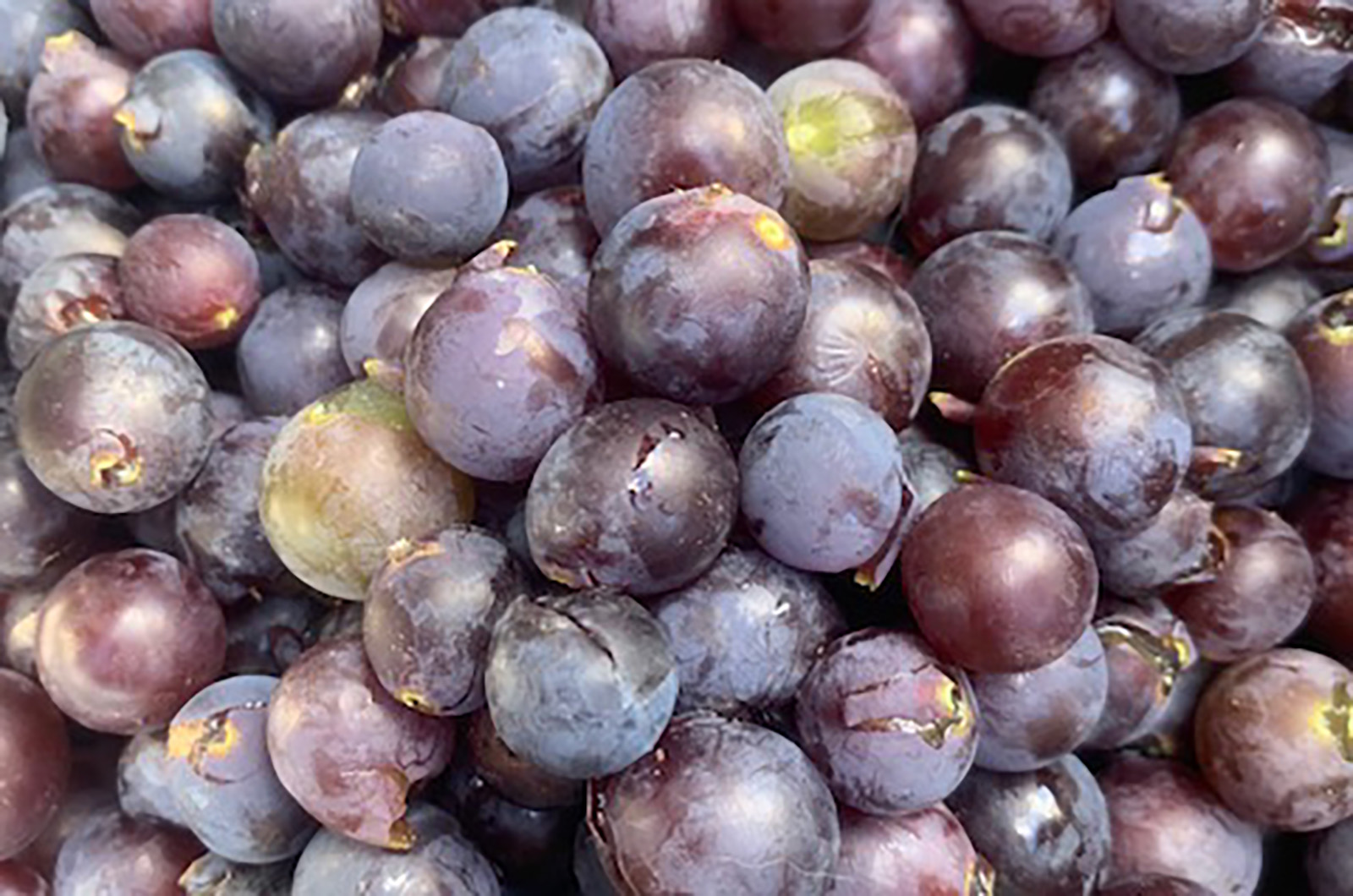
At his country home, fruit was his forte, but specifically his claim to fame was grapes. Bull began with an obsession to develop a grape that could survive New England winters and provide exceptional and delicious commercial fruit. Over many years he toiled, planting more than 22,000 seedlings until he found the perfect hybrid, which became the Concord grape, named for his adopted hometown.
Concord grapes were domesticated from the native fox grape, Vitis labrusca, collected from Bull’s backyard and likely hybridized with the Catawba cultivar of the Mediterranean variety Vitis vinifera. His perfected product won first-place honors from the Boston Horticultural Society Exhibition and accolades from his notable neighbors.
Nathaniel Hawthorne’s son described Bull as “eccentric as his name and genuine,” having developed a reciprocally affectionate relationship with the grape grower and his family.
Henry David Thoreau was also a friend and could certainly appreciate a great grape. In 1853, he described this encounter with Bull and his grapes in his diary: “Walking down the street in the evening I detect my neighbor’s ripening grapes by the scent twenty rods off, though they are concealed behind his house. Every passer knows of them. Perhaps he takes me to his back door a week afterward and shows me with an air of mystery his clusters concealed under the leaves, which he thinks will be ripe in a day or two – as if it were a secret. He little thinks that I smelled them before he did.”
Though neighbors held Bull in high esteem, he died almost destitute in a local home for the aged. Bull sold his plants to commercial nurseries who, instead of purchasing more seedlings, grew and sold their own from the plants they bought from Bull. Concord grapes became popularized as fresh fruit and, soon, in liquid form after a New Jersey dentist named Thomas Welch figured out a way to commercially produce juice.
Grapes, wild and cultivated, are scenting the Island and are ready to be picked. I was lucky enough to find a source last weekend. The grapes were processed, and locally-made fruit leather will be my reward after drying the puree in a dehydrator. For those who want to try to make their own fruit rollups, an oven at low temperature works also.
Unlike Bull, I cannot take credit for the cultivation and care of the grapes. That distinction belongs to Oak Bluffs artist and master woodworker Rob Gatchell, whose arbor and ladder were key to my success. And I must mention the matchmaker — that credit belongs to Kathy Ivory of Edgartown, who knew of my love for fruit and its gathering and brought our threesome together. While there will be no permanent marker honoring this harvest, if there was it might have read: “Rob sowed, Kathy connected and Suzan reaped.”
Even if I and so many others have benefited from Bull’s work, he never financially profited from it. His legacy lives on in food history, through his connections with the great transcendental writers and, of course, with the popularity of his mighty purple berry. His home, one of the oldest in Concord, now called Grapevine Cottage, has been restored. A grapevine remains on a trellis, ostensibly the original Concord grape, and his story continues to be told.
Suzan Bellincampi is director of the Felix Neck Wildlife Sanctuary in Edgartown, and author of Martha’s Vineyard: A Field Guide to Island Nature and The Nature of Martha’s Vineyard.
Add new comment