

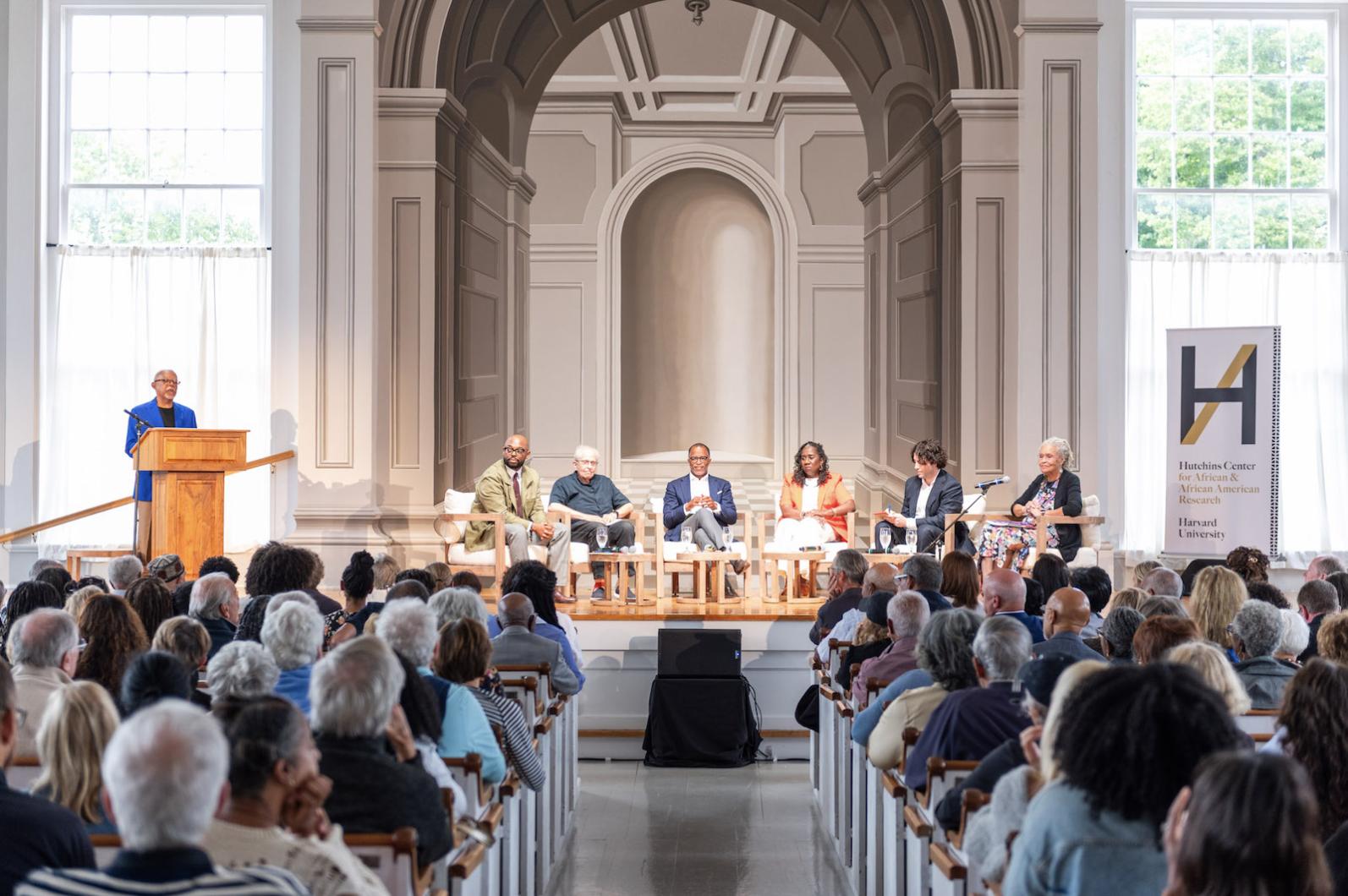
The central questions at the heart of this year’s annual Hutchins Forum were shorter than in past years — but no less complicated.
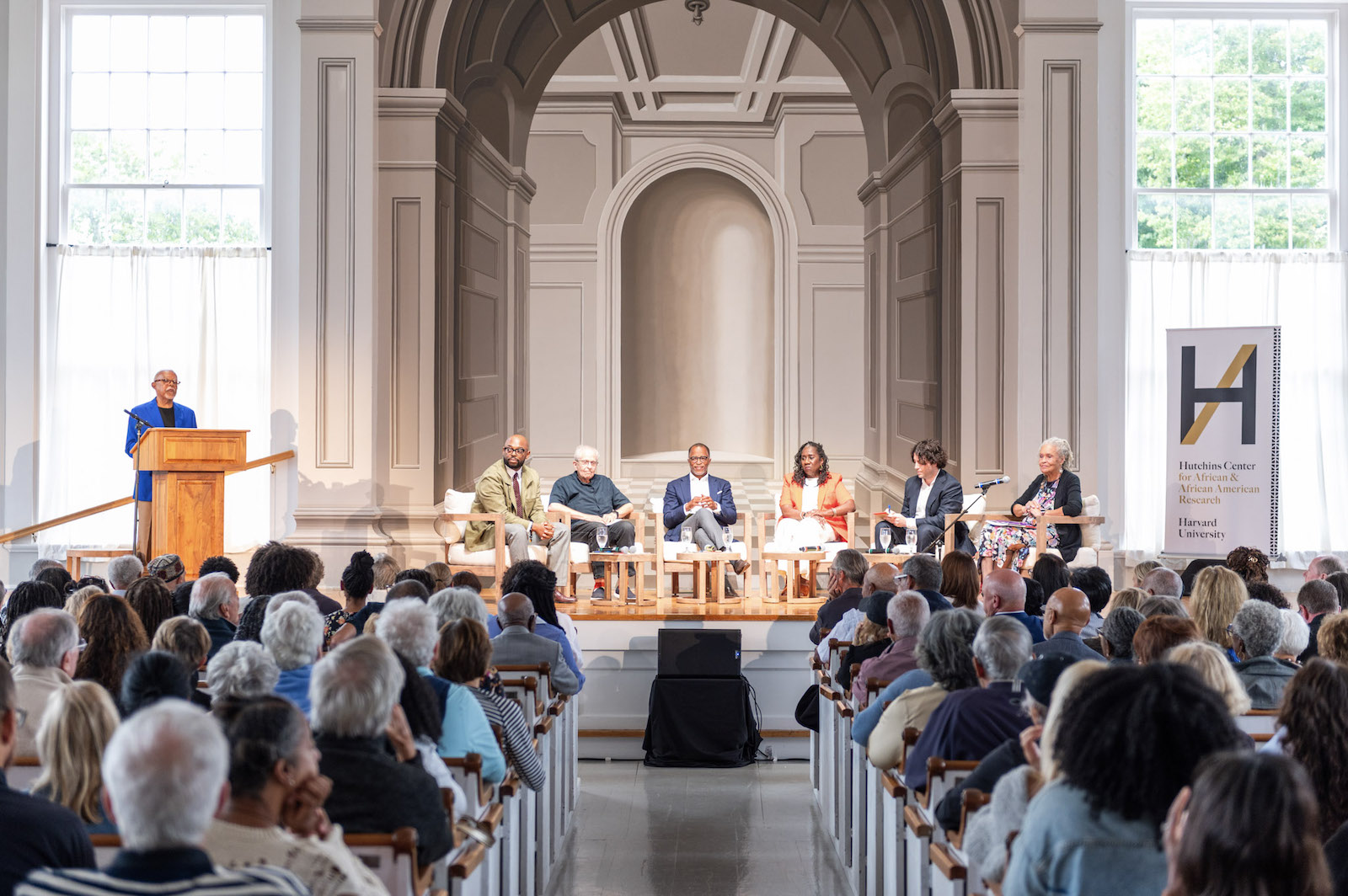
The central questions at the heart of this year’s annual Hutchins Forum were shorter than in past years — but no less complicated.
“What went wrong, and what’s next?” asked journalist and moderator Charlayne Hunter-Gault to a panel of lawyers, journalists, professors and experts that included Astead Herndon, Laurence Tribe, Jonathan Capehart, Sherrilyn Ifill and David Shor.
There was no need to specify what Ms. Hunter-Gault, and a captivated audience at the Old Whaling Church on Thursday, were asking about: President Trump’s election, Kamala Harris’ loss and the systematic dismantling of democratic systems under a growing executive authority.
The panelelists gave many answers and asked even more questions in a discussion about the role of race, education and the media in the 2024 election, as well as the state of democracy and what needs to happen to preserve it.
Event is organized and hosted by Henry Louis Gates Jr.
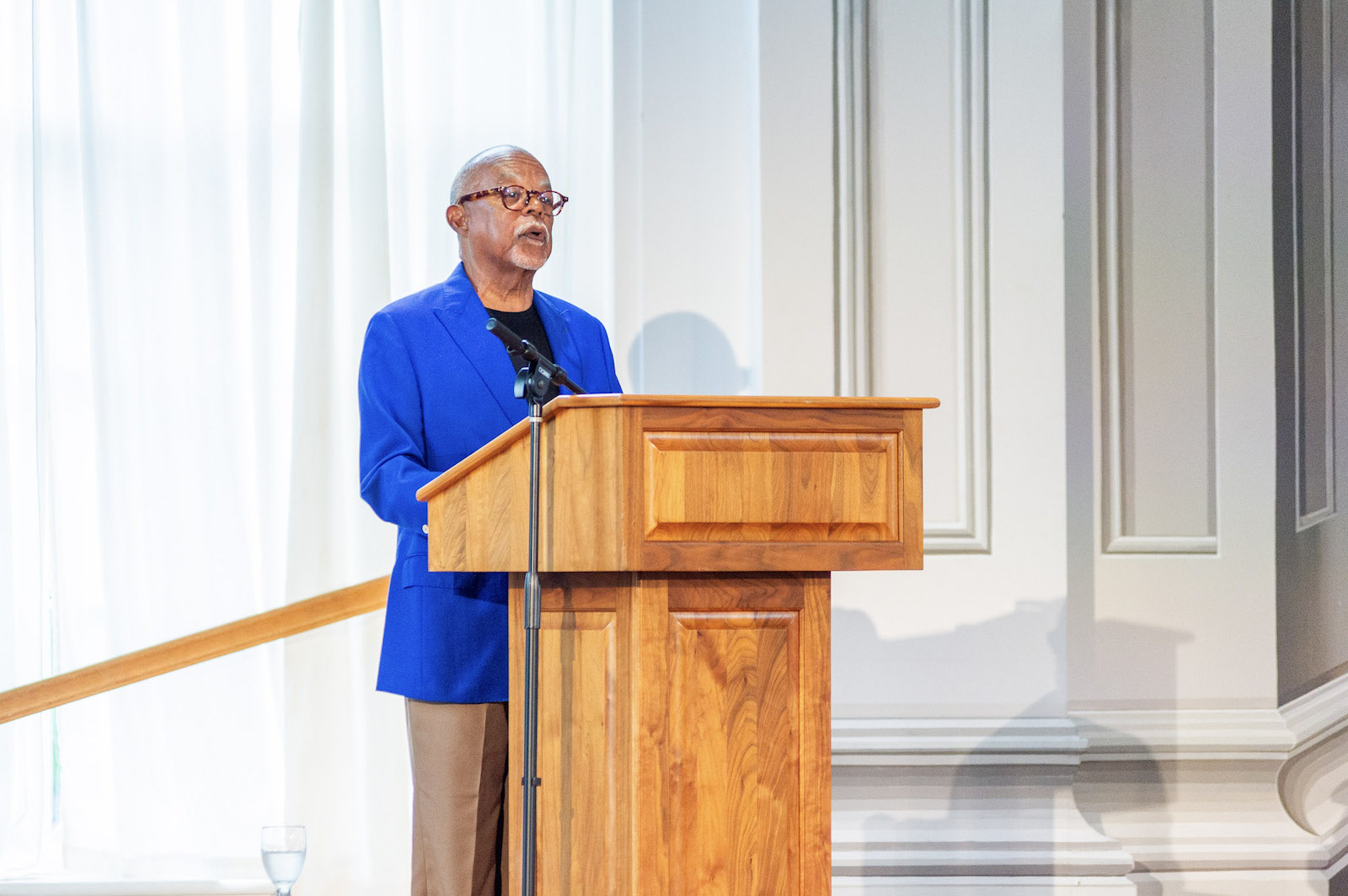
Event is organized and hosted by Henry Louis Gates Jr.
As in past years, Harvard professor Henry Louis (Skip) Gates Jr. introduced this year’s forum. He compared the current moment to the post-Reconstruction era of the 19th century, when political freedoms for African Americans were “wiped out by political and legal sleight of hand,” he said.
“And although it’s difficult for us to believe, ladies and gentlemen, we find ourselves at this place once again,” said Mr. Gates. “In just the past seven months, we’ve seen an unprecedented assault on our universities, public media, schools, libraries, cultural institutions and independent journalism, the very foundations of our democracy.”
For panelists, the main reason President Trump won the election varied.
Ms. Ifill, civil rights lawyer and scholar, said that the issue was race.
“The question we have to face in this country is whether or not we are prepared to be a true multiracial democracy,” she said. “[Race] is the most powerful force in political life.”
Other panelists challenged the centrality of race and racism in recent and upcoming elections, positing education and class divisions as explanations of how the President made such huge gains in minority populations.
Mr. Capehart, a journalist for PBS and MSNBC, pointed to the role of the media in the election’s outcome.
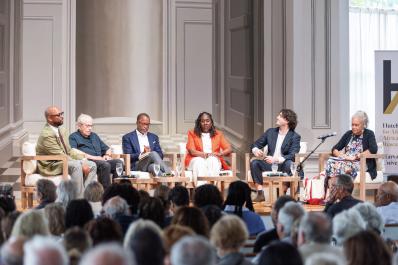
Astead Herndon, Laurence Tribe, Jonathan Capehart, Sherrilyn Ifill,David Shor and Charlayne Hunter-Gault
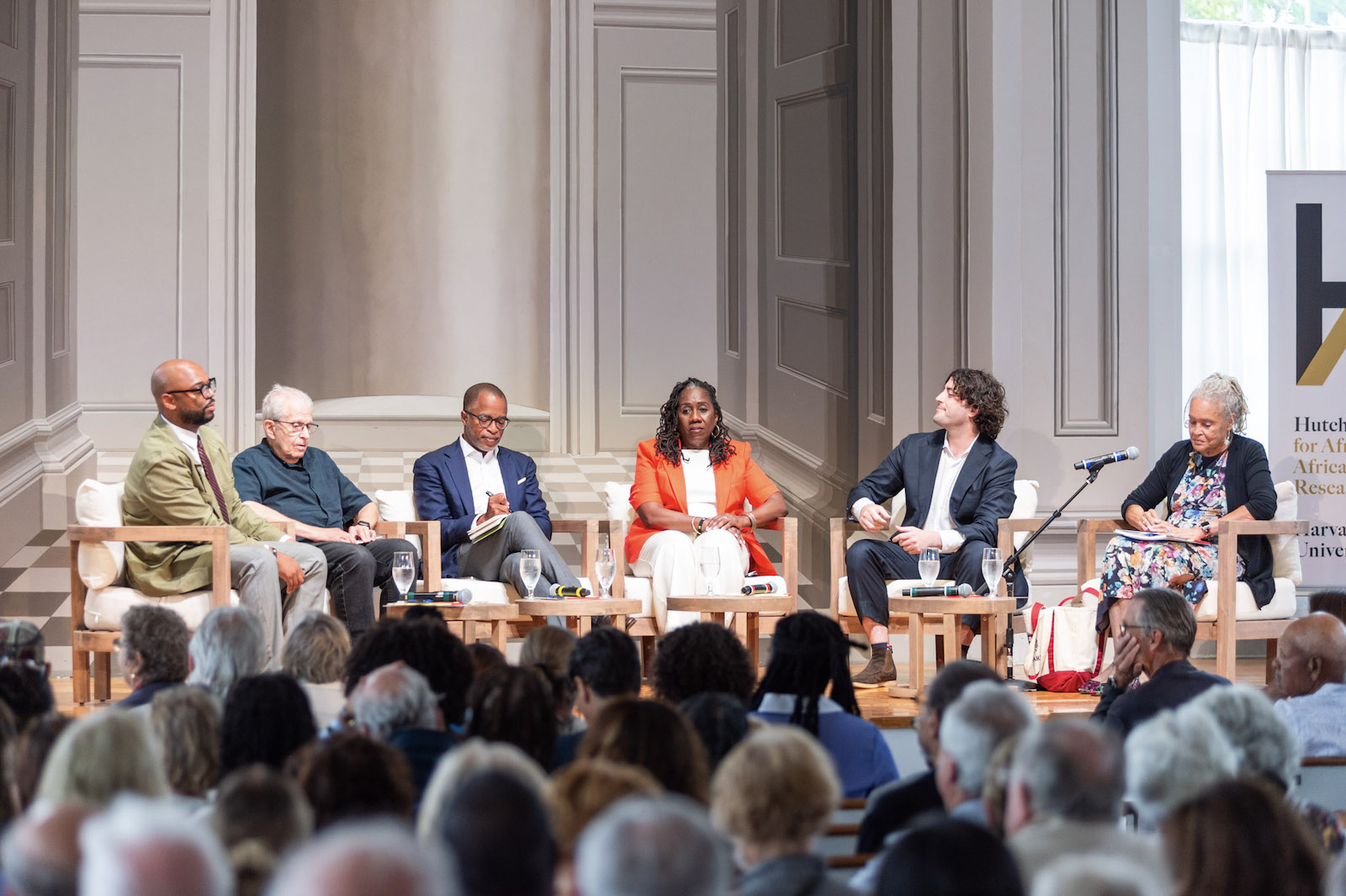
Astead Herndon, Laurence Tribe, Jonathan Capehart, Sherrilyn Ifill,David Shor and Charlayne Hunter-Gault
“The media environment has become so fragmented, it is difficult for just about anybody, except for, it seems, Donald Trump, to break through,” said Mr. Capehart.
Social media is also at fault for amplifying right-winged discourse, said Mr. Capehart. He gave the example of Elon Musk’s buyout of Twitter, allowing him to “switch the algorithms.”
“People are mad, and the President was very good at scratching at itches that are more emotional than they are rational,” Mr. Capehart said.
New York Times journalist Mr. Herndon disagreed.
“It’s comforting to think about this as a problem of information, that if we simply present the right headlines in front of the right people, they change their minds,” Mr. Herndon said.
But that’s not how he understands it, having talked to countless Republican politicians and voters.
“It is an active choice, not a passive one,” Mr. Herndon said. “They know who he is.”
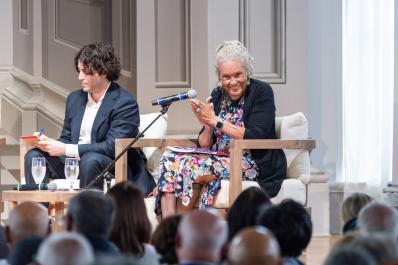
David Shor and Charlayne Hunter-Gault
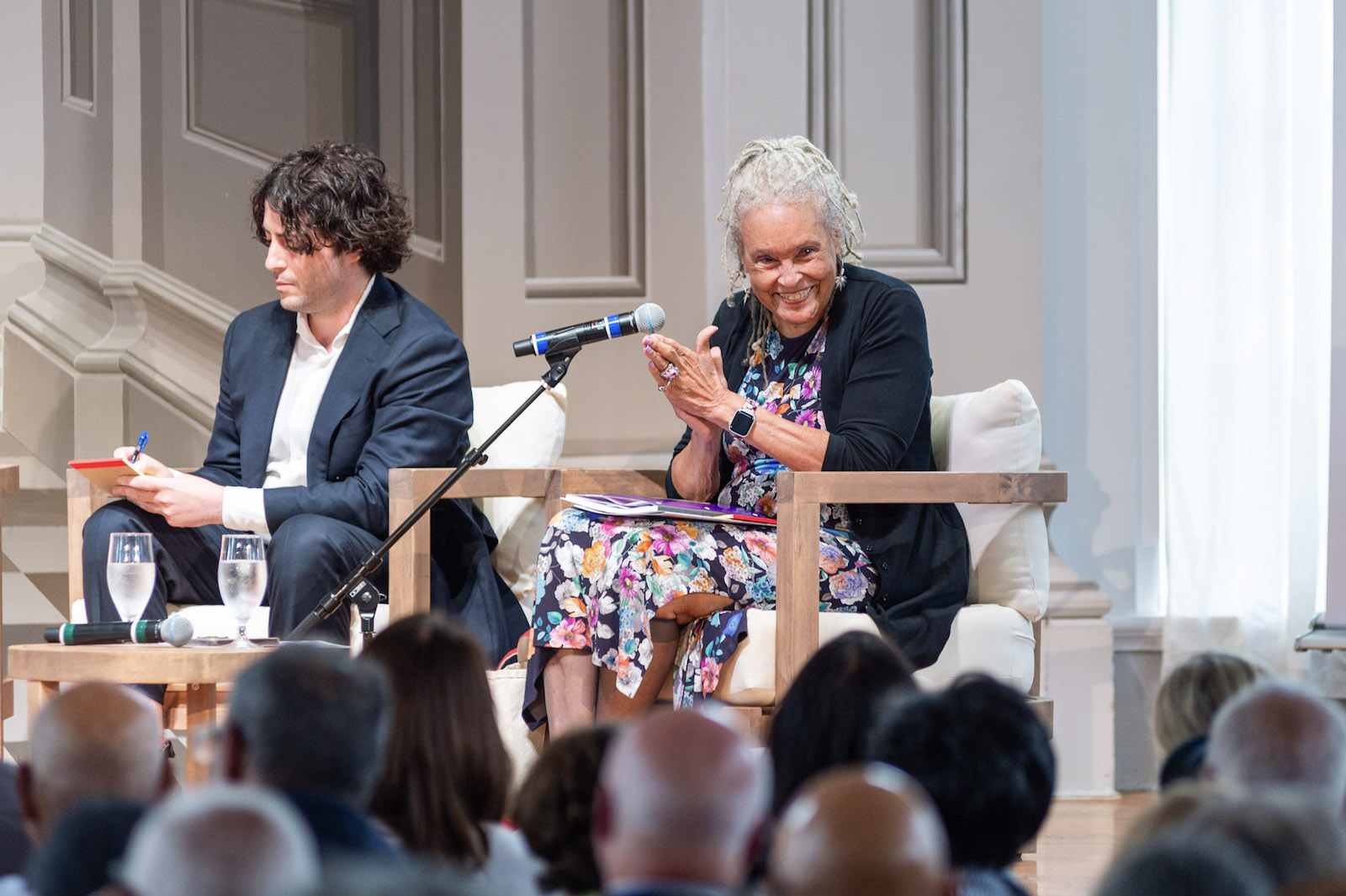
David Shor and Charlayne Hunter-Gault
Mr. Herndon also discussed his views about why the Democratic party lost. He said Democrats have failed to commit to firm beliefs about the economy, immigration and more, opting to run on a pro-democracy, anti-Trump platform. But that’s not enough, Mr. Herndon said.
“I would say Democrats are visionless,” he said. “If I was them right now, I would lock myself in the room and think, what do I really believe in?”
Mr. Tribe, emeritus professor at Harvard Law, said the midterms are the answer.
“The indispensable necessity for us to survive is something fairly simple: it’s to win the midterms and win big,” Mr. Tribe said. “How to do that is above my pay grade, but it seems to me that all of us need to get active in every way we can.”
That means supporting candidates, making phone calls, knocking on doors, and getting involved to “support democracy,” he said.
Once again, Mr. Herndon disagreed.
“I kind of got bad news for the midterms,” he said. The Republican Party “doesn’t care” to win Congress when they are creating a political ecosystem that writes out Congress’s authority altogether.
“I don’t think an ecosystem of gerrymandering of the Electoral College of state legislatures that largely write out most Black and Brown people is a working democracy,” Mr. Herndon said.
Audience members pushed the panelists for some words of hope and vision.
Ms. Ifill encouraged turning to spiritual leaders to build community and strengthen citizenship as a way to move forward.
“We had a whole civil rights movement that was led in many ways by faith leaders, and now we just leave them out of the conversation,” she said.
Mr. Tribe also turned to history to make an appeal for future leadership. The founding fathers, he explained, warned of an autocratic, charismatic demagogue that would one day threaten the new American democracy. That demagogue, he said, is Donald Trump.
“We need to be looking and we need to be encouraging the emergence of another generation of leadership,” Mr. Tribe said. “We need a charismatic leader in 2028. There are lots of talented people out there.”
Multiple panelists also spoke about the importance of listening and appealing to people who have “very different values than the audience here,” said Mr. Shor, a data scientist and political consultant.
“What I would love for the American people to do is engage in these conversations and not come to the table ready to argue but just sit, talk and listen,” said Mr. Capehart. “We have a system that does not reward that.”
“That system can change,” he added. “There is space for agreement and coalition.”
Add new comment