

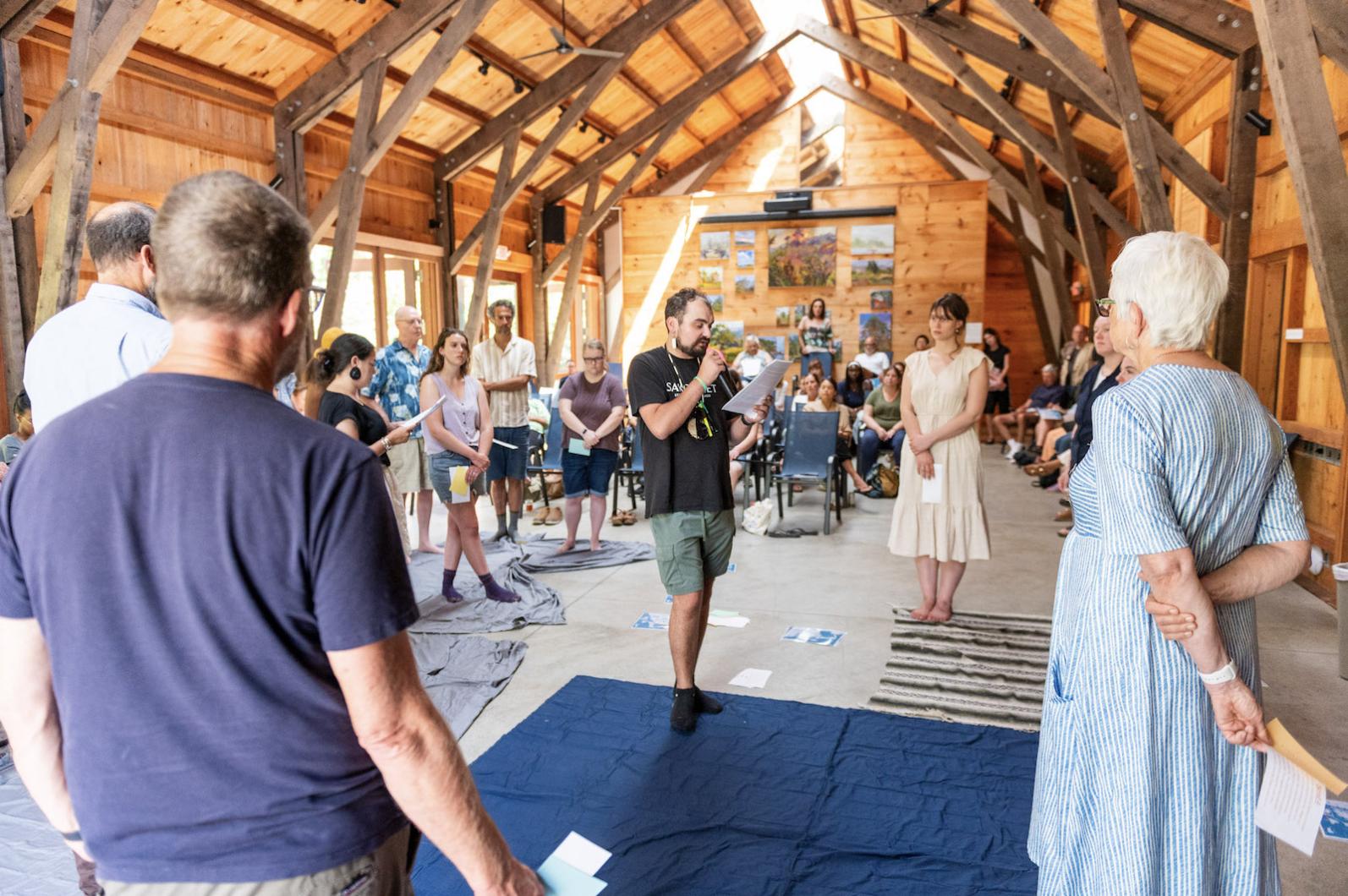
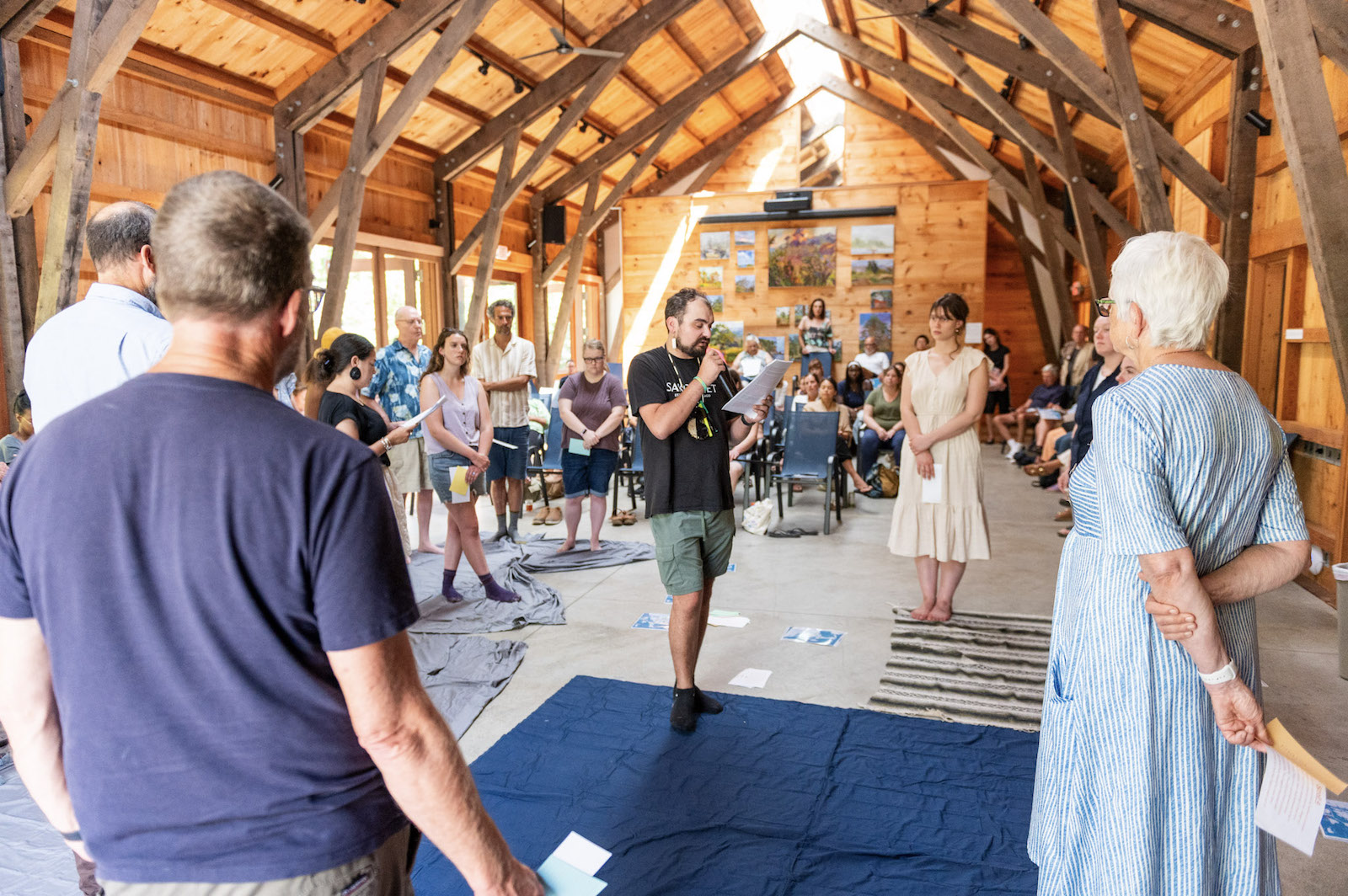
The day of remembrance at Stillpoint began with a gathering of the tribal community and then in the afternoon the wider Vineyard community was invited to take part in the discussions and activities.
At Stillpoint on Tuesday afternoon about 30 people stood on blankets spread out on the floor. The blankets represented Wampanoag land some 350 years ago. Gradually, blankets were removed or peeled back to reflect diminishing land, and people were asked to leave the remaining blankets until only a few remained.
The exercise was facilitated by Brad Lopes (Aquinnah Wampanoag) and Jannel Carey (Mashpee Wampanoag) and served as a tangible demonstration of the timeline of losses the Wampanoag people have suffered over the centuries due to colonization, genocide and forced assimilation. It was part of a day-long series of workshops and discussions led by the Aquinnah Cultural Center with support from the Harvard University Native American Program to recognize Metacom Day and the 350th Anniversary of King Philip’s War.
King Philip’s War was a violent tipping point in the relationship between the English colonists and the Wampanoag people. By the end of the war, the Wampanoag people, along with their Narragansett allies, were almost completely wiped out. On August 12, 1676, Metacom, the chief of the Wampanoag who had also adopted the name Philip due to previous good relations with the English, was killed.
Burning sage outside the building.
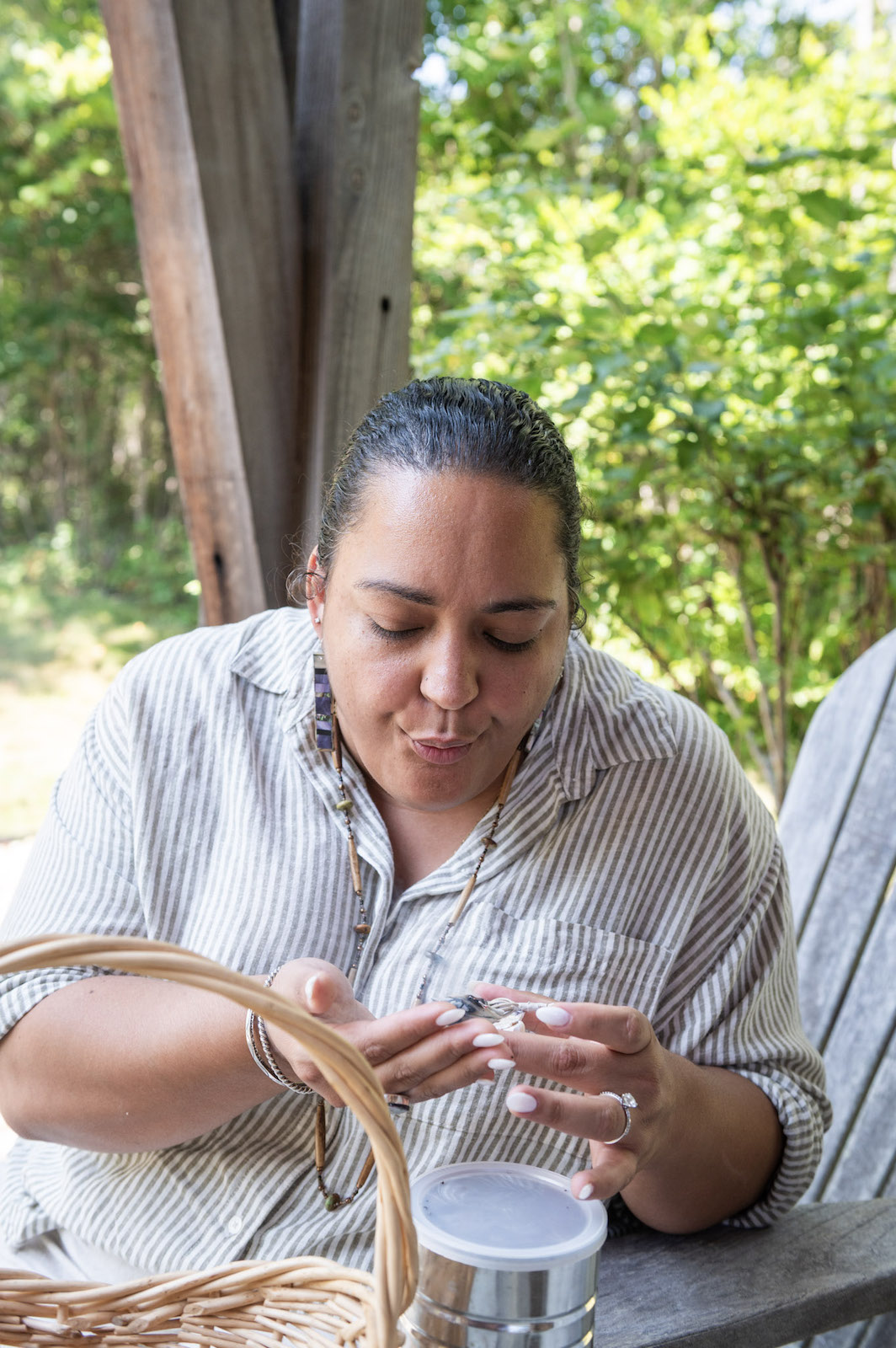
Burning sage outside the building.
The day of remembrance at Stillpoint began with a gathering of the tribal community and then in the afternoon the wider Vineyard community was invited to take part in the discussions and activities.
“One of the things I’ve come to learn is that we have a responsibility to the Earth to keep it as it was created, that is a job of human beings, and we have a responsibility to history, and it’s not just Wampanoag people or Indigenous people, it’s everyone, all of you,” said Linda Coombs, a panelist and Aquinnah Wampanoag historian.
Mr. Lopes asked participants and observers how their understanding of Indigenous history had shifted due to the exercise. He also invited everyone to consider what actions might promote reconciliation and healing. He then concluded the blanket representation with what he referred to as “seeds of hope,” acknowledging the efforts of the Aquinnah Cultural Center, Native land conservancies and The Weetumuw School, an immersive Wampanoag school in Mashpee.
In addition to Ms. Coombs, panelists included David Weeden (Mashpee Wampanoag) and Dr. Mary Amanda McNeil (Mashpee Wampanoag). The discussion was moderated by Tobias Vanderhoop (Aquinnah Wampanoag).
After a song about the value of education, Mr. Vanderhoop transitioned to the panel presentation.
“It is a discussion about our land, about our people, about our culture, but wrapped within that it is about loss, about dispossession of our land and resources and culture, about pain and trauma, but also about survival and defining a pathway to healing and moving forward to remember the things that have happened,” Mr. Vanderhoop said.
Metacom Day remembrance was led by the Aquinnah Cultural Center with support from the Harvard University Native American Program
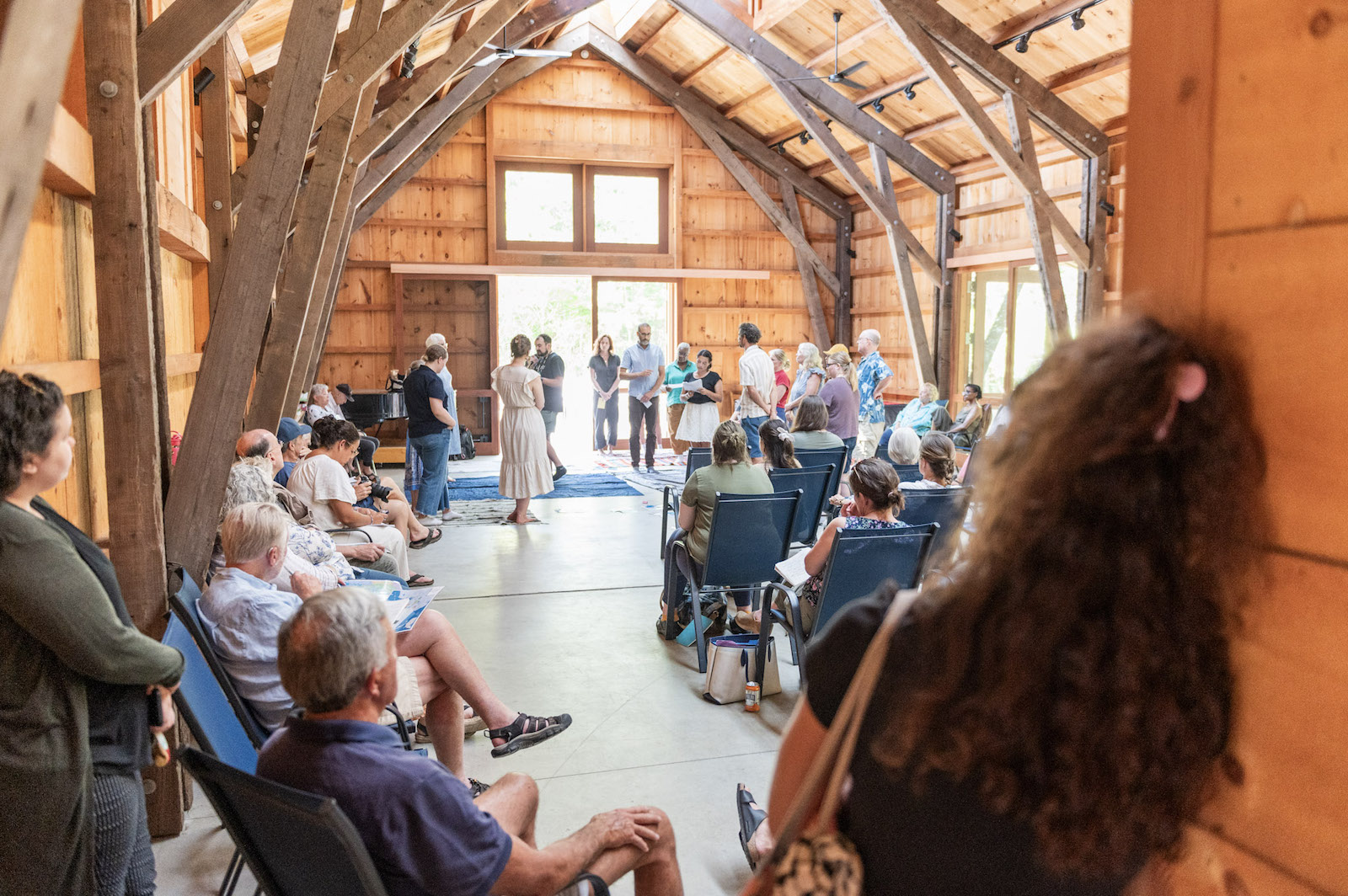
Metacom Day remembrance was led by the Aquinnah Cultural Center with support from the Harvard University Native American Program
Panelists then proceeded to discuss and examine King Phillip’s War.
“There’s no way of understanding the history of the Northeast without understanding it, there’s no way of understanding the history of the United States without understanding it,” said Dr. McNeil.
The panelists also discussed the lasting impacts of the war.
“I think the war was a turning point, since we did lose it and the colonial people got ultimate control,” Ms. Coombs said. “They were literally shipping boatloads of people out of the country just to get rid of them, and I think I always feel that since that boat landed, we’ve just not been living our own life, but having to respond to things coming at us from the rest of the world.”
Mr. Weeden pointed to issues Native people are facing today.
“The biggest thing I see is the struggle for autonomy and self-governance, that’s the one that seems to resonate over and over and over,” he said. “The fact that these are our homelands and we don’t have a say in the processes that affect us and decisions that are made, it’s not a representative government for us.”
As the panel transitioned to a forward-looking perspective, Ms. Coombs said the best way to help is to understand.
“If you learn the history and you’re sharing it with other people, or you’re teaching your children actual history... things will begin to change,” she said.
Comments
Beautiful!!
darius Fischer New York New YorkBeautiful!!
Add new comment