

It is leaving quite a bitter taste in my mouth.
It is leaving quite a bitter taste in my mouth.
As someone who loves the flavor of fresh cilantro, the herb haters had me mystified with their insistent and negative feelings for this flavoring. Emotions can run high. Online news and entertainment website Buzzfeed featured an article called 17 Reasons Coriander Is Just the Goddamn Worst.
First, let’s explain the relationship between coriander and cilantro. Both are from the same plant, Coriandrum sativum. Cilantro usually refers to the fresh leaves and coriander describes the dried seeds. Each have their own flavor, scent and uses, though the names can be used interchangeably to describe either the seeds and leaves or the plant in general.
Now we can discuss the disdain. For some, this plant tastes like soap or even insects (though how many of us have actually eaten bugs?). Others adore its lemony-citrus flavor. The plant’s scientific name comes from the Greek koriannon, with koris purportedly being a bed bug. Other names for this spice include Chinese parsley, Mexican parsley and dhania.
The love/hate relationship with this two-faced plant is more than skin deep, it is genetic. Those who abhor cilantro have olfactory receptor genes known as OR6A2 that detect the aldehyde chemicals present in cilantro. Those organic aldehyde chemicals are also present in soap and insects such as stink bugs. No wonder they find cilantro repulsive.
Some of us lack those receptors and can’t get enough of this bug-flavored herb. And your heritage might determine your affection for this seasoning. In one study, 3 to 21 per cent of the general population dislike cilantro.
East Asians, Caucasians and Africans have higher rates of the population being able to detect the soapy taste, while Middle Eastern, Hispanic and South Asian cultures have lower rates of detection. Of identical twins, 80 per cent shared the disposition.
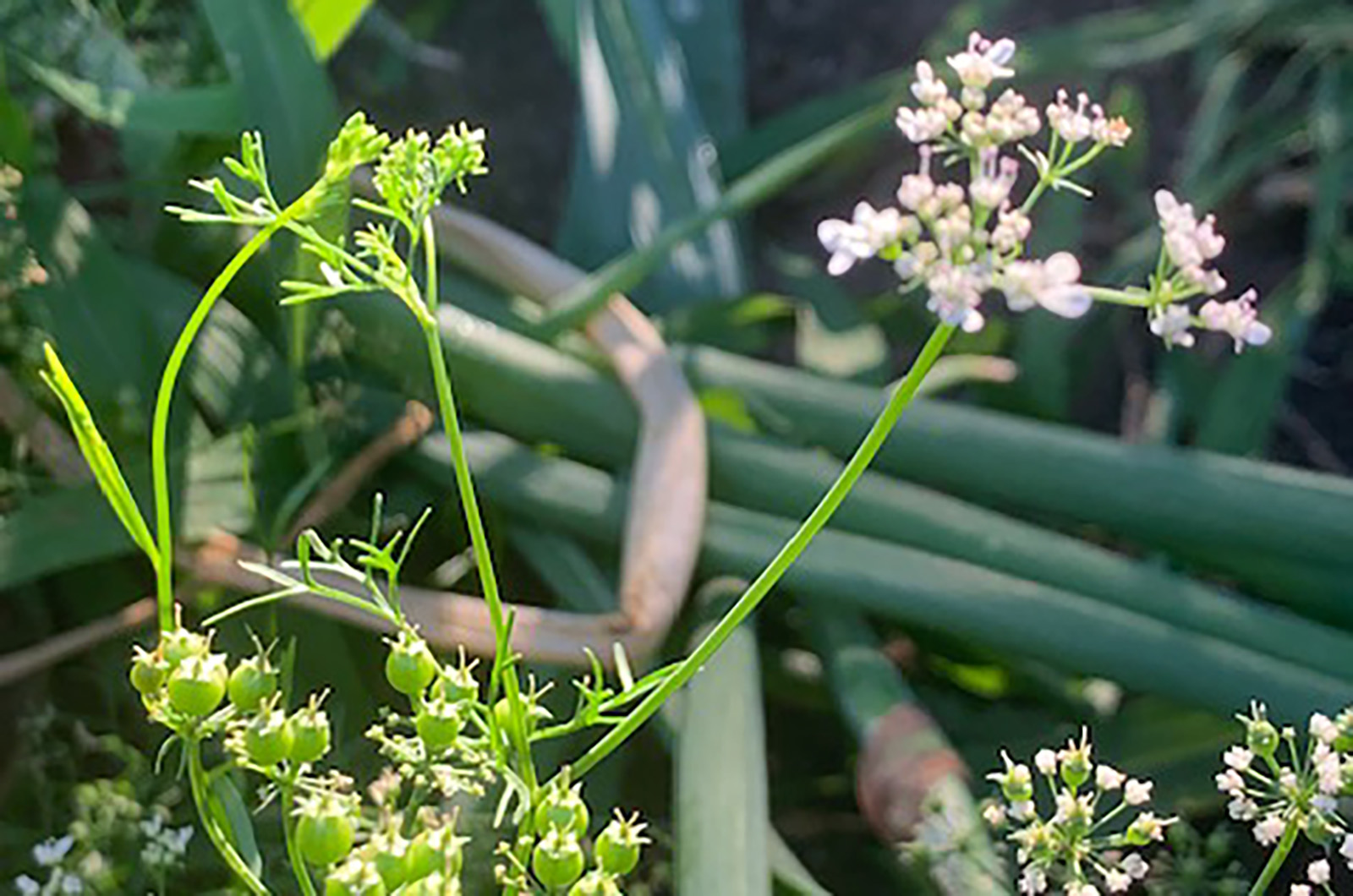
In our household, we are evenly split. That just means more cilantro for me as our garden is bearing large amounts of this herb. Interestingly, last year when I planted it, none of it grew. This year, though I did not plant any, this herb volunteered everywhere. Cilantro is known to self-seed and will bolt prolifically in hot weather.
All of the plant is edible, including the flowers and roots, though the leaves do get more bitter after the plant goes to seed. Native to Mediterranean regions and because of its value as a spice, cilantro has travelled widely and is grown in most places worldwide. Insects, especially flies and wasps, will use cilantro as a nectar plant so is beneficial wherever it roams.
Cilantro cultivation goes back to ancient times, and it was even found in Tutankhamen’s Tomb. Besides culinary uses, it was employed for perfumes, potions for immortality and as an aphrodisiac. Teas and tonics that included cilantro were believed to support digestion, act as sedatives, treat rheumatism and even lower cholesterol.
Julie Child wouldn’t care what historical, health or cultural uses cilantro had; she banned it from her home and kitchen and discouraged her sous chefs from its use. In an interview with Larry King, Ms. Child put herself strongly in the hater camp when she said she “would pick it out if (she) saw it and throw it on the floor.”
Modern chef and restauranteur Guy Fieri says it’s his favorite, and other chefs and personalities including Bette Midler, Jacques Pepin, Jamie Oliver and Kevin Bacon are in the pro-cilantro camp.
There are few food items that promote such passions, so whether you dress it down or spice it up, you will be in good company.
Suzan Bellincampi is director of the Felix Neck Wildlife Sanctuary in Edgartown, and author of Martha’s Vineyard: A Field Guide to Island Nature and The Nature of Martha’s Vineyard.
Add new comment