


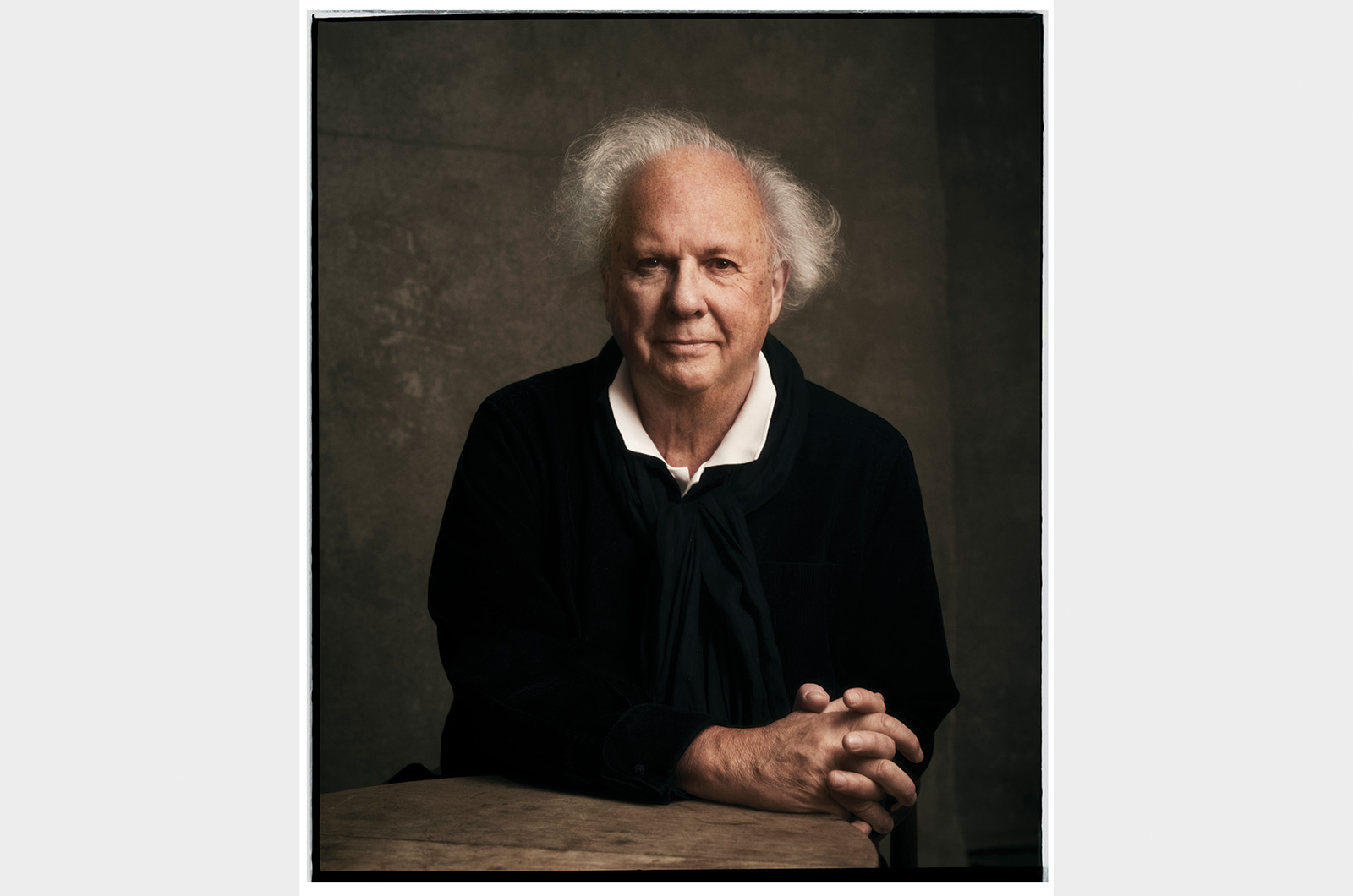
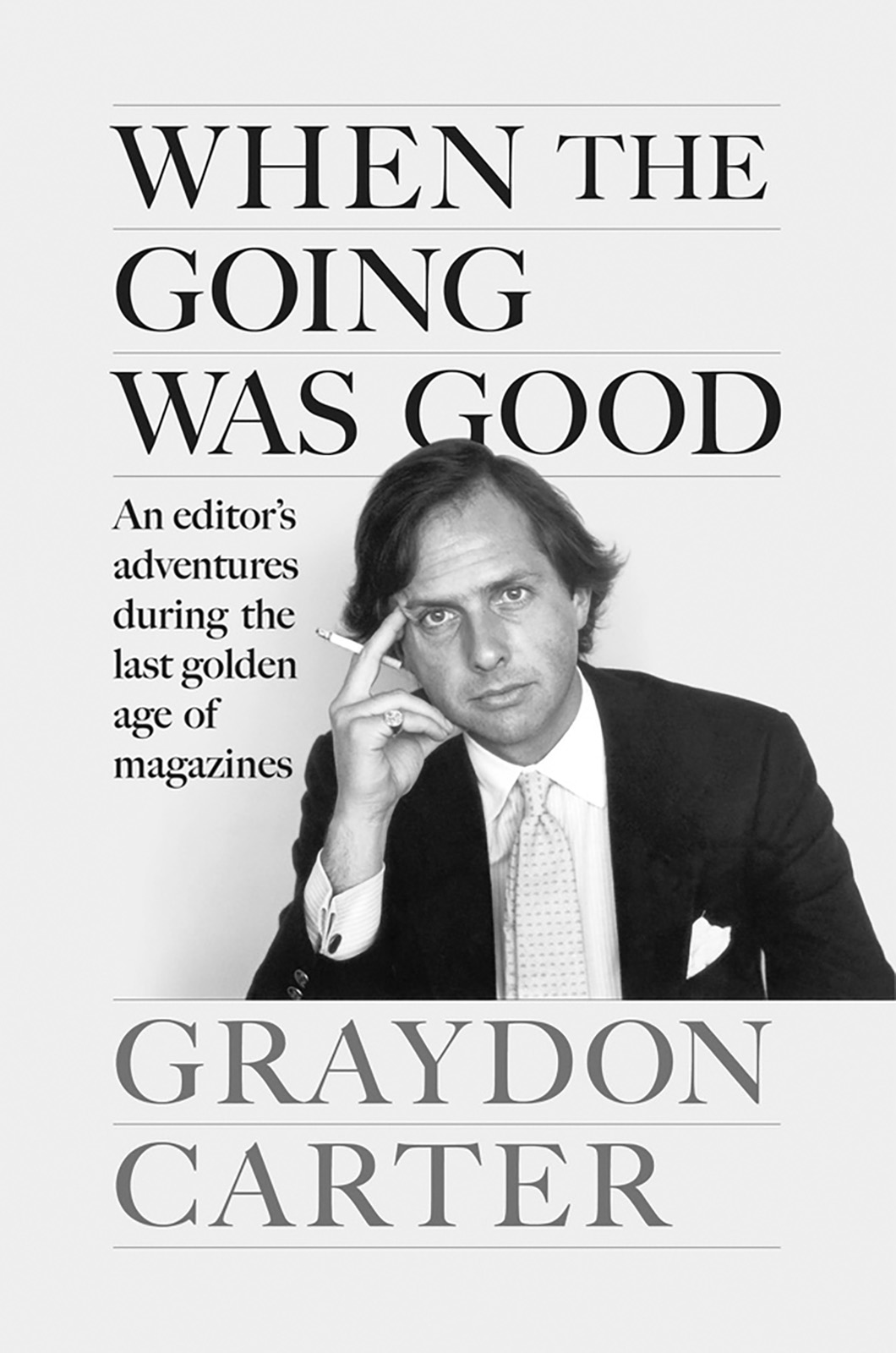
You can learn a lot about an editor from reading the publication they edit. Consider Graydon Carter, former editor-in-chief of Vanity Fair, whose new memoir is titled When the Going was Good: An Editor’s Adventures During the Last Golden Age of Magazines.
You can learn a lot about an editor from reading the publication they edit.
Consider Graydon Carter, former editor-in-chief of Vanity Fair, whose new memoir is titled When the Going was Good: An Editor’s Adventures During the Last Golden Age of Magazines. While he was at the top of the masthead, Vanity Fair was one of the most scintillating collections of buzzy cover stars (often shot by Annie Leibovitz, such as the 2015 “Call Me Caitlyn” cover with Caitlyn Jenner) and rigorous journalism (he and his crew were the ones who revealed the identity of Deep Throat in 2005).
And this was Mr. Carter: a man who started the see-and-be-seen Vanity Fair Oscar party but also spent decades establishing trust with his dedicated cadre of reporters during his 25-year-term as editor. He knew how to have fun and he knew how to fine tune a 10,000-word story until it sang. Thanks to his leadership, in that golden age of magazines, perhaps none shone as brightly as Vanity Fair.

“It was a great time we had,” Mr. Carter said in a recent interview with the Gazette.
But not everything about an editor can be revealed through what ends up on the page. Mr. Carter’s entertaining, dishy memoir fills in the gaps and gives readers a look behind the scenes. It starts far from the madding crowd, in snowy Canada. In a chapter titled Bitter Winters and a Lot of Hockey, we meet young Graydon, a boy growing up in Ottawa who worried he might not amount to much. His mother was a talented Sunday painter who encouraged her son to do the same.
“I was eager without being particularly ambitious, if that makes any sense, about not only art but about what I wanted to do in life,” he wrote in the memoir.
Later, when he read Herman Wouk’s novel Youngblood Hawke about a writer trying to make it in New York, he knew that he wanted to do the same.
After a backbreaking six-month gig as a lineman for the Canadian National Railways — a sort of Canadian young man’s rite of passage — he was off. He began his career in journalism at a college magazine and, after stops at a couple of other publications, he used that experience in New York to start Spy, a satirical magazine that took jabs at the city’s elite.
Spy was brash and held no punches, which often resulted in ruffled feathers. It was in this publication in the 1980s that Mr. Carter called Donald Trump a “short-fingered vulgarian,” a term which has haunted the now-president ever since.
And when Kurt Vonnegut’s wife was called a name-dropper in a story, Mr. Vonnegut called Mr. Carter and told him he hoped he got cancer.
In the memoir, Mr. Carter is a name-dropper as well but all the anecdotes and run-ins with the so-called establishment are part of the fun — and knowing who’s who was a currency that he’d need at his next job. In 1992, S.I. Newhouse, former chairman of Condé Nast, which publishes Vanity Fair, called Mr. Carter and asked him to become editor. He accepted.
“I now had the dream job of every magazine person in the world,” he wrote.
Magazine journalism is, at times, a team sport, and Mr. Carter was a conscientious coach. While speaking with the Gazette from his home in Manhattan’s West Village, he reflected on his approach.
“You developed a trust with the writers,” he said “You’re very careful in assigning the stories. You gave them great backup with wonderful editors and fact checkers.”
This was an era of long lead times and huge budgets, which allowed the reporters to dig deep and produce intimate yet sweeping pieces of journalism.
“We gave them everything they possibly could to succeed at each individual story, and that was sort of the underlying premise of what we did,” he said.
To fans of the kind of ambitious writing that could, and sometimes still can, be found in magazines such as Vanity Fair, the title of Mr. Carter’s memoir might sound bleak. But he has hope, and a clarification on that title.
“Maybe the golden age of magazines has disappeared,” he said, “but I honestly think this is a golden age of journalism.”
Thick, glossy print publications packed with ads might not be as plentiful or as lucrative as they were in the past but new mediums are rising up. Mr. Carter appreciates the emergence of Substack journalism, although he has a caveat there.
“I do think that a lot of Substack writers could benefit from editors,” he said.
His hope for the future of great reporting is on display at Airmail, the new venture he began in 2019 with former New York Times journalist Alessandra Stanley. According to the website, it’s a “mobile-first digital weekly” and, according to Mr. Carter, it’s a news outlet that mixes past and present.
At their West Village office, “there’s probably eight or nine of the staff members who are under 30 there every day, so they still have an opportunity to build long term, lasting relationships and bounce ideas off each other and have as close to an old-fashioned magazine office life as you can.”
Airmail has an international scope and was named in part after Mr. Carter’s appreciation for travel. In the mid-’90s, this proclivity brought him to Martha’s Vineyard, which he called “literally the most charming place on earth.”
However, things almost took a dark turn when he and his wife went for a swim.
“All of a sudden we noticed we were about a quarter of a mile out to sea, and we were caught in a riptide,” he said. “I wasn’t that familiar with riptides, and I didn’t realize you’re supposed to swim with the wave rather than over the waves to try to get in.” It was touch and go for a bit, but they eventually made it to shore. “I’m a strong swimmer,” he said. “It’s one of the few things I do well.”
Readers of Mr. Carter’s memoir will be reminded of just how un-true that is. They may also catch a glimpse of a way forward in the world of magazine journalism — one that benefits from good, old-fashioned time, care, and trust.
“I think that young people will discover magazines the way they’ve discovered vinyl and knitting,” he said. “I don’t think magazines will disappear.”
Graydon Carter will take part in an Author Talk on Sunday, August 3 at 1:30 p.m., in conversation with Belle Burden.
Add new comment