


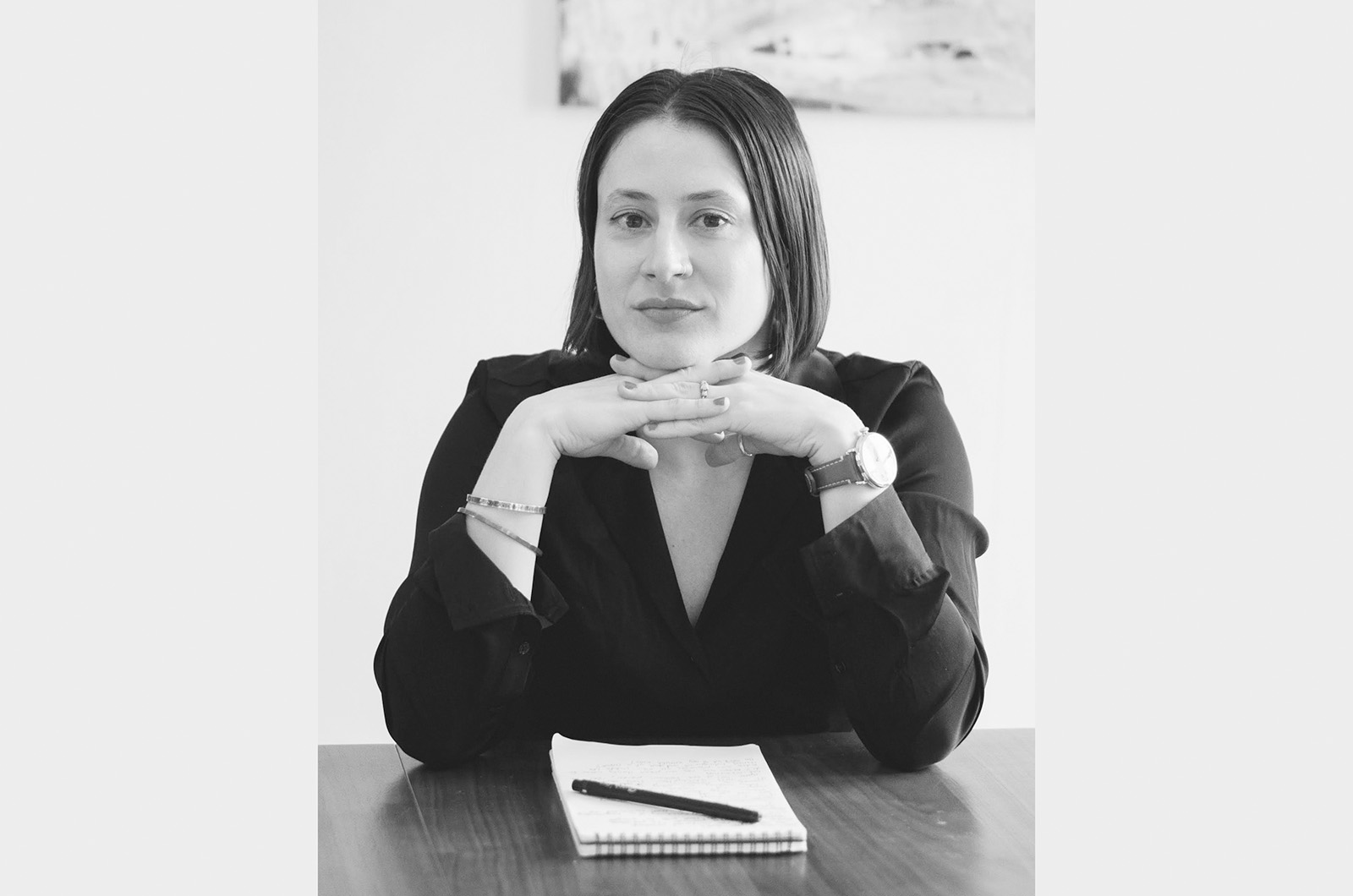
Rebecca Grant has spent her career lifting up the voices of those advocating for women to be able to live their lives with dignity and freedom, which she says is not possible without access to safe abortions.
Rebecca Grant has spent her career lifting up the voices of those advocating for women to be able to live their lives with dignity and freedom, which she says is not possible without access to safe abortions.
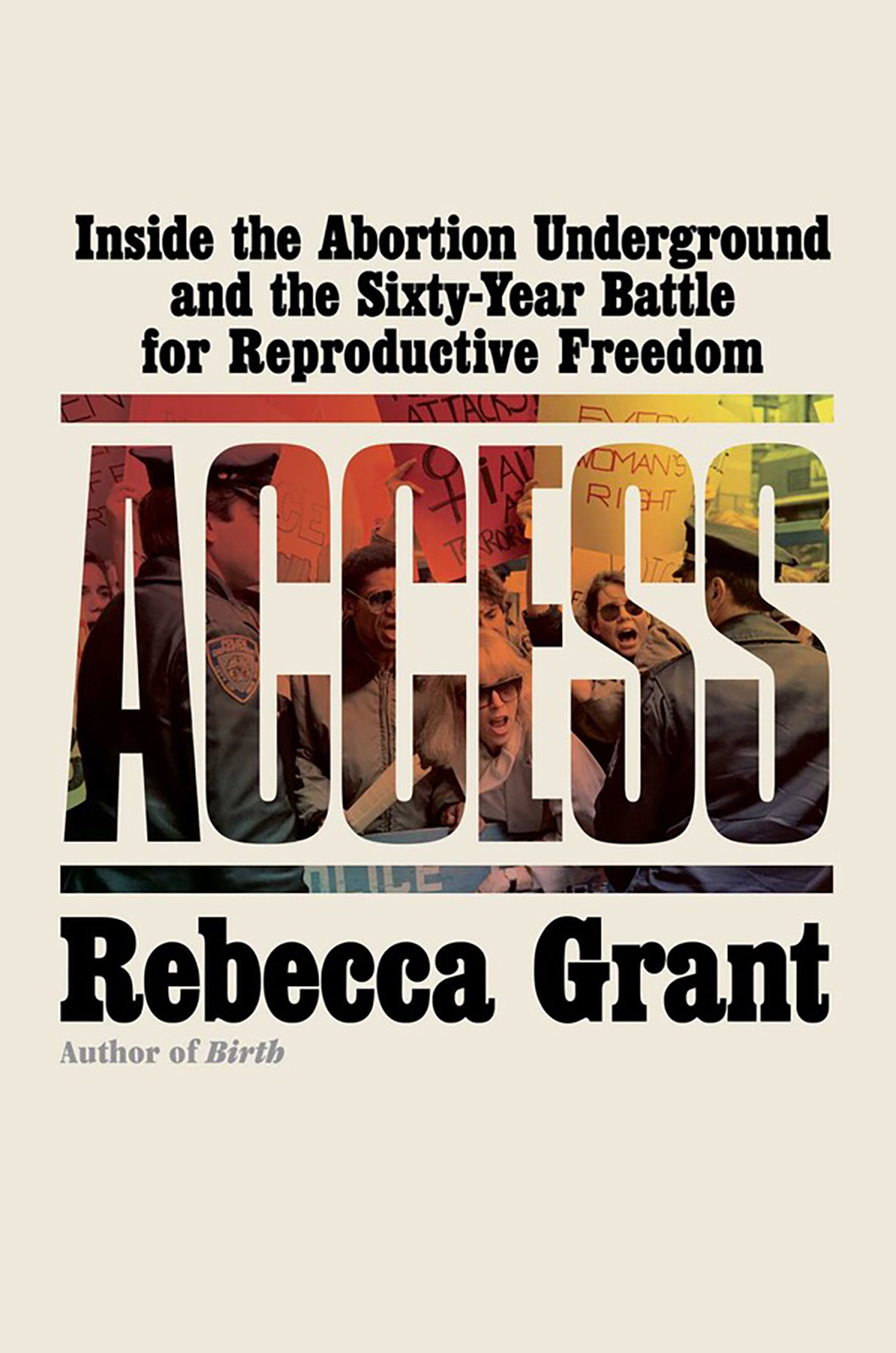
In her book Access: Inside the Abortion Underground and the Sixty-Year Battle for Reproductive Freedom, published in June, she offers a look at the centuries-long struggle for bodily autonomy. The book explores how underground activists in the United States and abroad have repeatedly fought to get people the medications they need and defend reproductive rights.
Ms. Grant grew up going to feminist marches in Washington D.C. with her mother. The past 10 years she has worked as a freelance reporter, traveling around the world on the abortion beat. Her work has appeared in NPR, New York Magazine, The Atlantic, The Washington Post, Mother Jones and more.

“In addition to covering the politics, which could be really depressing, I have always been covering activist movements and building my network of sources within the groups of folks who are doing grassroots work,” Ms. Grant said.
In the lead-up to Dobbs v. Jackson Women’s Health Organization, the U.S. Supreme Court ruling that ended the constitutional right to abortion in 2022, Ms. Grant knew there would be resistance and wanted to shed light on the underground, unofficial pill distributions network.
“The overwhelming sense of Dobbs was hopelessness and defeat and powerlessness, and that just wasn’t the only story,” Ms. Grant said.
The book opens in 1965, when activists were fighting for abortion access in the years before Roe v. Wade, the U.S. Supreme Court ruling that legalized abortion nationwide. It also follows the work of international activists in countries where abortion is illegal or criminalized.
One of those activists is Dr. Rebecca Gomperts, a Dutch physician and activist who in 1999 founded the nonprofit Women on Waves, which provides safe abortions in international waters where restrictive national laws don’t apply. She’s now running a global telemedicine service.
Ms. Grant’s book also follows Veronica “Vero” Cruz, a Mexican woman who developed the accompaniment model, where women receive support when going to a pharmacy or purchasing medications for at-home abortions. Her work helped decriminalize abortion in Mexico.
Ms. Grant’s book emphasizes how technology and medical advancements have expanded access to abortion. In one chapter, the author travels to India to trace the supply chain of abortion pills. She said that the underground distribution system can often feel sketchy, and people who are already scared and vulnerable may not seek the support they need.
“Speaking with people who have received medication from these community support networks, they’re just emailing a random encrypted email address that they found on the internet and then they receive pills [that] may or may not be packaged in the way that they’re expected to be,” she said.
She hopes her book can provide a measure of safety and comfort, not only helping others become aware of the options available to them, but also sharing the stories of the people working to support them.
Ms. Grant included the names of the medications, mifepristone and misoprostol, along with the regimen for taking them. She also includes legal resources and medical hotlines where anyone can ask questions and seek emotional support.
She said it was important for her to include this information because she believes this knowledge belongs in the hands of people who need abortions. She also wanted to show people that there is an ecosystem in place to help them make difficult decisions and navigate them safely through whatever channel they choose.
She also said that because President Donald Trump and his administration are working to censor public health information on abortions, the physicality of her book is essential because, unlike a website, it can’t be deleted with a single click.
“I refuse to let fear or concern about what might happen dictate the editorial or journalistic decisions that I make,” Ms. Grant said. “I mean, this is public health information.”
She said President Trump was elected for his second term just one month before her book’s production deadline.
“The month after the election was an absolute nightmare,” she said. “I was already so stressed out about trying to make sure that the manuscript was done in time [and] finish all of my edits, on top of basically needing to contact all of my sources and check in with them about how they were feeling and if there was anything that they wanted me to change....”
She said some of her sources were panicking about the election and others were expecting the outcome. Ms. Grant ended-up having to make minor changes, such as making the location where someone lived more vague. In one case, an anonymous source wanted to take out any mention of her work altogether.
Since her book was published, Ms. Grant said the response has been heartwarming. Women in their 60s, 70s and even their 80s, who remember life before Roe v. Wade, have been connecting with the book and telling Ms. Grant how it gives them a full-circle nostalgia. Young women, who are just starting to participate in the movement, have told Ms. Grant that her book gave them a more expansive view of what abortion activism can look like.
Ms. Grant acknowledged the fear of a federal abortion ban looming. She said the networks she has researched are designed to operate in spite of the law and are not subject to the vagaries of political whims. While a ban would be devastating, Ms. Grant said she gets hope from persistent activists.
“Having been on this beat for so long, it does feel hard sometimes to feel optimism,” Ms. Grant said. “But I am certainly, incredibly inspired by all the sources that I covered, and none of them have any plans to stop anytime soon. If anything, I think they’re only getting more ambitious.”
Rebecca Grant will take part in a discussion on Saturday, August 2 at 2:15 p.m. The talk is entitled Changing the Rules: The Role of Advocacy, and will also feature Jaz Brisack, Ayana Elizabeth Johnson and Wally Lamb. It will be moderated by Barbara Phillips.
On Sunday, August 3 at 1 p.m., Ms. Grant will be featured at an Author Talk, in conversation with Elizabeth Barnes.
Add new comment