

It must have been a very dramatic moment.
It must have been a very dramatic moment.
Samuel Thomson, early 19th-century New England herbalist, was on trial for the “willful murder” of one of his patients. Accused by a traditional physician, this Trial of Thomson, as it became known, eventually hinged on the identification (or misidentification) of a plant.
Thomson had created a therapeutic movement that used herbs rather than conventional medicine after he lost his mother through what he believed was inadequate treatment by seven different doctors. He also almost lost his wife in childbirth. Leaning into his belief in herbal cures, he engaged two “root doctors” to treat his spouse, who survived and went on to have seven more children.
The movement that Thomson started and popularized was called Thomsonium medicine or Thomsoniamism and relied on plants rather than the traditional treatments of the time. His go-to plant was lobelia, “to cleanse the Stomach, overpower the Cold, and promote a free perspiration,” to be followed with a course of other herbal tonics, including a common beach species.
In court, his accuser brought forth a plant labeled lobelia, potentially toxic though commonly used to induce vomiting. Thomson insisted the plant exhibited was not lobelia (also called puke weed) but rather it was marsh rosemary (Limonium carolinianum). His innocence was thus certain, and he was saved from jail after he ate the plant in question in front of the judge without ill effect.
Marsh rosemary, also called sea lavender, statice, ink root, seaside thrift and marsh root, was one of Thomson’s preferred herbs, though he was not the first healer to use it. Indigenous people, including the Micmac people of Maine and Canada, pounded the roots to make a concoction against hemorrhage.
Jacob Bigelow, and 18th-century physician from Sudbury, reported that this plant “possesses much medicinal reputation as an astringent, and large quantities are annually consumed in different parts of the United States. In Boston it is regularly kept by the druggists, and larger quantities are sold than of almost any other indigenous article.”
Other notable uses of this plant include remedies for stomach ailments and to treat oral conditions.
One of three native varieties of Limonium in North America, sea lavender has recently been studied for its cohabitating endophytes. Endophytes are types of fungus or bacteria that live on plants without harming them. In the case of sea lavender, studies have indicated that those endophytes may contain bioactive metabolites that have anticancer, antibacterial, anti-anxiety, anti-dysrhythmic and anti-depressant properties.
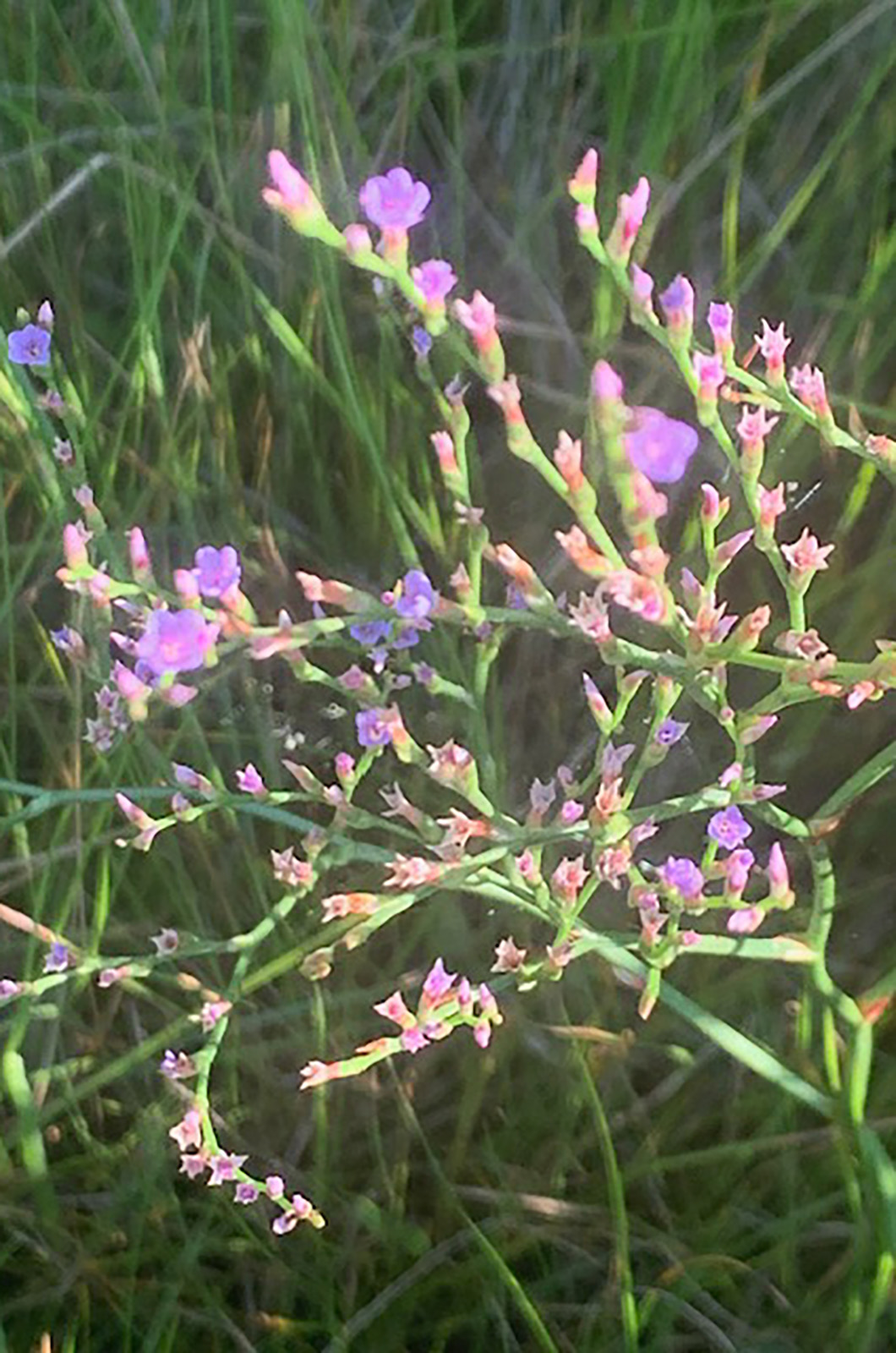
Sea lavender has begun to bloom on beaches, salt marshes, and other coastal areas across the Island. Their small, delicate flowers emerge from thin stems that are attached to robust ovate leaves that withstand the saline conditions on the shoreline.
Reminiscent of the flower known as baby’s breath, these blooms have historically been used for wreaths or flower arrangements, though harvesting is not recommended as human hands have reduced the population of these coastal treasure over time.
The value of sea lavender goes beyond its presence in a bouquet. It has been the star player in a murder trial, a healing herb, and a source of beauty on the beach.
Suzan Bellincampi is director of the Felix Neck Wildlife Sanctuary in Edgartown, and author of Martha’s Vineyard: A Field Guide to Island Nature and The Nature of Martha’s Vineyard.
Add new comment