

How do you save your local newspaper? A MassLive-Vineyard Gazette forum seeks the answer
Local news organizations are closing, their funding and revenue are dropping off and maintaining readership is a battle. The news landscape faces pressing challenges at a time when the public is desperately in need of reliable information.
How to address them is no straightforward task.
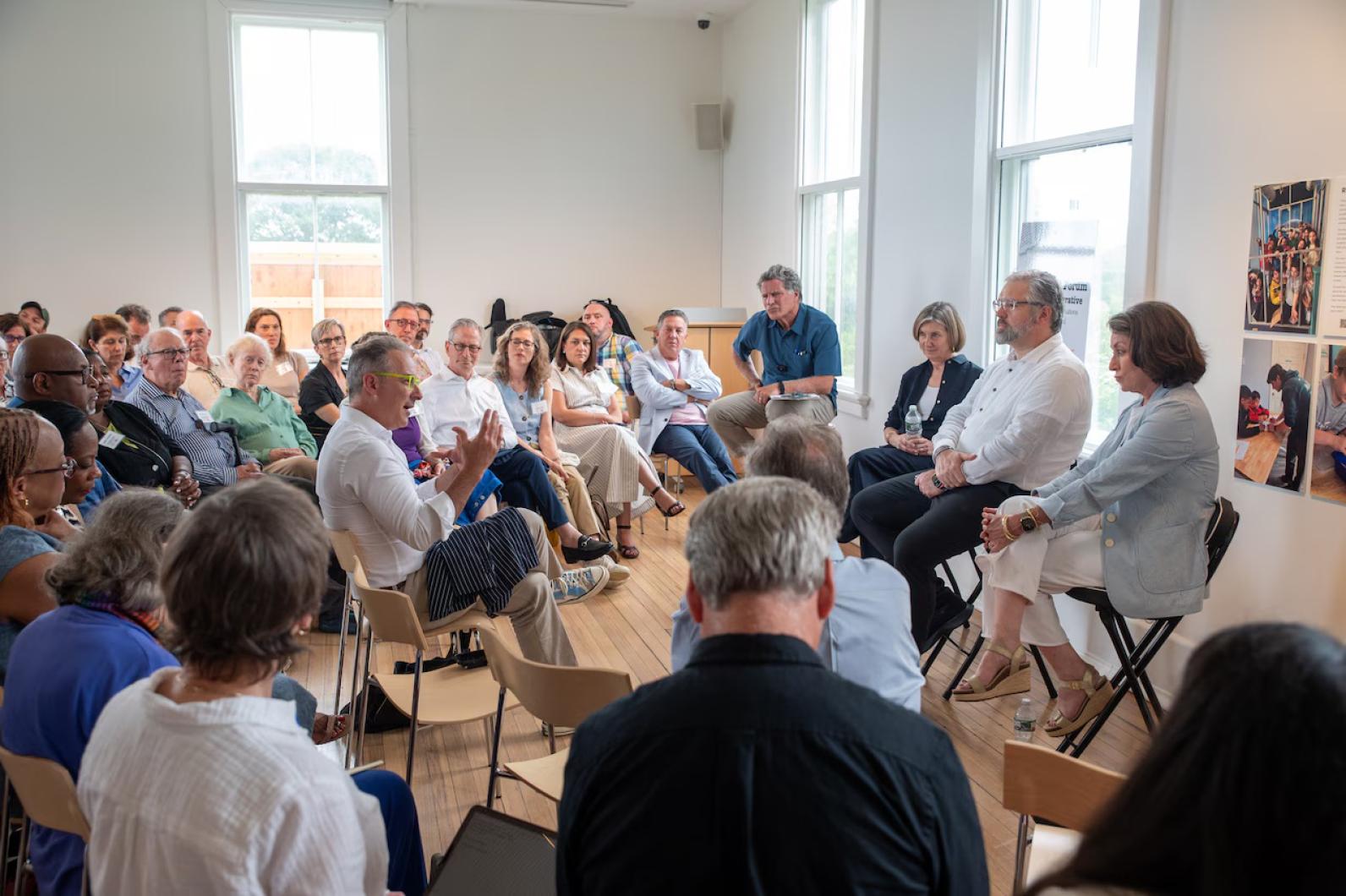
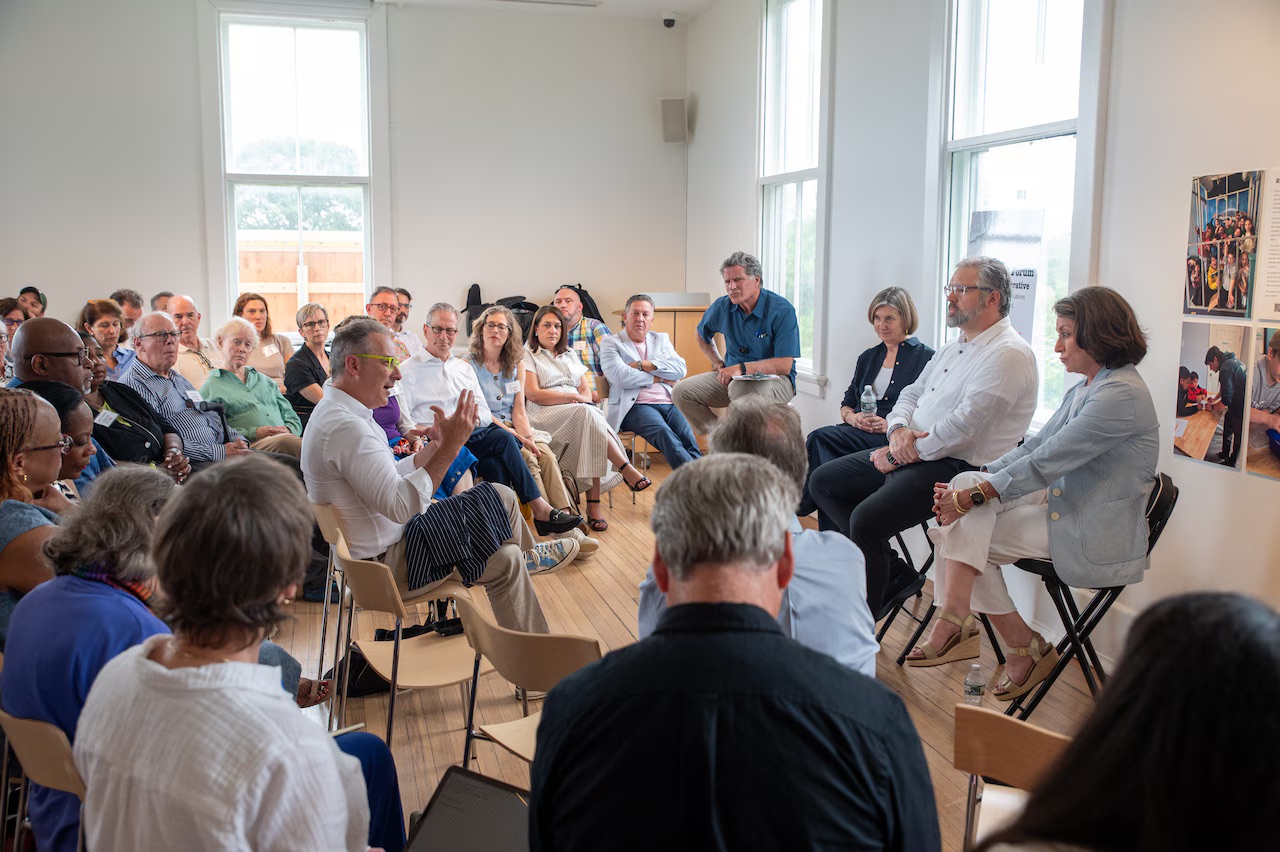
Seeking a pathway to sustaining and growing local news, a group of several dozen influential media executives and newsmakers convened Friday on Martha’s Vineyard for a forum co-sponsored by The Vineyard Gazette and MassLive.
“Local news is under huge threat, and yet never more important. Everyone in this room knows the dire consequences of when it dries up,” MassLive President Josh Macht said Friday, introducing the event at the Martha’s Vineyard Museum in Vineyard Haven.
From left to right, Bill Taylor, the author and founder of Fast Company Magazine, Margaret Low, CEO of WBUR, Nicco Mele, founder of Lexington Observer and Susan Goldberg, CEO of GBH formed a panel of news media executives on Martha's Vineyard on Friday, July 11, 2025.
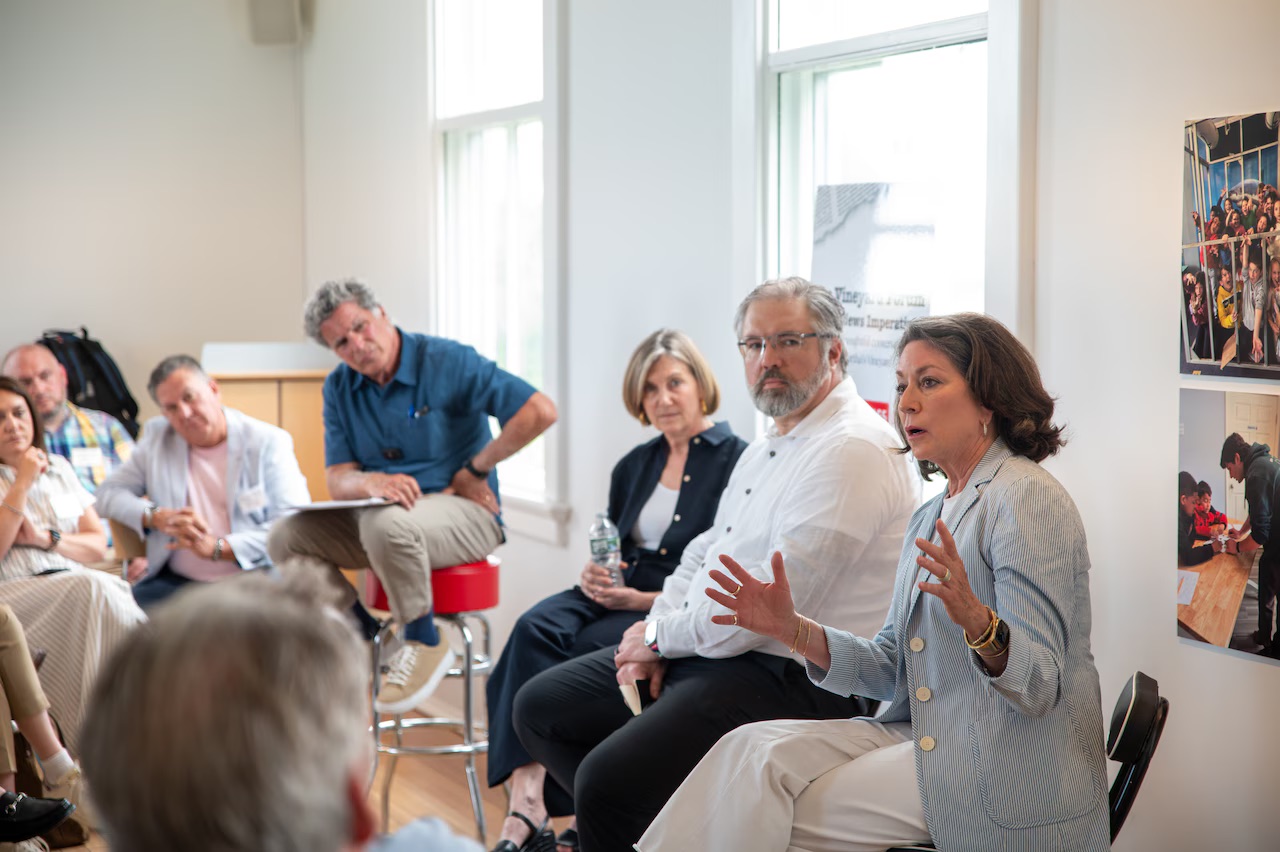
From left to right, Bill Taylor, the author and founder of Fast Company Magazine, Margaret Low, CEO of WBUR, Nicco Mele, founder of Lexington Observer and Susan Goldberg, CEO of GBH formed a panel of news media executives on Martha's Vineyard on Friday, July 11, 2025.
“Why not have a conversation about that?” he asked.
When residents of a neighborhood hear and see a helicopter hovering overhead, they often run to Facebook, Nextdoor or other online forums seeking information. Yet rarely do they wind up learning what is going on, Knight Foundation CEO Maribel Perez Wadsworth told the assembled group.
Newsrooms need to do a better job of answering the public’s questions and reaching their audience on the platforms that are most accessible to them, she said in a discussion with Ronnie Ramos, MassLive’s vice president of content.
“The only way what we do is going to matter is if it’s connecting with an audience,” she said.
A troubling financial picture
Perez Wadsworth remains optimistic about the future of local media. Yet the financial realities of the business remain “very dire,” she said.
Maribel Perez Wadsworth, president and CEO of the John S. and James L. Knight Foundation, speaks about the future of local news at The Vineyard Forum on Martha's Vineyard on July 11. 2025. MassLive and the Vineyard Gazette co-hosted the forum.
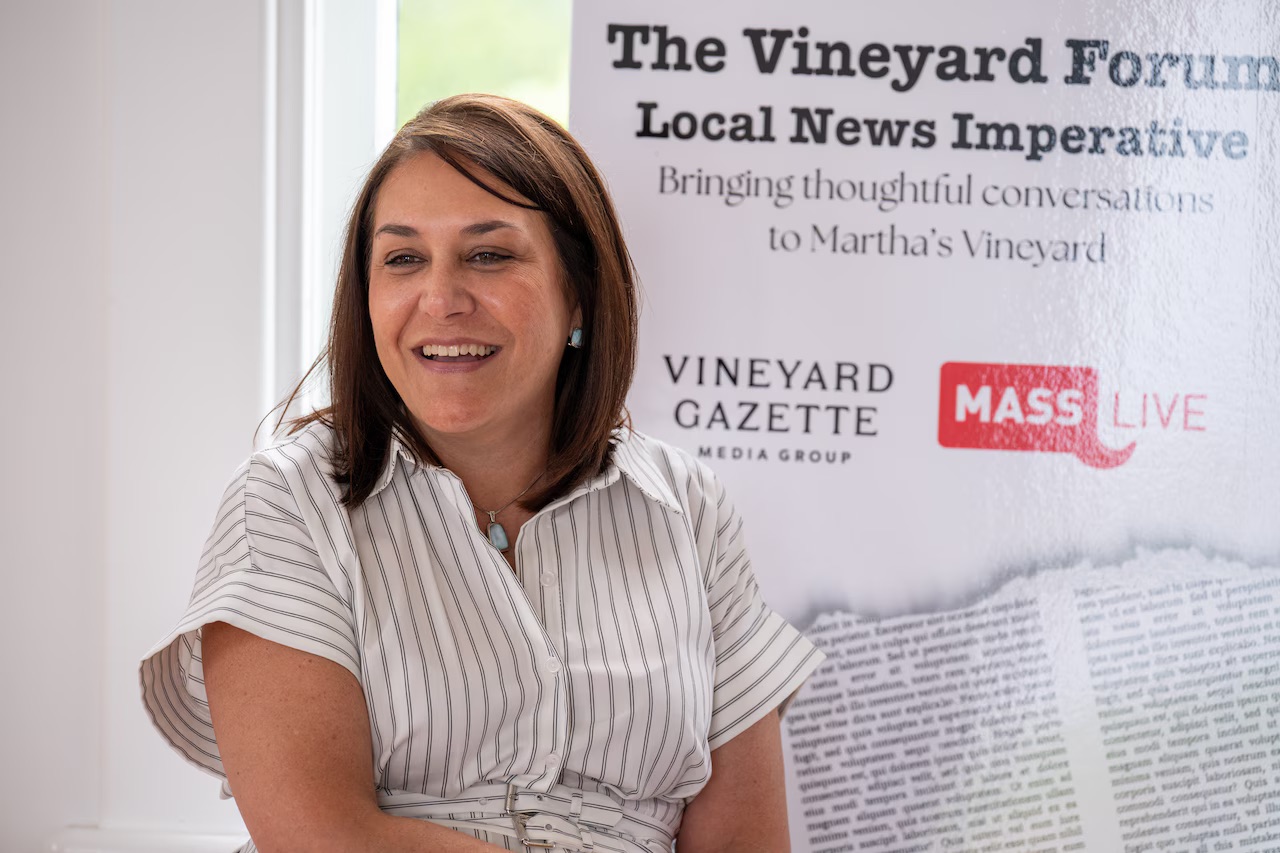
Maribel Perez Wadsworth, president and CEO of the John S. and James L. Knight Foundation, speaks about the future of local news at The Vineyard Forum on Martha's Vineyard on July 11. 2025. MassLive and the Vineyard Gazette co-hosted the forum.
Newspapers have faced declining advertising and circulation revenue since the early 2000s as their publications moved increasingly online.
More than 120 newspapers shuttered last year, leaving nearly 55 million Americans with diminished access to local news about their government, schools and communities, according to a report from Northwestern University’s Medill School of Journalism.
At radio organizations such as Greater Boston’s WBUR and GBH, the newsrooms face attempts from the Trump administration to slice more than $1 billion in federal funding for public broadcasting.
That comes on top of already strained budgets as a shrinking share of the public gets their news from the airwaves, operating costs increase and revenue stagnates, GBH CEO Susan Goldberg said in an email to staff in June, announcing the station was laying off 45 employees, 6% of its workforce.
WBUR, one of the largest NPR affiliates, said in April it would cut up to 14% of its staff to offset a decline in on-air sponsorship. While the organization can weather federal funding cuts, small public radio stations are not in as strong a position, WBUR CEO Margaret Low said last month.
Charles Sennott, founder of the nonprofit news organization the GroundTruth Project and publisher of Marthas Vineyard times pictured on Martha's Vineyard on Friday, July 11, 2025.
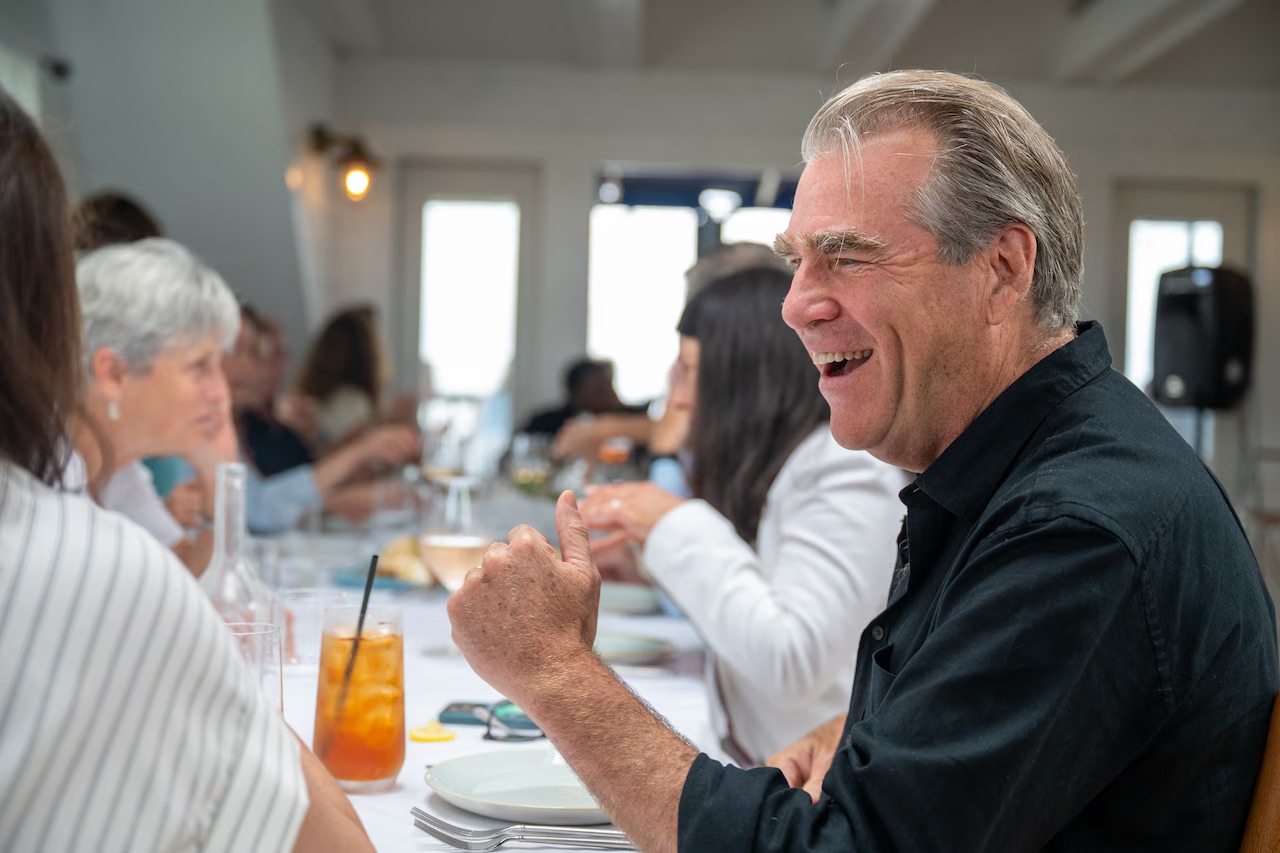
Charles Sennott, founder of the nonprofit news organization the GroundTruth Project and publisher of Marthas Vineyard times pictured on Martha's Vineyard on Friday, July 11, 2025.
“I don’t believe all is lost, but there’s a lot of work to do,” Perez Wadsworth told Ramos.
News must be relevant and accessible
Ideas varied for how to invigorate local media during a panel moderated by Bill Taylor, the author and founder of Fast Company magazine, featuring Low, Goldberg and Lexington Observer founder Nicco Mele.
“Everybody’s got to be relevant, whether you’re serving an international audience, a national audience, a local audience,” Goldberg said. That includes meeting audiences on the platforms that are most accessible to them, she said.
Some news organizations have found success by diversifying their offerings. Several speakers pointed to the success of the New York Times in offering a suite of services — games, cooking, sports coverage through The Athletic — as a way of staying relevant to its audience and attracting users.
Low pointed to the recent success of The WBUR Festival in May, which brought together state leaders, journalists and artists for three days of panels, speakers and other events in Boston.
Katharine Weymouth, former publisher of The Washington Post and chief executive officer of Washington Post Media, spoke at The Vineyard Forum about the future of local news at The Vineyard Forum on Martha's Vineyard on Friday, July 11, 2025. The forum was co-hosted by MassLive and the Vineyard Gazette.
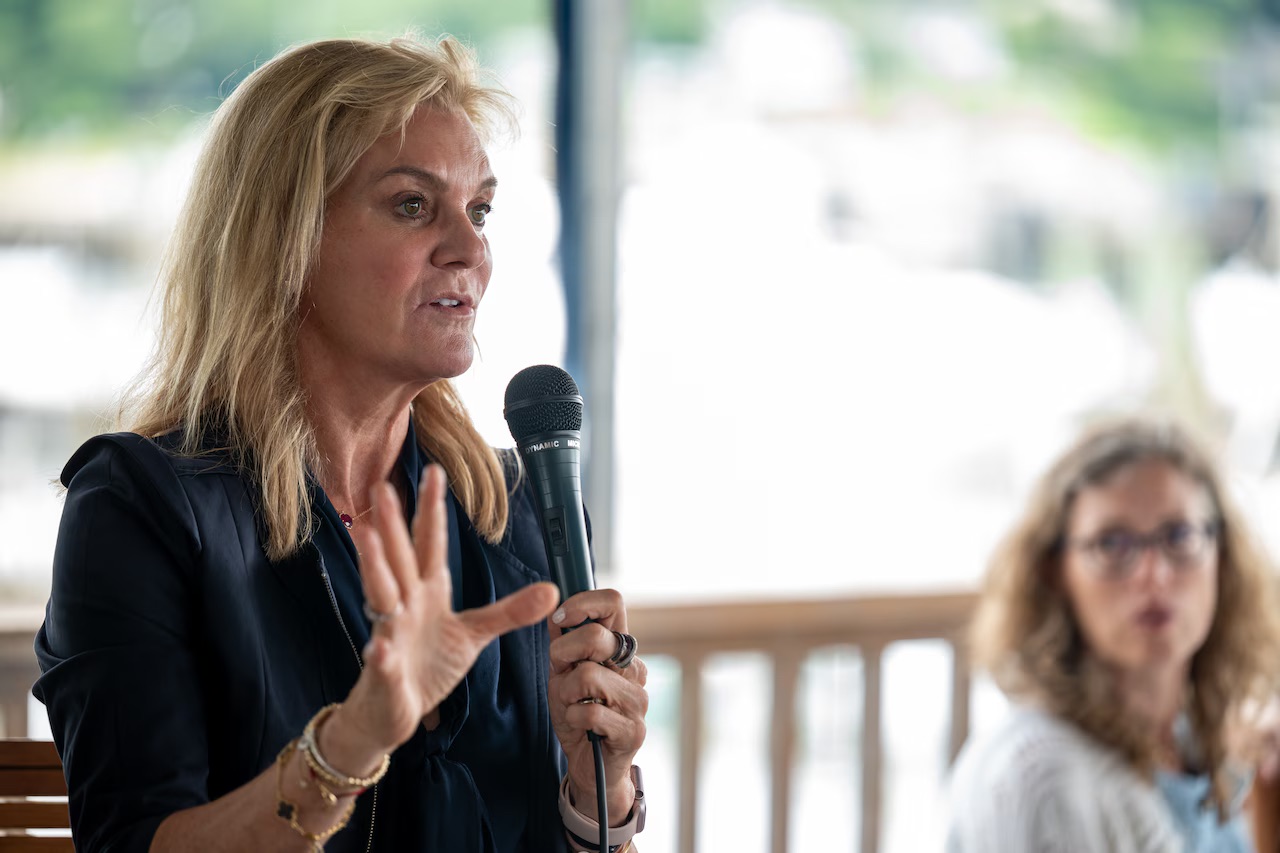
Katharine Weymouth, former publisher of The Washington Post and chief executive officer of Washington Post Media, spoke at The Vineyard Forum about the future of local news at The Vineyard Forum on Martha's Vineyard on Friday, July 11, 2025. The forum was co-hosted by MassLive and the Vineyard Gazette.
Mele said the Observer, a nonprofit outlet founded in 2021, went all in on local news in Lexington, recognizing that the existing media landscape “was too nationalized” and that residents lacked quality information on issues as hyperlocal as a school board race.
In the digital age, newsrooms have struggled to access younger audiences, panelists and audience members said. Young people are not as concerned with where they find news, whether it be from an independent source or a social media influencer.
Charles Sennott, who founded the nonprofit news organization The GroundTruth Project and now serves as publisher of the Martha’s Vineyard Times, challenged the group to understand young people’s dissatisfaction with the legacy media.
“They’re pissed off at the failure of traditional media to really hear voices that are in the middle of the country or that are in quiet corners of our community,” he said.
News organizations must adapt to the reality of how young people consume news, without judgment, Goldberg said. That may mean creating more short-form content or journalism structured around social media.
Nicco Mele, founder of the Lexington Observer as pictured for a portrait on Martha's Vineyard on Friday, July 11, 2025.
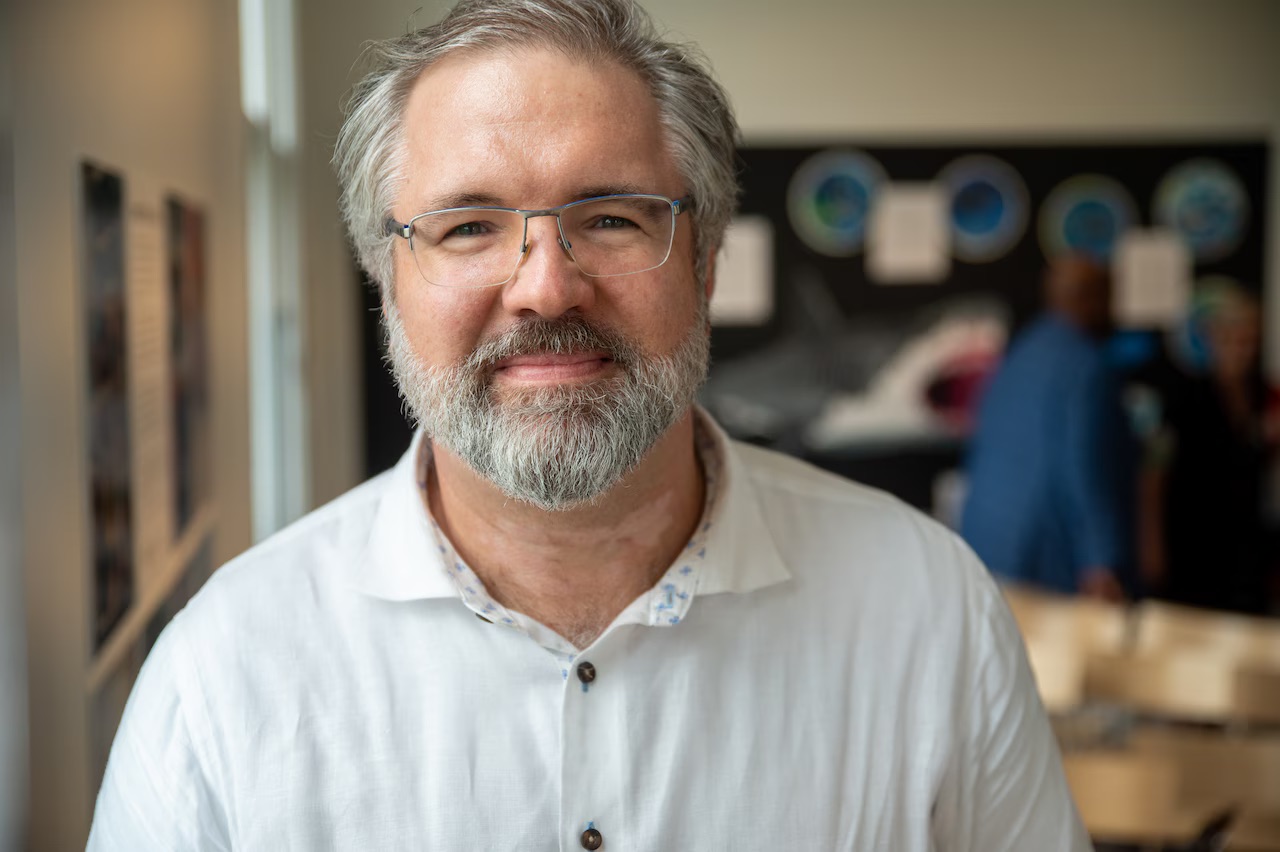
Nicco Mele, founder of the Lexington Observer as pictured for a portrait on Martha's Vineyard on Friday, July 11, 2025.
“I think it’s my responsibility not to shake some finger at them and tell them, ‘oh, you’re not really a serious person,’ but to give them that information that’s right and accessible and factual,” she said.
Low pointed out that many young people appear to be even more engaged with the news than their previous generations, even if they may not be finding their information from the television or radio to the same degree. Rather than tuning into radio, many young people now turn to podcasts, she said.
In some markets, news sources like the Lexington Observer have organized as nonprofits as a path to financial stability.
The nonprofit model is promising, particularly in light of the challenges facing for-profit news organizations, Katharine Weymouth, the former owner and publisher of the Washington Post, told the group. Yet, newsrooms large and small are still seeking business models and strategies that work.
“Even [Jeff] Bezos has not figured out the secret sauce,” she said, in a nod to the billionaire Amazon founder to whom her family sold the Post in 2013.
Craig Borges asks the panel of news media executives a question during The Vineyard Forum on Martha's Vineyard on Friday, July 11, 2025.
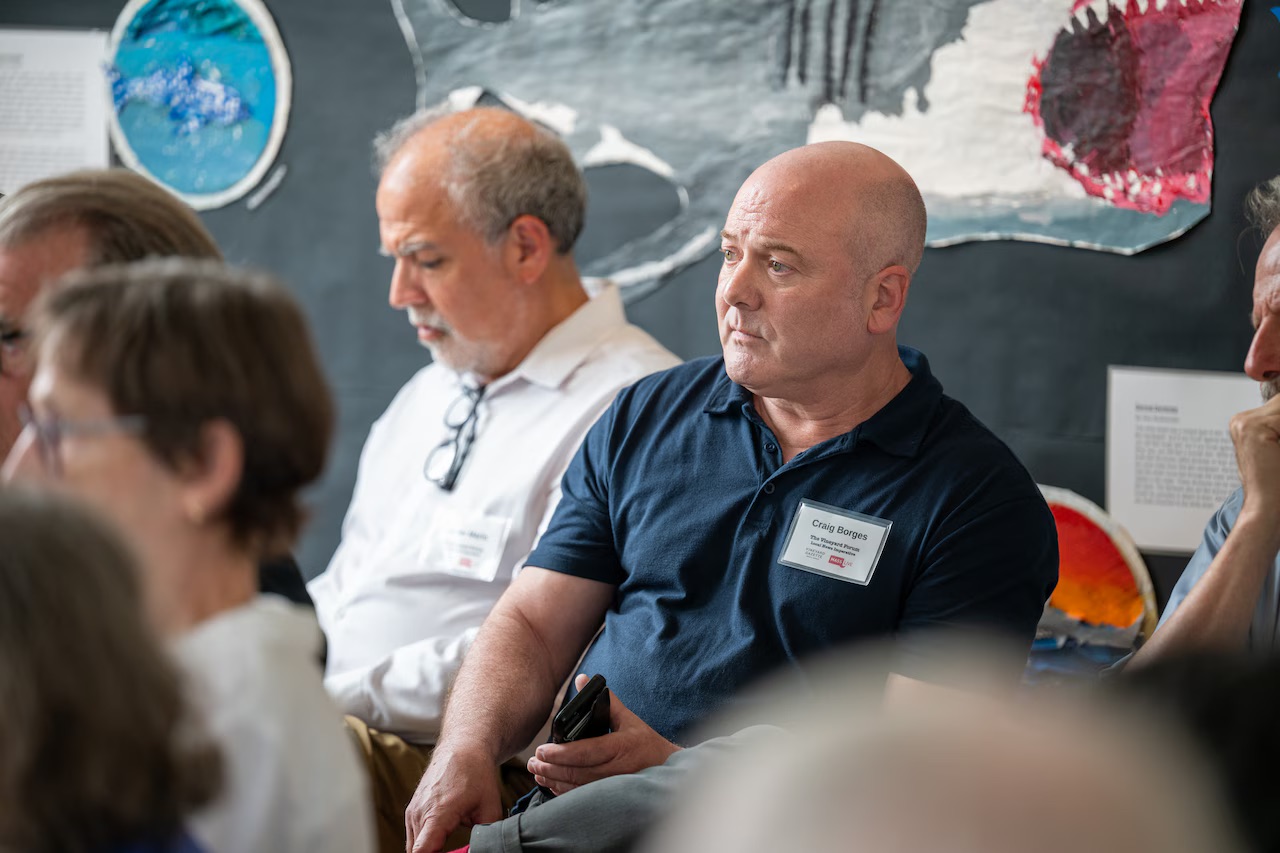
Craig Borges asks the panel of news media executives a question during The Vineyard Forum on Martha's Vineyard on Friday, July 11, 2025.
Weymouth noted that her great-grandfather, Eugene Meyer, purchased the paper at a bankruptcy sale in 1933.
“People forget that newspapers have been through challenging times before,” she said.
The group also debated the merits and risks of artificial intelligence.
Hyperlocal news can be insulated from AI, which likely can’t yet describe to readers what a specific construction project on a specific street corner in Lexington will result in, Mele said.
AI can present opportunities for newsrooms to distill incredible quantities of information, such a decade’s worth of police blotters a newsroom wants to analyze, Goldberg said.
For all the challenges and changes facing local news, readers are often unaware or refuse to believe that their local news outlet could fail.
Craig Borges, the executive editor of The Sun Chronicle in Attleboro, said he worked alongside 50 people in the newsroom when he joined the paper in 1997. Today, the staff is about a fifth as large.
He preached the benefits of newsrooms partnering with each other to share resources and stories, as his paper has done with MassLive.
“We’re well respected, but we’re dying. And I make no bones about telling the public that,” he said. “I say we cover the good, the bad, the ugly and the beautiful. And when we’re gone, no one’s going to cover that.”
Add new comment